Fowlers Syndrome Market Size, Share Demand Report By Treatment Type (Sacral Neuromodulation, Pharmacological Therapy, Behavioral Therapy), By Diagnosis Method (Urodynamic Testing, Imaging Techniques, Clinical Evaluation), By End-Use (Hospitals, Specialty Clinics), By Patient Type (Adult Women, Adolescents), By Distribution Channel (Hospital Pharmacies, Retail Pharmacies, Online Pharmacies), By Region & Segment Forecasts, 2025–2034
USD 3950
Market Overview
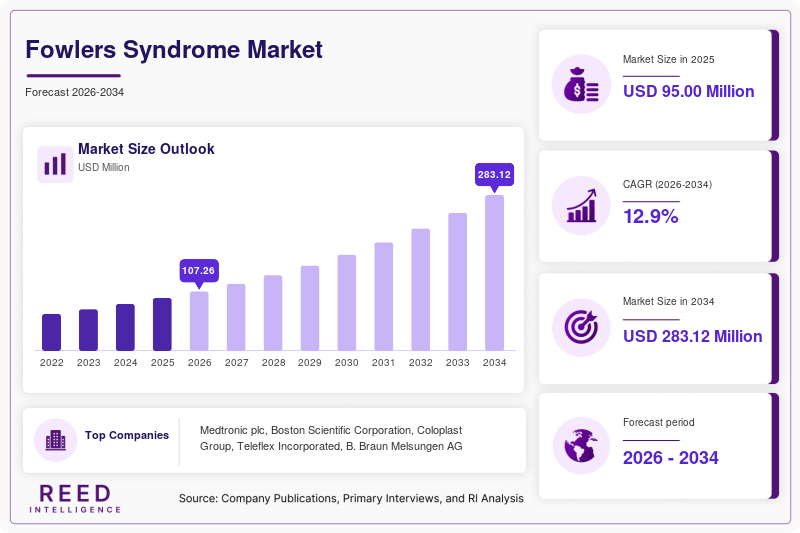
The Fowlers Syndrome Market size was valued at approximately USD 95 million in 2025 and is projected to reach USD 285 million by 2034, expanding at a CAGR of 12.9% during 2025–2034. The market growth reflects increasing recognition of rare urological disorders and advancements in diagnostic and treatment approaches for urinary retention conditions.
A key global factor supporting the growth of the Fowlers Syndrome Market is the growing emphasis on rare disease awareness and specialized healthcare services. Healthcare providers and research organizations are focusing on improving diagnosis rates and treatment accessibility for conditions such as Fowler’s syndrome, which primarily affects young women. Enhanced awareness campaigns and improved clinical guidelines are contributing to early identification and intervention.
Key Highlights:
- North America dominated the Fowlers Syndrome Market with a 40% share in 2025, while Asia Pacific is projected to grow at the fastest CAGR of 14.2%.
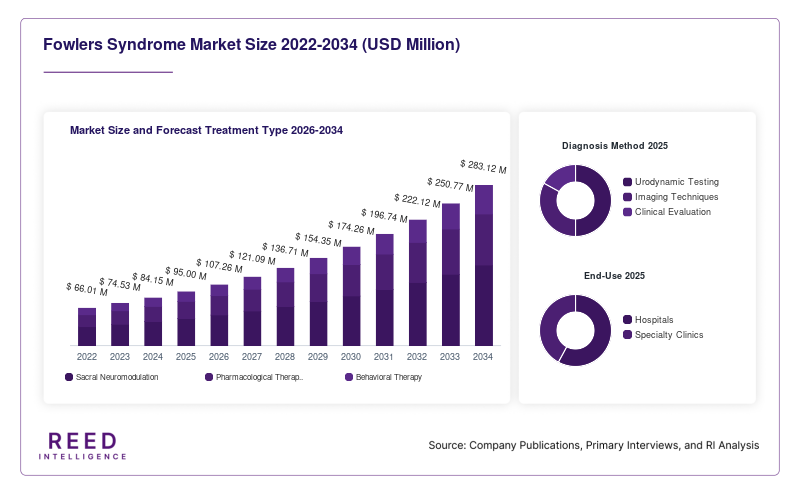
- By treatment type, sacral neuromodulation led with a 47% share, while pharmacological therapies are expected to grow at a CAGR of 13.5%.
- By end-use, hospitals accounted for the largest share, whereas specialty urology clinics are projected to grow at a CAGR of 13.9%.
- The United States remained the dominant country, with market values of USD 38 million in 2025 and USD 42 million in 2026.
Market Trends
Adoption of Neuromodulation Therapies
The Fowlers Syndrome Market is witnessing increasing adoption of neuromodulation techniques, particularly sacral nerve stimulation. These therapies offer effective management of urinary retention by modulating nerve activity. This trend reflects a shift toward minimally invasive and targeted treatment approaches, improving patient outcomes and quality of life.
Advancements in Diagnostic Technologies
Another notable trend is the development of advanced diagnostic tools for early detection of Fowler’s syndrome. Innovations in urodynamic testing and imaging technologies are enabling more accurate diagnosis. This trend is helping healthcare providers identify the condition earlier and initiate appropriate treatment strategies.
Market Drivers
Increasing Awareness of Rare Urological Disorders
Growing awareness of rare urological conditions is a key driver for the Fowlers Syndrome Market. Healthcare campaigns and patient advocacy initiatives are improving understanding among both patients and healthcare professionals. This increased awareness is leading to higher diagnosis rates and expanding the patient pool.
Advancements in Minimally Invasive Treatments
The development of minimally invasive treatment options is significantly driving market growth. Procedures such as sacral neuromodulation offer effective management with reduced recovery times. These advancements are encouraging adoption among patients and healthcare providers.
Market Restraint
Limited Awareness and Misdiagnosis
A major restraint in the Fowlers Syndrome Market is the limited awareness of the condition among healthcare professionals and patients. Due to its rarity and overlapping symptoms with other urological disorders, Fowler’s syndrome is often misdiagnosed or underdiagnosed. This can delay treatment and reduce the number of patients receiving appropriate care. Additionally, the lack of standardized diagnostic protocols can further complicate diagnosis, impacting market growth.
Market Opportunities
Expansion of Specialized Urology Clinics
The growth of specialized urology clinics presents a significant opportunity for the Fowlers Syndrome Market. These clinics offer targeted diagnostic and treatment services, improving patient outcomes. Increasing investments in specialized healthcare facilities are expected to support market expansion.
Research and Development in Rare Diseases
Ongoing research and development activities in rare diseases are creating new opportunities for market growth. Pharmaceutical companies and research institutions are focusing on developing innovative therapies and improving existing treatment options. This focus is expected to drive advancements and expand the market.
Segmental Analysis
By Treatment Type
Sacral neuromodulation dominated the Fowlers Syndrome Market with a 47% share in 2025, due to its effectiveness in managing urinary retention. This treatment is widely adopted as it offers long-term symptom relief.
Pharmacological therapies are expected to grow at the fastest CAGR of 13.5%, driven by ongoing research into new drug formulations. These therapies will gain traction due to their non-invasive nature.
By Diagnosis Method
Urodynamic testing held the largest share at 42% in 2025, as it is a primary method for diagnosing Fowler’s syndrome. This technique provides detailed insights into bladder function.
Imaging techniques will grow at a CAGR of 13.2%, supported by advancements in medical imaging technologies that enhance diagnostic accuracy.
By End-Use
Hospitals accounted for the largest share of 49% in 2025, driven by the availability of advanced treatment facilities and skilled professionals.
Specialty urology clinics will grow at a CAGR of 13.9%, fueled by increasing demand for specialized care.
By Patient Type
Adult women dominated with a 65% share in 2025, as Fowler’s syndrome primarily affects this demographic group.
Adolescent patients will grow at a CAGR of 13.1%, supported by improved early diagnosis and awareness.
By Distribution Channel
Hospital pharmacies held the largest share at 53% in 2025, as treatments are often administered in clinical settings.
Online pharmacies are expected to grow at a CAGR of 12.7%, driven by increasing adoption of digital healthcare platforms.
Regional Analysis
North America
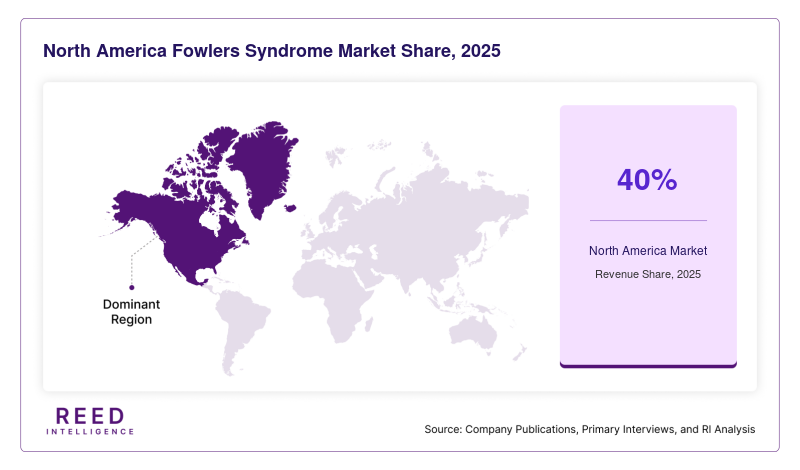
North America accounted for 40% of the Fowlers Syndrome Market share in 2025 and will grow at a CAGR of 12.3% through 2034. The region’s dominance was driven by advanced healthcare infrastructure and high awareness of rare diseases.
The United States led the region due to its strong research ecosystem. A key growth factor is the availability of specialized treatment centers and advanced diagnostic technologies.
Europe
Europe held approximately 27% market share in 2025 and is expected to grow at a CAGR of 12.6%. The region benefited from increasing investments in healthcare and rare disease research.
United Kingdom emerged as the dominant country, driven by its established healthcare system. A key growth factor is the integration of advanced diagnostic tools in clinical practice.
Asia Pacific
Asia Pacific captured around 18% of the market share in 2025 and will register the fastest growth at a CAGR of 14.2%. Rapid improvements in healthcare infrastructure and increasing awareness contributed to market growth.
China dominated the region, supported by expanding healthcare services. A major growth factor is the increasing focus on rare disease management.
Middle East & Africa
The Middle East & Africa region held about 8% share in 2025 and is projected to grow at a CAGR of 12.8%. Market growth was influenced by improving healthcare facilities and rising awareness.
Saudi Arabia led the region due to increased healthcare spending. A key growth factor is the establishment of specialized treatment centers.
Latin America
Latin America accounted for nearly 7% of the Fowlers Syndrome Market in 2025 and will grow at a CAGR of 12.5%. The region showed gradual growth supported by improving healthcare access.
Brazil dominated the market, driven by expanding healthcare infrastructure. A significant growth factor is the adoption of advanced diagnostic technologies.
Competitive Landscape
The Fowlers Syndrome Market is characterized by a limited number of specialized players focusing on niche treatment solutions. Companies are investing in research and development to improve therapeutic outcomes and expand their product portfolios.
Medtronic plc is a leading player, known for its expertise in neuromodulation technologies. The company recently introduced advanced sacral neuromodulation systems designed to enhance treatment efficacy, strengthening its position in the market.
Other players are focusing on developing innovative therapies and expanding their presence in emerging markets. Collaborations with healthcare providers and research institutions are also common strategies to drive growth.
Key Players List
- Medtronic plc
- Boston Scientific Corporation
- Coloplast Group
- Teleflex Incorporated
- B. Braun Melsungen AG
- Cook Medical
- ConvaTec Group
- Hollister Incorporated
- Laborie Medical Technologies
- Cogentix Medical
- Uroplasty Inc.
- Astellas Pharma Inc.
- Pfizer Inc.
- Novartis AG
- Sanofi S.A.
Recent Developments
- 2024: Medtronic plc launched advanced neuromodulation systems for urinary disorders.
- 2024: Boston Scientific expanded its urology product portfolio.
- 2025: Coloplast Group introduced new catheter solutions for patient care.
- 2025: Laborie Medical Technologies enhanced diagnostic equipment offerings.
- 2025: Astellas Pharma initiated research on novel therapies for urological conditions.
Fowlers Syndrome Market Segments
Treatment Type
- Sacral Neuromodulation
- Pharmacological Therapy
- Behavioral Therapy
Diagnosis Method
- Urodynamic Testing
- Imaging Techniques
- Clinical Evaluation
End-Use
- Hospitals
- Specialty Clinics
Patient Type
- Adult Women
- Adolescents
Distribution Channel
- Hospital Pharmacies
- Retail Pharmacies
- Online Pharmacies
By Region
- North America
- Europe
- APAC
- Middle East and Africa
- LATAM