Fragrance Wax Melt Market Size, Share Demand Report By Type (Scented Wax Melts, Unscented Wax Melts, Organic Wax Melts), By Application (Residential, Commercial), By Distribution Channel (Online Retail, Supermarkets & Hypermarkets, Specialty Stores, Home Décor Stores, Direct-to-Consumer Channels), By Region & Segment Forecasts, 2026–2034
USD 3950
Market Overview
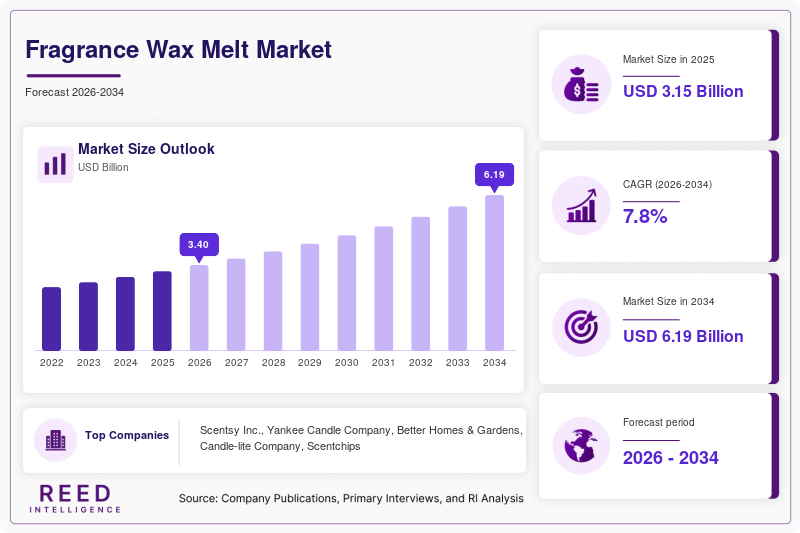
The global Fragrance Wax Melt Market size reached approximately USD 3.15 billion in 2025 and is projected to grow to USD 3.42 billion in 2026. With sustained demand across residential and commercial sectors, the market is forecast to reach nearly USD 6.25 billion by 2034, registering a compound annual growth rate (CAGR) of 7.8% from 2025 to 2034.
Fragrance wax melts are gaining traction as a safer and versatile alternative to traditional candles, as they do not require an open flame and offer longer-lasting scent diffusion. Increasing awareness about indoor air quality and non-toxic home products is encouraging consumers to shift toward wax melts made from natural ingredients such as soy wax and beeswax. This transition aligns with broader sustainability trends and supports market growth.
Key Highlights
- The market was valued at USD 3.15 billion in 2025 and is projected to reach USD 6.25 billion by 2034. This growth reflects steady expansion driven by evolving consumer preferences and wider product availability across regions.
- The market is expected to register a CAGR of 7.8% during the forecast period from 2025 to 2034. Consistent demand across residential and commercial applications is supporting this upward trajectory.
- Rising demand for flame-free fragrance solutions is contributing significantly to market growth. Consumers are increasingly choosing safer alternatives that eliminate the risks associated with open flames.
- The increasing adoption of natural and eco-friendly wax materials is shaping product development strategies. Manufacturers are focusing on sustainable ingredients such as soy and beeswax to meet consumer expectations.
- Strong expansion of online retail channels is enhancing product accessibility and visibility. Customized offerings and direct-to-consumer models are further boosting customer engagement and sales.
Market Trends
Rising Preference for Natural and Sustainable Wax Products
Consumers are increasingly prioritizing sustainability and health-conscious purchasing decisions, which has led to a shift toward natural wax melts made from soy, coconut, and beeswax. These alternatives are perceived as safer and environmentally friendly compared to paraffin-based products. Manufacturers are responding by reformulating products to eliminate harmful chemicals and incorporate essential oils derived from plant sources. This trend is further supported by eco-conscious packaging solutions, including recyclable and biodegradable materials. As sustainability becomes a core purchasing criterion, brands that emphasize transparency and ethical sourcing are gaining a competitive advantage in the fragrance wax melt market.
Growth of Customization and Artisanal Fragrance Offerings
The market is witnessing increasing demand for personalized and artisanal fragrance experiences. Consumers are seeking unique scent combinations, limited-edition collections, and handcrafted designs that reflect their personal preferences. Small and medium-sized enterprises are capitalizing on this trend by offering customized wax melts with tailored fragrances and aesthetic appeal. Subscription-based fragrance boxes and seasonal product launches are also gaining popularity, encouraging repeat purchases. This trend is particularly prominent in online retail channels, where brands can directly engage with consumers and offer customization options. As a result, product differentiation and brand storytelling are becoming critical elements of market success.
Market Drivers
Increasing Demand for Home Fragrance and Wellness Products
The growing focus on home wellness and comfort is a significant driver of the fragrance wax melt market. Consumers are investing in products that enhance mood, reduce stress, and create relaxing environments within their homes. Wax melts are widely used for aromatherapy purposes, offering benefits such as improved sleep quality and stress relief. The rise in remote work and time spent indoors has further amplified this demand. Additionally, social media trends showcasing aesthetically pleasing home environments have contributed to increased adoption. As consumers continue to prioritize mental well-being and sensory experiences, demand for fragrance wax melts is expected to remain strong.
Expansion of E-commerce and Direct-to-Consumer Channels
The rapid growth of e-commerce platforms has significantly boosted market accessibility and product visibility. Online retail allows consumers to explore a wide variety of fragrance wax melts, compare prices, and read reviews before making purchasing decisions. Direct-to-consumer business models enable manufacturers to build strong customer relationships and offer exclusive products. Digital marketing strategies, including influencer collaborations and targeted advertising, are further enhancing market reach. Subscription services and bundle offerings are also encouraging repeat purchases. This digital transformation is playing a crucial role in driving market growth and expanding the global customer base.
Market Restraint
Volatility in Raw Material Prices and Supply Chain Disruptions
One of the primary challenges facing the fragrance wax melt market is the fluctuation in raw material prices, particularly for natural waxes such as soy and beeswax. These materials are subject to agricultural output variations and supply chain constraints, which can impact production costs and pricing strategies. Additionally, disruptions in global logistics, including transportation delays and increased freight costs, have affected the timely availability of raw materials and finished products. Smaller manufacturers are especially vulnerable to these fluctuations, as they often operate with limited financial buffers. For example, a sudden increase in soy wax prices can lead to higher product costs, reducing competitiveness in price-sensitive markets. This restraint may limit market growth, particularly in emerging economies where affordability remains a key concern.
Market Opportunities
Expansion into Emerging Markets
Emerging economies present significant growth opportunities for the fragrance wax melt market due to rising disposable incomes and increasing urbanization. As consumers in these regions adopt modern lifestyles, demand for home décor and fragrance products is expected to rise. Market players can leverage this opportunity by introducing affordable product variants and localized fragrance options that cater to regional preferences. Strategic partnerships with local distributors and online marketplaces can further enhance market penetration. Additionally, awareness campaigns highlighting the benefits of wax melts can help drive adoption in untapped markets, creating new revenue streams for manufacturers.
Innovation in Product Design and Multi-Functional Features
Innovation in product design and functionality is creating new growth avenues in the market. Manufacturers are developing wax melts with added features such as color-changing properties, embedded decorative elements, and extended fragrance release technology. Multi-functional products that combine fragrance with air purification or insect-repellent properties are also gaining traction. These innovations not only enhance user experience but also differentiate products in a competitive market. By investing in research and development, companies can introduce unique offerings that appeal to a broader consumer base and drive market growth over the forecast period.
Segmental Analysis
By Type
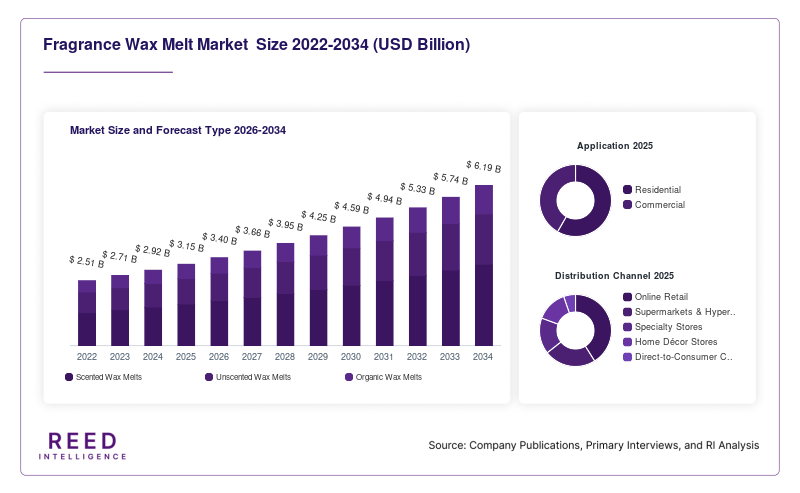
The paraffin wax segment dominated the market in 2024, accounting for approximately 48% of the total share. Paraffin-based wax melts are widely used due to their cost-effectiveness and strong fragrance retention capabilities. These products are easily available and offer a wide range of scent options, making them popular among budget-conscious consumers. Additionally, paraffin wax melts have a longer shelf life, which further supports their dominance in the market. Despite growing concerns about environmental impact, their affordability continues to drive demand across various regions.
The soy wax segment is expected to be the fastest-growing, registering a CAGR of 9.1% during the forecast period. This growth is driven by increasing consumer preference for eco-friendly and sustainable products. Soy wax melts are biodegradable and produce less soot, making them a preferred choice for health-conscious consumers. The rising demand for natural and organic products is further boosting this segment’s growth. Manufacturers are also focusing on enhancing product quality and fragrance performance to meet consumer expectations.
By Application
The residential segment held the largest share of approximately 62% in 2024, driven by increasing consumer interest in home fragrance and décor. Wax melts are widely used in households to create pleasant living environments and enhance ambiance. The growing trend of home personalization and the influence of social media are encouraging consumers to invest in fragrance products. Additionally, the availability of a wide variety of fragrances and designs is supporting the segment’s growth.
The commercial segment is projected to grow at the fastest CAGR of 8.3% during the forecast period. This growth is attributed to the increasing use of fragrance wax melts in spas, hotels, and retail spaces to improve customer experience. Businesses are recognizing the importance of scent marketing in influencing consumer behavior and enhancing brand identity. The adoption of fragrance solutions in commercial settings is expected to drive significant growth in this segment.
By Distribution Channel
The offline segment dominated the market in 2024, accounting for around 55% of the total share. Physical retail stores provide consumers with the opportunity to experience fragrances before purchasing, which is a key factor driving sales. Specialty stores and supermarkets offer a wide range of products, catering to different consumer preferences. The presence of knowledgeable staff also helps consumers make informed purchasing decisions.
The online segment is expected to grow at the highest CAGR of 9.5% during the forecast period. The convenience of online shopping, coupled with a wide variety of product options, is driving this growth. E-commerce platforms allow consumers to access global brands and unique products that may not be available in local stores. Additionally, digital marketing strategies and subscription services are encouraging repeat purchases, further supporting the growth of this segment.
Regional Analysis
North America
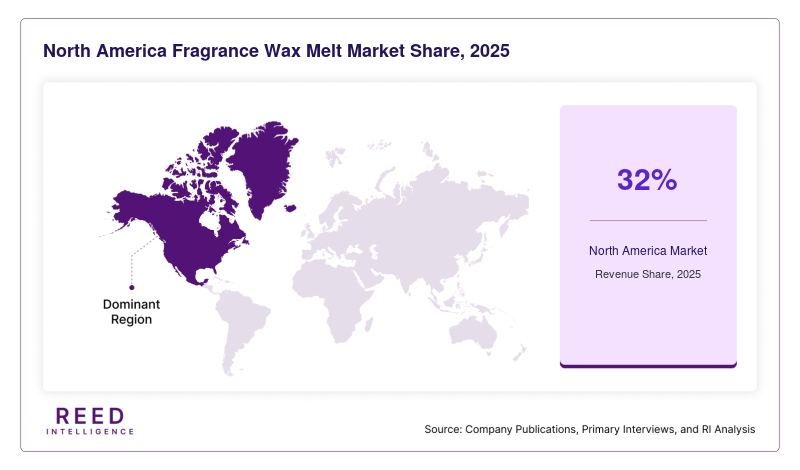
North America accounted for approximately 32% of the global fragrance wax melt market share in 2025 and is expected to grow at a CAGR of 7.2% during the forecast period. The region benefits from high consumer awareness regarding home fragrance products and a well-established retail infrastructure. Demand is driven by lifestyle trends emphasizing comfort and wellness, along with strong purchasing power among consumers.
The United States dominates the regional market due to its mature consumer base and high adoption of premium home fragrance products. A key growth factor is the increasing popularity of DIY and craft-based wax melt kits, which allow consumers to create customized fragrances at home. This trend is encouraging repeat purchases and fostering brand loyalty.
Europe
Europe held around 27% of the market share in 2025 and is projected to grow at a CAGR of 7.5% through 2034. The region’s growth is supported by strong demand for eco-friendly and sustainable products. Regulatory frameworks promoting the use of non-toxic materials are also influencing product development and consumer preferences.
Germany leads the European market, driven by its focus on sustainability and high consumer spending on home décor. A unique growth factor is the increasing adoption of aromatherapy practices, which is boosting demand for natural wax melts infused with essential oils. This trend aligns with the region’s emphasis on health and wellness.
Asia Pacific
Asia Pacific accounted for approximately 22% of the global market share in 2025 and is expected to register the highest CAGR of 8.6% during the forecast period. Rapid urbanization, rising disposable incomes, and changing consumer lifestyles are key factors driving market growth in this region.
China dominates the Asia Pacific market due to its large population and expanding middle class. A significant growth factor is the increasing influence of Western lifestyle trends, including home fragrance usage. The growing popularity of online shopping platforms is also facilitating market expansion.
Middle East & Africa
The Middle East & Africa region held about 10% of the market share in 2025 and is projected to grow at a CAGR of 6.9%. The market is driven by cultural preferences for scented environments and the use of fragrances in daily life and special occasions.
The United Arab Emirates leads the region, supported by a strong retail sector and high consumer spending on luxury products. A unique growth factor is the integration of traditional scents such as oud and amber into wax melt products, catering to regional preferences and enhancing product appeal.
Latin America
Latin America accounted for approximately 9% of the global market share in 2025 and is expected to grow at a CAGR of 7.1% during the forecast period. The market is supported by increasing urbanization and growing awareness of home fragrance products.
Brazil dominates the regional market due to its large consumer base and expanding retail network. A key growth factor is the rising popularity of affordable fragrance solutions, which is encouraging the adoption of wax melts among middle-income consumers. This trend is expected to drive steady market growth.
Competitive Landscape
The fragrance wax melt market is moderately fragmented, with a mix of established players and emerging brands competing for market share. Leading companies are focusing on product innovation, sustainable sourcing, and expanding distribution networks to strengthen their market position. The competitive landscape is characterized by frequent product launches and collaborations aimed at enhancing brand visibility.
A key market leader is Yankee Candle Company, which continues to maintain a strong presence through its extensive product portfolio and established brand reputation. The company recently introduced a new line of eco-friendly wax melts made from natural ingredients, reflecting the growing demand for sustainable products. Other major players are also investing in research and development to introduce innovative fragrances and improve product performance.
Key Players List
- Yankee Candle Company
- Scentsy Inc.
- Bath & Body Works Inc.
- Better Homes & Gardens
- Goose Creek Candle Company
- Village Candle
- Candle Warmers Etc.
- Colonial Candle
- Ashleigh & Burwood
- ScentSationals
- Aromatize Ltd.
- The Flaming Candle Company
- Happy Wax LLC
- Empire Candle Co.
- Wax Lyrical Ltd.
Recent Developments
- In 2025, a leading manufacturer launched a new range of biodegradable wax melts with plant-based packaging to address sustainability concerns.
- In 2024, a major company expanded its product portfolio by introducing aromatherapy-focused wax melts infused with essential oils.
- In 2025, several brands adopted subscription-based models to enhance customer retention and generate recurring revenue streams.
Fragrance Wax Melt Market Segments
Type
- Scented Wax Melts
- Unscented Wax Melts
- Organic Wax Melts
Application
- Residential
- Commercial
Distribution Channel
- Online Retail
- Supermarkets & Hypermarkets
- Specialty Stores
- Home Décor Stores
- Direct-to-Consumer Channels
By Region
- North America
- Europe
- APAC
- Middle East and Africa
- LATAM