Frasier Syndrome Market Size, Share & Demand Report By Treatment Type (Hormone Replacement Therapy, Gene-Based Therapy, Supportive Care), By Diagnosis Type (Genetic Testing, Molecular Diagnostics, Imaging Techniques), By End-Use (Hospitals, Specialty Clinics, Research Institutes), By Region & Segment Forecasts, 2026–2034
USD 3950
Market Overview
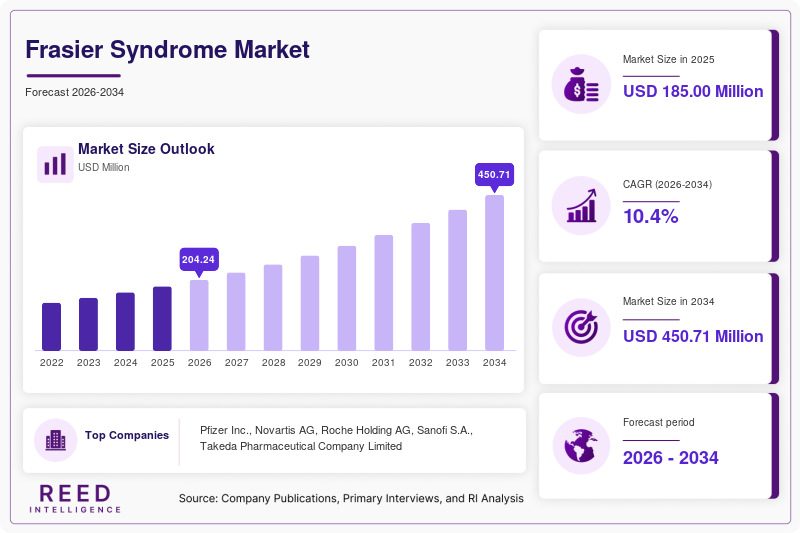
The global Frasier Syndrome Market size was valued at approximately USD 185 million in 2026 and is projected to reach around USD 410 million by 2034, expanding at a compound annual growth rate (CAGR) of 10.4% during the forecast period (2026–2034). This growth reflects the increasing clinical awareness of rare genetic disorders, improvements in diagnostic technologies, and the gradual expansion of specialized treatment options. Frasier syndrome, a rare genetic condition associated with mutations in the WT1 gene, requires long-term clinical management, including hormone therapy, renal care, and preventive oncology interventions. As healthcare systems enhance their focus on rare diseases, the market is witnessing steady growth supported by research funding and improved patient identification rates.
A major global factor contributing to market expansion is the growing integration of precision medicine and genetic screening into routine clinical practice. Advances in genomic sequencing technologies have enabled earlier and more accurate diagnosis, which is essential for managing rare conditions like Frasier syndrome. Increased availability of targeted therapies and multidisciplinary treatment approaches has further strengthened clinical outcomes, thereby driving market demand. Pharmaceutical companies and research institutions are increasingly investing in orphan drug development, contributing to a more structured treatment ecosystem.
Key Highlights
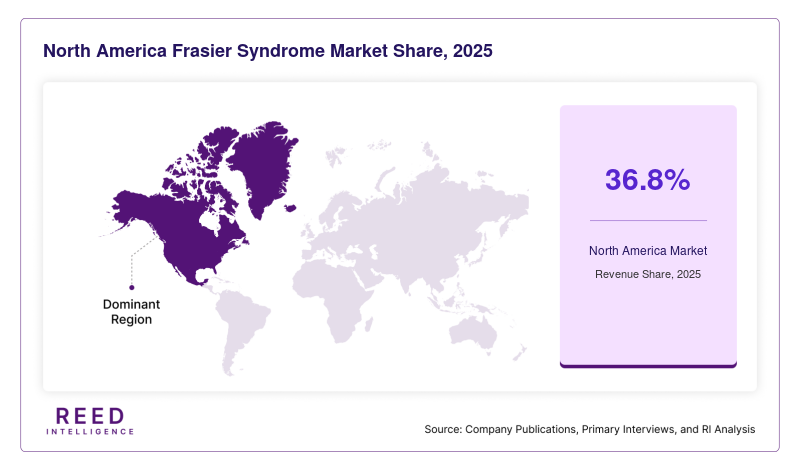
- North America dominated the market with a 36.8% share in 2025.
- Asia Pacific is expected to grow at the fastest CAGR of 11.6% during 2026–2034.
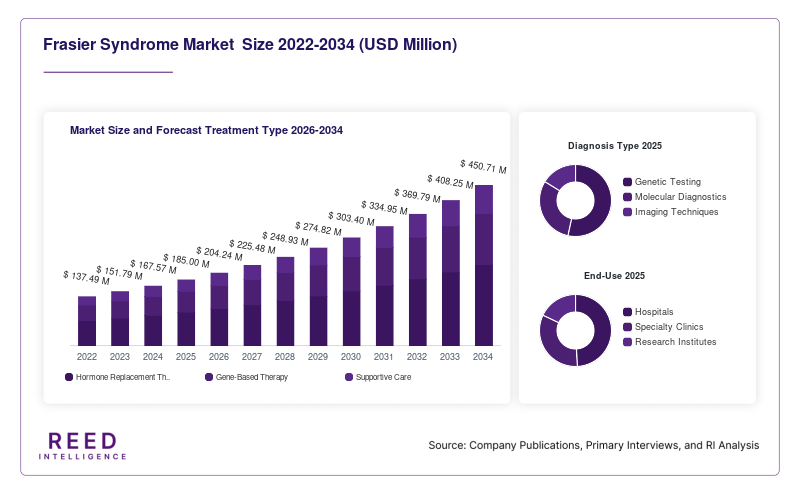
- By treatment type, hormone replacement therapy accounted for the largest share of 42.3%.
- while gene-based therapies are projected to grow at a CAGR of 13.2%.
- By diagnosis type, genetic testing led with a 48.7% share, whereas advanced molecular diagnostics are expected to expand at a CAGR of 12.5%.
- The United States remained the dominant country, with market values of USD 52 million in 2024 and USD 58 million in 2025.
Market Trends
Rising adoption of genetic and molecular diagnostics
One of the defining trends shaping the Frasier Syndrome Market is the increasing adoption of genetic and molecular diagnostic tools. Healthcare providers are transitioning from symptom-based diagnosis to precision-based genetic testing, enabling earlier detection of WT1 gene mutations associated with the condition. This shift has improved diagnostic accuracy and reduced the time required for disease identification, which is critical in rare disorders where delayed diagnosis can lead to complications such as kidney failure or malignancies. The integration of next-generation sequencing technologies into routine diagnostics has also made testing more accessible and cost-effective over time.
Furthermore, collaborations between diagnostic companies and research institutions are accelerating innovation in testing platforms. The use of comprehensive gene panels and advanced bioinformatics tools is enhancing clinicians’ ability to identify rare variants with greater precision. This trend is expected to continue as governments and private organizations increase funding for rare disease research, ultimately expanding the patient pool and supporting market growth. As diagnostic capabilities improve, treatment pathways become more structured, further strengthening demand across the market.
Expansion of orphan drug development and targeted therapies
Another important trend is the growing focus on orphan drug development and targeted therapies specifically designed for rare genetic conditions like Frasier syndrome. Pharmaceutical companies are increasingly investing in niche therapeutic areas due to favorable regulatory incentives, including market exclusivity, tax benefits, and accelerated approval pathways. This has led to the development of more specialized treatment options aimed at addressing the underlying genetic and hormonal imbalances associated with the condition.
In addition, advancements in biotechnology have enabled the exploration of gene-editing approaches and RNA-based therapies, which hold potential for long-term disease management. Clinical trials targeting WT1 gene mutations are gradually gaining traction, signaling a shift toward more personalized treatment strategies. As the pipeline of innovative therapies expands, patients are expected to benefit from improved outcomes and reduced disease burden. This trend is likely to create new revenue streams and enhance the overall competitiveness of the Frasier Syndrome Market.
Market Drivers
Increasing awareness and diagnosis of rare genetic disorders
A key driver of the Frasier Syndrome Market is the rising awareness of rare genetic disorders among healthcare professionals and the general population. Educational campaigns, advocacy groups, and improved medical training are contributing to earlier recognition of symptoms associated with Frasier syndrome. As awareness increases, more patients are being referred for genetic testing, leading to higher diagnosis rates and expanding the treated population.
Additionally, healthcare systems are placing greater emphasis on early intervention for rare diseases, recognizing the long-term cost benefits of timely diagnosis and management. The establishment of rare disease registries and specialized treatment centers has further facilitated patient identification and care coordination. This growing awareness is not only improving patient outcomes but also driving demand for diagnostic services, therapies, and supportive care solutions. As a result, the market is experiencing sustained growth supported by a more informed and proactive healthcare environment.
Advancements in treatment approaches and multidisciplinary care
Another significant driver is the advancement of treatment approaches and the adoption of multidisciplinary care models. Frasier syndrome requires comprehensive management involving endocrinologists, nephrologists, oncologists, and genetic counselors. The development of integrated care pathways has improved treatment outcomes and enhanced patient quality of life. Hormone replacement therapies, renal monitoring, and preventive surgical interventions are being combined with personalized care plans to address the complex nature of the condition.
Technological advancements in drug development and clinical research are also contributing to the availability of more effective therapies. The emergence of targeted treatments and supportive care innovations has reduced complications and extended patient survival rates. Moreover, healthcare providers are increasingly adopting digital health tools to monitor patient progress and ensure adherence to treatment regimens. These advancements are strengthening the overall treatment ecosystem, thereby fueling growth in the Frasier Syndrome Market.
Market Restraint
Limited patient population and high treatment costs
A major restraint affecting the Frasier Syndrome Market is the limited patient population combined with high treatment costs. As a rare genetic disorder, Frasier syndrome has a relatively small patient base, which restricts large-scale commercial opportunities for pharmaceutical companies. This often results in limited investment in research and development, slowing the pace of innovation compared to more prevalent diseases. The rarity of the condition also makes it challenging to conduct large clinical trials, leading to delays in drug approval and commercialization.
In addition, the cost of diagnosis and treatment remains a significant barrier, particularly in developing regions. Genetic testing, long-term hormone therapy, and specialized medical care can be expensive, limiting accessibility for many patients. Insurance coverage for rare diseases is often inconsistent, further exacerbating affordability issues. These challenges can lead to delayed treatment initiation and suboptimal patient outcomes. Despite ongoing efforts to improve access and reduce costs, these factors continue to restrain market growth and highlight the need for more inclusive healthcare policies.
Market Opportunities
Growth in personalized medicine and gene therapy research
The expansion of personalized medicine and gene therapy research presents a substantial opportunity for the Frasier Syndrome Market. Advances in genomic technologies are enabling the development of treatments tailored to individual genetic profiles, which is particularly relevant for rare disorders caused by specific gene mutations. Researchers are exploring innovative approaches such as CRISPR-based gene editing and RNA interference therapies to address the root cause of the condition.
These developments are attracting significant investment from both public and private sectors, fostering a robust pipeline of potential therapies. As clinical trials progress and regulatory frameworks evolve to support advanced treatments, the market is expected to benefit from the introduction of more effective and durable solutions. This opportunity not only enhances patient outcomes but also creates new avenues for revenue generation and market expansion.
Expansion of healthcare infrastructure in emerging economies
Another promising opportunity lies in the expansion of healthcare infrastructure in emerging economies. Countries in Asia Pacific, Latin America, and parts of the Middle East are investing heavily in healthcare modernization, including the establishment of specialized diagnostic centers and rare disease treatment facilities. These developments are improving access to advanced medical services, enabling earlier diagnosis and better management of conditions like Frasier syndrome.
Government initiatives aimed at strengthening healthcare systems and increasing funding for rare disease programs are further supporting market growth. Public-private partnerships are playing a crucial role in enhancing research capabilities and improving treatment availability. As awareness and infrastructure continue to improve in these regions, the Frasier Syndrome Market is expected to witness increased patient identification and higher demand for diagnostic and therapeutic solutions.
Segmental Analysis
By Treatment Type
Hormone replacement therapy emerged as the dominant subsegment in 2024, accounting for approximately 42.3% of the market share. This dominance is attributed to its critical role in managing hormonal imbalances associated with Frasier syndrome. Patients often require long-term hormone therapy to address issues related to sexual development and endocrine function. The widespread adoption of these therapies is supported by their proven efficacy and relatively established clinical protocols.
Gene-based therapies are expected to be the fastest-growing subsegment, with a CAGR of 13.2% during the forecast period. The growth is driven by advancements in genetic research and increasing investment in innovative treatment approaches. These therapies aim to address the underlying genetic cause of the condition, offering potential for long-term disease management and improved patient outcomes.
By Diagnosis Type
Genetic testing held the largest share of 48.7% in 2024, driven by its accuracy and reliability in identifying WT1 gene mutations. The increasing availability of advanced sequencing technologies has made genetic testing more accessible, enabling early diagnosis and timely intervention.
Advanced molecular diagnostics are projected to grow at a CAGR of 12.5%, supported by ongoing technological innovations. These diagnostic methods provide detailed insights into genetic variations, enabling personalized treatment approaches. The growing emphasis on precision medicine is expected to drive demand for these advanced diagnostic solutions.
By End-Use
Hospitals accounted for the largest share of 45.6% in 2024, as they serve as primary centers for diagnosis and treatment. The availability of multidisciplinary care teams and advanced medical infrastructure makes hospitals the preferred choice for managing complex conditions like Frasier syndrome.
Specialty clinics are expected to be the fastest-growing subsegment, with a CAGR of 11.9%. These clinics focus on rare diseases and offer specialized care tailored to patient needs. The increasing establishment of such facilities is enhancing access to targeted treatments and improving overall patient outcomes.
Regional Analysis
North America
North America held the largest share of the Frasier Syndrome Market in 2025, accounting for approximately 36.8%, and is expected to maintain steady growth with a CAGR of 9.8% during the forecast period. The region benefits from advanced healthcare infrastructure, high awareness of rare diseases, and strong investment in research and development. The presence of leading pharmaceutical companies and specialized treatment centers further supports market expansion.
The United States dominates the regional market due to its well-established rare disease ecosystem and supportive regulatory environment. A unique growth factor in this region is the strong presence of patient advocacy groups that actively promote awareness and funding for rare genetic disorders. These organizations play a critical role in facilitating early diagnosis and improving access to treatment.
Europe
Europe accounted for a significant share of the global market in 2025 and is projected to grow at a CAGR of 9.5% through 2034. The region’s growth is driven by government support for rare disease research and the implementation of comprehensive healthcare policies. Countries across the region are focusing on improving diagnostic capabilities and expanding access to specialized treatments.
Germany leads the European market, supported by its robust healthcare system and strong focus on medical research. A unique growth factor in this region is the presence of collaborative research networks that bring together academic institutions, healthcare providers, and pharmaceutical companies. These collaborations are accelerating the development of innovative therapies and improving patient outcomes.
Asia Pacific
Asia Pacific is expected to register the fastest growth, with a CAGR of 11.6% during the forecast period, driven by increasing healthcare investments and rising awareness of rare diseases. The region is witnessing rapid improvements in diagnostic infrastructure and expanding access to advanced medical technologies.
China dominates the regional market due to its large population base and growing focus on healthcare modernization. A unique growth factor in this region is the increasing adoption of digital health platforms, which are improving patient monitoring and facilitating access to specialized care. These advancements are contributing to the overall growth of the market.
Middle East & Africa
The Middle East & Africa region is experiencing moderate growth, with a projected CAGR of 8.7% during the forecast period. The market is gradually expanding due to improvements in healthcare infrastructure and increasing government initiatives aimed at addressing rare diseases.
Saudi Arabia leads the regional market, supported by its investments in healthcare development and research. A unique growth factor in this region is the rising focus on medical tourism, which is attracting patients seeking specialized treatments. This trend is enhancing the availability of advanced care options and supporting market growth.
Latin America
Latin America is expected to grow at a CAGR of 9.1% during the forecast period, driven by improving healthcare systems and increasing awareness of rare genetic disorders. The region is making progress in expanding access to diagnostic services and specialized treatments.
Brazil dominates the market in this region, supported by government initiatives and growing investment in healthcare infrastructure. A unique growth factor is the increasing collaboration between public and private sectors, which is enhancing research capabilities and improving treatment availability. These efforts are contributing to steady market growth.
Competitive Landscape
The Frasier Syndrome Market is characterized by a moderate level of competition, with several pharmaceutical and biotechnology companies focusing on rare disease treatments. Leading players are investing in research and development to expand their product portfolios and strengthen their market presence. Strategic collaborations, mergers, and acquisitions are common as companies aim to leverage complementary expertise and accelerate innovation.
Pfizer Inc. is considered a leading player in the market, supported by its strong pipeline of rare disease therapies and global presence. A recent development includes the expansion of its research initiatives focused on genetic disorders, highlighting its commitment to advancing treatment options. Other companies are also actively exploring innovative approaches, including gene therapy and personalized medicine, to address unmet clinical needs.
Key Players
- Pfizer Inc.
- Novartis AG
- Roche Holding AG
- Sanofi S.A.
- Takeda Pharmaceutical Company Limited
- AstraZeneca plc
- Johnson & Johnson
- Merck & Co., Inc.
- Biogen Inc.
- Amgen Inc.
- Bristol Myers Squibb
- Eli Lilly and Company
- Regeneron Pharmaceuticals
- Vertex Pharmaceuticals
- Gilead Sciences
Recent Developments
- Several companies have initiated clinical trials focusing on gene-based therapies targeting WT1 mutations, indicating progress toward advanced treatment options.
- A major pharmaceutical firm announced a strategic collaboration with a biotechnology startup to develop personalized therapies for rare genetic disorders, including Frasier syndrome.
- Healthcare organizations in emerging markets have launched new rare disease programs aimed at improving diagnosis and treatment accessibility, contributing to market expansion.
Frasier Syndrome Market Segments
Treatment Type
- Hormone Replacement Therapy
- Gene-Based Therapy
- Supportive Care
Diagnosis Type
- Genetic Testing
- Molecular Diagnostics
- Imaging Techniques
End-Use
- Hospitals
- Specialty Clinics
- Research Institutes
By Region
- North America
- Europe
- APAC
- Middle East and Africa
- LATAM