Frozen Smoked Salmon Market Size, Share & Demand Report By Product Type (Cold Smoked Salmon, Hot Smoked Salmon, Organic Smoked Salmon, Flavored Smoked Salmon), By Distribution Channel (Supermarkets & Hypermarkets, Specialty Seafood Stores, Online Retail, Others), By End User (Foodservice Sector, Hotels, Restaurants, Catering Services), By Region & Segment Forecasts, 2026–2034
USD 3950
Market Overview
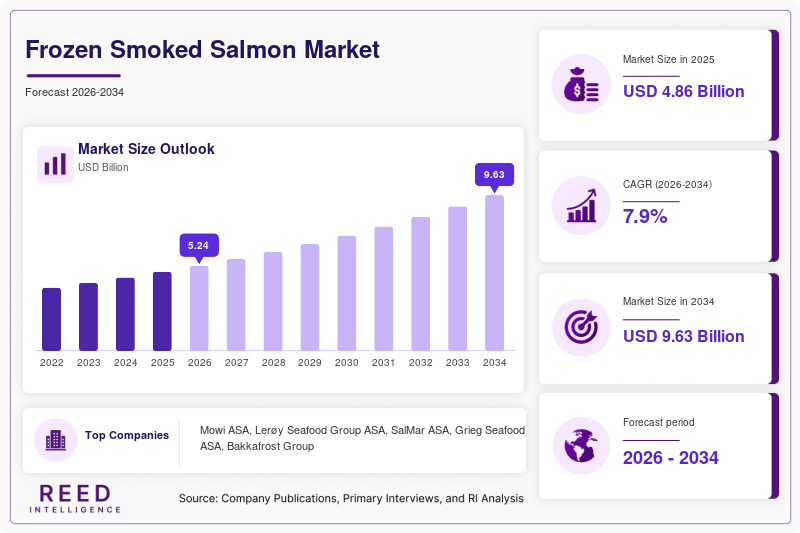
The global Frozen Smoked Salmon Market size was valued at USD 4.86 billion in 2026 and is projected to reach USD 8.91 billion by 2034, expanding at a CAGR of 7.9% during 2026–2034. The market continues to demonstrate steady expansion due to rising consumer demand for premium seafood products, increasing preference for protein-rich diets, and the growing availability of frozen food products through organized retail and e-commerce channels. Frozen smoked salmon has gained significant acceptance among consumers seeking convenient meal solutions without compromising taste, nutritional value, or shelf life.
The growing global focus on healthy eating habits has been a major factor supporting market growth. Consumers increasingly view salmon as a source of omega-3 fatty acids, high-quality protein, vitamins, and minerals. As awareness regarding cardiovascular health and balanced nutrition expands, frozen smoked salmon products have become more common in households, restaurants, hotels, and foodservice establishments. In addition, advancements in freezing technology and cold-chain logistics have enabled manufacturers to preserve product quality during transportation and storage, strengthening international trade opportunities.
Key Highlights
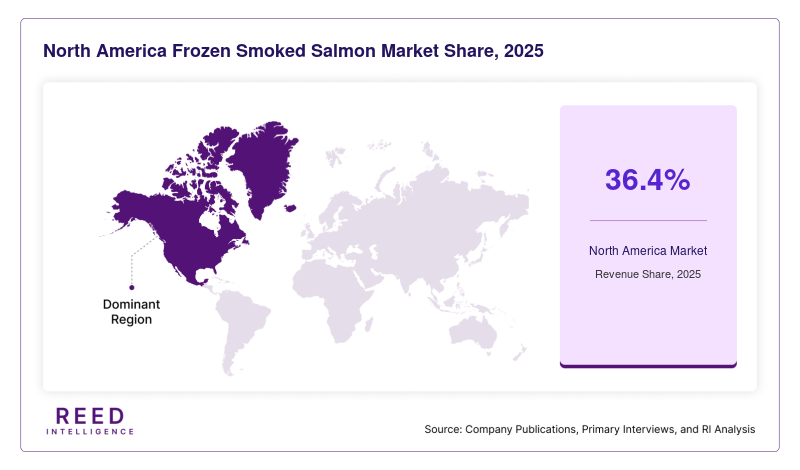
- North America dominated the market with a 36.4% share in 2025.
- while Asia Pacific is expected to grow at the fastest CAGR of 10.8% during 2026–2034.
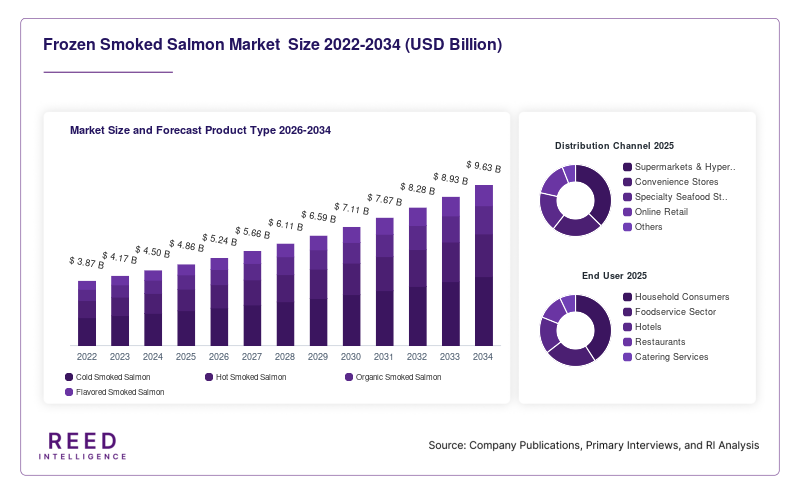
- By product type, Cold Smoked Salmon accounted for the largest share of 58.7%.
- while Organic Smoked Salmon is projected to grow at a CAGR of 11.4%.
- By distribution channel, Supermarkets & Hypermarkets led with a 45.9% share.
- whereas Online Retail is expected to expand at a CAGR of 12.1%.
- By end user, Household Consumers held a 52.6% share.
- while the Foodservice Sector is expected to grow at a CAGR of 10.3%.
- The United States remained the dominant country, with market values of USD 1.42 billion in 2024 and USD 1.55 billion in 2025.
Market Trends
Rising Demand for Premium and Sustainable Seafood Products
Consumers are increasingly prioritizing premium seafood products that combine nutritional benefits, traceable sourcing, and high product quality. Frozen smoked salmon aligns with these preferences by offering convenience, extended shelf life, and a premium culinary experience. Retailers are expanding shelf space dedicated to sustainably sourced seafood products, while manufacturers are emphasizing certifications related to responsible aquaculture and fisheries management. Sustainability labeling has become an important purchasing factor among environmentally conscious consumers. The trend is particularly visible in North America and Europe, where consumers are willing to pay higher prices for responsibly sourced frozen smoked salmon. This shift is encouraging producers to invest in transparent supply chains and sustainable production practices.
Expansion of Online Seafood Retail and Direct-to-Consumer Sales
The rapid growth of e-commerce platforms has transformed seafood distribution channels across multiple regions. Consumers increasingly purchase frozen smoked salmon through online grocery applications, specialized seafood retailers, and direct-to-consumer subscription services. Improved cold-chain delivery systems allow products to maintain freshness and quality during transportation. Digital platforms provide manufacturers with opportunities to showcase product origins, nutritional benefits, and preparation recommendations. Subscription-based seafood delivery models are also gaining popularity among urban consumers seeking convenience and consistent access to premium products. As online retail infrastructure continues to improve globally, frozen smoked salmon manufacturers are expected to benefit from broader market reach and stronger customer engagement.
Market Drivers
Growing Consumer Preference for High-Protein and Omega-3 Rich Diets
Increasing awareness regarding the health benefits associated with seafood consumption remains a major growth driver for the frozen smoked salmon market. Consumers are actively seeking foods that support cardiovascular health, cognitive function, and overall wellness. Frozen smoked salmon contains beneficial omega-3 fatty acids, high-quality protein, and essential nutrients, making it an attractive choice among health-conscious individuals. Nutrition-focused purchasing behavior has become more common across developed and emerging economies. Rising participation in fitness activities and preventive healthcare practices has also encouraged consumers to incorporate nutrient-dense seafood products into their diets. These factors continue to support sustained demand growth across household and foodservice segments.
Expansion of Cold Chain Infrastructure and Frozen Food Consumption
The continuous development of cold storage facilities, refrigerated transportation networks, and advanced freezing technologies has significantly improved the distribution of frozen seafood products worldwide. Enhanced cold-chain capabilities allow manufacturers to reach distant markets while maintaining product quality and safety. At the same time, consumers are increasingly embracing frozen food products because of convenience, reduced food waste, and longer storage life. Modern freezing techniques preserve texture, flavor, and nutritional value, helping overcome historical concerns regarding frozen seafood quality. As infrastructure investments continue across Asia Pacific, Latin America, and the Middle East, frozen smoked salmon producers are expected to gain access to larger consumer bases and new growth opportunities.
Market Restraint
Price Volatility and Supply Chain Challenges in Salmon Production
The frozen smoked salmon market faces challenges associated with fluctuating salmon prices and supply chain disruptions. Salmon production depends on multiple factors including feed costs, environmental conditions, disease outbreaks, regulatory compliance requirements, and aquaculture capacity. Variations in these factors can significantly affect raw material availability and pricing structures. Rising transportation expenses and energy costs may further increase production and distribution expenditures for manufacturers.
Supply disruptions can create inventory shortages and affect product availability across retail and foodservice channels. For example, disease-related production reductions in major salmon-producing countries may lead to temporary shortages and increased procurement costs for processors. These cost pressures often result in higher retail prices, potentially limiting consumer purchasing activity in price-sensitive markets. Smaller manufacturers may face additional difficulties in securing stable supply agreements and maintaining profitability during periods of market volatility. Although industry participants continue to invest in supply diversification and production efficiency improvements, pricing instability remains a notable challenge influencing market expansion.
Market Opportunities
Increasing Penetration in Emerging Asian Markets
Emerging economies across Asia are creating substantial opportunities for frozen smoked salmon manufacturers. Rising disposable income, expanding middle-class populations, and growing exposure to international cuisines are encouraging seafood consumption across urban centers. Consumers are becoming more receptive to premium imported food products, including smoked salmon. Modern retail development and expanding e-commerce networks further support product accessibility. Countries such as China, India, South Korea, and several Southeast Asian nations are witnessing increasing demand for convenience-oriented and health-focused food products. Manufacturers that establish localized distribution partnerships and adapt product offerings to regional preferences are expected to benefit from significant growth potential throughout the forecast period.
Product Innovation and Value-Added Offerings
Manufacturers have opportunities to differentiate their products through innovation in flavors, packaging, and premium positioning. Consumers increasingly seek unique culinary experiences, creating demand for herb-infused, pepper-coated, honey-glazed, and specialty smoked salmon varieties. Value-added packaging solutions, including resealable packs and portion-controlled formats, enhance convenience and reduce waste. Organic and sustainably certified products are also gaining popularity among environmentally conscious consumers. In addition, the introduction of ready-to-eat meal kits and smoked salmon snack formats can expand usage occasions beyond traditional breakfast and appetizer applications. Continued investment in product development is expected to strengthen brand positioning and support revenue growth across competitive markets.
Segmental Analysis
By Product Type
Cold Smoked Salmon represented the dominant product type and accounted for 58.7% of the market share in 2024. The segment benefits from widespread consumer familiarity, premium taste characteristics, and versatility across various meal applications. Cold smoked salmon is frequently used in breakfast dishes, salads, sandwiches, appetizers, and gourmet recipes. Its distinctive texture and flavor profile make it a preferred choice among household consumers and foodservice operators. Strong availability across supermarkets, specialty stores, and online channels further supports segment leadership. Manufacturers continue expanding product offerings through improved packaging formats and sustainable sourcing initiatives, helping maintain consumer interest and market share.
Organic Smoked Salmon is expected to emerge as the fastest-growing subsegment, registering a CAGR of 11.4% during 2026–2034. Growing consumer interest in natural food products and environmentally responsible production methods is driving demand. Organic certifications provide assurance regarding production standards and sustainability practices, making these products attractive to health-conscious buyers. Retailers are expanding organic seafood selections to meet evolving consumer preferences. Rising disposable income and increased willingness to pay premium prices for certified products are expected to support strong growth. Manufacturers are also investing in transparent supply chains and eco-friendly branding strategies to capitalize on this expanding market opportunity.
By Distribution Channel
Supermarkets & Hypermarkets accounted for the largest market share of 45.9% in 2024. These retail formats provide consumers with extensive product variety, competitive pricing, and convenient access to frozen seafood products. Large retailers frequently allocate dedicated freezer sections to premium seafood categories, enhancing product visibility and encouraging purchases. Promotional campaigns, loyalty programs, and in-store sampling activities further support sales growth. Consumers often prefer purchasing frozen smoked salmon through supermarkets because they can compare brands, packaging options, and price points in a single location. Continued retail expansion and improvements in frozen food merchandising are expected to reinforce segment leadership.
Online Retail is projected to witness the fastest growth, expanding at a CAGR of 12.1% through 2034. Increasing consumer confidence in e-commerce grocery platforms and improvements in cold-chain delivery systems are supporting market penetration. Digital channels enable manufacturers to reach wider audiences while providing detailed product information and sourcing transparency. Subscription services and direct-to-consumer business models are becoming increasingly popular among urban households. Convenience, home delivery, and access to specialty products are key factors driving online purchases. As internet penetration and digital payment adoption continue to increase globally, online retail is expected to become an increasingly important distribution channel.
By End User
Household Consumers held the largest market share of 52.6% in 2024. Growing demand for convenient meal solutions and increasing awareness regarding seafood nutrition have contributed to strong household adoption. Frozen smoked salmon offers consumers flexibility in meal preparation while maintaining product quality over extended storage periods. The segment benefits from rising health consciousness, increasing home cooking activities, and broader availability through retail channels. Consumers appreciate the product's versatility across breakfast, lunch, and dinner applications. Manufacturers continue introducing family-sized packaging and value-added product options designed specifically for household consumption, supporting sustained segment growth.
The Foodservice Sector is expected to record the fastest growth rate with a CAGR of 10.3% during the forecast period. Restaurants, hotels, cafes, and catering providers increasingly incorporate smoked salmon into premium menu offerings. Growing demand for gourmet dining experiences and international cuisine is encouraging foodservice operators to expand seafood selections. Frozen smoked salmon provides operational advantages including longer shelf life, consistent quality, and reduced waste. The recovery and expansion of tourism activities in multiple regions are expected to further strengthen foodservice demand. Continued menu innovation and premiumization trends are likely to support long-term growth within this segment.
Regional Analysis
North America
North America accounted for 36.4% of the global frozen smoked salmon market in 2025 and is expected to maintain a strong position throughout the forecast period. The regional market is projected to expand at a CAGR of 7.1% between 2026 and 2034. Consumer preference for premium seafood products, high awareness regarding nutritional benefits, and widespread availability through retail channels contribute to market leadership. Frozen smoked salmon remains a popular choice among households seeking convenient and nutritious meal options.
The United States dominates the regional market due to its large consumer base and advanced cold-chain infrastructure. A unique growth factor supporting demand is the increasing adoption of protein-focused dietary patterns among health-conscious consumers. The popularity of seafood-based breakfasts, gourmet sandwiches, and ready-to-eat meals has expanded product usage. Strong retail distribution networks and continuous product innovation further strengthen market growth prospects across the country.
Europe
Europe represented 29.8% of the global market in 2025 and is anticipated to grow at a CAGR of 7.5% through 2034. The region benefits from strong seafood consumption traditions, sophisticated retail infrastructure, and growing demand for sustainably sourced products. Consumers increasingly prioritize traceability and environmental responsibility when purchasing seafood products. These preferences support premium frozen smoked salmon sales across multiple European countries and encourage manufacturers to invest in sustainable sourcing practices.
The United Kingdom remains the dominant country within the regional market. A unique growth factor is the widespread incorporation of smoked salmon into everyday meal occasions and premium food categories. Demand from hospitality establishments, specialty food retailers, and gourmet food consumers continues to support market expansion. Product innovation focused on sustainability and convenience is further contributing to long-term growth across the country.
Asia Pacific
Asia Pacific held 21.6% of the global market share in 2025 and is forecast to register the fastest CAGR of 10.8% during 2026–2034. Rapid urbanization, rising disposable income, and increasing acceptance of international cuisine are supporting market development. Consumers are becoming more familiar with premium seafood products through travel, digital media exposure, and expanding modern retail networks. These factors are driving greater adoption of frozen smoked salmon products across major metropolitan areas.
China dominates the Asia Pacific market due to its large population and expanding middle-income consumer base. A unique growth factor is the rapid development of e-commerce grocery platforms capable of distributing frozen products efficiently. Online retail channels have improved product accessibility and consumer awareness. Rising demand for premium imported foods and increasing interest in healthy dietary choices continue to support strong regional growth.
Middle East & Africa
The Middle East & Africa accounted for 6.1% of the global market in 2025 and is expected to expand at a CAGR of 8.2% during the forecast period. The market is benefiting from increasing urbanization, rising tourism activity, and the expansion of premium retail establishments. Demand for imported seafood products continues to grow among affluent consumers seeking diverse culinary experiences. Investments in cold-chain logistics are also improving market accessibility throughout the region.
The United Arab Emirates remains the dominant country within the regional market. A unique growth factor is the strong influence of the hospitality sector, which consistently demands premium seafood products for hotels, restaurants, and catering services. International tourism and a diverse expatriate population contribute to the popularity of frozen smoked salmon. Retailers continue expanding premium seafood offerings to address evolving consumer preferences.
Latin America
Latin America captured 6.1% of the global frozen smoked salmon market in 2025 and is projected to grow at a CAGR of 8.6% through 2034. Rising consumer awareness regarding seafood nutrition and the gradual expansion of modern retail infrastructure support market growth. Urban consumers increasingly seek convenient food options that align with healthy lifestyles. Improvements in refrigerated transportation and storage capabilities are enhancing product distribution throughout major regional markets.
Brazil leads the Latin American market due to its large consumer population and expanding retail sector. A unique growth factor is the growing popularity of international dining trends among younger consumers. Exposure to global food cultures has increased demand for premium seafood products, including smoked salmon. Retailers and foodservice operators continue introducing new product formats to attract consumers seeking convenient and nutritious meal solutions.
Competitive Landscape
The frozen smoked salmon market is characterized by the presence of established seafood processors, aquaculture companies, and specialized smoked seafood manufacturers competing through product quality, sustainability initiatives, and distribution network expansion. Companies increasingly focus on certified sourcing practices, premium product development, and geographic expansion strategies to strengthen market positions.
Mowi ASA remains a leading participant due to its integrated salmon farming operations, extensive production capacity, and global distribution network. The company continues investing in sustainable aquaculture practices and value-added seafood products. Recent developments across the industry include expansion of cold-chain capabilities, introduction of organic product lines, and strategic partnerships with retail chains. Major players are also investing in advanced processing technologies to improve efficiency and maintain product quality. The growing importance of traceability and sustainability certifications has encouraged manufacturers to enhance transparency across supply chains. Competitive differentiation increasingly depends on product innovation, brand reputation, and responsible sourcing commitments.
Key Players
- Mowi ASA
- Lerøy Seafood Group ASA
- SalMar ASA
- Grieg Seafood ASA
- Bakkafrost Group
- Cooke Inc.
- Acme Smoked Fish Corporation
- Labeyrie Fine Foods
- Marine Harvest Consumer Products
- Ducktrap River of Maine
- Ocean Beauty Seafoods
- High Liner Foods Inc.
- Thai Union Group PCL
- Tassal Group Limited
- BluGlacier LLC
Recent Developments
- Mowi ASA expanded its premium frozen smoked salmon portfolio with new sustainably sourced product variants targeted at retail consumers.
- Lerøy Seafood Group invested in advanced freezing and packaging technologies to improve product shelf life and distribution efficiency.
- Bakkafrost Group increased production capacity through aquaculture expansion initiatives designed to support growing global seafood demand.
- Cooke Inc. strengthened its international distribution network through strategic partnerships with major food retailers.
- Labeyrie Fine Foods introduced new flavored frozen smoked salmon offerings aimed at expanding premium seafood consumption among younger consumers.
Frozen Smoked Salmon Market Segments
Product Type
- Cold Smoked Salmon
- Hot Smoked Salmon
- Organic Smoked Salmon
- Flavored Smoked Salmon
Distribution Channel
- Supermarkets & Hypermarkets
- Convenience Stores
- Specialty Seafood Stores
- Online Retail
- Others
End User
- Household Consumers
- Foodservice Sector
- Hotels
- Restaurants
- Catering Services
By Region
- North America
- Europe
- APAC
- Middle East and Africa
- LATAM