Gallbladder Cancer Therapeutics Market Size, Share & Demand Report By Treatment Type (Chemotherapy, Targeted Therapy, Immunotherapy, Combination Therapy), By Drug Class (Cytotoxic Drugs, Immune Checkpoint Inhibitors, Tyrosine Kinase Inhibitors, Monoclonal Antibodies), By End-Use (Hospitals, Specialty Cancer Centers, Ambulatory Surgical Centers), By Region & Segment Forecasts, 2025–2034
USD 3950
Market Overview
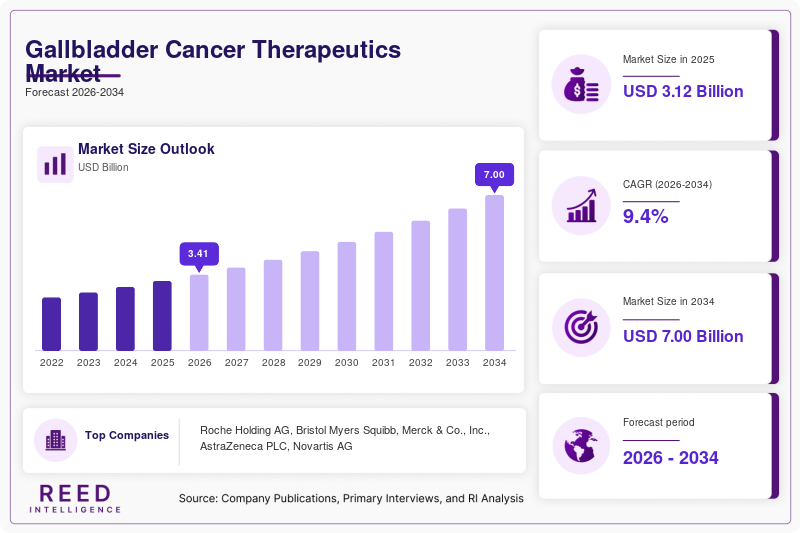
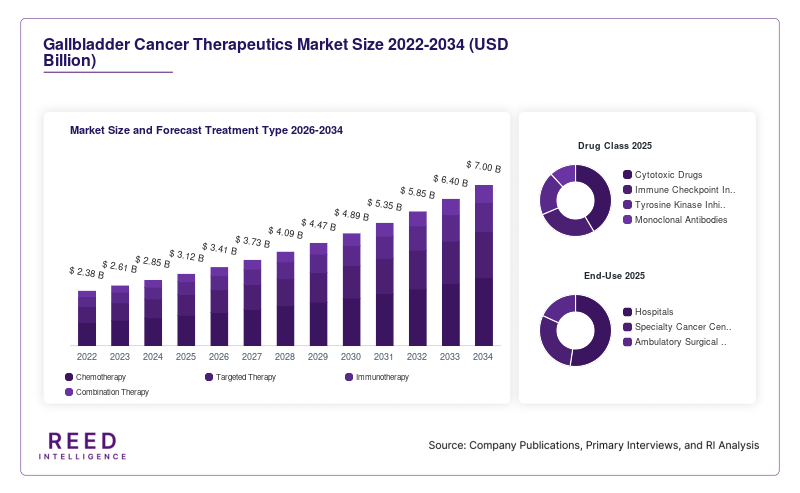
The Gallbladder Cancer Therapeutics Market Size was valued at USD 3.12 billion in 2025 and is projected to reach USD 6.98 billion by 2034, expanding at a compound annual growth rate (CAGR) of 9.4% from 2025 to 2034. The market growth reflects increasing research investments in oncology therapeutics, expanding clinical trials for rare gastrointestinal cancers, and growing global awareness regarding early cancer detection.
Gallbladder cancer is considered a relatively rare but aggressive malignancy with poor survival outcomes when diagnosed at advanced stages. As a result, the global healthcare ecosystem has gradually increased its focus on improving treatment accessibility and developing targeted therapeutics. The expansion of precision medicine programs and biomarker-based oncology therapies has contributed to broader treatment options for gallbladder cancer patients. Pharmaceutical companies and research institutes are also exploring combination therapy approaches involving chemotherapy, targeted therapy, and immunotherapy to improve survival rates and treatment effectiveness.
Key Highlights
- North America accounted for the dominant 39.2% share in 2025, while Asia Pacific is expected to register the fastest growth with a CAGR of 10.8%.
- Chemotherapy represented the leading treatment type segment with 46.5% market share in 2025, while targeted therapy is projected to grow fastest at a CAGR of 11.6%.
- By end-use, hospitals dominated with 63.4% share in 2025, while specialty cancer centers are forecast to grow at 10.2% CAGR.
- The United States remained the dominant country market with USD 1.04 billion in 2025 and is estimated to reach USD 1.12 billion in 2026.
Market Trends
Expansion of Targeted Oncology Therapies
The increasing adoption of targeted therapies is influencing the Gallbladder Cancer Therapeutics Market. Targeted drugs designed to inhibit specific genetic mutations or signaling pathways associated with gallbladder cancer are gaining clinical attention. These therapies focus on molecular biomarkers and tumor-specific mechanisms, which can potentially reduce damage to healthy cells while improving treatment outcomes.
Pharmaceutical companies are intensifying research in targeted molecules such as HER2 inhibitors, EGFR inhibitors, and FGFR-targeted drugs for biliary tract cancers. The integration of biomarker testing into clinical decision-making has also improved patient selection for targeted therapies. As personalized medicine continues to evolve, targeted treatments are expected to become more widely incorporated into gallbladder cancer management strategies.
Growing Clinical Research in Immunotherapy
Another significant trend shaping the Gallbladder Cancer Therapeutics Market is the rising exploration of immunotherapy in clinical trials. Immune checkpoint inhibitors and immunomodulatory therapies are being evaluated to enhance immune system responses against gallbladder tumors.
Research institutions and oncology centers are studying combination immunotherapy regimens alongside chemotherapy to enhance treatment response rates. This trend reflects the broader shift toward immune-based oncology treatments across gastrointestinal cancers.
Market Drivers
Increasing Incidence of Biliary Tract Cancers
The growing incidence of biliary tract cancers, including gallbladder cancer, has created a demand for effective treatment options. Rising diagnostic capabilities and better cancer screening infrastructure have led to increased identification of gallbladder cancer cases globally. Regions with higher prevalence of gallstones and chronic gallbladder inflammation often show increased disease incidence, prompting healthcare providers to prioritize treatment availability.
Improved diagnostic imaging technologies and pathology testing have also enabled earlier identification of malignant gallbladder tumors, which supports treatment initiation and contributes to the demand for therapeutics.
Advancements in Oncology Drug Development
The continuous expansion of oncology drug pipelines is another driver influencing the Gallbladder Cancer Therapeutics Market. Biotechnology firms and pharmaceutical companies are increasing their focus on rare cancer therapies to diversify oncology portfolios. Drug development strategies now include targeted inhibitors, immunotherapies, and combination regimens.
Regulatory agencies in several regions have also introduced expedited approval pathways for orphan and rare disease drugs, encouraging pharmaceutical companies to pursue gallbladder cancer treatment research.
Market Restraint
Limited Early Diagnosis and Disease Awareness
A significant restraint in the Gallbladder Cancer Therapeutics Market is the limited early diagnosis of the disease. Gallbladder cancer often presents with nonspecific symptoms, which results in late-stage detection for many patients. Late diagnosis reduces the effectiveness of therapeutic interventions and limits treatment success rates.
In several developing regions, awareness regarding gallbladder cancer risk factors remains relatively low. Additionally, limited screening programs and lack of specialized oncology infrastructure in certain healthcare systems further constrain the overall adoption of advanced treatment therapies.
Market Opportunities
Emerging Precision Medicine Approaches
Precision medicine initiatives represent a notable opportunity for the Gallbladder Cancer Therapeutics Market. Advances in genomic sequencing and tumor profiling technologies are enabling researchers to identify molecular drivers of gallbladder cancer. This approach facilitates the development of personalized treatment strategies tailored to individual patient genetic profiles.
Pharmaceutical companies are investing in biomarker-driven clinical trials to evaluate targeted therapy effectiveness for specific patient groups. As precision oncology programs expand globally, new treatment pathways may emerge for gallbladder cancer.
Expanding Oncology Infrastructure in Emerging Markets
The growth of oncology care infrastructure across developing countries also presents new opportunities for market participants. Governments and healthcare organizations are investing in cancer treatment facilities, diagnostic laboratories, and specialized oncology hospitals.
Improved healthcare accessibility is likely to increase patient access to chemotherapy, targeted therapy, and other treatment options. As oncology healthcare systems expand in emerging economies, the demand for gallbladder cancer therapeutics is expected to rise steadily.
Segmental Analysis
By Treatment Type
Chemotherapy held the dominant position in the Gallbladder Cancer Therapeutics Market, accounting for 46.5% share in 2025. Chemotherapy drugs have traditionally served as the primary treatment option for advanced gallbladder cancer cases. Combination chemotherapy regimens are commonly used to slow tumor growth and extend patient survival. Due to established clinical protocols and widespread availability in hospitals and oncology centers, chemotherapy continues to play a central role in gallbladder cancer treatment strategies.
Targeted therapy is expected to emerge as the fastest-growing subsegment, expanding at a CAGR of 11.6% during the forecast period. Advances in molecular oncology research will enable the identification of specific genetic alterations in gallbladder tumors. These insights will support the development of targeted drugs that selectively inhibit tumor growth pathways, improving treatment outcomes and expanding the role of targeted therapies in gallbladder cancer management.
By Drug Class
The cytotoxic drugs subsegment accounted for the largest 38.7% share of the Gallbladder Cancer Therapeutics Market in 2025. Cytotoxic drugs are widely used in chemotherapy regimens for biliary tract cancers due to their ability to destroy rapidly dividing cancer cells. Established clinical protocols involving cytotoxic agents have made them a cornerstone of gallbladder cancer treatment strategies.
The immune checkpoint inhibitors subsegment is expected to register the fastest growth with a CAGR of 12.4% from 2025 to 2034. Immunotherapy treatments that enhance immune responses against tumor cells will gain increasing attention as clinical research advances. The development of immune checkpoint inhibitors for biliary tract cancers will expand treatment possibilities and contribute to improved patient outcomes.
By End-Use
Hospitals dominated the Gallbladder Cancer Therapeutics Market with 63.4% share in 2025. Hospitals remain the primary treatment facilities for cancer patients due to the availability of multidisciplinary oncology teams, advanced diagnostic tools, and chemotherapy administration capabilities. Comprehensive treatment services available in hospitals have supported their strong presence in the market.
Specialty cancer centers are projected to experience the fastest growth, expanding at a CAGR of 10.2% during the forecast period. These facilities will continue to attract patients seeking specialized oncology treatments and access to innovative therapies. The presence of experienced oncologists and advanced treatment protocols will support the increasing role of specialty cancer centers in gallbladder cancer treatment.
Regional Analysis
North America
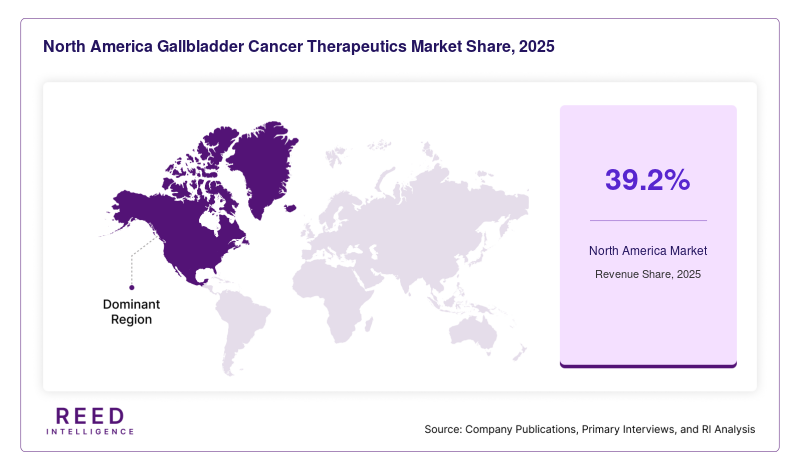
North America accounted for 39.2% of the global Gallbladder Cancer Therapeutics Market share in 2025 and remained the largest regional market. The region is projected to grow at a CAGR of 8.7% between 2025 and 2034. Growth in the region is influenced by the presence of established oncology drug development companies and advanced cancer treatment infrastructure. Healthcare institutions across the region have adopted modern oncology treatment approaches that integrate chemotherapy, targeted therapies, and immunotherapy options.
The United States dominated the regional market due to extensive oncology research initiatives and advanced healthcare facilities. The country also benefits from a strong clinical research environment where biotechnology firms and academic institutions conduct cancer-focused clinical trials. Increased patient access to innovative oncology drugs and well-established reimbursement frameworks have supported the expansion of the gallbladder cancer therapeutics industry within the country.
Europe
Europe represented 26.4% of the global Gallbladder Cancer Therapeutics Market in 2025 and is anticipated to grow at a CAGR of 8.9% during the forecast period. The region has developed a strong pharmaceutical research ecosystem, with multiple oncology-focused companies investing in novel treatment development.
Within Europe, Germany remained the leading country market. The country’s advanced pharmaceutical manufacturing capabilities and strong research institutions have contributed to the development of innovative oncology therapeutics. Government support for cancer research programs and collaborations between biotechnology companies and academic institutions have strengthened Germany’s position in the gallbladder cancer treatment landscape.
Asia Pacific
Asia Pacific accounted for 22.7% share of the Gallbladder Cancer Therapeutics Market in 2025 and is expected to expand at the fastest CAGR of 10.8% from 2025 to 2034. The region is witnessing a rapid transformation in healthcare infrastructure and oncology treatment capacity. Increasing healthcare expenditure and expanding pharmaceutical manufacturing activities have contributed to the region’s growth trajectory.
China emerged as the dominant country market in the region. The country has been investing significantly in biotechnology research and pharmaceutical manufacturing capabilities. Additionally, collaborations between domestic pharmaceutical companies and international biotechnology firms have accelerated the development of innovative oncology therapeutics in China.
Middle East & Africa
The Middle East & Africa region accounted for 6.1% of the global Gallbladder Cancer Therapeutics Market in 2025 and is projected to grow at a CAGR of 7.6% through 2034. Healthcare modernization initiatives across several countries have gradually improved oncology treatment accessibility.
Saudi Arabia led the regional market. The country has implemented healthcare transformation programs aimed at strengthening specialized medical services, including oncology care. Investments in hospital infrastructure and specialized cancer treatment centers have supported the availability of modern therapeutic options for gallbladder cancer patients.
Latin America
Latin America represented 5.6% of the Gallbladder Cancer Therapeutics Market share in 2025 and is expected to expand at a CAGR of 7.9% during the forecast period. Regional healthcare systems have been gradually improving cancer treatment accessibility through investments in oncology infrastructure.
Brazil dominated the regional market due to the expansion of healthcare institutions offering specialized cancer treatments. The country has also increased research activities in oncology drug development through collaborations between pharmaceutical companies and research institutes.
Competitive Landscape
The Gallbladder Cancer Therapeutics Market is moderately consolidated, with several global pharmaceutical companies actively engaged in oncology drug development. Market participants focus on expanding their oncology pipelines, developing targeted therapies, and conducting clinical trials to explore new treatment approaches.
Among the leading companies, Roche Holding AG holds a notable position in the oncology therapeutics landscape due to its extensive portfolio of targeted therapies and immunotherapy drugs. The company has continued to expand its oncology research programs through collaborations with biotechnology firms and research institutions.
Other key market participants are focusing on strengthening research capabilities and expanding clinical trial pipelines to develop new therapeutic options for gallbladder cancer patients.
Key Players
- Roche Holding AG
- Bristol Myers Squibb
- Merck & Co., Inc.
- AstraZeneca PLC
- Novartis AG
- Pfizer Inc.
- Eli Lilly and Company
- GlaxoSmithKline plc
- Amgen Inc.
- Johnson & Johnson
- AbbVie Inc.
- Bayer AG
- Takeda Pharmaceutical Company Limited
- BeiGene Ltd.
- Sun Pharmaceutical Industries Ltd.
Recent Developments
- In 2024, Roche expanded its oncology clinical trial program to evaluate targeted therapies for biliary tract cancers.
- In 2024, AstraZeneca initiated a research collaboration focused on developing precision oncology treatments for gastrointestinal cancers.
- In 2023, Merck & Co. expanded immunotherapy clinical trials for rare gastrointestinal cancers, including gallbladder cancer.
- In 2023, Bristol Myers Squibb increased investment in immune checkpoint inhibitor research targeting biliary tract tumors.
- In 2024, Novartis strengthened its oncology pipeline through partnerships with biotechnology research organizations developing targeted cancer therapies.
Gallbladder Cancer Therapeutics Market Segments
Treatment Type
- Chemotherapy
- Targeted Therapy
- Immunotherapy
- Combination Therapy
Drug Class
- Cytotoxic Drugs
- Immune Checkpoint Inhibitors
- Tyrosine Kinase Inhibitors
- Monoclonal Antibodies
End-Use
- Hospitals
- Specialty Cancer Centers
- Ambulatory Surgical Centers
Region
- North America
- Europe
- Asia Pacific
- Middle East & Africa
- Latin America
By Region
- North America
- Europe
- APAC
- Middle East and Africa
- LATAM