Gamma Probe Device Market Size, Share & Demand Report By Type (Handheld Gamma Probe Systems, Wireless Gamma Probe Systems, Console-Based Gamma Probe Systems, Hybrid Detection Gamma Probe Systems), By Application (Sentinel Lymph Node Biopsy, Tumor Localization, Parathyroid Surgery, Other Radioguided Surgical Procedures), By End Use (Hospitals, Ambulatory Surgical Centers, Cancer Research Institutes, Academic Medical Centers), By Distribution Channel (Direct Sales, Medical Device Distributors, Hos
USD 3950
Market Overview
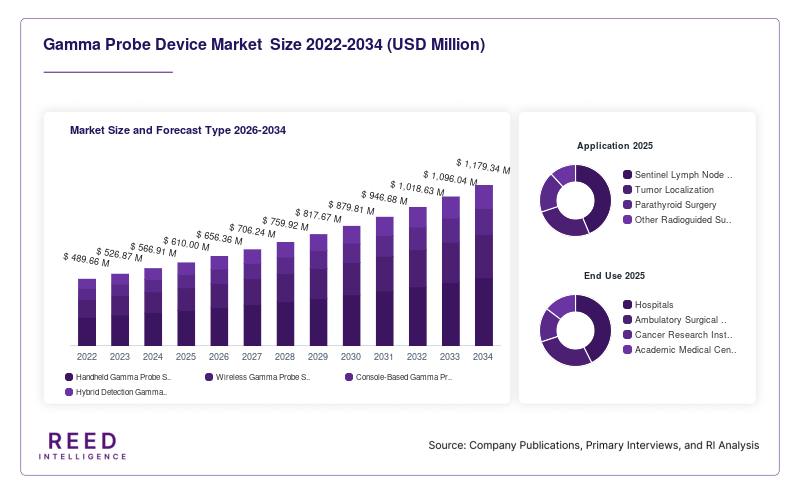
The Gamma Probe Device Market size was valued at USD 610 million in 2025 and is projected to reach USD 1.18 billion by 2034, expanding at a compound annual growth rate (CAGR) of 7.6% during 2025–2034. Gamma probe devices are handheld surgical instruments used to detect radioactive tracers during procedures such as sentinel lymph node biopsies and tumor localization. The increasing use of radioguided surgery across oncology procedures has contributed significantly to the expansion of the Gamma Probe Device Market globally.
A major global factor supporting the growth of the Gamma Probe Device Market is the growing incidence of cancer and the increasing demand for minimally invasive surgical techniques. Hospitals and surgical centers are integrating advanced intraoperative imaging tools that allow surgeons to precisely detect lymph nodes and tumor tissues while minimizing damage to surrounding healthy tissue. Gamma probe systems provide real-time radiation detection and enhance surgical accuracy, which has increased their adoption across oncology-focused healthcare facilities.
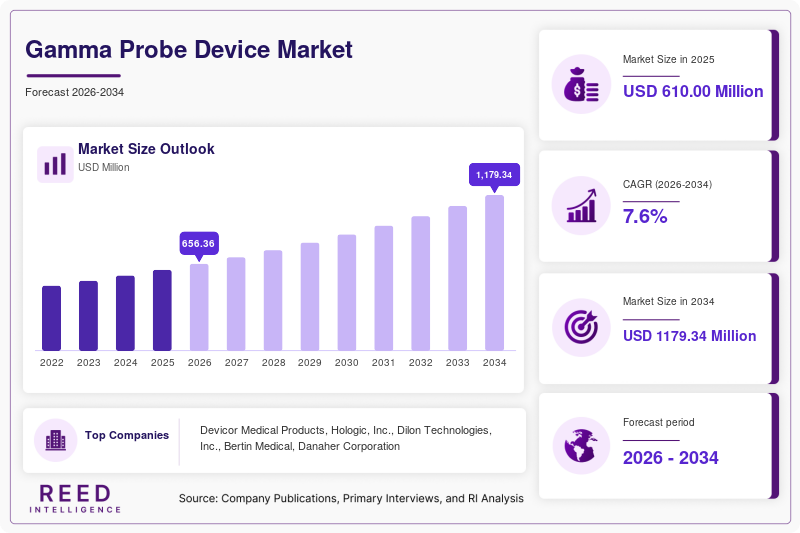
Key Highlights
- North America accounted for 38% of the Gamma Probe Device Market share in 2025, while Asia Pacific is expected to grow at a CAGR of 9.1% through 2034.
- Handheld gamma probe systems represented the dominant type segment with 63% share in 2025, while wireless probe systems are projected to grow at a CAGR of 9.4%.
- Sentinel lymph node biopsy applications led the application segment with 54% market share, while oncology tumor localization procedures are projected to grow at 8.8% CAGR.
- The United States Gamma Probe Device Market reached USD 205 million in 2025 and is estimated to reach USD 220 million in 2026.
Market Trends
Integration of Digital Detection Technologies
A notable trend shaping the Gamma Probe Device Market is the integration of advanced digital detection technologies into surgical gamma probe systems. Modern probes incorporate improved scintillation crystals, semiconductor detectors, and digital signal processing modules that provide higher sensitivity and faster radiation detection. These improvements allow surgeons to identify radiolabeled tissues more accurately during sentinel lymph node mapping procedures. Additionally, manufacturers are developing probes with improved ergonomic designs, lightweight structures, and intuitive interfaces that support surgeon workflow. The adoption of digital gamma probe systems is gradually replacing older analog-based devices, supporting the technological modernization of the Gamma Probe Device Market.
Growing Adoption of Radioguided Surgery
Another significant trend influencing the Gamma Probe Device Market is the growing adoption of radioguided surgery across oncology procedures. Radioguided surgical techniques help surgeons locate radioactive tracers injected before surgery to identify lymph nodes or tumor tissue. This approach is increasingly used in procedures for breast cancer, melanoma, and other solid tumors. As healthcare providers prioritize surgical precision and patient recovery outcomes, hospitals are integrating radioguided tools within surgical oncology departments. This shift toward image-guided and tracer-guided procedures is expected to expand the clinical scope of gamma probe devices, strengthening long-term growth prospects for the Gamma Probe Device Market.
Market Drivers
Rising Incidence of Cancer Worldwide
The increasing global prevalence of cancer is a major driver supporting the expansion of the Gamma Probe Device Market. Oncology procedures often require precise localization of tumor tissue and lymph nodes to determine disease spread. Gamma probe devices assist surgeons in detecting radiolabeled tracers injected near tumors, which improves the accuracy of surgical interventions. As the global cancer burden increases, hospitals and surgical centers are expanding oncology diagnostic and treatment infrastructure. This rise in oncology procedures is creating sustained demand for gamma probe devices used in sentinel lymph node biopsies and tumor localization surgeries.
Expansion of Nuclear Medicine Procedures
Another important factor contributing to the growth of the Gamma Probe Device Market is the increasing use of nuclear medicine techniques in clinical diagnostics and surgical planning. Radiopharmaceutical tracers used in nuclear medicine procedures enable the detection of disease at the molecular level. Gamma probe devices complement these technologies by enabling surgeons to detect radiotracer signals during operations. The expanding availability of nuclear medicine departments, radiopharmaceutical production facilities, and advanced diagnostic imaging centers has encouraged broader use of radioguided surgical tools. As healthcare systems strengthen nuclear medicine capabilities, demand for gamma probe devices is expected to increase steadily across hospitals and specialized oncology centers.
Market Restraint
Regulatory and Safety Compliance Challenges
Regulatory requirements associated with radioactive materials and surgical equipment represent a key restraint affecting the Gamma Probe Device Market. Gamma probe systems are used in procedures involving radioactive tracers, which require strict compliance with radiation safety regulations and medical device approval standards. Healthcare institutions must follow specific protocols for storage, handling, and disposal of radiopharmaceutical substances. These regulatory procedures may increase operational complexity for hospitals adopting radioguided surgical technologies.
Medical device manufacturers also face stringent approval processes before launching new gamma probe devices in international markets. Regulatory agencies require detailed testing, performance validation, and safety assessments to ensure that radiation detection equipment operates reliably within surgical environments. Compliance costs associated with certification, documentation, and product testing can increase development timelines and limit the pace of innovation.
Additionally, healthcare providers in emerging markets may face infrastructure limitations related to nuclear medicine capabilities. Facilities without specialized radiation safety infrastructure may hesitate to implement radioguided surgical procedures. These operational and regulatory challenges may influence the adoption rate of gamma probe devices in certain healthcare systems, moderating the overall expansion of the Gamma Probe Device Market.
Market Opportunities
Development of Wireless and Portable Gamma Probe Systems
One emerging opportunity within the Gamma Probe Device Market involves the development of wireless and portable gamma probe systems. Traditional systems require wired connections between the probe and the monitoring console. Manufacturers are introducing wireless probe designs that enhance mobility during surgery and reduce cable-related interference. Portable gamma probe systems can also support surgical procedures in smaller operating environments and ambulatory surgical centers. As healthcare providers seek flexible surgical tools, wireless technology is expected to create new growth avenues in the Gamma Probe Device Market.
Expanding Use in Emerging Healthcare Markets
Another opportunity influencing the Gamma Probe Device Market lies in the expansion of advanced surgical technologies across emerging healthcare markets. Countries in Asia Pacific, Latin America, and the Middle East are investing in oncology treatment infrastructure and nuclear medicine capabilities. Hospitals in these regions are gradually adopting modern surgical tools that improve diagnostic accuracy and treatment outcomes. The expansion of specialized cancer treatment centers and academic hospitals is expected to support the adoption of gamma probe devices. As healthcare investments increase in developing economies, manufacturers may find significant growth potential within the global Gamma Probe Device Market.
Segmental Analysis
By Type
Handheld gamma probe systems represented the dominant type segment in the Gamma Probe Device Market, accounting for 63% of the total share in 2025. These devices are widely used in radioguided surgery because of their compact design and ease of use during surgical procedures. Surgeons utilize handheld probes to detect gamma radiation emitted from injected radiotracers and locate sentinel lymph nodes or tumor tissues. The portability and operational convenience of handheld probes supported their strong market adoption across hospitals and surgical oncology centers.
Wireless gamma probe systems are projected to represent the fastest-growing subsegment with a CAGR of 9.4% through 2034. These systems eliminate cable connections between the probe and monitoring console, allowing greater mobility during surgical procedures. Wireless technology also helps reduce clutter in the operating room environment and improves procedural efficiency. As hospitals adopt advanced surgical technologies, wireless gamma probe systems are expected to gain increasing acceptance within the Gamma Probe Device Market.
By Application
Sentinel lymph node biopsy represented the largest application segment in the Gamma Probe Device Market, holding 54% of total revenue share in 2025. This procedure is widely used in oncology to determine whether cancer has spread to nearby lymph nodes. Gamma probe devices help surgeons detect radiolabeled tracers that accumulate in sentinel lymph nodes, allowing accurate identification and removal. The widespread use of this procedure in breast cancer and melanoma surgeries supported the segment’s strong presence within the market.
Tumor localization procedures are projected to grow at a CAGR of 8.8% during the forecast period. Gamma probe devices enable surgeons to identify tumor tissue labeled with radioactive tracers during surgical interventions. This capability improves surgical precision and helps ensure the complete removal of malignant tissue. As surgical oncology techniques continue to evolve, the demand for tumor localization procedures is expected to expand within the Gamma Probe Device Market.
By End Use
Hospitals accounted for the largest end-use segment in the Gamma Probe Device Market, representing 66% of the total share in 2025. Hospitals typically maintain nuclear medicine departments and advanced surgical facilities that perform radioguided procedures. The availability of specialized oncology units and trained surgical staff contributes to the widespread use of gamma probe systems in hospital settings.
Ambulatory surgical centers are expected to grow at a CAGR of 8.6% through 2034. These facilities focus on minimally invasive surgical procedures and outpatient care. As radioguided surgical techniques become more efficient and accessible, ambulatory surgical centers are increasingly incorporating gamma probe devices into their procedural offerings. This trend is expected to support growth within the Gamma Probe Device Market.
Regional Analysis
North America
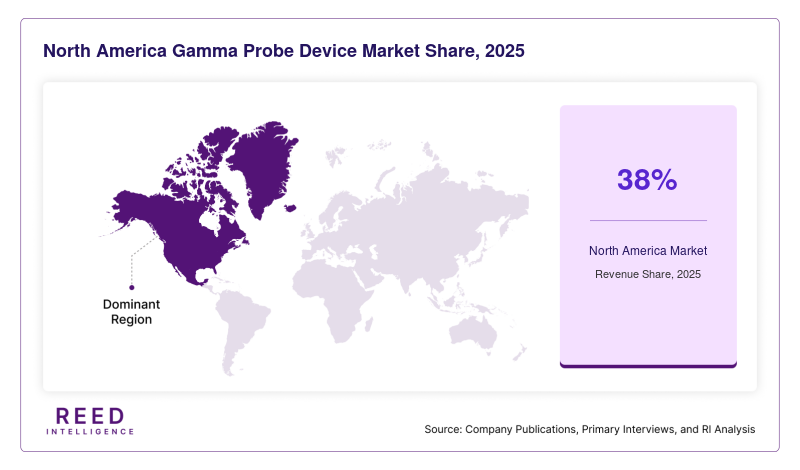
North America accounted for 38% of the Gamma Probe Device Market share in 2025 and represented the largest regional contributor to global revenue. The region will expand at a CAGR of 7.2% from 2025 to 2034. The presence of advanced healthcare infrastructure, extensive nuclear medicine capabilities, and strong adoption of radioguided surgery supported the regional market share. Hospitals across the United States and Canada widely utilize gamma probe systems for sentinel lymph node biopsy procedures in oncology surgeries. Additionally, medical device innovation and the availability of skilled surgical specialists have contributed to steady demand for gamma probe devices.
The United States represented the dominant country within the regional Gamma Probe Device Market. The country’s healthcare system includes numerous cancer treatment centers and nuclear medicine departments that regularly perform radioguided surgical procedures. Research institutions and medical device manufacturers located in the country continue to develop advanced intraoperative detection technologies. The integration of surgical imaging technologies within oncology departments has supported the continued adoption of gamma probe devices in hospitals and specialized surgical facilities.
Europe
Europe represented 27% of the Gamma Probe Device Market in 2025 and is projected to grow at a CAGR of 7.0% during the forecast period. The region has a strong network of academic hospitals, oncology treatment facilities, and nuclear medicine centers that utilize radioguided surgical procedures. European healthcare systems emphasize early cancer detection and precise surgical treatment strategies, which has supported the demand for gamma probe devices across the region.
Germany accounted for the dominant share within the European Gamma Probe Device Market. The country maintains a robust healthcare infrastructure and advanced surgical technology adoption across hospitals. Germany also has a strong medical device manufacturing sector that contributes to the availability of specialized surgical instruments. The widespread adoption of sentinel lymph node biopsy procedures in breast cancer treatment has supported the demand for gamma probe systems in German hospitals and surgical centers.
Asia Pacific
Asia Pacific held 21% of the Gamma Probe Device Market share in 2025 and is expected to grow at the fastest CAGR of 9.1% between 2025 and 2034. Rapid healthcare infrastructure development and rising awareness of advanced oncology treatment techniques are contributing to the regional market outlook. Governments and private healthcare providers across Asia Pacific are investing in modern surgical equipment and diagnostic technologies to improve cancer care services.
China represented the dominant country within the regional Gamma Probe Device Market. The country has been expanding its oncology treatment capacity and nuclear medicine infrastructure across major hospitals. Healthcare modernization programs and growing access to advanced surgical equipment have supported the adoption of radioguided surgery technologies. As hospitals upgrade surgical capabilities, the demand for gamma probe devices is expected to increase across Chinese healthcare institutions.
Middle East & Africa
The Middle East & Africa accounted for 7% of the Gamma Probe Device Market in 2025 and is projected to grow at a CAGR of 7.4% during the forecast period. The region is witnessing gradual improvements in healthcare infrastructure and the establishment of specialized cancer treatment centers. Healthcare authorities are investing in modern diagnostic technologies to enhance patient care capabilities.
Saudi Arabia represented the dominant country in the regional Gamma Probe Device Market. The country has been expanding hospital infrastructure and introducing advanced medical technologies within public healthcare systems. Government initiatives aimed at strengthening oncology treatment capabilities have supported the adoption of radioguided surgical equipment in major hospitals.
Latin America
Latin America held 7% of the Gamma Probe Device Market share in 2025 and is expected to grow at a CAGR of 7.3% through 2034. The region’s healthcare sector has been gradually adopting modern surgical technologies to improve treatment outcomes. Hospitals and research institutions are integrating advanced diagnostic tools within oncology departments, which supports the adoption of gamma probe systems.
Brazil represented the dominant country within the Latin American Gamma Probe Device Market. The country has a large network of hospitals and academic medical institutions that provide cancer treatment services. Growing awareness of sentinel lymph node biopsy procedures and improved access to surgical equipment have contributed to the demand for gamma probe devices across Brazilian healthcare facilities.
Competitive Landscape
The Gamma Probe Device Market includes a mix of global medical device manufacturers and specialized surgical technology providers. Companies operating in this market focus on improving radiation detection accuracy, ergonomic design, and digital integration capabilities. Product development strategies often involve enhancing detector sensitivity, reducing device size, and introducing wireless communication features.
Among the key participants, Devicor Medical Products maintains a notable presence in the Gamma Probe Device Market through its portfolio of radioguided surgical technologies. The company has focused on improving intraoperative detection tools used in sentinel lymph node procedures.
Other manufacturers are also investing in research and development activities aimed at expanding clinical applications of gamma probe systems. Partnerships with hospitals and academic research institutions are commonly used to validate device performance and support clinical adoption.
The competitive landscape remains moderately consolidated, with several established companies and emerging technology developers contributing to product innovation within the Gamma Probe Device Market.
Key Players
- Devicor Medical Products
- Hologic Inc.
- Dilon Technologies
- Bertin Medical
- Danaher Corporation
- Crystal Photonics GmbH
- Care Wise Medical Products
- Lake Shore Cryotronics Inc.
- Raditec Medical AG
- Oncovision
- Intramedical Imaging LLC
- SurgicEye GmbH
- Sun Nuclear Corporation
- Crystal Photonics
- NuCare Medical Systems
Recent Developments
- Several medical device manufacturers have introduced compact digital gamma probe systems designed to improve detection sensitivity during surgical oncology procedures.
- Healthcare institutions have expanded radioguided surgery programs, increasing demand for gamma probe technologies.
- Manufacturers are developing wireless gamma probe solutions that enhance mobility and simplify operating room workflows.
- Partnerships between medical device developers and academic hospitals are supporting clinical validation of advanced gamma detection systems.
Gamma Probe Device Market Segments
Type
- Handheld Gamma Probe Systems
- Wireless Gamma Probe Systems
- Console-Based Gamma Probe Systems
- Hybrid Detection Gamma Probe Systems
Application
- Sentinel Lymph Node Biopsy
- Tumor Localization
- Parathyroid Surgery
- Other Radioguided Surgical Procedures
End Use
- Hospitals
- Ambulatory Surgical Centers
- Cancer Research Institutes
- Academic Medical Centers
Distribution Channel
- Direct Sales
- Medical Device Distributors
- Hospital Procurement Contracts
- Online Medical Equipment Platforms
By Region
- North America
- Europe
- APAC
- Middle East and Africa
- LATAM