Gan Epitaxial Wafers Market Size, Share & Demand Report By Wafer Type (GaN-on-Silicon, GaN-on-SiC, GaN-on-Sapphire), By Application (Power Electronics, RF Devices, Optoelectronics), By End-Use Industry (Consumer Electronics, Automotive, Aerospace & Defense, Industrial) By Region & Segment Forecasts, 2026–2034
USD 3950
Market Overview
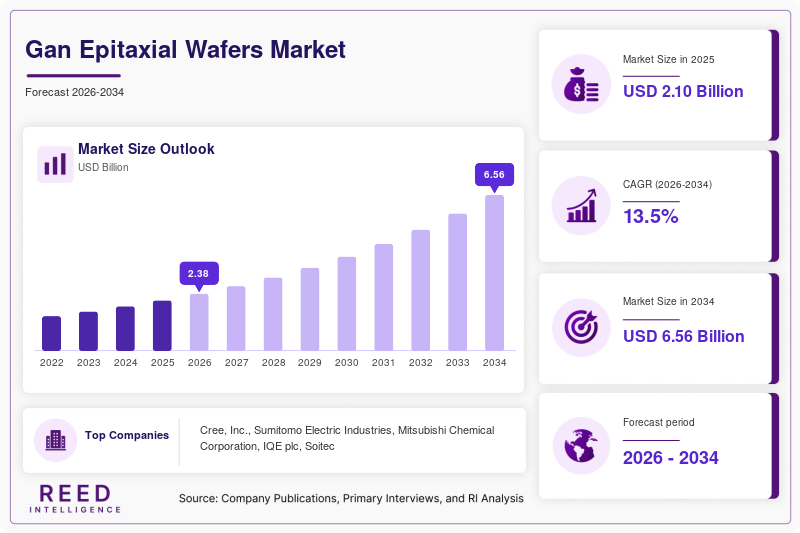
The global Gan Epitaxial Wafers Market was valued at approximately USD 2.1 billion in 2026 and is projected to reach USD 5.8 billion by 2034, registering a CAGR of 13.5% during the forecast period (2026–2034). The market is experiencing steady expansion due to increasing demand for high-performance semiconductor materials across power electronics, radio frequency (RF) devices, and optoelectronics. Gallium nitride (GaN) epitaxial wafers offer superior efficiency, high thermal stability, and improved switching performance, making them suitable for next-generation applications such as electric vehicles, 5G infrastructure, and renewable energy systems.
A major global factor supporting market growth is the rapid adoption of energy-efficient power devices across industrial and consumer applications. Governments and private organizations are investing in sustainable energy technologies, which has accelerated the demand for GaN-based components. These wafers play a critical role in reducing energy loss and enhancing device performance, contributing to broader sustainability goals and improved system efficiency.
Key Highlights
- North America dominated the market with a 36.4% share in 2025
- Asia Pacific is expected to grow at the fastest CAGR of 14.2% during 2026–2034.
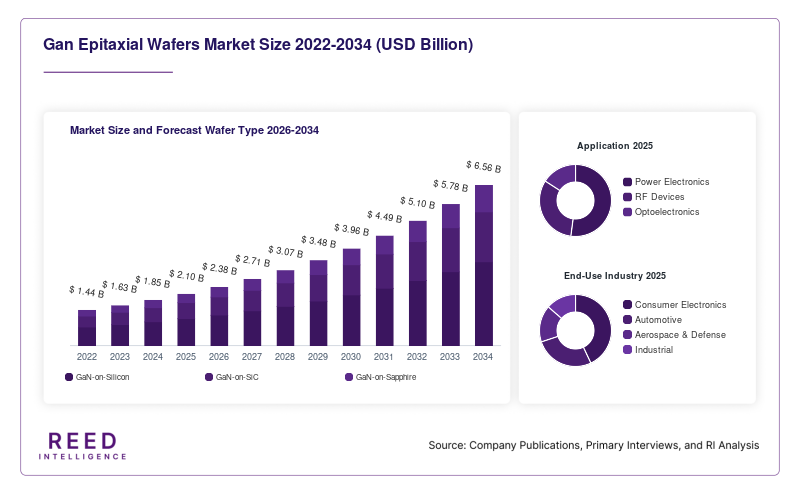
- By wafer type, GaN-on-Silicon accounted for the largest share of 42.8%, while GaN-on-SiC is projected to grow at a CAGR of 14.9%.
- By application, power electronics led with a 45.6% share, whereas RF devices are expected to expand at a CAGR of 14.5%.
- The United States remained the dominant country, with market values of USD 620 million in 2024 and USD 690 million in 2025.
Market Trends
Increasing Integration of GaN in Electric Vehicle Power Systems
The integration of GaN epitaxial wafers in electric vehicle (EV) power systems is gaining traction due to their efficiency and compact design advantages. Automakers are focusing on reducing energy losses and improving battery performance, which has led to the adoption of GaN-based components in onboard chargers and inverters. These wafers enable faster switching speeds and lower conduction losses compared to traditional silicon-based solutions. As EV adoption accelerates globally, the demand for GaN epitaxial wafers continues to rise. This trend is further supported by government incentives for electric mobility and increasing investments in EV infrastructure, which are expected to sustain long-term market growth.
Expansion of 5G and RF Communication Infrastructure
The deployment of 5G networks worldwide is driving demand for high-frequency RF components, where GaN epitaxial wafers play a vital role. These wafers support high power density and efficient signal transmission, making them suitable for base stations and communication devices. Telecom providers are investing heavily in upgrading infrastructure, leading to increased production of GaN-based RF devices. Additionally, the growing demand for data connectivity and low-latency communication is pushing manufacturers to adopt advanced materials like GaN. This trend is expected to continue as countries expand their digital infrastructure and move toward next-generation communication technologies.
Market Drivers
Rising Demand for Energy-Efficient Power Devices
The increasing focus on energy efficiency across industries is a major driver of the Gan Epitaxial Wafers Market. GaN-based devices offer lower power losses, higher efficiency, and improved thermal performance compared to conventional silicon devices. These advantages are particularly important in applications such as renewable energy systems, industrial automation, and consumer electronics. As energy regulations become stricter and organizations aim to reduce operational costs, the demand for efficient semiconductor materials is growing. This has led to increased adoption of GaN epitaxial wafers, which are essential for manufacturing advanced power devices that meet modern efficiency standards.
Growth in Renewable Energy and Smart Grid Systems
The expansion of renewable energy sources such as solar and wind power is driving the need for efficient power conversion technologies. GaN epitaxial wafers are widely used in inverters and power management systems, where they help improve energy conversion efficiency and reduce system size. The development of smart grid infrastructure further supports this demand, as it requires advanced semiconductor components for efficient energy distribution. Governments and utilities are investing in modernizing power grids, which is expected to boost the adoption of GaN-based technologies. This driver is likely to have a long-term impact on market growth as renewable energy adoption continues to increase.
Market Restraint
High Production Costs and Complex Manufacturing Processes
One of the primary restraints affecting the Gan Epitaxial Wafers Market is the high cost associated with production and the complexity of manufacturing processes. The fabrication of GaN epitaxial wafers requires advanced equipment, precise control over deposition processes, and high-quality substrates such as silicon carbide or sapphire. These factors contribute to increased production costs compared to traditional semiconductor materials. Additionally, achieving consistent quality and yield remains a challenge, which can impact scalability and profitability for manufacturers.
The high cost of GaN wafers limits their adoption, particularly in price-sensitive applications and emerging markets. Small and medium-sized enterprises may find it difficult to invest in the required infrastructure, which can restrict market entry and competition. Furthermore, the need for specialized expertise and equipment adds to operational expenses. While ongoing research and technological advancements are expected to reduce costs over time, this restraint continues to influence market dynamics. Manufacturers are focusing on improving production efficiency and exploring alternative substrates to address these challenges, but cost remains a key barrier to widespread adoption.
Market Opportunities
Emerging Applications in Consumer Electronics
The growing demand for compact and high-performance consumer electronics presents a significant opportunity for the Gan Epitaxial Wafers Market. Devices such as smartphones, laptops, and wearable technology require efficient power management solutions to enhance battery life and performance. GaN-based components enable smaller form factors and improved efficiency, making them suitable for next-generation consumer devices. Manufacturers are increasingly integrating GaN technology into chargers and adapters, which is expected to drive demand for epitaxial wafers. This opportunity is further supported by the rapid pace of innovation in consumer electronics and the increasing focus on energy efficiency.
Expansion in Aerospace and Defense Applications
The aerospace and defense sector offers substantial growth potential for GaN epitaxial wafers due to their high power density and reliability in extreme conditions. These wafers are used in radar systems, satellite communications, and electronic warfare systems, where performance and durability are critical. Governments are increasing defense spending and investing in advanced technologies, which is expected to boost demand for GaN-based components. The ability of GaN devices to operate at high frequencies and temperatures makes them ideal for these applications. As defense technologies continue to evolve, the adoption of GaN epitaxial wafers is expected to increase, creating new opportunities for market players.
Segmental Analysis
By Wafer Type
GaN-on-Silicon emerged as the dominant subsegment in 2024, accounting for approximately 42.8% of the Gan Epitaxial Wafers Market share. This dominance is attributed to its cost-effectiveness and compatibility with existing silicon-based manufacturing processes. Manufacturers prefer GaN-on-Silicon wafers as they allow for larger wafer sizes and lower production costs compared to other substrates. The ability to leverage established semiconductor fabrication infrastructure further supports its adoption. Additionally, GaN-on-Silicon wafers are widely used in consumer electronics and power devices, where cost and scalability are critical factors.
GaN-on-SiC is the fastest-growing subsegment, expected to register a CAGR of 14.9% during the forecast period. This growth is driven by its superior thermal conductivity and high-frequency performance, making it suitable for RF and high-power applications. Industries such as telecommunications and defense are increasingly adopting GaN-on-SiC wafers for advanced systems. The growing demand for high-performance devices and the expansion of 5G networks are key factors supporting this growth. Although the cost is higher, the performance benefits are driving increased adoption in specialized applications.
By Application
Power electronics dominated the application segment in 2024, holding a market share of 45.6%. This dominance is driven by the widespread use of GaN epitaxial wafers in power conversion systems, including inverters, chargers, and power supplies. The demand for efficient energy management solutions across industries such as automotive, industrial, and renewable energy supports this segment. GaN-based power devices offer higher efficiency and reduced energy loss, making them suitable for modern applications. The increasing focus on sustainability and energy efficiency further drives demand in this segment.
RF devices represent the fastest-growing application segment, with a projected CAGR of 14.5% during the forecast period. This growth is fueled by the expansion of 5G networks and the increasing demand for high-frequency communication systems. GaN epitaxial wafers enable high power density and efficient signal transmission, which are essential for RF applications. The growing need for reliable and high-performance communication infrastructure is expected to drive demand for GaN-based RF devices. This trend is likely to continue as digital connectivity becomes more important globally.
By End-Use Industry
The consumer electronics segment held the largest market share of 39.2% in 2024, driven by the increasing demand for compact and efficient devices. GaN epitaxial wafers are used in chargers, adapters, and power management systems for smartphones, laptops, and other devices. The ability to deliver high performance in smaller form factors makes GaN technology attractive for consumer electronics manufacturers. The rapid pace of innovation and the growing demand for portable devices further support this segment’s dominance.
The aerospace and defense segment is expected to grow at the fastest CAGR of 14.1% during the forecast period. This growth is driven by the increasing use of GaN-based components in radar systems, satellite communications, and electronic warfare. The need for high reliability and performance in extreme conditions supports the adoption of GaN epitaxial wafers in this sector. Government investments in defense technologies and the development of advanced communication systems are key factors driving growth in this segment.
Regional Analysis
North America
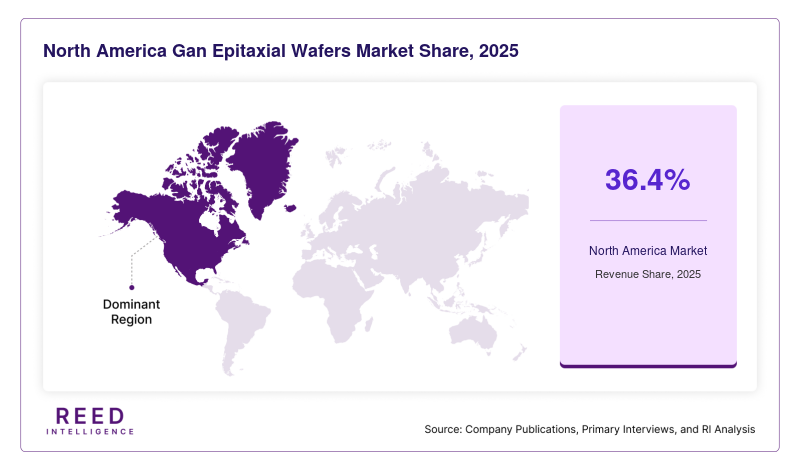
North America accounted for approximately 36.4% of the Gan Epitaxial Wafers Market share in 2025 and is expected to maintain steady growth with a CAGR of 12.8% during the forecast period. The region benefits from strong technological infrastructure, high adoption of advanced semiconductor materials, and significant investments in research and development. The presence of established semiconductor companies and growing demand for energy-efficient devices contribute to market growth.
The United States dominates the regional market due to its advanced semiconductor industry and strong focus on innovation. A key growth factor is the increasing adoption of GaN technology in electric vehicles and renewable energy systems. Government initiatives supporting clean energy and advanced manufacturing further drive demand for GaN epitaxial wafers in the country.
Europe
Europe held a market share of around 24.7% in 2025 and is projected to grow at a CAGR of 12.3% during the forecast period. The region’s focus on sustainability and energy efficiency has led to increased adoption of GaN-based technologies. The presence of automotive and industrial sectors also supports market growth, as these industries require efficient power electronics.
Germany is the dominant country in the European market, driven by its strong automotive industry and emphasis on electric mobility. A unique growth factor is the increasing integration of GaN technology in industrial automation systems, which enhances efficiency and reduces energy consumption. This trend is expected to support market expansion in the region.
Asia Pacific
Asia Pacific is expected to grow at the fastest CAGR of 14.2% during 2026–2034, with a market share of 28.5% in 2025. The region is a major hub for semiconductor manufacturing and electronics production. Rapid industrialization, urbanization, and increasing demand for consumer electronics contribute to market growth.
China leads the regional market due to its large-scale manufacturing capabilities and strong government support for semiconductor development. A key growth factor is the expansion of 5G infrastructure, which drives demand for GaN-based RF components. This is expected to significantly boost the market in the coming years.
Middle East & Africa
The Middle East & Africa region accounted for a smaller market share of 5.6% in 2025 but is expected to grow at a CAGR of 11.5% during the forecast period. The region is gradually adopting advanced technologies, supported by investments in infrastructure and energy projects. The demand for efficient power devices is increasing, particularly in renewable energy applications.
Saudi Arabia is a dominant country in this region, driven by its investments in renewable energy and smart city projects. A unique growth factor is the increasing deployment of solar power systems, which require efficient power conversion technologies. This is expected to drive demand for GaN epitaxial wafers.
Latin America
Latin America held a market share of approximately 4.8% in 2025 and is projected to grow at a CAGR of 11.2% during the forecast period. The region is witnessing gradual adoption of advanced semiconductor technologies, supported by industrial growth and increasing demand for energy-efficient solutions.
Brazil dominates the regional market due to its expanding industrial base and growing focus on renewable energy. A key growth factor is the increasing adoption of GaN-based power devices in industrial applications, which enhances efficiency and reduces operational costs. This trend is expected to support market growth in the region.
Competitive Landscape
The Gan Epitaxial Wafers Market is characterized by the presence of several established players and emerging companies focusing on technological advancements and strategic collaborations. The market is moderately consolidated, with key players investing in research and development to enhance product performance and reduce production costs. Companies are also expanding their manufacturing capacities to meet increasing demand across various applications.
A leading company in the market is Cree, Inc., which has a strong presence in GaN technology and continues to innovate in wafer production. A recent development includes the expansion of its manufacturing facilities to increase output and improve efficiency. Other major players are focusing on partnerships and acquisitions to strengthen their market position and expand their product portfolios. The competitive landscape is expected to evolve as new entrants introduce innovative solutions and existing players invest in advanced technologies.
Key Players
- Cree, Inc.
- Sumitomo Electric Industries
- Mitsubishi Chemical Corporation
- IQE plc
- Soitec
- Nichia Corporation
- Samsung Electronics
- Toshiba Corporation
- Infineon Technologies
- Qorvo, Inc.
- Wolfspeed, Inc.
- Epistar Corporation
- Enkris Semiconductor
- Azzurro Semiconductors
- Advanced Epitaxy Technology
Recent Developments
- A leading semiconductor company expanded its GaN wafer production facility in 2025 to meet rising demand from the EV sector.
- A major player introduced a new GaN-on-SiC wafer with improved thermal performance for RF applications in 2026.
- A strategic partnership between two industry firms was announced in 2025 to develop advanced GaN solutions for 5G infrastructure.
Gan Epitaxial Wafers Market Segments
Wafer Type
- GaN-on-Silicon
- GaN-on-SiC
- GaN-on-Sapphire
Application
- Power Electronics
- RF Devices
- Optoelectronics
End-Use Industry
- Consumer Electronics
- Automotive
- Aerospace & Defense
- Industrial
By Region
- North America
- Europe
- APAC
- Middle East and Africa
- LATAM