Gardner Syndrome Treatment Market Size, Share & Demand Report By Treatment Type (Surgical Treatment, Chemotherapy, Targeted Therapy, Radiation Therapy, Supportive Care), By Diagnosis Type (Genetic Testing, Colonoscopy, Imaging Techniques, Biomarker Screening), By End User (Hospitals, Specialty Clinics, Diagnostic Centers, Ambulatory Surgical Centers), By Region & Segment Forecasts, 2026–2034
USD 3950
Market Overview
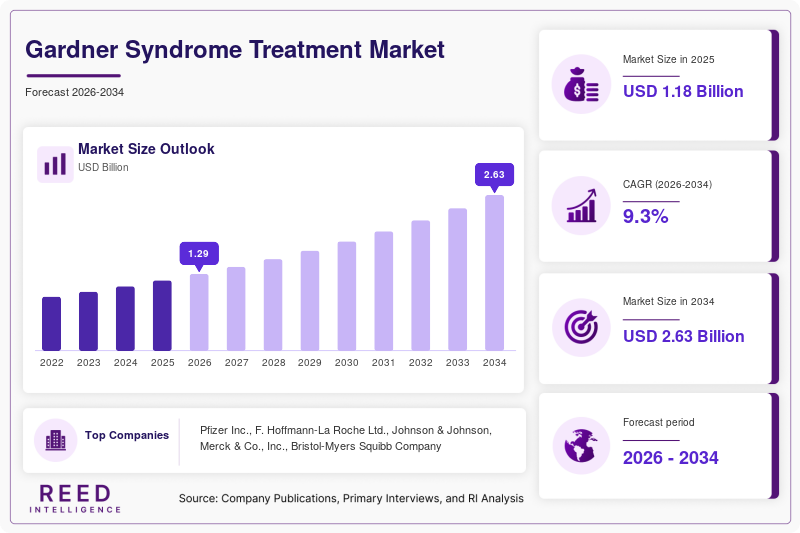
The global Gardner Syndrome Treatment Market size was valued at USD 1.18 billion in 2026 and is projected to reach USD 2.41 billion by 2034, expanding at a CAGR of 9.3% during the forecast period from 2026 to 2034. The market is experiencing consistent growth due to increasing awareness regarding hereditary colorectal disorders, rising adoption of genetic screening technologies, and the growing availability of targeted therapeutic approaches for rare gastrointestinal conditions. Gardner syndrome, a genetic disorder associated with familial adenomatous polyposis, has gained wider clinical attention because of rising diagnosis rates and advancements in precision medicine. Healthcare providers are increasingly adopting multidisciplinary treatment approaches that combine surgery, pharmacological therapy, genetic counseling, and long-term surveillance.
The expansion of healthcare infrastructure in emerging economies and the growing integration of molecular diagnostics into oncology care have further strengthened market demand. Pharmaceutical companies are investing in rare disease treatment pipelines, while research institutions continue to explore biomarker-based therapies for gastrointestinal polyposis disorders. In addition, supportive government programs for rare disease management and reimbursement expansion for genetic testing procedures have accelerated treatment accessibility. Increasing collaboration between biotechnology firms and academic research centers is also contributing to product innovation and treatment optimization.
Key Highlights
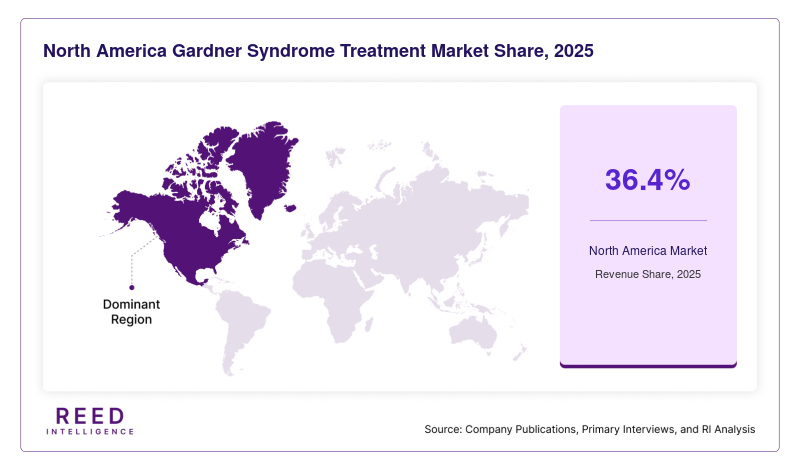
- North America dominated the market with a 36.4% share in 2025, while Asia Pacific is expected to grow at the fastest CAGR of 11.6% during 2026–2034.
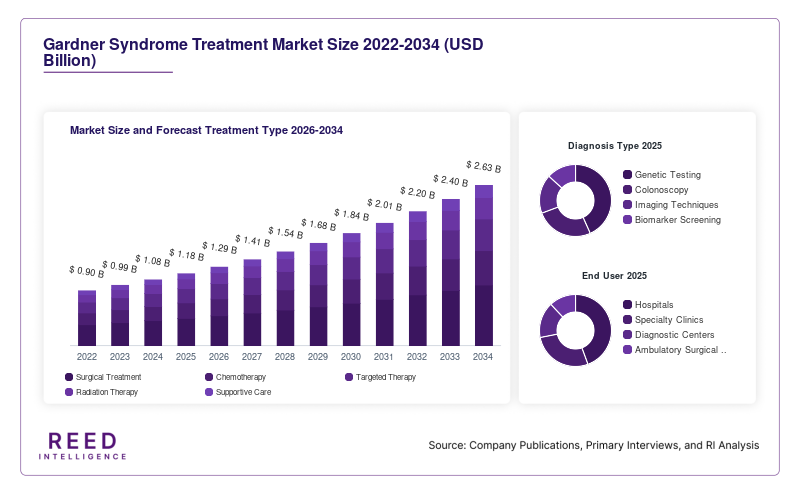
- By treatment type, surgical treatment accounted for the largest share of 42.1%, while targeted therapy is projected to grow at a CAGR of 12.2%.
- By diagnosis type, genetic testing led with a 39.3% share, whereas biomarker screening is expected to expand at a CAGR of 11.8%.
- By end user, hospitals held the leading share of 47.5%, while specialty clinics are anticipated to grow at a CAGR of 10.9%.
- The United States remained the dominant country, with market values of USD 395 million in 2024 and USD 432 million in 2025.
Market Trends
Rising Adoption of Precision Medicine in Rare Genetic Disorders
The Gardner Syndrome Treatment Market is witnessing strong momentum from the growing use of precision medicine and individualized treatment planning. Healthcare providers are increasingly relying on genomic profiling and mutation analysis to determine the most effective treatment pathway for patients with inherited colorectal conditions. The integration of molecular diagnostics into routine clinical practice has improved early disease detection and enabled physicians to personalize therapy according to genetic risk factors. Pharmaceutical manufacturers are also developing targeted drugs that address specific molecular pathways associated with gastrointestinal polyps and tumor development. The availability of advanced sequencing technologies has reduced diagnostic delays and improved clinical outcomes. Precision oncology programs in developed economies are encouraging hospitals and specialty clinics to invest in personalized treatment infrastructure, which continues to strengthen demand for advanced Gardner syndrome therapies.
Expansion of Preventive Screening and Long-Term Surveillance Programs
Another major trend shaping the Gardner Syndrome Treatment Market is the expansion of preventive screening initiatives and long-term patient surveillance programs. Governments and healthcare organizations are increasingly promoting genetic counseling and regular colonoscopy screening for individuals with hereditary cancer risk. Preventive healthcare strategies have become a priority because early identification of adenomatous polyps significantly reduces cancer-related complications. Hospitals are adopting digital monitoring platforms that allow physicians to track patient progression and optimize follow-up care. In addition, family-based screening programs are gaining popularity in regions with strong healthcare awareness campaigns. The increased use of artificial intelligence in diagnostic imaging and pathology assessment is improving screening efficiency and diagnostic accuracy. These developments are expected to enhance treatment adoption rates and support sustained market expansion over the coming years.
Market Drivers
Increasing Prevalence of Hereditary Colorectal Disorders
The increasing prevalence of hereditary colorectal disorders is a significant factor driving growth in the Gardner Syndrome Treatment Market. Rising awareness regarding inherited gastrointestinal diseases has improved diagnosis rates among high-risk patient populations. Healthcare professionals are emphasizing early intervention strategies because untreated Gardner syndrome can lead to severe colorectal cancer complications. The expansion of genetic testing facilities and wider availability of screening programs have encouraged more individuals to undergo diagnostic evaluations. In addition, advancements in pathology and imaging technologies have improved detection accuracy for intestinal polyps and associated tumors. Governments in several countries are supporting rare disease research and encouraging healthcare providers to establish specialized treatment centers. These initiatives are increasing patient access to surgical procedures, pharmacological therapy, and long-term disease management solutions, thereby strengthening market growth across both developed and emerging healthcare systems.
Advancements in Targeted Therapy and Surgical Techniques
Continuous advancements in targeted therapy and minimally invasive surgical procedures are further accelerating the growth of the Gardner Syndrome Treatment Market. Surgeons are increasingly adopting laparoscopic and robotic-assisted procedures to reduce recovery time and improve patient outcomes. At the same time, pharmaceutical companies are investing in targeted therapies designed to inhibit abnormal cellular growth associated with hereditary polyposis syndromes. The introduction of biologics and immune-based therapies has expanded treatment possibilities for patients with complex disease progression. Research institutions are collaborating with biotechnology companies to develop innovative treatment options that improve long-term survival rates. Enhanced postoperative care and modern patient monitoring systems are also contributing to treatment success. These advancements are encouraging healthcare providers to adopt integrated therapeutic approaches, which continue to support higher treatment demand and broader market penetration.
Market Restraint
High Treatment Costs and Limited Access to Specialized Care
High treatment costs and limited availability of specialized healthcare infrastructure remain major challenges for the Gardner Syndrome Treatment Market. Comprehensive disease management often requires multiple procedures, including genetic testing, surgical intervention, continuous surveillance, and long-term medication therapy. These treatment components can create a significant financial burden for patients, particularly in low-income and middle-income countries where insurance coverage for rare diseases remains limited. In several regions, the shortage of trained genetic counselors and gastrointestinal oncology specialists restricts access to timely diagnosis and treatment planning.
The complexity of Gardner syndrome management also increases healthcare expenditure for hospitals and specialty centers. Advanced diagnostic technologies and targeted therapies involve substantial operational costs, which can limit adoption among smaller healthcare facilities. Delayed diagnosis in underserved regions frequently results in advanced disease progression and increased complication rates. In addition, limited awareness regarding hereditary colorectal disorders among the general population can reduce participation in preventive screening programs. These factors collectively restrain market growth and create disparities in treatment accessibility across different geographic regions.
Market Opportunities
Growing Investments in Rare Disease Research Programs
Increasing investments in rare disease research programs are creating substantial opportunities for the Gardner Syndrome Treatment Market. Governments, biotechnology firms, and academic institutions are expanding funding initiatives aimed at improving understanding of hereditary gastrointestinal disorders. Research organizations are actively studying molecular pathways and genetic mutations associated with Gardner syndrome to identify novel therapeutic targets. These efforts are encouraging the development of innovative drug candidates and biomarker-based diagnostic solutions.
The growing focus on orphan drug development is also attracting pharmaceutical companies to the market. Regulatory authorities in several countries are providing incentives such as tax benefits, fast-track approvals, and extended market exclusivity for rare disease therapies. This supportive regulatory environment is accelerating clinical trial activity and increasing the number of pipeline products entering development stages. As research capabilities continue to improve, healthcare providers are expected to gain access to more effective treatment options, thereby expanding future revenue opportunities for market participants.
Expansion of Telemedicine and Digital Patient Monitoring
The rapid adoption of telemedicine and digital patient monitoring technologies presents another promising opportunity for the Gardner Syndrome Treatment Market. Patients with hereditary gastrointestinal disorders often require long-term follow-up consultations and regular surveillance procedures. Digital healthcare platforms are enabling physicians to remotely monitor patient health status, treatment adherence, and postoperative recovery. Telemedicine solutions are especially beneficial in rural and underserved regions where access to specialty healthcare services remains limited.
Healthcare providers are increasingly integrating electronic health records, wearable monitoring devices, and artificial intelligence-driven analytics into patient management systems. These technologies improve communication between physicians and patients while reducing hospitalization rates and healthcare costs. Digital platforms also support family-based genetic counseling services, which are becoming increasingly important for hereditary disease management. As healthcare systems continue to prioritize remote care delivery and preventive medicine, the adoption of digital health solutions is expected to create long-term growth opportunities across the global market.
Segmental Analysis
By Treatment Type
Surgical treatment represented the dominant subsegment within the Gardner Syndrome Treatment Market in 2024, accounting for approximately 42.1% of total revenue. Surgical procedures remain the primary treatment approach because Gardner syndrome patients often develop multiple colorectal polyps that carry a high risk of malignant transformation. Preventive colectomy and minimally invasive gastrointestinal surgeries are widely adopted to reduce cancer-related complications and improve long-term patient survival. Hospitals and specialty surgical centers continue to invest in robotic-assisted and laparoscopic procedures that offer reduced postoperative complications and shorter recovery periods. The growing availability of advanced imaging technologies and enhanced surgical planning tools has further improved treatment precision. Increasing awareness regarding hereditary colorectal disorders and the importance of early intervention strategies also contribute to the strong market position of surgical treatment procedures.
Targeted therapy is projected to emerge as the fastest-growing subsegment, expanding at a CAGR of 12.2% during the forecast period. Pharmaceutical companies are increasingly focusing on the development of molecular therapies that inhibit abnormal cellular growth associated with hereditary polyposis syndromes. Advances in precision medicine and biomarker identification have accelerated the introduction of personalized therapeutic approaches for rare gastrointestinal conditions. Healthcare providers are adopting targeted treatment combinations to improve disease management and reduce recurrence rates following surgery. In addition, growing research activity related to biologics and immune-based therapies is supporting innovation in this segment. Regulatory incentives for orphan drug development and rising investment in rare disease clinical trials are expected to strengthen the adoption of targeted therapy across major healthcare markets.
By Diagnosis Type
Genetic testing held the largest share within the diagnosis segment in 2024, accounting for nearly 39.3% of the Gardner Syndrome Treatment Market. The growing use of genomic sequencing and hereditary cancer screening programs has significantly improved early disease detection. Healthcare providers increasingly recommend genetic testing for individuals with a family history of colorectal disorders to identify disease-associated mutations before symptom progression. Diagnostic laboratories and hospitals are adopting advanced sequencing platforms that deliver faster and more accurate results. Government support for preventive healthcare and growing awareness regarding inherited gastrointestinal syndromes have further encouraged patient participation in screening programs. The availability of genetic counseling services has also improved treatment planning and long-term disease monitoring, strengthening the market position of this subsegment.
Biomarker screening is anticipated to register the fastest CAGR of 11.8% throughout the forecast period due to rising interest in personalized medicine and precision oncology. Biomarker-based diagnostic tools enable healthcare professionals to assess disease progression and identify targeted treatment pathways more effectively. Research institutions are investing in the discovery of predictive biomarkers that can improve risk assessment and therapy selection for hereditary gastrointestinal disorders. Hospitals and specialty clinics are increasingly integrating biomarker analysis into routine oncology diagnostics to enhance clinical decision-making. Technological advancements in laboratory automation and artificial intelligence-driven diagnostic interpretation are further improving test accuracy and operational efficiency. As personalized treatment strategies gain broader acceptance, biomarker screening is expected to become a critical component of Gardner syndrome management.
By End User
Hospitals accounted for the dominant share of the Gardner Syndrome Treatment Market in 2024, contributing approximately 47.5% of global revenue. Large hospitals remain the preferred treatment centers because they provide integrated healthcare services, including genetic counseling, advanced diagnostics, surgery, oncology care, and long-term patient monitoring. The availability of multidisciplinary medical teams and specialized gastrointestinal oncology departments has strengthened hospital-based treatment adoption. Many hospitals are also investing in robotic-assisted surgery systems and digital patient management platforms to improve treatment outcomes. Increasing patient admissions for hereditary colorectal disorders and rising demand for minimally invasive procedures continue to support segment growth. In addition, favorable reimbursement policies in developed economies encourage patients to seek treatment within advanced hospital settings.
Specialty clinics are projected to witness the fastest growth during the forecast period, expanding at a CAGR of 10.9%. These clinics are gaining popularity because they offer focused expertise in genetic disorders, oncology care, and gastrointestinal disease management. Patients increasingly prefer specialty centers for personalized consultation services, faster diagnosis, and long-term follow-up care. The expansion of outpatient treatment models and telemedicine integration has improved accessibility to specialty healthcare services. Many clinics are adopting digital surveillance systems and family-based counseling programs to enhance preventive care strategies for hereditary disorders. Furthermore, rising investment in private healthcare infrastructure and increasing partnerships between specialty clinics and diagnostic laboratories are expected to support strong growth within this segment over the coming years.
Regional Analysis
North America
North America accounted for the largest share of the Gardner Syndrome Treatment Market in 2025, representing approximately 36.4% of global revenue. The region is projected to expand at a CAGR of 8.8% during the forecast period due to advanced healthcare infrastructure, high awareness regarding hereditary cancer disorders, and strong adoption of genetic testing technologies. The presence of leading pharmaceutical companies and research organizations has accelerated the development of targeted therapies and advanced diagnostic solutions. Increasing investment in precision medicine and oncology care programs further supports regional market growth.
The United States remains the dominant country within North America due to strong reimbursement policies and widespread availability of specialized gastrointestinal treatment centers. The country benefits from extensive clinical research activities and early adoption of molecular diagnostics in cancer prevention programs. Hospitals and academic medical centers are increasingly collaborating on rare disease studies to improve patient outcomes. In addition, increasing participation in hereditary cancer screening programs and growing awareness regarding familial adenomatous polyposis continue to strengthen treatment demand across the country.
Europe
Europe held a significant share of the Gardner Syndrome Treatment Market in 2025 and is expected to maintain stable growth throughout the forecast period. The regional market is projected to grow at a CAGR of 8.5% from 2026 to 2034, supported by strong healthcare systems and expanding rare disease management initiatives. Countries across the region are increasing investment in genetic screening programs and advanced oncology diagnostics. Favorable healthcare regulations and supportive reimbursement structures are encouraging healthcare providers to adopt early detection strategies and long-term surveillance programs.
Germany emerged as the leading country in the European market due to its advanced medical research infrastructure and growing emphasis on precision healthcare. The country has witnessed increasing adoption of robotic-assisted surgeries and biomarker-based diagnostic technologies for hereditary gastrointestinal disorders. Collaboration between biotechnology companies and university hospitals is supporting innovation in targeted therapies. Furthermore, growing awareness campaigns related to inherited cancer syndromes and improved access to specialized healthcare facilities are contributing to consistent market expansion across Germany.
Asia Pacific
Asia Pacific is anticipated to record the fastest growth in the Gardner Syndrome Treatment Market, with a projected CAGR of 11.6% during the forecast period. The regional market is expanding due to improving healthcare infrastructure, increasing healthcare expenditure, and rising awareness regarding hereditary diseases. Governments in several Asian countries are investing in cancer prevention programs and expanding access to diagnostic services. Rapid urbanization and improving medical insurance coverage are also contributing to higher treatment adoption rates.
China represents the dominant country within the Asia Pacific market because of its large patient population and ongoing healthcare modernization initiatives. The country is increasingly investing in genomic research and precision medicine programs to improve diagnosis and treatment outcomes for rare diseases. Domestic pharmaceutical manufacturers are expanding research capabilities to develop affordable targeted therapies. In addition, rising collaboration between international biotechnology firms and regional healthcare providers is strengthening the availability of advanced diagnostic and treatment solutions across major urban healthcare centers.
Middle East & Africa
The Middle East & Africa region is witnessing gradual growth in the Gardner Syndrome Treatment Market, supported by increasing investment in healthcare modernization and oncology care infrastructure. The regional market is projected to grow at a CAGR of 7.4% during the forecast period. Governments in Gulf countries are expanding access to advanced diagnostic services and promoting preventive healthcare initiatives. Improvements in healthcare technology and rising awareness regarding hereditary disorders are gradually supporting treatment adoption.
Saudi Arabia remains the leading country in the regional market due to ongoing healthcare transformation programs and increasing focus on specialized medical services. The country is investing heavily in genomic medicine and digital healthcare platforms to improve rare disease management. Expansion of private healthcare facilities and international partnerships with global pharmaceutical companies are also improving treatment accessibility. In addition, rising participation in genetic counseling programs and the growing presence of advanced cancer treatment centers are contributing to market development across Saudi Arabia.
Latin America
Latin America accounted for a moderate share of the Gardner Syndrome Treatment Market in 2025 and is expected to register steady growth over the forecast period. The regional market is projected to expand at a CAGR of 7.9% from 2026 to 2034. Increasing healthcare awareness, improving diagnostic capabilities, and growing government initiatives for cancer prevention are supporting market growth. Healthcare providers across the region are gradually adopting genetic testing technologies and minimally invasive surgical procedures for hereditary gastrointestinal disorders.
Brazil remains the dominant country within the Latin American market due to its expanding healthcare infrastructure and increasing investment in oncology services. The country has experienced growing demand for preventive screening and early diagnosis programs aimed at reducing colorectal cancer risk. Public and private healthcare institutions are collaborating to improve patient access to advanced diagnostic solutions. Furthermore, rising awareness regarding inherited gastrointestinal disorders among healthcare professionals and patients is supporting long-term market growth in Brazil.
Competitive Landscape
The Gardner Syndrome Treatment Market is characterized by increasing competition among pharmaceutical companies, biotechnology firms, diagnostic solution providers, and healthcare institutions focusing on hereditary gastrointestinal disorders. Market participants are investing in research collaborations, targeted therapy development, and advanced diagnostic technologies to strengthen their market presence. Companies are also expanding clinical trial activities and strategic partnerships to accelerate innovation in precision medicine and rare disease treatment.
Pfizer Inc. remains one of the leading companies in the market due to its extensive oncology portfolio and strong research capabilities in targeted therapies. The company recently expanded its rare disease research initiatives through partnerships with biotechnology firms focused on genetic disorders. Other major companies are concentrating on molecular diagnostics, minimally invasive surgical technologies, and biologic drug development to improve treatment outcomes.
Key Players
- Pfizer Inc.
- F. Hoffmann-La Roche Ltd.
- Johnson & Johnson
- Merck & Co., Inc.
- Bristol-Myers Squibb Company
- Novartis AG
- AstraZeneca PLC
- Eli Lilly and Company
- AbbVie Inc.
- Takeda Pharmaceutical Company Limited
- Amgen Inc.
- Illumina, Inc.
- Thermo Fisher Scientific Inc.
- Guardant Health, Inc.
- Bio-Rad Laboratories, Inc.
Recent Developments
- In February 2026, Roche expanded its molecular diagnostics portfolio by introducing an advanced hereditary cancer screening panel designed to improve detection rates for gastrointestinal genetic disorders.
- In August 2025, Pfizer announced a strategic collaboration with a biotechnology company to accelerate the development of targeted therapies for rare hereditary colorectal syndromes.
- In November 2025, Illumina launched an upgraded genomic sequencing platform capable of improving mutation analysis accuracy for hereditary polyposis disorders.
- In March 2026, Takeda Pharmaceutical expanded its rare disease clinical trial program focused on precision medicine approaches for inherited gastrointestinal conditions.
- In January 2026, Siemens Healthineers introduced an artificial intelligence-enabled diagnostic imaging solution aimed at improving early detection of gastrointestinal abnormalities associated with hereditary cancer syndromes.
Gardner Syndrome Treatment Market Segments
Treatment Type
- Surgical Treatment
- Chemotherapy
- Targeted Therapy
- Radiation Therapy
- Supportive Care
Diagnosis Type
- Genetic Testing
- Colonoscopy
- Imaging Techniques
- Biomarker Screening
End User
- Hospitals
- Specialty Clinics
- Diagnostic Centers
- Ambulatory Surgical Centers
By Region
- North America
- Europe
- APAC
- Middle East and Africa
- LATAM