Garlic Oleoresin Market Size, Share & Demand Report By Form (Liquid, Powder), By Application (Food and Beverages, Nutraceuticals, Pharmaceuticals, Personal Care), By Distribution Channel (Direct Sales, Distributors and Wholesalers, Online Distribution), By Region & Segment Forecasts, 2026–2034
USD 3950
Market Overview
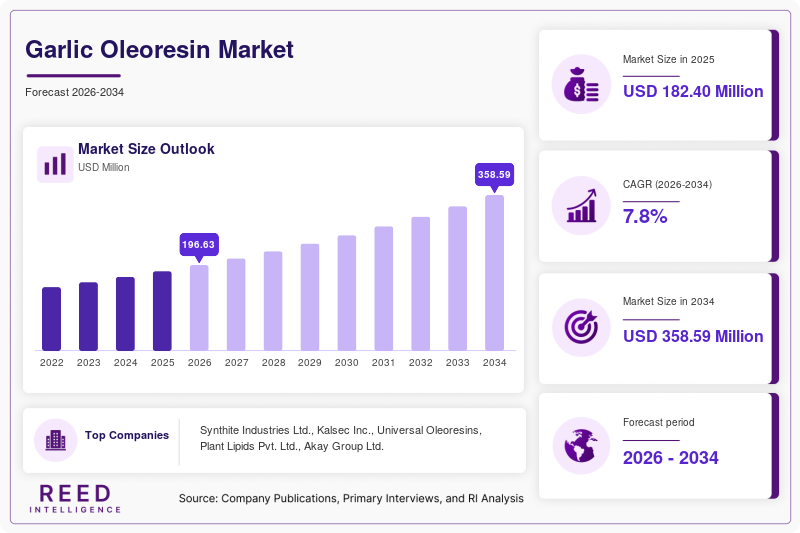
The global Garlic Oleoresin Market size was valued at USD 182.4 million in 2026 and is projected to reach USD 331.8 million by 2034, expanding at a CAGR of 7.8% during the forecast period from 2026 to 2034. The market is gaining steady momentum due to increasing demand for concentrated natural flavoring ingredients across the food processing, pharmaceutical, nutraceutical, and personal care industries. Garlic oleoresin, extracted through solvent extraction from dehydrated garlic cloves, offers a strong aroma, extended shelf life, and high stability compared to fresh garlic. These properties have increased its adoption in packaged food products, seasoning blends, sauces, meat products, and ready-to-eat meals.
One major global factor supporting market growth is the rising preference for natural food ingredients and clean-label formulations. Consumers are becoming more aware of synthetic additives and artificial flavors used in processed foods. As a result, manufacturers are incorporating botanical extracts and spice-based ingredients to improve product appeal and meet regulatory standards. Garlic oleoresin provides a convenient and cost-effective alternative to fresh garlic while delivering consistent flavor intensity. The expanding processed food industry in emerging economies, combined with growing demand for functional food ingredients, continues to create favorable conditions for market expansion.
Key Highlights
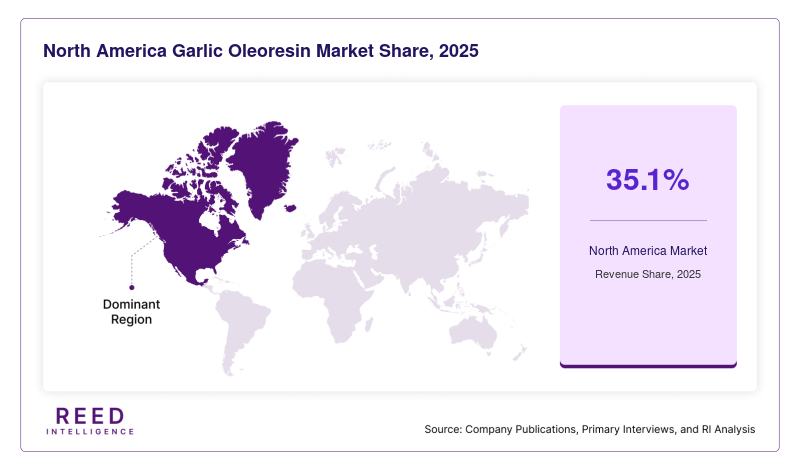
- North America dominated the market with a 35.1% share in 2025, while Asia Pacific is expected to grow at the fastest CAGR of 9.6% during 2026–2034.
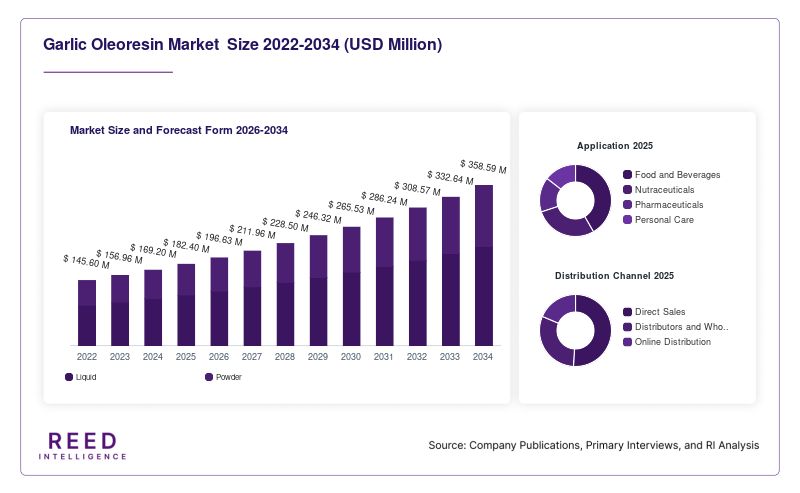
- By form, liquid garlic oleoresin accounted for the largest share of 61.4%, while powder garlic oleoresin is projected to grow at a CAGR of 8.8%.
- By application, food and beverages led with a 47.3% share, whereas nutraceuticals are expected to expand at a CAGR of 9.1%.
- By distribution channel, direct sales accounted for the largest share of 54.6%, while online distribution is projected to grow at a CAGR of 10.2%.
- The United States remained the dominant country, with market values of USD 48 million in 2024 and USD 52 million in 2025.
Market Trends
Rising Adoption of Clean-Label and Natural Food Ingredients
The increasing shift toward clean-label food products is influencing demand within the Garlic Oleoresin Market. Food manufacturers are replacing synthetic flavor enhancers and preservatives with plant-derived extracts to meet changing consumer expectations. Garlic oleoresin has emerged as a preferred ingredient due to its concentrated flavor profile, ease of blending, and extended storage stability. The ingredient is widely used in processed meat, soups, snacks, marinades, sauces, and frozen foods where flavor consistency is essential. Consumers are also seeking transparency in ingredient labeling, encouraging manufacturers to use recognizable spice extracts. This trend is especially visible in North America and Europe, where premium packaged food brands are focusing on natural seasoning solutions. Growing demand for convenience foods combined with rising interest in organic and minimally processed ingredients is expected to sustain long-term demand for garlic oleoresin products across multiple food categories.
Expansion of Garlic Oleoresin Applications in Nutraceutical Products
Garlic oleoresin is increasingly being incorporated into nutraceutical and dietary supplement formulations due to its bioactive sulfur compounds and antioxidant properties. Manufacturers are developing capsules, herbal blends, and immunity-support products using concentrated garlic extracts to appeal to health-conscious consumers. The growing awareness of preventive healthcare and cardiovascular wellness has strengthened demand for botanical ingredients with functional benefits. Garlic-derived products are also gaining popularity in sports nutrition and wellness supplements because of their potential anti-inflammatory and antimicrobial characteristics. In Asia Pacific and Europe, demand for herbal healthcare products has increased significantly, encouraging suppliers to diversify garlic oleoresin applications beyond food processing. Companies are investing in standardized extraction methods to ensure consistent active compound levels, which is improving acceptance among nutraceutical manufacturers. This trend is expected to create new revenue opportunities for suppliers operating in the global garlic extract industry.
Market Drivers
Growth of the Global Processed Food Industry
The rapid expansion of the processed and packaged food industry is a major factor driving the Garlic Oleoresin Market. Urbanization, changing lifestyles, and rising disposable incomes have increased demand for ready-to-cook and ready-to-eat food products worldwide. Garlic oleoresin offers manufacturers several advantages, including concentrated flavor, lower transportation costs, and longer shelf stability compared to fresh garlic. These characteristics make it suitable for large-scale industrial food production. Food manufacturers also prefer oleoresin because it reduces flavor variability and improves product consistency. Demand from fast-food chains, snack manufacturers, frozen meal producers, and seasoning companies continues to grow steadily. Emerging economies in Asia Pacific and Latin America are witnessing rapid growth in food processing infrastructure, which is creating additional demand for spice extracts. The expansion of international cuisine trends and flavored convenience foods is expected to further support long-term market growth during the forecast period.
Increasing Demand from Pharmaceutical and Healthcare Industries
The healthcare sector is contributing significantly to the growth of the Garlic Oleoresin Market due to increasing interest in plant-based medicinal ingredients. Garlic contains sulfur compounds such as allicin that are associated with antimicrobial, antioxidant, and cardiovascular benefits. Pharmaceutical and nutraceutical companies are using garlic oleoresin in supplements, herbal medicines, and wellness formulations aimed at supporting immunity and heart health. Consumers are increasingly adopting preventive healthcare practices, particularly after heightened awareness regarding immunity and lifestyle diseases. This has accelerated the use of botanical extracts in over-the-counter healthcare products. In addition, rising research activities focused on natural therapeutic compounds are encouraging the development of new garlic-derived formulations. Manufacturers are introducing high-purity oleoresin products with standardized active ingredient concentrations to improve efficacy and regulatory compliance. The growing acceptance of herbal healthcare products across developed and emerging economies is expected to continue driving industry expansion.
Market Restraint
Volatility in Raw Material Prices and Agricultural Supply
Fluctuations in garlic production and raw material pricing remain a significant restraint for the Garlic Oleoresin Market. Garlic cultivation is highly dependent on climatic conditions, irrigation availability, seasonal weather patterns, and regional agricultural productivity. Any disruption in crop yields caused by droughts, excessive rainfall, pest infestations, or transportation limitations can directly affect the supply chain and increase raw material costs. Since garlic oleoresin production relies heavily on high-quality garlic bulbs, inconsistent agricultural output can create instability in manufacturing operations and profit margins.
Price volatility also affects long-term procurement planning for food processors and ingredient manufacturers. Smaller producers often face difficulties maintaining stable production volumes when raw garlic prices rise sharply. In some cases, manufacturers shift toward alternative flavoring ingredients to reduce procurement risks, limiting market growth potential. Export restrictions and international trade fluctuations in major garlic-producing countries can further increase supply uncertainty. For example, reduced garlic harvests in key Asian exporting nations have previously led to temporary price increases for spice extracts and seasonings. These supply-side challenges may restrict market expansion, particularly for manufacturers operating with limited sourcing flexibility and lower inventory capacities.
Market Opportunities
Growing Demand for Ethnic and International Cuisine Products
The increasing popularity of ethnic cuisines and global flavor profiles is creating strong opportunities for the Garlic Oleoresin Market. Consumers are exploring Asian, Mediterranean, Mexican, and Middle Eastern food products that rely heavily on garlic-based seasonings and spice blends. Restaurants, food service chains, and packaged food brands are expanding their international product offerings to cater to evolving consumer preferences. Garlic oleoresin provides manufacturers with concentrated flavor intensity and improved formulation consistency, making it suitable for industrial-scale production of sauces, marinades, instant noodles, snack seasonings, and frozen meals.
The rapid growth of online food delivery platforms and international retail food chains has also accelerated exposure to global cuisines. As demand for authentic flavor experiences increases, manufacturers are investing in advanced spice extraction technologies to improve aroma retention and product quality. Emerging economies are witnessing rising consumption of processed ethnic foods, which is expected to create favorable opportunities for garlic oleoresin suppliers. Increased demand from premium food brands focusing on natural spice extracts is likely to further support future market expansion.
Expansion of Organic and Sustainable Ingredient Production
The rising focus on sustainable agriculture and organic food production presents a major growth opportunity for the Garlic Oleoresin Market. Consumers are increasingly seeking organic-certified ingredients and environmentally responsible food products. This trend is encouraging spice extract manufacturers to adopt sustainable sourcing practices and invest in organic garlic cultivation. Organic garlic oleoresin products are gaining attention among premium food brands and health-conscious consumers seeking minimally processed ingredients.
Manufacturers are also focusing on eco-friendly extraction methods and reduced solvent usage to improve sustainability standards. Regulatory agencies in several regions are promoting cleaner food manufacturing practices, which is encouraging suppliers to modernize production facilities. In addition, growing awareness regarding traceability and ethical sourcing is influencing procurement decisions among large food companies. Organic seasoning blends, plant-based food products, and natural health supplements are expected to generate additional demand for sustainably produced garlic oleoresin. As consumers continue prioritizing environmentally conscious purchasing behavior, companies investing in certified organic and sustainable production capabilities are likely to gain competitive advantages in the market.
Segmental Analysis
By Form
Liquid garlic oleoresin dominated the market and accounted for 61.4% of the global share in 2024 due to its broad industrial applicability and ease of incorporation into food processing systems. Liquid formulations are widely preferred by sauce manufacturers, seasoning producers, processed meat companies, and ready-meal manufacturers because they blend efficiently with oils, marinades, and liquid food bases. The format also offers improved flavor consistency and lower handling complexity compared to raw garlic ingredients. Manufacturers favor liquid oleoresin for large-scale operations because it reduces preparation time and improves shelf stability. In addition, liquid garlic oleoresin is extensively utilized in food service applications where concentrated flavor delivery is required. Strong demand from packaged food manufacturers in North America and Europe has further strengthened the position of liquid formulations in the global market. The availability of standardized concentration levels also supports widespread adoption across industrial food production environments.
Powder garlic oleoresin is projected to register the fastest CAGR of 8.8% during the forecast period due to rising demand for dry seasoning blends and instant food products. Powder formulations are increasingly used in snack coatings, dry soup mixes, bakery products, spice premixes, and convenience meal kits because they provide easy storage and transportation advantages. The growing popularity of dehydrated food ingredients among food processors is supporting adoption across emerging markets. Powder oleoresin products are also gaining traction among nutraceutical manufacturers due to improved compatibility with capsules and dietary supplements. Increasing investments in spray-drying and encapsulation technologies are improving product quality and aroma retention, which is encouraging wider commercial usage. Demand for powdered formulations is especially strong in Asia Pacific, where packaged snack consumption and spice blend manufacturing continue to expand rapidly across urban consumer markets.
By Application
Food and beverages represented the largest application segment and accounted for 47.3% of the market share in 2024. Garlic oleoresin is widely used across sauces, seasonings, snacks, frozen foods, canned products, processed meats, and ready-to-eat meals because it provides concentrated flavor with extended shelf stability. The growing global preference for convenience foods and packaged meal solutions has strengthened demand for industrial flavoring ingredients. Food manufacturers increasingly rely on garlic oleoresin to maintain consistency across large production batches while reducing storage and processing challenges associated with fresh garlic. The ingredient also supports clean-label product positioning, which has become important among consumers seeking natural flavor alternatives. Demand from restaurant chains and food service operators is further supporting growth within this segment. Rapid expansion of international cuisine products and premium savory snacks is expected to sustain strong application demand across developed and emerging economies.
Nutraceuticals are anticipated to witness the fastest CAGR of 9.1% during the forecast period due to rising consumer awareness regarding preventive healthcare and botanical wellness products. Garlic oleoresin contains bioactive compounds associated with antioxidant and antimicrobial properties, making it attractive for immunity-support supplements and cardiovascular wellness formulations. Manufacturers are introducing concentrated garlic extract capsules, tablets, and herbal blends targeted at health-conscious consumers seeking natural alternatives. The expansion of herbal supplement industries in Asia Pacific and Europe is contributing significantly to segment growth. Nutraceutical companies are also investing in standardized extraction technologies to improve active ingredient consistency and product efficacy. Increasing consumer interest in plant-based health products following global health awareness trends is expected to strengthen long-term demand for garlic oleoresin within functional nutrition and wellness applications across multiple international markets.
By Distribution Channel
Direct sales accounted for the largest market share of 54.6% in 2024 due to the strong presence of long-term supply agreements between manufacturers and industrial buyers. Large food processing companies, seasoning manufacturers, and nutraceutical producers typically procure garlic oleoresin directly from suppliers to ensure quality consistency and stable pricing. Direct distribution channels also provide better customization options, technical support, and bulk purchasing advantages for commercial clients. Ingredient manufacturers prefer direct partnerships because they enable efficient inventory management and stronger supply chain coordination. In addition, direct sales channels help producers maintain stronger control over product specifications and delivery timelines. North America and Europe continue to dominate this segment due to the concentration of large-scale food manufacturing facilities and established ingredient procurement networks. Increasing industrial demand for customized spice extract formulations is expected to further strengthen the role of direct sales channels in the market.
Online distribution is expected to expand at the fastest CAGR of 10.2% during the forecast period due to rapid digitalization and growing adoption of e-commerce platforms for specialty ingredient sourcing. Small and medium-sized food manufacturers, wellness brands, and independent seasoning companies are increasingly purchasing garlic oleoresin through online channels because of wider product accessibility and competitive pricing. Digital platforms allow suppliers to reach international customers more efficiently while offering detailed product specifications and lower minimum order quantities. The growing popularity of business-to-business ingredient marketplaces is also contributing to segment expansion. Online sales are particularly increasing in emerging economies where digital procurement systems are becoming more common across the food and nutraceutical industries. Suppliers are investing in digital marketing, online catalogs, and international shipping capabilities to improve customer engagement and expand their commercial reach.
Regional Analysis
North America
North America accounted for 35.1% of the global Garlic Oleoresin Market share in 2025 and is expected to maintain a stable growth trajectory with a CAGR of 6.9% through 2034. The region benefits from a highly developed food processing industry and strong demand for natural flavoring ingredients. Rising consumption of convenience foods, frozen meals, and ready-to-eat products continues to support market expansion. Food manufacturers across the United States and Canada are increasingly using spice extracts to maintain flavor consistency and reduce raw ingredient handling costs in large-scale production operations.
The United States dominated the regional market due to high demand from processed food manufacturers and nutraceutical companies. The country recorded strong growth in herbal supplements and clean-label packaged foods, which increased demand for garlic-based extracts. A unique factor supporting regional expansion is the growing adoption of functional seasonings in protein-rich food products such as meat snacks, marinades, and plant-based meat alternatives. Manufacturers are also investing in advanced extraction technologies to improve product quality and supply chain efficiency.
Europe
Europe represented 27.4% of the global Garlic Oleoresin Market in 2025 and is projected to expand at a CAGR of 7.1% during the forecast period. The region benefits from strong consumer preference for natural food additives and clean-label processed products. European food manufacturers are reducing synthetic flavor usage and increasing incorporation of botanical extracts in sauces, bakery products, and ready meals. Regulatory standards supporting natural ingredients are also encouraging food companies to adopt spice oleoresins for commercial production.
Germany emerged as the leading country within the European market due to its advanced food manufacturing sector and rising demand for premium seasoning ingredients. The country has experienced strong growth in processed meat, frozen food, and savory snack production, all of which use garlic-based flavoring compounds extensively. A unique factor supporting market growth in Germany is the increasing focus on plant-based and vegan food products that rely on natural seasonings to improve taste profiles and product appeal.
Asia Pacific
Asia Pacific accounted for 22.6% of the global Garlic Oleoresin Market share in 2025 and is expected to register the fastest CAGR of 9.6% during 2026–2034. The region benefits from strong garlic cultivation, expanding food processing industries, and rising urban populations. Increasing demand for packaged foods, instant noodles, seasoning mixes, and ready meals is supporting growth across China, India, Japan, and Southeast Asia. Manufacturers are increasingly adopting oleoresin products to improve production efficiency and flavor standardization.
China dominated the Asia Pacific market due to its large garlic production capacity and strong export activities. The country serves as a major supplier of garlic-based ingredients to international food manufacturers and spice processors. One unique factor supporting market growth is the rapid modernization of food processing infrastructure, which has increased demand for concentrated spice extracts across industrial applications. Chinese manufacturers are also expanding export-oriented production capacities to strengthen their position in the global spice extract industry.
Middle East & Africa
The Middle East & Africa region held 8.3% of the global Garlic Oleoresin Market in 2025 and is projected to grow at a CAGR of 6.5% through 2034. The regional market is benefiting from increasing consumption of processed foods and expanding hospitality industries. Demand for seasoning blends, sauces, and meat products is rising steadily across Gulf countries, which is increasing the use of concentrated spice extracts. Food manufacturers are focusing on improving product shelf life and flavor consistency, supporting adoption of garlic oleoresin in industrial applications.
Saudi Arabia dominated the regional market due to strong growth in packaged food consumption and rapid expansion of restaurant chains. The country is witnessing increasing demand for international cuisine products and premium seasonings. A unique factor driving growth is the rising tourism and hospitality sector, which has accelerated demand for commercial food preparation ingredients. Food service companies are increasingly using spice extracts to maintain standardized flavor profiles across large-scale operations.
Latin America
Latin America accounted for 6.6% of the global Garlic Oleoresin Market share in 2025 and is anticipated to grow at a CAGR of 6.8% through 2034. The region is benefiting from rising processed food production and increasing demand for savory snack products. Food manufacturers across Brazil, Mexico, and Argentina are adopting concentrated spice extracts to improve operational efficiency and flavor consistency. Growing urban populations and changing dietary habits are also contributing to increased consumption of packaged foods and ready meals.
Brazil dominated the Latin American market due to its large food processing industry and expanding seasoning product segment. The country has witnessed growing demand for sauces, processed meats, and spice blends that utilize garlic oleoresin as a flavoring component. One unique factor supporting growth is the increasing export activity of processed food products from Brazil to international markets, which is encouraging manufacturers to use stable and concentrated flavor ingredients.
Competitive Landscape
The Garlic Oleoresin Market is moderately fragmented, with several regional and international players competing through product innovation, distribution expansion, and strategic partnerships. Leading companies are focusing on improving extraction technologies, expanding organic product portfolios, and strengthening relationships with food processing and nutraceutical manufacturers. The competitive environment is influenced by raw material sourcing capabilities, pricing strategies, product quality consistency, and global distribution networks.
Synthite Industries Ltd. remains one of the leading companies in the market due to its extensive spice extraction expertise and broad international customer base. The company has invested in advanced extraction infrastructure to improve production efficiency and maintain consistent product quality standards. Major players are also emphasizing sustainable sourcing practices and traceability initiatives to meet growing demand for clean-label and responsibly produced ingredients.
Key Players
- Synthite Industries Ltd.
- Kalsec Inc.
- Universal Oleoresins
- Plant Lipids Pvt. Ltd.
- Akay Group Ltd.
- Vidya Herbs Pvt. Ltd.
- Naturex SA
- Givaudan SA
- Paras Perfumers
- AVT Natural Products Ltd.
- Indo World Trading Corporation
- Ungerer & Company
- PT Indesso Aroma
- Ozone Naturals
- Bioingredia Natural Pvt. Ltd.
Recent Developments
- Synthite Industries Ltd. expanded its spice extraction production capacity in India to improve export supply for natural seasoning ingredients in 2025.
- Plant Lipids Pvt. Ltd. introduced a high-purity garlic oleoresin formulation designed for nutraceutical and functional food applications in 2024.
- Kalsec Inc. announced investments in sustainable sourcing initiatives aimed at improving traceability and environmental compliance across its botanical extract portfolio in 2025.
- AVT Natural Products Ltd. launched a new clean-label spice ingredient range targeting processed food manufacturers seeking natural flavor solutions in 2024.
- Givaudan SA expanded its savory ingredient research capabilities to support development of customized garlic-based flavor systems for international food brands in 2025.
Garlic Oleoresin Market Segments
Form
- Liquid
- Powder
Application
- Food and Beverages
- Nutraceuticals
- Pharmaceuticals
- Personal Care
Distribution Channel
- Direct Sales
- Distributors and Wholesalers
- Online Distribution
By Region
- North America
- Europe
- APAC
- Middle East and Africa
- LATAM