Gastric Volvulus Treatment Market Size, Share & Demand Report By Treatment Type (Surgical Intervention, Laparoscopic Procedures, Endoscopic Reduction, Gastropexy Procedures, Supportive Care and Medication), By Diagnosis Method (Imaging Techniques, Endoscopic Diagnosis), By End User (Hospitals, Specialty Gastrointestinal Clinics, Ambulatory Surgical Centers) By Region & Segment Forecasts, 2026–2034
USD 3950
Market Overview
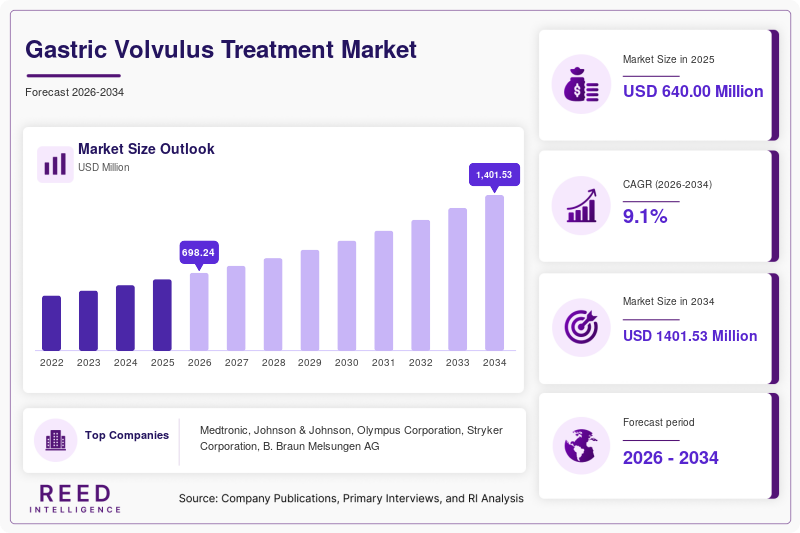
The global Gastric Volvulus Treatment Market size was valued at approximately USD 640 million in 2026 and is projected to reach nearly USD 1280 million by 2034, expanding at a CAGR of 9.1% during the forecast period from 2026 to 2034. The market is gaining momentum due to the increasing prevalence of gastrointestinal disorders, rising awareness regarding emergency abdominal conditions, and the growing availability of minimally invasive treatment procedures across developed and emerging healthcare systems. Gastric volvulus, a condition involving abnormal rotation of the stomach leading to obstruction and vascular compromise, requires rapid diagnosis and timely treatment. The increasing burden of age-related digestive complications and chronic diaphragmatic abnormalities has supported long-term demand for effective treatment solutions.
The expansion of healthcare infrastructure in emerging economies has also contributed to the broader adoption of surgical and endoscopic interventions for gastric volvulus management. Hospitals and specialty gastrointestinal centers are increasingly investing in advanced imaging technologies and laparoscopic surgical systems to improve patient outcomes. Moreover, the growing focus on emergency care preparedness and enhanced reimbursement policies in several countries have improved patient access to treatment. Pharmaceutical companies and medical device manufacturers are also strengthening their presence in this market through targeted innovations in minimally invasive surgical tools, fixation devices, and postoperative care solutions.
Key Highlights
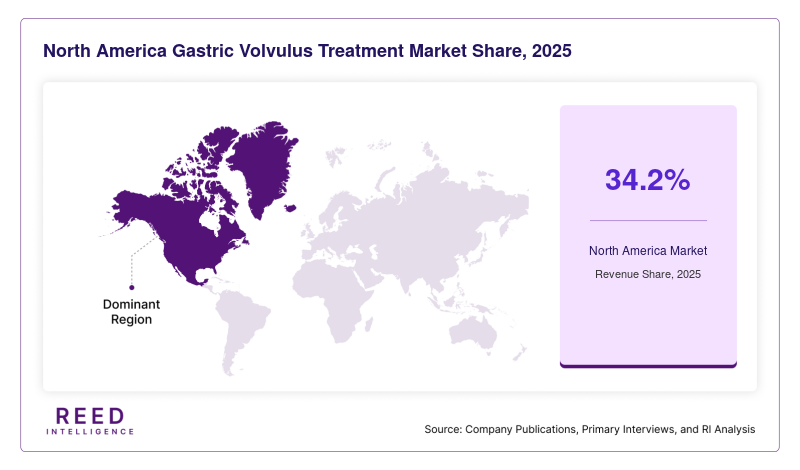
- North America dominated the market with a 34.2% share in 2025.
- Asia Pacific is expected to grow at the fastest CAGR of 11.2% during 2026–2034.
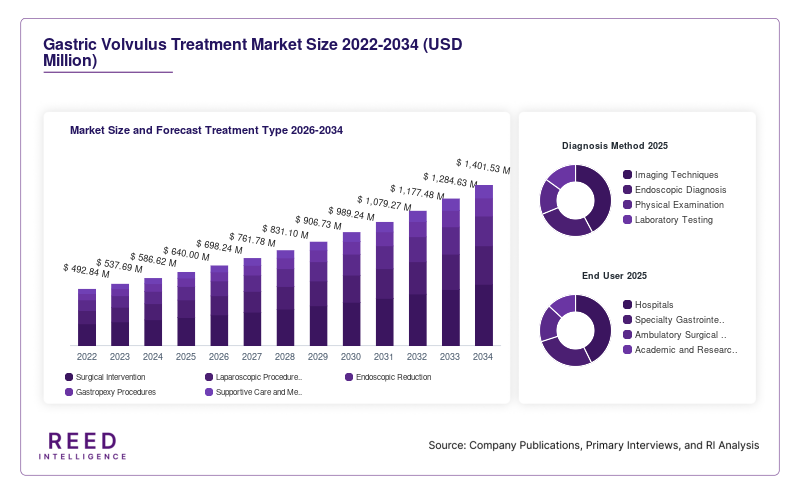
- By treatment type, surgical intervention accounted for the largest share of 48.6%.
- while laparoscopic procedures are projected to grow at a CAGR of 10.8%.
- By diagnosis method, imaging techniques led with a 42.1% share, whereas endoscopic diagnosis is expected to expand at a CAGR of 10.4%.
- By end user, hospitals held a dominant share of 56.3%, while specialty gastrointestinal clinics are projected to witness a CAGR of 9.9%.
- The United States remained the dominant country, with market values of USD 182 million in 2024 and USD 198 million in 2025.
Market Trends
Rising Adoption of Minimally Invasive Gastric Volvulus Procedures
The Gastric Volvulus Treatment Market is experiencing significant growth due to the increasing adoption of minimally invasive surgical techniques. Laparoscopic procedures are becoming more common in both developed and developing healthcare systems because they reduce recovery time, minimize surgical trauma, and lower the risk of postoperative complications. Hospitals are increasingly integrating robotic-assisted laparoscopic systems into gastrointestinal surgeries to improve precision and reduce hospitalization duration. Physicians are also recommending minimally invasive interventions for elderly patients who may not tolerate conventional open surgeries effectively. The growing availability of skilled laparoscopic surgeons and training programs has further accelerated the use of these procedures. In addition, healthcare providers are focusing on patient-centered treatment strategies that emphasize shorter recovery cycles and improved clinical outcomes.
Expansion of Advanced Diagnostic Imaging Technologies
Another major trend influencing the Gastric Volvulus Treatment Market is the growing use of advanced imaging technologies for rapid diagnosis. Computed tomography scans, upper gastrointestinal contrast studies, and endoscopic imaging are increasingly used to identify gastric torsion and associated complications at an early stage. Hospitals are integrating artificial intelligence-assisted diagnostic tools into emergency departments to improve the accuracy of gastrointestinal disorder detection. The growing burden of emergency digestive conditions has encouraged healthcare facilities to modernize radiology departments and enhance diagnostic workflows. Furthermore, rising investments in digital healthcare infrastructure are enabling quicker patient assessment and treatment planning. The availability of portable imaging systems in emergency settings has also improved the speed of diagnosis in critical care environments.
Market Drivers
Increasing Incidence of Gastrointestinal Disorders Among Aging Population
The rising incidence of gastrointestinal disorders among aging populations is a key factor driving the growth of the Gastric Volvulus Treatment Market. Elderly individuals are more susceptible to diaphragmatic hernias, chronic digestive complications, and anatomical abnormalities that can increase the risk of gastric volvulus. As global life expectancy continues to improve, healthcare systems are witnessing a greater demand for emergency gastrointestinal procedures and long-term digestive care management. Many countries are also reporting higher hospitalization rates linked to acute abdominal disorders among older adults. This demographic trend has encouraged hospitals and specialty clinics to strengthen their gastrointestinal surgery capabilities. Increased awareness regarding early diagnosis and prompt intervention is further contributing to market expansion.
Growing Healthcare Investments and Emergency Care Infrastructure
The continuous expansion of healthcare infrastructure and emergency medical services is supporting the growth of the Gastric Volvulus Treatment Market. Governments and private healthcare organizations are increasing investments in advanced surgical units, imaging technologies, and emergency gastrointestinal care centers. Emerging economies are rapidly improving healthcare accessibility through hospital modernization initiatives and expanded insurance coverage. The demand for efficient emergency surgical interventions has encouraged healthcare providers to adopt technologically advanced treatment systems. Moreover, the rising availability of skilled surgeons and specialized gastrointestinal care professionals is improving treatment success rates. Medical training institutions are also focusing on advanced laparoscopic and endoscopic education programs, which supports long-term procedural adoption.
Market Restraint
High Cost of Advanced Surgical Procedures and Delayed Diagnosis
One of the primary restraints affecting the Gastric Volvulus Treatment Market is the high cost associated with advanced surgical procedures and delayed diagnosis in low-resource healthcare settings. Minimally invasive surgeries, robotic-assisted procedures, and advanced imaging systems often require significant financial investments, making them less accessible in developing economies. Smaller hospitals and rural healthcare facilities may lack adequate infrastructure to perform emergency gastric volvulus procedures effectively. Delayed diagnosis can also increase the severity of complications, leading to prolonged hospital stays and higher treatment costs. In several countries, patients continue to face limited access to specialized gastrointestinal surgeons and emergency diagnostic services. These challenges can reduce treatment adoption rates and create disparities in patient outcomes. Additionally, reimbursement limitations in certain healthcare systems may discourage patients from opting for advanced treatment procedures, particularly when emergency surgeries involve substantial postoperative care expenses.
Market Opportunities
Expansion of Robotic-Assisted Gastrointestinal Surgery Platforms
The increasing adoption of robotic-assisted surgical platforms presents a strong opportunity for the Gastric Volvulus Treatment Market. Robotic systems provide surgeons with enhanced visualization, greater procedural precision, and improved dexterity during complex gastrointestinal procedures. Hospitals are increasingly investing in robotic surgery technologies to improve patient outcomes and reduce complication rates associated with conventional open surgeries. The growing demand for minimally invasive treatments among elderly patients has accelerated interest in robotic-assisted interventions. Furthermore, medical device companies are actively developing advanced robotic instruments designed specifically for gastrointestinal applications. As robotic systems become more accessible and training programs expand globally, healthcare providers are expected to integrate these technologies into emergency digestive care services more frequently.
Rising Demand for Specialized Gastrointestinal Care Centers
The growing establishment of specialized gastrointestinal care centers is creating new growth opportunities for the Gastric Volvulus Treatment Market. Many healthcare organizations are expanding dedicated digestive disorder units equipped with advanced diagnostic imaging systems, endoscopy facilities, and minimally invasive surgical technologies. These centers provide integrated treatment pathways that improve patient outcomes through faster diagnosis and coordinated emergency care. The rising prevalence of chronic gastrointestinal disorders has encouraged healthcare investors to develop specialty care networks across urban and semi-urban regions. In addition, the increasing awareness regarding digestive health and emergency abdominal conditions is supporting patient visits to specialized clinics. Partnerships between hospitals and gastrointestinal specialty providers are also enhancing access to advanced treatment procedures.
Segmental Analysis
By Treatment Type
Surgical intervention accounted for the largest share of the Gastric Volvulus Treatment Market in 2024, representing nearly 48.6% of total revenue. Open surgical procedures and gastropexy techniques continue to play a major role in managing severe gastric volvulus cases involving ischemia, obstruction, or tissue necrosis. Hospitals and emergency surgical centers rely heavily on surgical interventions because they provide immediate correction of stomach rotation and prevent life-threatening complications. The increasing prevalence of acute gastrointestinal emergencies and the growing number of elderly patients requiring urgent surgical management have contributed to the dominance of this segment. Furthermore, improvements in anesthesia protocols, postoperative monitoring systems, and intensive care support have enhanced patient survival rates following complex gastrointestinal surgeries.
Laparoscopic procedures are projected to register the fastest CAGR of 10.8% during the forecast period due to their minimally invasive nature and shorter recovery duration. Healthcare providers are increasingly favoring laparoscopic approaches because they reduce postoperative pain, lower infection risk, and shorten hospital stays compared to traditional open surgeries. The growing availability of advanced laparoscopic instruments and robotic-assisted platforms is further accelerating adoption. Many hospitals are also expanding specialized training programs for minimally invasive gastrointestinal surgeries to improve procedural outcomes. In addition, rising patient preference for quicker recovery and lower surgical trauma has encouraged healthcare systems to prioritize laparoscopic treatment pathways, particularly for elderly and high-risk patients.
By Diagnosis Method
Imaging techniques held the dominant share of the Gastric Volvulus Treatment Market in 2024, accounting for approximately 42.1% of overall revenue. Computed tomography scans, upper gastrointestinal contrast studies, and chest radiography remain essential diagnostic tools for identifying gastric torsion and related complications. Healthcare providers rely on advanced imaging technologies to achieve rapid diagnosis and initiate timely intervention in emergency situations. The increasing integration of digital imaging systems in hospitals and emergency departments has improved diagnostic accuracy and patient outcomes. Furthermore, rising investments in radiology infrastructure and advanced visualization technologies have strengthened the adoption of imaging-based diagnosis methods. The growing focus on reducing emergency care delays has also contributed to segment growth.
Endoscopic diagnosis is expected to expand at the fastest CAGR of 10.4% throughout the forecast period due to its ability to provide direct visualization of gastric abnormalities and support therapeutic intervention. Flexible endoscopy procedures are increasingly utilized in specialty gastrointestinal clinics and tertiary care hospitals to evaluate the severity of volvulus and assess tissue viability. The rising availability of advanced endoscopic imaging systems with enhanced maneuverability is supporting procedural efficiency. Healthcare providers are also recognizing the benefits of combining diagnostic and therapeutic endoscopic procedures to reduce the need for invasive surgery in selected patients. Increasing physician expertise in gastrointestinal endoscopy and improvements in patient monitoring technologies are further driving segment growth.
By End User
Hospitals represented the largest end-user segment in the Gastric Volvulus Treatment Market in 2024, contributing nearly 56.3% of total market revenue. Hospitals remain the primary treatment centers for gastric volvulus because the condition often requires emergency surgical intervention, intensive monitoring, and multidisciplinary care coordination. Large tertiary hospitals are increasingly equipped with advanced imaging technologies, minimally invasive surgical systems, and dedicated gastrointestinal surgery units capable of handling complex digestive emergencies. The rising number of emergency department admissions linked to acute abdominal disorders has strengthened the role of hospitals in market growth. Additionally, favorable reimbursement structures and government investments in hospital infrastructure continue to support treatment accessibility and advanced procedural adoption.
Specialty gastrointestinal clinics are projected to witness the fastest CAGR of 9.9% during the forecast period due to the growing demand for focused digestive disorder management and minimally invasive treatment services. These clinics provide specialized expertise in gastrointestinal diagnostics, endoscopy, and postoperative follow-up care, improving patient outcomes and treatment efficiency. Healthcare providers are increasingly establishing dedicated digestive care centers in urban areas to address the rising burden of gastrointestinal diseases. Another important growth factor is the increasing patient preference for specialized outpatient services that offer shorter waiting times and personalized treatment pathways. Collaborations between hospitals and specialty clinics are also supporting integrated care delivery and expanding access to advanced gastrointestinal procedures.
Regional Analysis
North America
North America accounted for the largest share of the Gastric Volvulus Treatment Market in 2025, representing approximately 34.2% of global revenue. The region is expected to maintain a stable growth trajectory with a forecast CAGR of 8.7% during the assessment period. Strong healthcare expenditure, widespread adoption of minimally invasive surgeries, and advanced emergency care infrastructure continue to support market expansion. Hospitals across the United States and Canada are increasingly utilizing robotic-assisted gastrointestinal procedures and high-resolution imaging systems for rapid diagnosis and treatment planning.
The United States remained the dominant contributor within North America due to its extensive network of tertiary care hospitals and specialized gastrointestinal treatment centers. The country has experienced rising demand for emergency digestive disorder management driven by an aging population and increased awareness regarding acute abdominal complications. Another important growth factor is the presence of leading medical device manufacturers investing in laparoscopic systems and advanced fixation devices. Favorable reimbursement structures and higher healthcare spending further strengthen the market environment.
Europe
Europe represented a significant portion of the Gastric Volvulus Treatment Market in 2025 and is projected to grow at a CAGR of 8.4% during the forecast period. The regional market is benefiting from increasing adoption of minimally invasive surgical techniques and growing awareness regarding gastrointestinal emergencies. Several European countries are investing in hospital modernization projects that include advanced endoscopic imaging systems and emergency surgical care facilities. The region also benefits from strong healthcare regulations supporting patient safety and improved postoperative outcomes.
Germany emerged as the leading country in the European market due to its well-developed healthcare infrastructure and strong surgical expertise. Hospitals in Germany are increasingly adopting laparoscopic gastrointestinal procedures to reduce recovery times and improve procedural efficiency. Another important growth factor is the country’s focus on medical technology innovation and clinical research. Academic medical centers and research institutions continue to collaborate with device manufacturers to improve gastrointestinal treatment protocols and surgical precision.
Asia Pacific
Asia Pacific is expected to register the fastest CAGR of 11.2% in the Gastric Volvulus Treatment Market from 2026 to 2034. The region is witnessing rapid improvements in healthcare infrastructure, increasing healthcare expenditure, and rising awareness regarding digestive disorders. Countries such as China, India, Japan, and South Korea are expanding emergency healthcare facilities and investing in advanced imaging technologies. The increasing burden of chronic gastrointestinal diseases and changing dietary patterns are also contributing to the growing demand for effective treatment solutions.
China remained the dominant market within Asia Pacific due to its large patient population and expanding healthcare network. Government initiatives aimed at improving hospital accessibility and emergency care systems have accelerated the adoption of advanced surgical procedures. Another unique growth factor is the rapid expansion of private healthcare providers offering minimally invasive gastrointestinal surgeries in urban centers. Increasing medical tourism and growing availability of skilled gastrointestinal surgeons are also supporting regional market development.
Middle East & Africa
The Middle East & Africa region is gradually expanding within the Gastric Volvulus Treatment Market and is projected to grow at a CAGR of 7.8% during the forecast period. Rising healthcare investments, improving hospital infrastructure, and growing awareness regarding emergency digestive conditions are supporting market growth. Countries across the Gulf Cooperation Council are increasing spending on advanced medical technologies and specialized surgical care facilities. Healthcare reforms focused on improving patient access to emergency treatment services are also contributing to the adoption of gastrointestinal treatment procedures.
Saudi Arabia dominated the regional market due to its expanding healthcare modernization programs and increasing focus on specialized surgical care. The country is investing heavily in advanced hospital facilities equipped with laparoscopic and robotic-assisted surgical systems. Another important growth factor is the government’s strategy to strengthen domestic healthcare services and reduce dependence on overseas treatment. Rising cases of obesity-related gastrointestinal complications and growing healthcare awareness are further supporting market demand.
Latin America
Latin America is expected to witness steady growth in the Gastric Volvulus Treatment Market with a forecast CAGR of 8.1% during 2026–2034. The region is benefiting from increasing healthcare investments and expanding access to emergency medical services. Hospitals across Brazil, Mexico, and Argentina are adopting advanced diagnostic imaging technologies and minimally invasive surgical techniques for gastrointestinal disorders. The growing prevalence of digestive diseases and gradual improvements in healthcare infrastructure are encouraging broader treatment adoption.
Brazil remained the dominant country in the Latin American market due to its large healthcare network and rising investments in tertiary care services. Public and private hospitals are increasingly integrating advanced laparoscopic systems to improve surgical efficiency and patient recovery outcomes. Another key growth factor is the expansion of medical education and training programs focused on gastrointestinal surgery. The increasing participation of international medical device companies in Brazil is also improving access to innovative treatment technologies.
Competitive Landscape
The Gastric Volvulus Treatment Market is characterized by the presence of established medical device manufacturers, pharmaceutical companies, and healthcare service providers focused on gastrointestinal care solutions. Market participants are investing in minimally invasive surgical technologies, robotic-assisted systems, and advanced diagnostic imaging platforms to strengthen their competitive position. Strategic collaborations between hospitals, research institutions, and device manufacturers are becoming increasingly common as companies aim to improve treatment efficiency and patient outcomes.
Medtronic remained one of the leading companies in the market due to its broad portfolio of laparoscopic surgical devices and gastrointestinal treatment technologies. The company recently expanded its minimally invasive surgery product line with advanced energy devices designed for gastrointestinal procedures. Johnson & Johnson, through its surgical technology division, continues to invest in robotic-assisted platforms and digital surgery solutions. Olympus Corporation is strengthening its gastrointestinal endoscopy business by introducing advanced imaging systems for improved digestive disorder diagnosis.Other major participants are also focusing on regional expansion strategies and clinical partnerships to increase market penetration. Companies are investing in surgeon training programs and product innovation to address the growing demand for minimally invasive treatment procedures. Increasing competition is expected to encourage technological advancements and improve patient access to advanced gastric volvulus treatment solutions.
Key Players
- Medtronic
- Johnson & Johnson
- Olympus Corporation
- Stryker Corporation
- B. Braun Melsungen AG
- Boston Scientific Corporation
- Cook Medical
- Fujifilm Holdings Corporation
- Karl Storz SE & Co. KG
- Intuitive Surgical
- Smith & Nephew
- CONMED Corporation
- Richard Wolf GmbH
- GE HealthCare
- Siemens Healthineers
Recent Developments
- In February 2026, Medtronic introduced an advanced laparoscopic visualization platform designed to improve precision in gastrointestinal emergency surgeries.
- In July 2025, Olympus Corporation expanded its gastrointestinal endoscopy portfolio with a next-generation imaging system focused on enhanced diagnostic accuracy for digestive disorders.
- In October 2025, Johnson & Johnson announced a strategic collaboration with multiple hospital networks to improve robotic-assisted gastrointestinal surgery training programs.
- In March 2026, Intuitive Surgical launched upgraded robotic-assisted instruments aimed at improving minimally invasive gastrointestinal procedure efficiency.
Gastric Volvulus Treatment Market Segments
Treatment Type
- Surgical Intervention
- Laparoscopic Procedures
- Endoscopic Reduction
- Gastropexy Procedures
- Supportive Care and Medication
Diagnosis Method
- Imaging Techniques
- Endoscopic Diagnosis
- Physical Examination
- Laboratory Testing
End User
- Hospitals
- Specialty Gastrointestinal Clinics
- Ambulatory Surgical Centers
- Academic and Research Institutes
By Region
- North America
- Europe
- APAC
- Middle East and Africa
- LATAM