Gene Vector Market Size, Share & Demand Report By Vector Type (Viral Vectors, Non-Viral Vectors), By Application (Gene Therapy, Vaccine Development, Research Applications), By End-Use (Biopharmaceutical Companies, Research Institutes, Contract Manufacturing Organizations), By Region & Segment Forecasts, 2026–2034
USD 3950
Market Overview
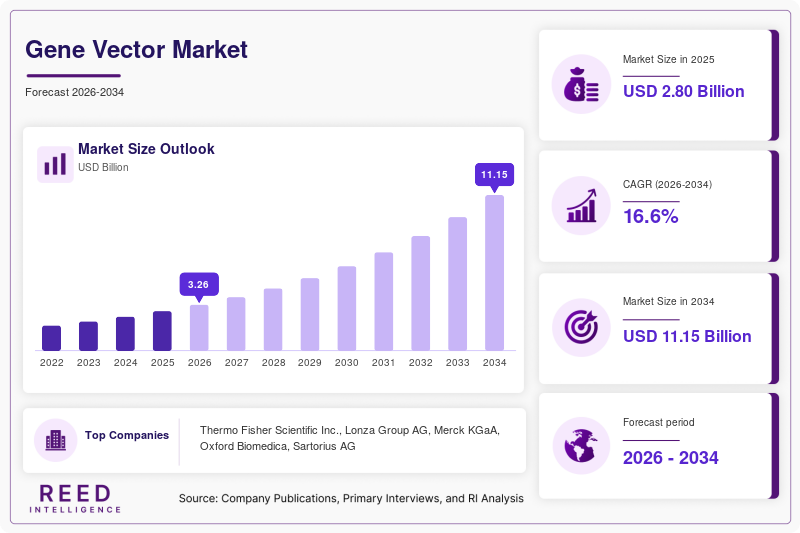
The Gene Vector Market size was valued at approximately USD 2.8 billion in 2026 and is projected to reach USD 9.6 billion by 2034, expanding at a CAGR of 16.6% during the forecast period (2026–2034). The rapid advancement of gene therapy pipelines, particularly for rare genetic disorders and oncology applications, has significantly supported the growth of this market. Increasing regulatory approvals for gene-based treatments and growing investments from biotechnology firms are further strengthening the adoption of viral and non-viral vectors globally.
A key global factor driving the Gene Vector Market is the rising prevalence of chronic and genetic diseases, which has intensified the demand for targeted therapies. As traditional treatment approaches often fail to address root genetic causes, gene vectors have emerged as essential tools for delivering therapeutic genes into patient cells. Additionally, improvements in vector design, safety profiles, and manufacturing scalability have contributed to wider clinical and commercial adoption across regions.
Key Highlights
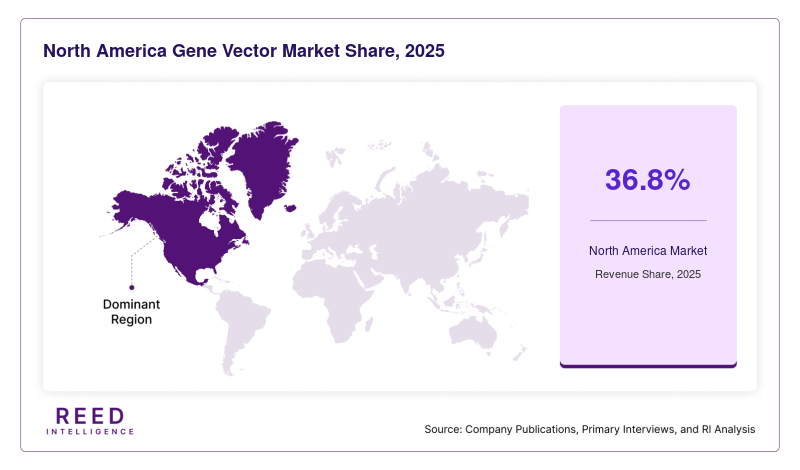
- North America dominated the market with a 36.8% share in 2025.
- Asia Pacific is expected to grow at the fastest CAGR of 18.3% during 2026–2034.
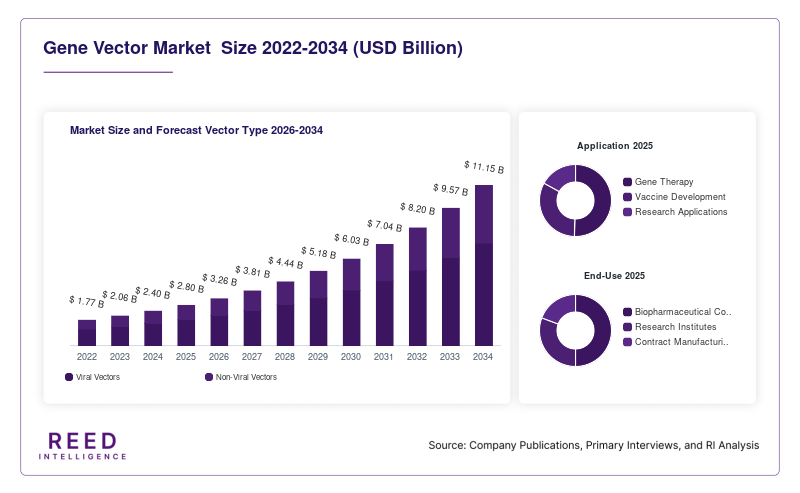
- By vector type, viral vectors accounted for the largest share of 64.5%, while non-viral vectors are projected to grow at a CAGR of 17.9%.
- By application, gene therapy led with a 48.2% share, whereas vaccine development is expected to expand at a CAGR of 18.7%.
- The United States remained the dominant country, with market values of USD 820 million in 2024 and USD 910 million in 2025.
Market Trends
Increasing adoption of viral vectors in clinical applications
The Gene Vector Market is witnessing a steady increase in the use of viral vectors, particularly adeno-associated viruses (AAV) and lentiviral vectors, in clinical applications. These vectors offer high efficiency in gene delivery and stable gene expression, making them suitable for treating genetic disorders and cancers. Pharmaceutical and biotechnology companies are increasingly focusing on viral vector platforms to enhance therapeutic outcomes. Additionally, regulatory approvals for viral vector-based therapies have boosted confidence among stakeholders, encouraging further investments. The scalability of viral vector manufacturing has also improved, enabling commercial production and expanding their role in advanced therapeutic pipelines.
Rising focus on non-viral vector innovation
Another notable trend shaping the Gene Vector Market is the growing interest in non-viral vector technologies. These include lipid nanoparticles, polymer-based systems, and physical delivery methods such as electroporation. Non-viral vectors are gaining attention due to their lower immunogenicity, improved safety profile, and cost-effectiveness compared to viral vectors. Research institutions and companies are actively developing innovative non-viral delivery systems to overcome limitations associated with viral vectors. The success of mRNA-based vaccines has further accelerated the adoption of lipid nanoparticle systems, highlighting their potential in gene delivery applications and driving continuous innovation in this segment.
Market Drivers
Growing pipeline of gene therapy products
The expanding pipeline of gene therapy products is a major driver of the Gene Vector Market. Numerous therapies targeting rare diseases, inherited disorders, and cancers are currently in clinical trials, requiring efficient gene delivery systems. As these therapies progress toward commercialization, the demand for high-quality gene vectors continues to rise. Pharmaceutical companies are investing heavily in research and development to improve vector performance and safety. Additionally, collaborations between biotech firms and contract manufacturing organizations are enhancing production capabilities. This growing pipeline is expected to sustain long-term market growth by increasing the need for advanced vector technologies.
Increasing investment in biotechnology and genomics
Another significant driver is the increasing investment in biotechnology and genomics research. Governments and private organizations are allocating substantial funds to support gene therapy development and related technologies. This financial support has accelerated innovation in vector design and manufacturing processes. Academic institutions and research organizations are also contributing to advancements in gene delivery systems. The rise of precision medicine and personalized therapies has further emphasized the importance of gene vectors in modern healthcare. As funding continues to grow, the Gene Vector Market is likely to benefit from enhanced research capabilities and faster commercialization of novel therapies.
Market Restraint
High manufacturing costs and scalability challenges
Despite strong growth prospects, the Gene Vector Market faces challenges related to high manufacturing costs and scalability. Producing gene vectors, especially viral vectors, requires complex processes, specialized facilities, and stringent quality control measures. These factors significantly increase production costs, limiting accessibility for smaller companies and emerging markets. Additionally, scaling up production while maintaining consistency and safety remains a critical challenge. For example, large-scale production of AAV vectors often faces bottlenecks due to limited yield and purification complexities. These issues can delay product development timelines and increase overall therapy costs, impacting market expansion and adoption rates.
Market Opportunities
Expansion in emerging markets
The Gene Vector Market presents significant opportunities in emerging markets, particularly in Asia Pacific and Latin America. These regions are witnessing improvements in healthcare infrastructure, increasing awareness of advanced therapies, and supportive government initiatives. Local manufacturing capabilities are also developing, reducing dependence on imports and lowering costs. As regulatory frameworks evolve, more companies are entering these markets to tap into growing patient populations. The expansion of clinical trials in these regions further enhances opportunities for gene vector providers, enabling broader access to innovative therapies and driving regional market growth.
Advancements in gene editing technologies
Advancements in gene editing technologies such as CRISPR are creating new opportunities for the Gene Vector Market. These technologies rely on efficient delivery systems to transport genetic material into target cells, increasing the demand for advanced vectors. The integration of gene editing with vector platforms has opened new avenues for treating previously untreatable conditions. Companies are focusing on developing vectors that can deliver gene-editing components with high precision and minimal side effects. This convergence of technologies is expected to accelerate innovation and expand the scope of gene-based therapies, offering substantial growth potential for the market.
Segmental Analysis
By Vector Type
Viral vectors dominated the Gene Vector Market in 2024, accounting for a share of 64.5%. These vectors are widely used due to their high efficiency in delivering genetic material into target cells. Adeno-associated viruses, lentiviruses, and retroviruses are commonly used in gene therapy applications. Their ability to achieve stable gene expression makes them suitable for treating chronic and genetic diseases. Pharmaceutical companies prefer viral vectors for their proven performance in clinical trials. Additionally, advancements in vector engineering have improved safety profiles, reducing risks associated with immunogenicity and enhancing their adoption across various therapeutic areas.
Non-viral vectors are the fastest-growing subsegment, with a projected CAGR of 17.9% during the forecast period. These vectors offer advantages such as lower toxicity, reduced immune response, and cost-effectiveness. Technologies such as lipid nanoparticles and polymer-based systems are gaining popularity, especially in vaccine development and gene editing applications. The success of mRNA vaccines has highlighted the potential of non-viral delivery systems, encouraging further research and development. As companies continue to innovate, non-viral vectors are expected to play a crucial role in expanding the scope of gene therapies and improving accessibility.
By Application
Gene therapy emerged as the dominant application segment in 2024, holding a share of 48.2% in the Gene Vector Market. The increasing prevalence of genetic disorders and the need for targeted treatments have driven demand for gene therapy solutions. Gene vectors are essential for delivering therapeutic genes into patient cells, enabling effective treatment outcomes. Pharmaceutical companies are focusing on developing gene therapies for rare diseases and oncology applications. The growing number of clinical trials and regulatory approvals has further strengthened this segment, making it a key contributor to overall market growth.
Vaccine development is the fastest-growing application segment, with a CAGR of 18.7% during the forecast period. The use of gene vectors in vaccine production has gained momentum, particularly following the success of mRNA and viral vector-based vaccines. These technologies enable rapid development and scalability, making them suitable for addressing emerging infectious diseases. Governments and healthcare organizations are investing in vaccine research, further driving demand for gene vectors. This trend is expected to continue, supporting the growth of the vaccine development segment.
By End-Use
Biopharmaceutical companies dominated the end-use segment in 2024, accounting for a significant share of 52.6%. These companies are the primary users of gene vectors, as they develop and commercialize gene therapies and vaccines. Their strong financial resources and research capabilities enable them to invest in advanced vector technologies. Collaborations with contract manufacturing organizations further enhance production efficiency. The increasing number of partnerships and acquisitions in the biotechnology sector has also contributed to the dominance of this segment.
Research institutes are the fastest-growing end-use segment, with a projected CAGR of 17.2%. Academic and research organizations play a crucial role in advancing gene vector technologies through innovation and experimentation. Government funding and grants support their activities, enabling the development of novel vector systems. These institutions often collaborate with industry players to translate research findings into commercial applications. As research efforts continue to expand, this segment is expected to contribute significantly to market growth.
Regional Analysis
North America
North America held a dominant share of 36.8% in the Gene Vector Market in 2025 and is expected to maintain steady growth with a CAGR of 15.9% during the forecast period. The region benefits from a well-established biotechnology sector, advanced healthcare infrastructure, and strong regulatory support for gene therapy approvals. High investment in research and development further supports market expansion. The presence of leading pharmaceutical companies and contract manufacturing organizations enhances production capabilities, ensuring consistent supply of gene vectors.
The United States remains the leading country in North America, driven by its robust clinical trial landscape and innovation ecosystem. A unique growth factor in the region is the increasing number of FDA-approved gene therapies, which has strengthened confidence in vector technologies. This has encouraged both domestic and international companies to invest in the U.S. market, further boosting demand for gene vectors.
Europe
Europe accounted for a significant share of the Gene Vector Market in 2025, with steady growth projected at a CAGR of 15.2% through 2034. The region benefits from supportive regulatory frameworks and increasing adoption of advanced therapies. Countries such as Germany, France, and the United Kingdom are leading contributors to market growth. The presence of established research institutions and collaborations between academia and industry supports innovation in gene vector technologies.
Germany is a dominant country in the European market, driven by its strong biotechnology sector and government funding for research. A unique growth factor is the region’s emphasis on rare disease treatment programs, which has increased demand for gene therapies. This focus has encouraged the development of specialized vector solutions tailored to specific genetic conditions, supporting overall market expansion.
Asia Pacific
Asia Pacific is the fastest-growing region in the Gene Vector Market, with a projected CAGR of 18.3% during the forecast period. The region is experiencing rapid growth due to increasing healthcare investments, rising awareness of gene therapies, and expanding biotechnology industries. Countries such as China, Japan, and India are contributing significantly to market growth. The establishment of local manufacturing facilities is also enhancing accessibility and reducing costs.
China leads the Asia Pacific market, supported by strong government initiatives and growing clinical trial activities. A unique growth factor is the increasing number of domestic biotechnology companies focusing on gene therapy development. This has created a competitive landscape and accelerated innovation in vector technologies, driving overall market growth in the region.
Middle East & Africa
The Middle East & Africa region is gradually emerging in the Gene Vector Market, with a moderate CAGR of 13.8% expected during the forecast period. The market is supported by improving healthcare infrastructure and increasing investment in advanced medical technologies. Countries in the Gulf Cooperation Council are leading the adoption of gene therapies, contributing to regional growth.
Saudi Arabia is a dominant country in this region, driven by government initiatives to modernize healthcare systems. A unique growth factor is the increasing focus on medical tourism and advanced treatment options, which has boosted demand for gene-based therapies. This trend is expected to support the growth of the gene vector market in the region.
Latin America
Latin America holds a smaller share of the Gene Vector Market but is expected to grow at a CAGR of 14.6% during the forecast period. The region is witnessing gradual adoption of gene therapies due to improving healthcare access and increasing awareness. Brazil and Mexico are key contributors to market growth, supported by expanding pharmaceutical industries.
Brazil dominates the Latin American market, driven by its large patient population and growing investment in biotechnology. A unique growth factor is the increasing number of clinical trials conducted in the country, which has boosted demand for gene vectors. This trend is expected to enhance market development and create new opportunities for industry players.
Competitive Landscape
The Gene Vector Market is characterized by intense competition, with several global and regional players focusing on innovation and strategic collaborations. Companies are investing in research and development to enhance vector efficiency, safety, and scalability. Partnerships between biotechnology firms and contract manufacturing organizations are common, enabling efficient production and distribution. The market also witnesses mergers and acquisitions aimed at expanding product portfolios and strengthening market presence.
A leading player in the market is Thermo Fisher Scientific, known for its comprehensive range of gene vector solutions and strong global presence. The company has recently expanded its manufacturing capabilities to meet growing demand for viral vectors. Other key players are focusing on developing advanced vector platforms and improving production processes. The competitive landscape is expected to evolve further as new entrants introduce innovative technologies and established players strengthen their positions through strategic initiatives.
Key Players
- Thermo Fisher Scientific Inc.
- Lonza Group AG
- Merck KGaA
- Oxford Biomedica
- Sartorius AG
- Takara Bio Inc.
- GenScript Biotech Corporation
- FUJIFILM Diosynth Biotechnologies
- Catalent Inc.
- Wuxi AppTec
- Cobra Biologics
- Aldevron
- Vigene Biosciences
- Creative Biogene
- Cell and Gene Therapy Catapult
Recent Developments
- A leading biotechnology company expanded its viral vector manufacturing facility to increase production capacity and meet rising demand for gene therapies.
- A strategic collaboration between two firms focused on developing advanced non-viral vector systems for gene editing applications.
- A major player launched a new lipid nanoparticle platform to enhance the delivery efficiency of genetic material in vaccine development.
Gene Vector Market Segments
Vector Type
- Viral Vectors
- Non-Viral Vectors
Application
- Gene Therapy
- Vaccine Development
- Research Applications
End-Use
- Biopharmaceutical Companies
- Research Institutes
- Contract Manufacturing Organizations
By Region
- North America
- Europe
- APAC
- Middle East and Africa
- LATAM