Genital Warts Condyloma Acuminatum Market Size, Share & Demand Report By Treatment Type (Topical Therapies, Surgical Procedures, Immunotherapy), By Application (Hospitals, Dermatology Clinics, Homecare Settings), By End-Use (Adults, Adolescents) & Segment Forecasts, 2026–2034
USD 3950
Market Overview
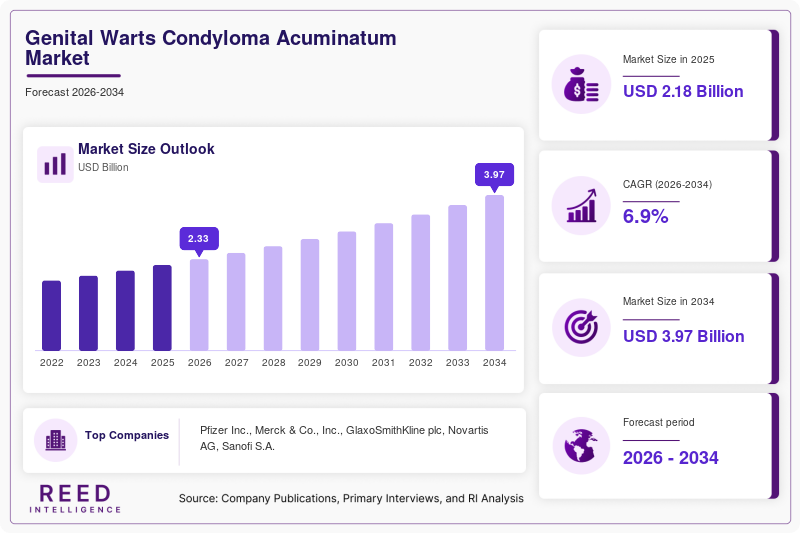
The global Genital Warts Condyloma Acuminatum Market size was valued at approximately USD 2.18 billion in 2026 and is projected to reach USD 3.74 billion by 2034, expanding at a compound annual growth rate (CAGR) of 6.9% during the forecast period from 2026 to 2034. The market is primarily driven by the increasing prevalence of human papillomavirus (HPV) infections, which are the leading cause of genital warts worldwide. Growing awareness regarding sexually transmitted infections (STIs), coupled with rising diagnostic rates and improvements in treatment accessibility, has contributed to steady market expansion.
A key global factor supporting market growth is the rising adoption of preventive healthcare measures, including vaccination programs and early screening initiatives. Governments and healthcare organizations are investing in HPV vaccination campaigns and public health education, which indirectly boost the demand for diagnostic and therapeutic solutions. In addition, advancements in topical treatments, immunotherapy, and minimally invasive procedures have improved patient outcomes, encouraging higher treatment uptake.
Key Highlights
- North America dominated the market with a 35.1% share in 2025.
- Asia Pacific is expected to grow at the fastest CAGR of 8.4% during 2026–2034.
- By treatment type, topical therapies accounted for the largest share of 42.6%, while immunotherapy is projected to grow at a CAGR of 9.1%.
- By end-use, hospitals led with a 47.3% share, whereas dermatology clinics are expected to expand at a CAGR of 8.7%.
- The United States remained the dominant country, with market values of USD 620 million in 2024 and USD 665 million in 2025.
Market Trends
Increasing Adoption of HPV Vaccination Programs
The growing emphasis on preventive healthcare has led to widespread adoption of HPV vaccination programs across developed and emerging economies. Governments and healthcare organizations are actively promoting vaccination among adolescents and young adults to reduce the incidence of HPV infections. This trend is shaping the Genital Warts Condyloma Acuminatum Market by influencing long-term demand patterns. While vaccination reduces future cases, it also raises awareness about HPV-related conditions, leading to increased screening and diagnosis rates in the short term.
Pharmaceutical companies are investing in the development of next-generation vaccines with broader strain coverage and improved efficacy. Additionally, school-based vaccination programs and public awareness campaigns are improving vaccine accessibility, especially in urban areas. As a result, healthcare systems are witnessing a dual impact—declining infection rates in vaccinated populations and increased demand for treatment in previously undiagnosed cases. This evolving dynamic is expected to influence market growth trajectories over the forecast period.
Advancements in Minimally Invasive Treatment Options
Technological advancements in treatment modalities are significantly transforming the market landscape. Minimally invasive procedures such as cryotherapy, laser therapy, and electrosurgery are gaining traction due to their effectiveness and reduced recovery time. These procedures offer improved patient comfort and lower recurrence rates compared to conventional treatments, making them a preferred choice among healthcare providers.
Moreover, the integration of advanced diagnostic tools enables early detection and precise treatment planning. Innovations in topical formulations and immunomodulatory therapies are also contributing to better clinical outcomes. Healthcare providers are increasingly adopting combination therapies to enhance treatment efficacy and minimize recurrence risks. This trend is expected to drive demand for advanced therapeutic solutions, particularly in urban healthcare settings where access to specialized care is more readily available.
Market Drivers
Rising Prevalence of HPV Infections Globally
The increasing prevalence of HPV infections remains a primary driver of the Genital Warts Condyloma Acuminatum Market. HPV is one of the most common sexually transmitted infections worldwide, affecting millions of individuals annually. The high transmission rate, coupled with limited awareness in certain regions, continues to contribute to a growing patient population requiring diagnosis and treatment.
Urbanization and changing lifestyle patterns have also played a role in increasing infection rates. In many developing regions, lack of access to preventive healthcare and limited screening programs further exacerbate the problem. As awareness improves, more individuals are seeking medical attention, leading to higher diagnosis rates. This growing patient pool directly translates into increased demand for therapeutic solutions, thereby supporting market expansion.
Growing Awareness and Screening Initiatives
Rising awareness regarding sexually transmitted infections and the importance of early diagnosis is another significant driver of market growth. Public health campaigns, educational programs, and digital health platforms are playing a crucial role in disseminating information about HPV and its associated conditions, including genital warts.
Healthcare providers are increasingly recommending routine screenings, especially for high-risk populations. Early detection allows for timely intervention, reducing complications and improving treatment outcomes. In addition, the availability of over-the-counter topical treatments and telemedicine consultations has made it easier for patients to access care. This increased accessibility is encouraging more individuals to seek treatment, thereby driving market demand. As awareness continues to grow, the market is expected to witness sustained expansion over the forecast period.
Market Restraint
Social Stigma and Underreporting of Cases
One of the key challenges hindering market growth is the social stigma associated with sexually transmitted infections, including genital warts. In many regions, cultural and societal norms discourage open discussions about sexual health, leading to underreporting and delayed diagnosis. This reluctance to seek medical care results in a significant number of untreated cases, limiting the overall market potential.
The impact of stigma is particularly evident in developing economies, where awareness levels are relatively low and access to healthcare services may be limited. Patients often resort to self-medication or avoid treatment altogether, which can lead to complications and higher recurrence rates. For example, individuals in rural areas may rely on traditional remedies instead of seeking professional medical advice. This behavior not only affects patient outcomes but also reduces the demand for clinically approved treatments. Addressing this issue requires targeted awareness campaigns and improved access to confidential healthcare services.
Market Opportunities
Expansion of Telemedicine and Digital Health Platforms
The rapid growth of telemedicine and digital health platforms presents significant opportunities for the Genital Warts Condyloma Acuminatum Market. These platforms enable patients to consult healthcare professionals remotely, ensuring privacy and convenience. This is particularly beneficial for individuals who may hesitate to seek in-person consultations due to stigma or geographical barriers.
Telemedicine also facilitates early diagnosis and timely treatment, reducing the risk of complications. Healthcare providers can offer personalized treatment plans and monitor patient progress through digital tools. In addition, online pharmacies are making it easier for patients to access prescribed medications. The integration of artificial intelligence in digital health platforms further enhances diagnostic accuracy and treatment recommendations. As digital healthcare continues to evolve, it is expected to play a crucial role in expanding market reach and improving patient outcomes.
Increasing Investment in Research and Development
Growing investment in research and development is creating new opportunities for innovation in the treatment of genital warts. Pharmaceutical companies and research institutions are focusing on developing advanced therapies with improved efficacy and reduced side effects. This includes the exploration of novel antiviral agents, immunotherapies, and combination treatments.
Clinical trials aimed at evaluating new treatment options are gaining momentum, supported by government funding and private sector investments. These efforts are expected to result in the introduction of more effective and patient-friendly therapies. In addition, collaborations between academic institutions and industry players are accelerating the pace of innovation. As new products enter the market, they are likely to address unmet medical needs and enhance treatment outcomes, thereby driving market growth.
Segmental Analysis
By Treatment Type
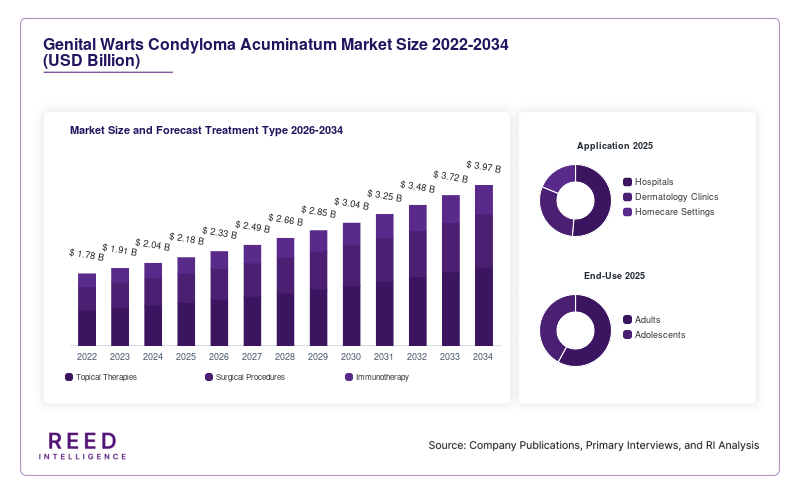
Topical therapies dominated the market in 2024, accounting for approximately 42.6% of the total share. These treatments are widely preferred due to their non-invasive nature, ease of application, and cost-effectiveness. Commonly used topical agents include imiquimod and podophyllotoxin, which are effective in treating external genital warts. The availability of over-the-counter options further contributes to their widespread adoption. Patients often prefer topical treatments as a first-line therapy, especially for mild to moderate cases. In addition, healthcare providers recommend these therapies due to their favorable safety profile and minimal side effects.
Immunotherapy is emerging as the fastest-growing subsegment, with a projected CAGR of 9.1% during the forecast period. This growth is driven by the increasing focus on enhancing the body’s immune response to combat HPV infections. Immunotherapeutic agents offer improved efficacy and lower recurrence rates compared to conventional treatments. Ongoing research and development efforts are leading to the introduction of advanced immunotherapies with better clinical outcomes. As awareness about these treatments grows, their adoption is expected to increase significantly, particularly in developed markets.
By Application
Hospitals accounted for the largest share of the market in 2024, with approximately 47.3%. This dominance is attributed to the availability of advanced diagnostic and treatment facilities, as well as the presence of skilled healthcare professionals. Hospitals are often the first point of contact for patients seeking treatment for genital warts, especially in severe cases. They offer a wide range of treatment options, including surgical procedures and combination therapies. In addition, hospitals play a crucial role in conducting clinical trials and research activities, further contributing to market growth.
Dermatology clinics are the fastest-growing subsegment, with a CAGR of 8.7% during the forecast period. The growth of this segment is driven by the increasing preference for specialized care and personalized treatment plans. Dermatology clinics offer targeted therapies and advanced treatment options, ensuring better patient outcomes. The rise of private healthcare facilities and increasing awareness about skin-related conditions are also contributing to the growth of this segment. As patients seek more convenient and specialized services, dermatology clinics are expected to gain significant traction.
By End-Use
Adults represented the dominant subsegment in 2024, accounting for the largest share of the market. This is primarily due to the higher prevalence of HPV infections among sexually active individuals. Adults are more likely to seek medical attention and undergo treatment, contributing to the segment’s dominance. In addition, increased awareness and access to healthcare services are encouraging more adults to opt for diagnosis and treatment.
The adolescent segment is expected to grow at the fastest CAGR of 7.8% during the forecast period. This growth is driven by increasing awareness and the implementation of school-based vaccination programs. Early education about sexual health and preventive measures is encouraging adolescents to seek timely medical advice. As vaccination programs continue to expand, the demand for diagnostic and treatment services in this segment is expected to increase.
Regional Analysis
North America
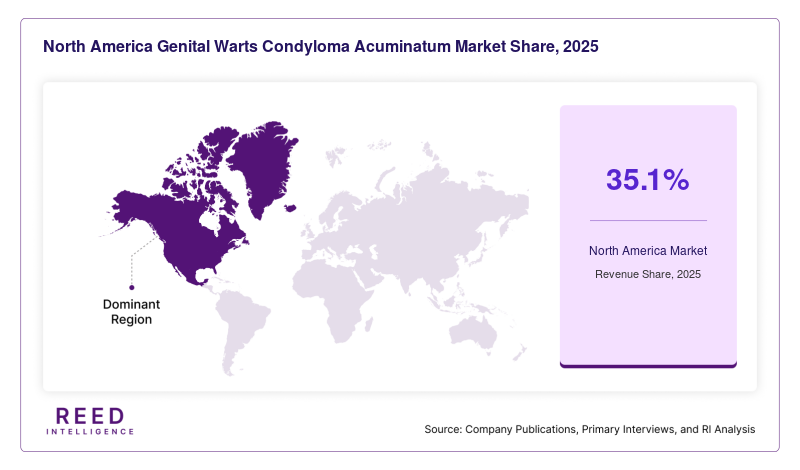
North America held the largest share of the Genital Warts Condyloma Acuminatum Market in 2025, accounting for approximately 35.1% of the global market. The region is expected to maintain its dominance, with a steady CAGR of 6.5% during the forecast period. High awareness levels, advanced healthcare infrastructure, and widespread availability of treatment options contribute to the region’s strong market position.
The United States is the dominant country in this region, driven by robust healthcare spending and extensive HPV vaccination programs. A unique growth factor is the strong presence of leading pharmaceutical companies and research institutions, which facilitates continuous innovation and product development. This ensures a steady pipeline of advanced therapies, supporting market growth.
Europe
Europe accounted for a significant share of the global market in 2025, with steady growth expected at a CAGR of 6.2%. The region benefits from well-established healthcare systems and strong government support for public health initiatives. Increasing awareness about HPV and regular screening programs are key factors driving market growth.
Germany emerges as the dominant country in Europe, supported by its advanced healthcare infrastructure and high adoption of innovative treatment solutions. A unique growth factor is the region’s focus on preventive healthcare, including widespread HPV vaccination programs, which indirectly boost demand for diagnostic and therapeutic services.
Asia Pacific
Asia Pacific is the fastest-growing region in the Genital Warts Condyloma Acuminatum Market, with a projected CAGR of 8.4% from 2026 to 2034. The region’s growth is driven by a large population base, increasing awareness, and improving healthcare infrastructure. Rising disposable incomes are also contributing to higher healthcare spending.
China is the dominant country in this region, supported by its large patient population and expanding healthcare sector. A unique growth factor is the increasing government focus on public health campaigns and vaccination programs, which are improving awareness and encouraging early diagnosis and treatment.
Middle East & Africa
The Middle East & Africa region is experiencing moderate growth, with a CAGR of 5.8% during the forecast period. The market is driven by improving healthcare infrastructure and increasing awareness about sexually transmitted infections. However, challenges such as limited access to healthcare services in certain areas persist.
South Africa stands out as the dominant country in this region, benefiting from relatively advanced healthcare facilities compared to neighboring countries. A unique growth factor is the growing involvement of non-governmental organizations in promoting sexual health awareness and facilitating access to treatment.
Latin America
Latin America is expected to witness steady growth, with a CAGR of 6.0% over the forecast period. The region’s market is supported by increasing awareness and improving access to healthcare services. Government initiatives aimed at promoting sexual health are also contributing to market expansion.
Brazil is the leading country in this region, driven by its large population and growing healthcare sector. A unique growth factor is the increasing adoption of digital health platforms, which are enhancing access to diagnosis and treatment, particularly in remote areas.
Competitive Landscape
The Genital Warts Condyloma Acuminatum Market is characterized by the presence of several established pharmaceutical companies and emerging players. These companies are focusing on product innovation, strategic collaborations, and expansion into emerging markets to strengthen their market position. The competitive landscape is moderately fragmented, with a mix of global and regional players.
One of the leading companies in the market is Pfizer Inc., which has a strong portfolio of vaccines and therapeutic solutions. The company recently announced the expansion of its HPV vaccine distribution network, aiming to increase accessibility in emerging markets. Other key players are investing in research and development to introduce advanced treatment options with improved efficacy and safety profiles. Strategic partnerships and mergers are also common, enabling companies to enhance their product offerings and expand their geographical presence.
Key Players
- Pfizer Inc.
- Merck & Co., Inc.
- GlaxoSmithKline plc
- Novartis AG
- Sanofi S.A.
- Johnson & Johnson
- AbbVie Inc.
- Bayer AG
- Teva Pharmaceutical Industries Ltd.
- Mylan N.V.
- Cipla Limited
- Sun Pharmaceutical Industries Ltd.
- Aurobindo Pharma Limited
- Lupin Limited
- Zydus Lifesciences Limited
Recent Developments
- In 2025, a leading pharmaceutical company launched an advanced topical formulation with improved efficacy and reduced side effects for genital warts treatment.
- In 2024, a global healthcare firm expanded its HPV vaccine production capacity to meet rising demand in emerging markets.
- In 2026, a biotechnology company initiated clinical trials for a novel immunotherapy aimed at reducing recurrence rates of genital warts.
Genital Warts Condyloma Acuminatum Market Segments
Treatment Type
- Topical Therapies
- Surgical Procedures
- Immunotherapy
Application
- Hospitals
- Dermatology Clinics
- Homecare Settings
End-Use
- Adults
- Adolescents
By Region
- North America
- Europe
- APAC
- Middle East and Africa
- LATAM