Genomic Urine Testing Market Size, Share & Demand Report By Test Type (Cancer Detection, Infectious Disease Testing, Genetic Disorder Testing), By Application (Disease Diagnosis, Monitoring & Screening, Research Applications), By End-Use (Hospitals, Diagnostic Laboratories, Research Institutes), By Region & Segment Forecasts, 2026–2034
USD 3950
Market Overview
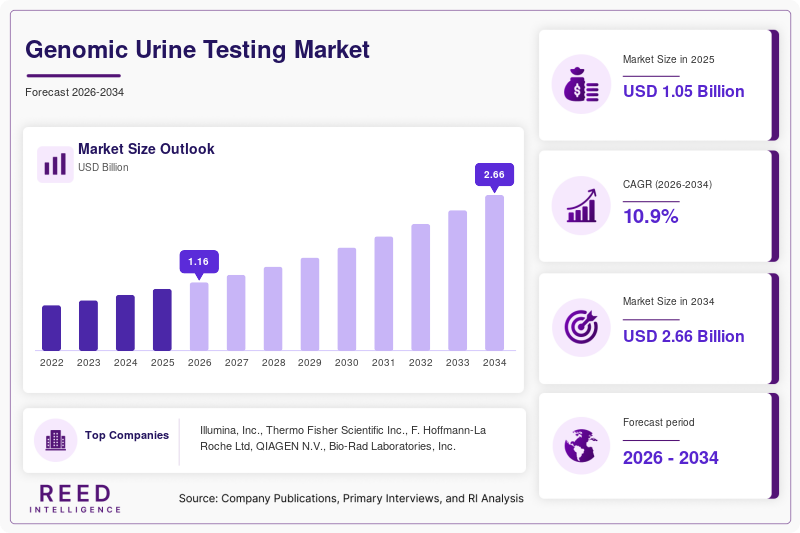
The Genomic Urine Testing Market was valued at approximately USD 1.05 billion in 2026 and is projected to reach USD 2.42 billion by 2034, expanding at a CAGR of 10.9% during the forecast period (2026–2034). This growth trajectory reflects the increasing adoption of non-invasive diagnostic technologies and the rising demand for precision medicine solutions across global healthcare systems. Genomic urine testing enables early detection of diseases, particularly urological cancers and chronic kidney disorders, by analyzing genetic biomarkers present in urine samples. The non-invasive nature of this testing method has improved patient compliance and screening efficiency, which continues to support its broader adoption across hospitals, diagnostic laboratories, and research institutions.
A major global factor supporting market expansion is the shift toward personalized healthcare. Governments and healthcare providers are increasingly investing in genomic research and biomarker-based diagnostics to enhance disease prediction and treatment outcomes. This trend has accelerated the integration of genomic urine testing into routine clinical workflows, particularly in developed economies. Additionally, advancements in sequencing technologies and bioinformatics platforms have enhanced the accuracy, speed, and scalability of genomic urine tests, further strengthening market growth.
Key Highlights
- North America dominated the market with a 35.1% share in 2025.
- Asia Pacific is expected to grow at the fastest CAGR of 12.3% during 2026–2034.
- By test type, cancer detection tests accounted for the largest share of 42.6%.
- while infectious disease testing is projected to grow at a CAGR of 12.8%.
- By end-use, hospitals led with a 46.3% share, whereas diagnostic laboratories are expected to expand at a CAGR of 11.7%.
- The United States remained the dominant country, with market values of USD 420 million in 2024 and USD 465 million in 2025.
Market Trends
Integration of AI and Bioinformatics in Genomic Testing
The integration of artificial intelligence and advanced bioinformatics tools is emerging as a key trend in the genomic urine testing market. AI-driven algorithms are increasingly being used to interpret complex genomic data derived from urine samples, enabling more accurate disease detection and risk stratification. These tools enhance the identification of genetic mutations and biomarkers associated with conditions such as bladder cancer and prostate cancer. Additionally, AI improves turnaround time by automating data processing workflows, which is critical for clinical decision-making. As healthcare providers prioritize efficiency and precision, the adoption of AI-enabled genomic testing platforms is expected to increase steadily across developed and emerging markets.
Growing Adoption of Non-Invasive Diagnostic Techniques
There is a notable shift toward non-invasive diagnostic methods in clinical practice, which has significantly influenced the adoption of genomic urine testing. Patients and clinicians prefer urine-based testing over traditional biopsy or blood-based methods due to its convenience and reduced discomfort. This trend is particularly strong in cancer screening and monitoring applications, where repeated testing is often required. Furthermore, healthcare systems are emphasizing early detection programs, which favor accessible and patient-friendly diagnostic tools. As awareness of non-invasive testing benefits continues to rise, genomic urine testing is likely to become a standard component of routine diagnostics.
Market Drivers
Rising Prevalence of Urological and Chronic Diseases
The increasing incidence of urological cancers, kidney disorders, and chronic diseases is a major driver for the genomic urine testing market. Conditions such as bladder cancer and prostate cancer require early and accurate diagnosis to improve survival rates. Genomic urine testing provides a reliable and non-invasive solution for detecting disease-specific biomarkers, making it highly suitable for screening and monitoring. As global disease burden continues to rise due to aging populations and lifestyle factors, the demand for efficient diagnostic tools is increasing. This has led to greater adoption of genomic urine testing in clinical settings, supporting sustained market growth.
Advancements in Genomic Technologies
Technological advancements in genomic sequencing and molecular diagnostics have significantly enhanced the capabilities of urine-based testing. Next-generation sequencing and polymerase chain reaction techniques have improved the sensitivity and specificity of genomic tests, enabling detection of low-abundance biomarkers. These innovations have expanded the application scope of genomic urine testing beyond oncology to include infectious diseases and genetic disorders. Additionally, continuous improvements in cost efficiency and scalability have made these technologies more accessible to healthcare providers. As innovation continues, the market is expected to benefit from improved diagnostic accuracy and broader clinical adoption.
Market Restraint
High Cost of Genomic Testing and Limited Reimbursement Policies
Despite its advantages, the genomic urine testing market faces challenges related to high testing costs and limited reimbursement frameworks. Advanced genomic tests require sophisticated equipment, skilled personnel, and complex data analysis, which increases overall costs. In many regions, particularly in developing economies, these costs limit accessibility for patients and healthcare providers. Additionally, reimbursement policies for genomic testing remain inconsistent across countries, which affects adoption rates. Insurance coverage often does not fully support genomic urine tests, especially for preventive or screening purposes. This creates financial barriers for patients and restricts market penetration. For example, smaller diagnostic laboratories may hesitate to invest in genomic testing infrastructure due to uncertain returns on investment. These factors collectively hinder widespread adoption and pose a challenge to market expansion.
Market Opportunities
Expansion in Emerging Markets
Emerging economies present significant growth opportunities for the genomic urine testing market. Countries in Asia Pacific, Latin America, and the Middle East are investing in healthcare infrastructure and diagnostic capabilities. Increasing awareness of early disease detection and rising healthcare expenditure are driving demand for advanced diagnostic solutions. Governments are also launching initiatives to improve access to genomic technologies, which supports market expansion. As these regions continue to develop their healthcare systems, genomic urine testing is expected to gain traction, particularly in urban centers and private healthcare facilities.
Development of Multi-Target Diagnostic Panels
The development of multi-target genomic panels represents a promising opportunity for market growth. These panels allow simultaneous detection of multiple biomarkers, enabling comprehensive disease analysis from a single urine sample. This approach improves diagnostic efficiency and reduces the need for multiple tests. Healthcare providers are increasingly adopting multi-target panels for cancer screening and monitoring, as they offer higher clinical value. Additionally, ongoing research in biomarker discovery is expected to expand the range of detectable conditions. As innovation continues, multi-target genomic panels are likely to become a key growth driver in the market.
Segmental Analysis
By Test Type
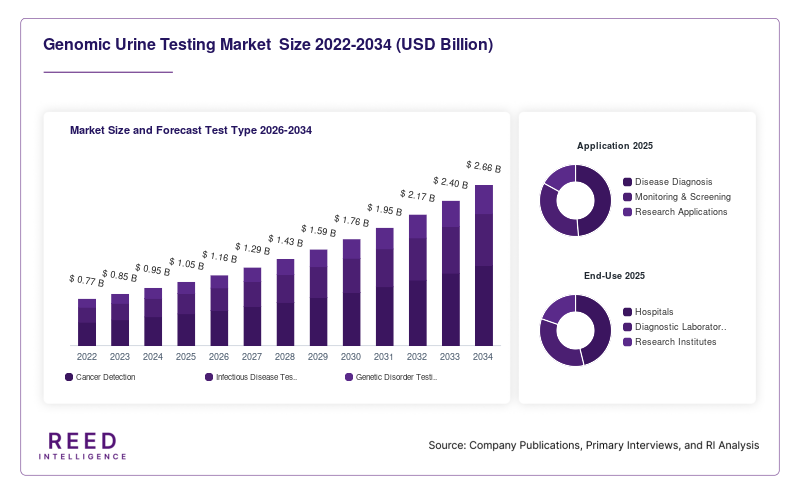
Cancer detection tests dominated the genomic urine testing market, accounting for approximately 42.6% of the share in 2024. These tests are widely used for detecting bladder cancer, prostate cancer, and other urological malignancies. The high prevalence of cancer and the need for early detection have driven the adoption of these tests. Additionally, cancer detection tests offer high sensitivity and specificity, making them suitable for clinical use. Healthcare providers prefer these tests due to their non-invasive nature and ability to provide accurate diagnostic results, which supports their leading position in the market.
Infectious disease testing is expected to be the fastest-growing subsegment, with a CAGR of 12.8% during the forecast period. The growth is driven by increasing demand for rapid and accurate diagnostic solutions for infections. Genomic urine testing enables detection of pathogens at the molecular level, improving diagnostic accuracy. Additionally, the rising incidence of infectious diseases and the need for efficient screening methods are contributing to the growth of this subsegment.
By Application
Disease diagnosis accounted for the largest share of 48.2% in 2024, driven by the increasing demand for accurate and early detection of diseases. Genomic urine testing is widely used in diagnosing various conditions, including cancer and kidney disorders. The ability to detect genetic biomarkers in urine samples has made it a valuable tool in clinical diagnostics. Healthcare providers are increasingly adopting these tests to improve patient outcomes and reduce diagnostic errors.
Monitoring and screening applications are expected to grow at the fastest CAGR of 11.9% during the forecast period. This growth is driven by the increasing emphasis on preventive healthcare and early disease detection. Genomic urine testing allows for continuous monitoring of disease progression, making it suitable for long-term patient management. Additionally, the growing awareness of preventive healthcare is supporting the adoption of these applications.
By End-Use
Hospitals dominated the market with a share of 46.3% in 2024, driven by the availability of advanced diagnostic infrastructure and skilled professionals. Hospitals are the primary settings for disease diagnosis and treatment, making them key users of genomic urine testing. The integration of genomic testing into hospital workflows has improved diagnostic accuracy and patient care. Additionally, hospitals have the resources to invest in advanced technologies, which supports their leading position in the market.
Diagnostic laboratories are expected to be the fastest-growing subsegment, with a CAGR of 11.7% during the forecast period. The growth is driven by the increasing demand for specialized diagnostic services and outsourcing of testing by hospitals. Diagnostic laboratories offer cost-effective and efficient testing solutions, making them attractive to healthcare providers. Additionally, advancements in laboratory technologies are enhancing the capabilities of these facilities, supporting their growth in the market.
Regional Analysis
North America
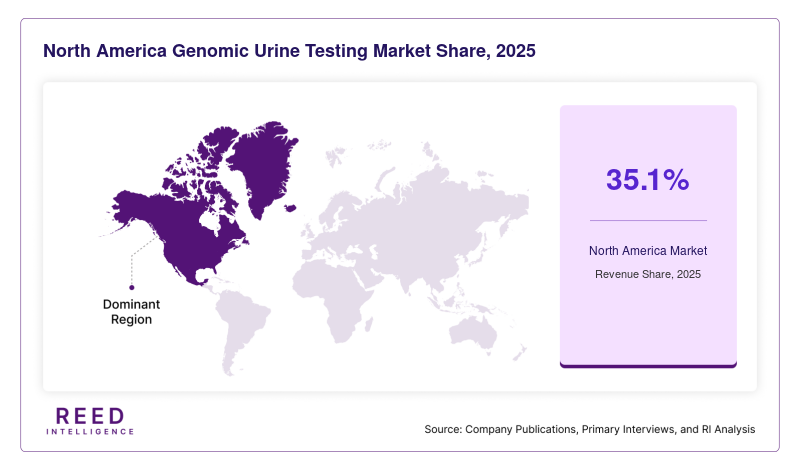
North America accounted for a dominant share of approximately 35.1% in 2025 and is projected to grow at a CAGR of 10.2% during the forecast period. The region benefits from advanced healthcare infrastructure and strong adoption of genomic technologies. High investment in research and development, along with the presence of leading biotechnology companies, supports market growth. Additionally, favorable regulatory frameworks and increasing awareness of precision medicine contribute to the widespread use of genomic urine testing.
The United States remains the dominant country in this region, driven by strong healthcare spending and early adoption of innovative diagnostic solutions. A key growth factor is the integration of genomic testing into routine clinical practice, particularly in oncology. The presence of well-established diagnostic laboratories and academic research institutions further strengthens market expansion.
Europe
Europe held a market share of around 27.4% in 2025 and is expected to grow at a CAGR of 9.8% through 2034. The region has a well-developed healthcare system and increasing focus on early disease detection. Government initiatives supporting genomic research and personalized medicine are driving market growth. Additionally, collaborations between research institutions and healthcare providers are enhancing the adoption of genomic urine testing.
Germany is the leading country in this region, supported by strong investment in medical research and innovation. A unique growth factor is the emphasis on preventive healthcare, which encourages the use of non-invasive diagnostic methods. This approach has increased demand for genomic urine testing in both public and private healthcare sectors.
Asia Pacific
Asia Pacific is expected to grow at the fastest CAGR of 12.3% during the forecast period, with a market share of 22.6% in 2025. Rapid economic development and improving healthcare infrastructure are key drivers of growth. The region is witnessing increased adoption of advanced diagnostic technologies, particularly in urban areas. Rising awareness of early disease detection is also contributing to market expansion.
China dominates the Asia Pacific market, driven by large population size and increasing healthcare investments. A significant growth factor is government support for genomic research and precision medicine initiatives. These efforts are enhancing the availability and accessibility of genomic urine testing across the country.
Middle East & Africa
The Middle East & Africa region accounted for approximately 7.3% of the market in 2025 and is projected to grow at a CAGR of 9.1%. Growth in this region is supported by improving healthcare infrastructure and increasing investments in diagnostic technologies. However, market penetration remains limited compared to developed regions.
Saudi Arabia is the leading country in this region, with a focus on modernizing healthcare systems. A unique growth factor is the adoption of advanced medical technologies in private healthcare facilities. This trend is expected to drive demand for genomic urine testing in the coming years.
Latin America
Latin America held a market share of 7.6% in 2025 and is expected to grow at a CAGR of 9.5% during the forecast period. The region is experiencing gradual improvements in healthcare infrastructure and increased awareness of advanced diagnostics. Government initiatives aimed at improving healthcare access are supporting market growth.
Brazil is the dominant country in this region, driven by expanding healthcare services and increasing demand for diagnostic testing. A key growth factor is the rising prevalence of chronic diseases, which has increased the need for early detection and monitoring solutions such as genomic urine testing.
Competitive Landscape
The genomic urine testing market is characterized by the presence of several established players and emerging companies focusing on innovation and strategic collaborations. The competitive environment is shaped by continuous advancements in genomic technologies and increasing demand for non-invasive diagnostic solutions. Companies are investing in research and development to enhance test accuracy and expand their product portfolios.
One of the leading players in the market is Illumina, Inc., which has a strong presence in genomic sequencing technologies. The company has recently focused on expanding its diagnostic capabilities through strategic partnerships and product development initiatives. Other key players are also adopting strategies such as mergers, acquisitions, and collaborations to strengthen their market position. Additionally, companies are investing in expanding their geographic presence to tap into emerging markets. The competitive landscape is expected to remain dynamic, with innovation playing a key role in shaping market trends.
Key Players List
- Illumina, Inc.
- Thermo Fisher Scientific Inc.
- F. Hoffmann-La Roche Ltd
- QIAGEN N.V.
- Bio-Rad Laboratories, Inc.
- Agilent Technologies, Inc.
- Myriad Genetics, Inc.
- Exact Sciences Corporation
- Guardant Health, Inc.
- Natera, Inc.
- Hologic, Inc.
- PerkinElmer, Inc.
- Danaher Corporation
- Becton, Dickinson and Company
- Sysmex Corporation
Recent Developments
- In 2025, a leading biotechnology company launched a multi-biomarker urine test panel for early cancer detection, enhancing diagnostic accuracy.
- In 2024, a major diagnostic firm expanded its genomic testing portfolio by introducing AI-enabled data analysis tools for urine-based diagnostics.
- In 2025, a strategic collaboration between two healthcare companies aimed to develop cost-effective genomic urine testing solutions for emerging markets.
Genomic Urine Testing Market Segments
Test Type
- Cancer Detection
- Infectious Disease Testing
- Genetic Disorder Testing
Application
- Disease Diagnosis
- Monitoring & Screening
- Research Applications
End-Use
- Hospitals
- Diagnostic Laboratories
- Research Institutes
By Region
- North America
- Europe
- APAC
- Middle East and Africa
- LATAM