Germ Cell Tumor Market Size, Share & Demand Report By Type (Testicular Germ Cell Tumors, Ovarian Germ Cell Tumors, Extragonadal Germ Cell Tumors), By Treatment (Chemotherapy, Radiation Therapy, Surgery, Targeted Therapy), By Diagnosis (Imaging, Biomarker Testing, Biopsy), By End-Use (Hospitals, Specialty Cancer Clinics, Research Institutes), By Region & Segment Forecasts, 2025–2034
USD 3950
Market Overview
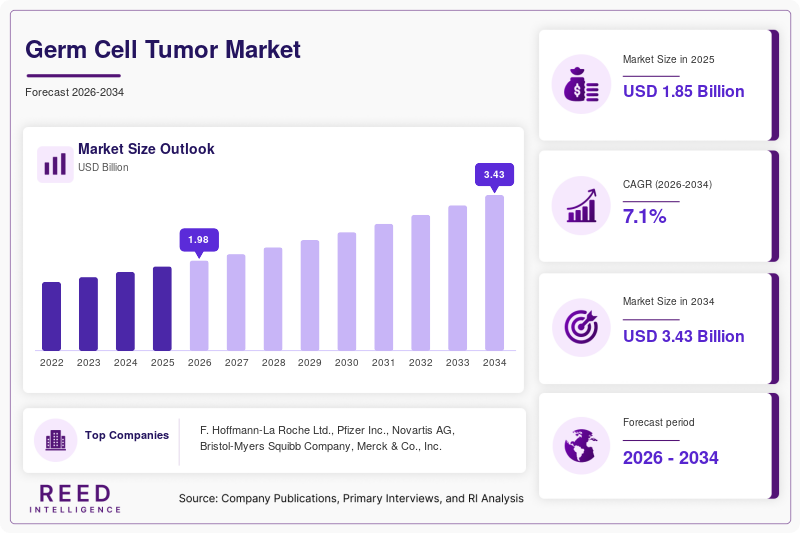
The global Germ Cell Tumor Market size was valued at approximately USD 1.85 billion in 2025 and is projected to reach USD 3.42 billion by 2034, expanding at a CAGR of 7.1% from 2025 to 2034. Germ cell tumors, which originate in reproductive cells and primarily affect the testes and ovaries, represent a critical segment within oncology therapeutics due to their increasing incidence among adolescents and young adults. Advancements in diagnostic imaging, biomarker testing, and targeted therapies have contributed to improved detection rates and treatment outcomes, thereby supporting market expansion.
A major global factor driving the Germ Cell Tumor Market is the growing awareness and early screening initiatives for testicular and ovarian cancers, particularly in developed healthcare systems. Public health campaigns and improved access to oncology services have enhanced early-stage diagnosis, leading to higher treatment uptake and better survival rates.
Key Highlights
- North America dominated the market with a 38.6% share in 2025, while Asia Pacific is expected to register the fastest growth at a CAGR of 8.4% during the forecast period.
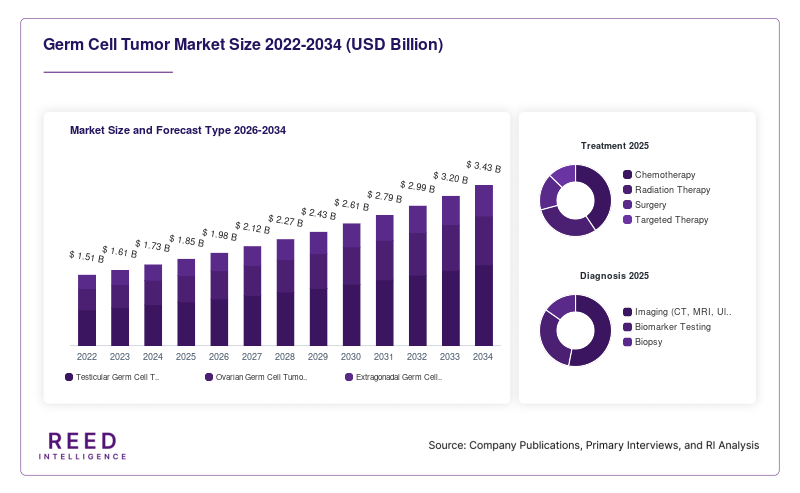
- By type, testicular germ cell tumors accounted for the largest share of 56.2% in 2025, whereas extragonadal germ cell tumors are projected to grow at the fastest CAGR of 7.9%.
- By treatment, chemotherapy led with a 48.5% share, while targeted therapy is anticipated to expand at a CAGR of 8.7%.
- The U.S. Germ Cell Tumor Market was valued at USD 620 million in 2025 and is expected to reach USD 665 million in 2026.
Market Trends
Increasing Adoption of Targeted and Immunotherapy Approaches
The Germ Cell Tumor Market is witnessing a gradual shift from conventional chemotherapy to targeted therapies and immunotherapy-based treatments. These advanced modalities offer improved efficacy with fewer side effects, especially for patients with resistant or recurrent tumors. Pharmaceutical companies are investing in novel biologics and checkpoint inhibitors that target tumor-specific pathways, which is reshaping treatment protocols and enhancing long-term patient outcomes.
Integration of Precision Medicine and Biomarker Testing
Precision medicine is becoming a significant trend in the Germ Cell Tumor Market, driven by advancements in genomic profiling and biomarker identification. Clinicians are increasingly using molecular diagnostics to tailor treatments based on tumor characteristics. This approach allows for personalized therapy selection, improving response rates and minimizing unnecessary interventions. As healthcare systems adopt data-driven oncology solutions, the demand for companion diagnostics and personalized treatment strategies is expected to rise steadily.
Market Drivers
Rising Incidence of Germ Cell Tumors Among Young Population
The increasing prevalence of germ cell tumors, particularly testicular cancer among young males aged 15–35 years, is a key driver of the Germ Cell Tumor Market. Changing lifestyle patterns, environmental factors, and genetic predispositions have contributed to the growing patient pool. This trend has led to higher demand for diagnostic services and treatment options across both developed and developing regions.
Advancements in Oncology Treatment Technologies
Technological advancements in oncology, including improved chemotherapy regimens, minimally invasive surgical techniques, and advanced radiotherapy systems, are accelerating market growth. Innovations in drug delivery systems and combination therapies have enhanced treatment effectiveness and reduced recurrence rates. Continuous research and development efforts are also enabling the introduction of novel therapeutics, supporting the expansion of the Germ Cell Tumor Market.
Market Restraint
High Cost of Advanced Treatment Modalities
One of the primary challenges in the Germ Cell Tumor Market is the high cost associated with advanced treatment options such as targeted therapy and immunotherapy. These treatments often require prolonged administration and specialized healthcare infrastructure, making them less accessible in low- and middle-income regions. Additionally, limited reimbursement coverage and high out-of-pocket expenses can restrict patient access to optimal care. The economic burden on healthcare systems and patients may hinder widespread adoption of innovative therapies, thereby restraining overall market growth.
Market Opportunities
Expansion of Emerging Markets
Developing regions such as Asia Pacific and Latin America present significant growth opportunities for the Germ Cell Tumor Market. Improvements in healthcare infrastructure, increasing government investments, and rising awareness about cancer diagnosis are driving market penetration in these regions. Pharmaceutical companies are focusing on expanding their presence through partnerships and localized manufacturing to tap into these high-growth markets.
Development of Novel Therapeutics and Clinical Trials
The ongoing development of innovative drugs and participation in clinical trials offer strong growth potential for the Germ Cell Tumor Market. Research institutions and biotechnology firms are exploring new treatment pathways, including gene therapy and combination regimens. Increased funding for oncology research and supportive regulatory frameworks are expected to accelerate the approval of new therapies, providing patients with more effective treatment options.
Segmental Analysis
By Type
Testicular germ cell tumors dominated the Germ Cell Tumor Market with a 56.2% share in 2025. This dominance was attributed to the higher incidence rate of testicular cancer compared to other germ cell tumor types. Early detection programs and effective treatment options contributed to the widespread management of this segment.
Extragonadal germ cell tumors are expected to witness the fastest growth at a CAGR of 7.9% during the forecast period. Their increasing diagnosis due to improved imaging techniques and growing awareness among healthcare professionals will drive this segment’s expansion.
By Treatment
Chemotherapy held the largest share of 48.5% in 2025 in the Germ Cell Tumor Market. The widespread use of platinum-based chemotherapy regimens and their proven effectiveness in treating germ cell tumors supported this segment’s dominance.
Targeted therapy is projected to grow at the fastest CAGR of 8.7% through 2034. The development of drugs that specifically target cancer cells while minimizing damage to healthy tissue will drive adoption, especially in advanced-stage cases.
By Diagnosis
Imaging techniques, including CT scans and MRI, accounted for the largest share of 42.3% in 2025. These methods provided accurate tumor localization and staging, making them essential in treatment planning.
Biomarker testing is expected to grow at a CAGR of 8.1%, driven by advancements in molecular diagnostics. The increasing use of tumor markers such as AFP and hCG will enhance early detection and monitoring.
By End-Use
Hospitals dominated the Germ Cell Tumor Market with a 61.7% share in 2025 due to their comprehensive oncology services and availability of advanced treatment facilities.
Specialty cancer clinics are anticipated to grow at a CAGR of 7.8%, supported by their focus on personalized care and specialized treatment protocols.
Regional Analysis
North America
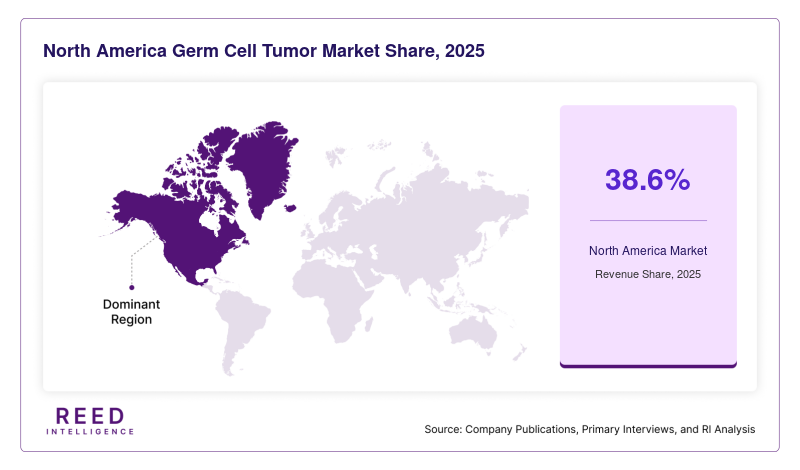
North America accounted for 38.6% of the Germ Cell Tumor Market share in 2025 and is expected to grow at a CAGR of 6.8% through 2034. The region benefited from advanced healthcare infrastructure, high awareness levels, and early diagnosis rates.
The United States dominated the regional market due to its well-established oncology care ecosystem. The presence of leading pharmaceutical companies and ongoing clinical research activities supported the adoption of advanced treatment modalities. High healthcare spending and strong insurance coverage further contributed to market expansion.
Europe
Europe held approximately 27.4% of the Germ Cell Tumor Market share in 2025 and is projected to grow at a CAGR of 6.5% during the forecast period. The region experienced steady growth due to government-supported cancer screening programs and access to quality healthcare services.
Germany emerged as the leading country in Europe, driven by its robust healthcare system and strong focus on oncology research. The country’s investment in medical innovation and patient-centric care supported the adoption of advanced therapies.
Asia Pacific
Asia Pacific captured around 21.8% of the Germ Cell Tumor Market share in 2025 and is expected to expand at the fastest CAGR of 8.4% from 2025 to 2034. The region’s growth was supported by increasing healthcare investments and rising cancer awareness.
China led the regional market due to its large population base and improving healthcare infrastructure. Government initiatives to enhance cancer diagnosis and treatment accessibility played a key role in market growth.
Middle East & Africa
The Middle East & Africa region accounted for approximately 6.2% of the Germ Cell Tumor Market share in 2025 and is anticipated to grow at a CAGR of 6.9% during the forecast period. Growth was influenced by gradual improvements in healthcare systems and rising awareness about cancer treatment.
Saudi Arabia dominated the region due to increasing healthcare expenditure and expansion of specialized oncology centers. Government initiatives to modernize healthcare infrastructure supported market development.
Latin America
Latin America held about 6.0% of the Germ Cell Tumor Market share in 2025 and is projected to grow at a CAGR of 7.2% through 2034. The region experienced moderate growth due to improving access to healthcare services and rising awareness.
Brazil emerged as the leading country, driven by its expanding healthcare sector and increasing focus on cancer care. Public and private sector investments in oncology facilities contributed to market growth.
Competitive Landscape
The Germ Cell Tumor Market is moderately competitive, with key players focusing on research and development, strategic collaborations, and product innovation. Leading companies are investing in advanced therapies and expanding their global presence to strengthen market positioning.
F. Hoffmann-La Roche Ltd. is a leading player in the market, known for its strong oncology portfolio. The company recently advanced its pipeline with new targeted therapy candidates aimed at improving treatment outcomes for rare cancers, including germ cell tumors.
Other major players are actively engaged in clinical trials and partnerships to develop innovative treatment solutions, contributing to the overall growth and competitiveness of the Germ Cell Tumor Market.
Key Players List
- F. Hoffmann-La Roche Ltd.
- Pfizer Inc.
- Novartis AG
- Bristol-Myers Squibb Company
- Merck & Co., Inc.
- AstraZeneca plc
- Johnson & Johnson
- Sanofi S.A.
- Eli Lilly and Company
- GlaxoSmithKline plc
- Bayer AG
- Takeda Pharmaceutical Company Limited
- Amgen Inc.
- AbbVie Inc.
- Teva Pharmaceutical Industries Ltd.
Recent Developments
- 2024: A leading pharmaceutical company initiated a Phase III clinical trial for a novel targeted therapy aimed at treating resistant germ cell tumors.
- 2024: Expansion of oncology research collaborations between biotech firms and academic institutions accelerated innovation in personalized medicine.
- 2023: Introduction of advanced biomarker-based diagnostic kits improved early detection rates.
- 2023: Strategic partnerships between global healthcare providers enhanced access to cancer treatment in emerging markets.
- 2023: Increased investment in oncology R&D supported the development of next-generation therapeutics for germ cell tumors.
Germ Cell Tumor Market Segments
Type
- Testicular Germ Cell Tumors
- Ovarian Germ Cell Tumors
- Extragonadal Germ Cell Tumors
Treatment
- Chemotherapy
- Radiation Therapy
- Surgery
- Targeted Therapy
Diagnosis
- Imaging (CT, MRI, Ultrasound)
- Biomarker Testing
- Biopsy
End-Use
- Hospitals
- Specialty Cancer Clinics
- Research Institutes
By Region
- North America
- Europe
- APAC
- Middle East and Africa
- LATAM