German Biopesticide Market Size, Share & Demand Report By Product Type (Microbial Biopesticides, Biochemical Biopesticides, Plant-Incorporated Protectants), By Crop Type (Fruits and Vegetables, Cereals and Grains, Oilseeds and Pulses, Turf and Ornamentals, Other Crops), By Application Method (Foliar Spray, Seed Treatment, Soil Treatment, Post-Harvest Applications) & Segment Forecasts, 2026–2034
USD 3950
Market Overview
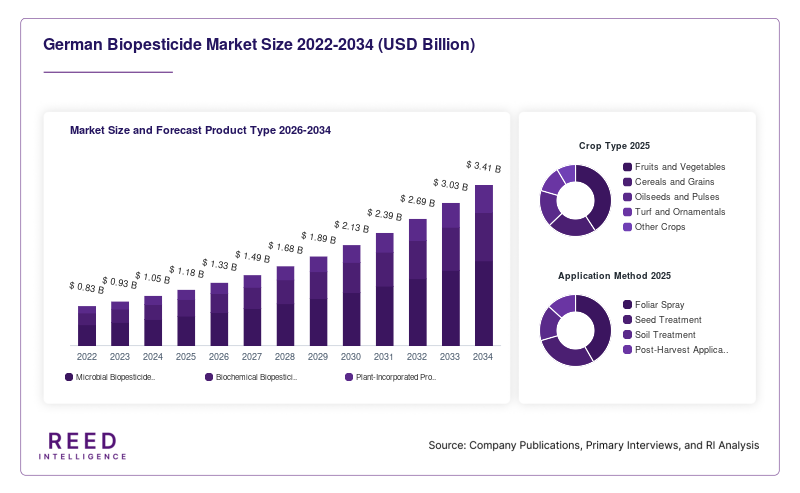
The German Biopesticide Market size was valued at USD 1.18 billion in 2026 and is projected to reach USD 3.04 billion by 2034, expanding at a CAGR of 12.5% during the forecast period. The market continues to gain momentum as agricultural producers across Germany adopt biological crop protection solutions to reduce chemical residue levels, improve soil quality, and comply with tightening environmental regulations. Increased awareness regarding sustainable farming practices, combined with rising demand for residue-free fruits and vegetables, has accelerated the adoption of microbial pesticides, biochemical pesticides, and plant-incorporated protectants across commercial farming operations.
A major global factor supporting market expansion is the growing transition toward sustainable agriculture and regenerative farming systems. Governments and food supply chains across Europe, North America, and Asia Pacific are introducing stricter standards on synthetic agrochemicals, encouraging farmers to shift toward biological alternatives. Food retailers and export-oriented agricultural producers are also placing stronger emphasis on traceability and eco-friendly crop protection practices. These developments have strengthened demand for biopesticides in Germany, particularly within greenhouse farming, cereal cultivation, and high-value horticulture.
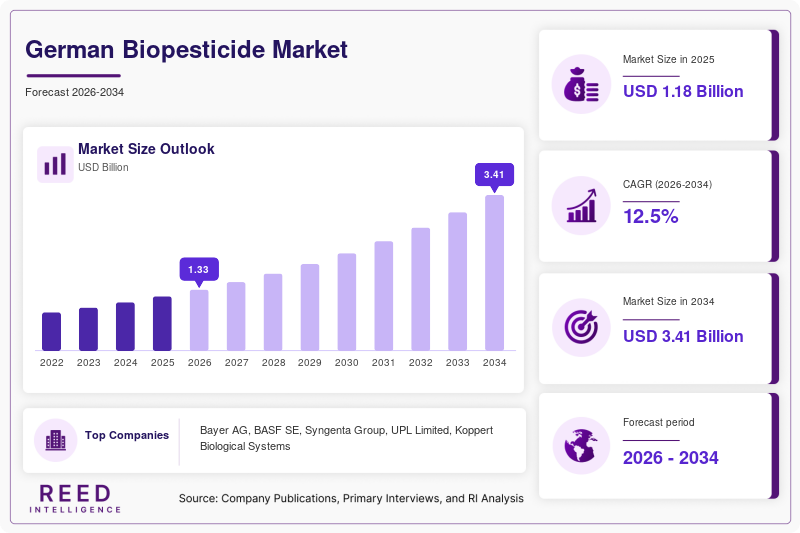
Key Highlights
- Europe dominated the market with a 37.8% share in 2025, while Asia Pacific is expected to grow at the fastest CAGR of 13.1% during 2026–2034.
- By product type, microbial biopesticides accounted for the largest share of 46.3%, while biochemical biopesticides are projected to grow at a CAGR of 13.4%.
- By crop type, fruits and vegetables led with a 39.6% share, whereas cereals and grains are expected to expand at a CAGR of 12.9%.
- By application method, foliar spray held the dominant share of 42.1%, while seed treatment is anticipated to grow at a CAGR of 14.2% during the forecast period.
- Germany remained the dominant country in Europe, with market values of USD 960 million in 2024 and USD 1.06 billion in 2025.
Market Trends
Expansion of Organic Farming Practices Across Germany
Organic farming activities across Germany are increasing steadily as consumers continue to prefer food products cultivated with limited synthetic chemical exposure. Agricultural cooperatives and organic food retailers are supporting biological crop protection solutions to maintain compliance with organic certification standards. Farmers are adopting microbial and botanical pesticides to manage fungal infections, insects, and soil-borne diseases while preserving biodiversity and soil fertility. The German Biopesticide Market is also benefiting from the rising number of organic greenhouse operations focused on tomatoes, cucumbers, peppers, and leafy vegetables. These farming systems require effective pest management solutions that align with environmental sustainability goals. In addition, government subsidies supporting organic farming transitions are encouraging mid-sized farms to adopt integrated pest management programs that include biological pesticides.
Integration of Precision Agriculture with Biological Crop Protection
Precision agriculture technologies are increasingly being combined with biological pest management systems in Germany. Farmers are utilizing drones, automated sprayers, remote sensing platforms, and AI-enabled monitoring tools to optimize biopesticide application rates and improve crop protection efficiency. This trend is helping reduce operational costs and improve the consistency of biological formulations in large-scale farming operations. Agricultural technology providers are also introducing smart application systems capable of monitoring pest pressure in real time and delivering targeted biopesticide treatments. The integration of digital agriculture with biological solutions is improving farmer confidence regarding product performance and crop yield stability. These advancements are expected to strengthen the commercial viability of biopesticides across cereal crops, vineyards, and protected cultivation environments.
Market Drivers
Rising Regulatory Restrictions on Synthetic Pesticides
Germany and the broader European agricultural sector are witnessing increasing restrictions on synthetic pesticides due to environmental and health concerns. Regulatory agencies are implementing stricter residue limits and banning several active chemical ingredients associated with soil degradation, pollinator decline, and water contamination. These regulatory developments are encouraging farmers and agricultural distributors to adopt safer biological alternatives. The German Biopesticide Market is benefiting from these policy shifts as microbial and biochemical solutions gain approval for use in multiple crop categories. Farmers are also facing pressure from export markets and food processing companies that require compliance with sustainable agricultural standards. As regulations continue to tighten, demand for environmentally compatible pest management products is expected to rise significantly during the forecast period.
Increasing Consumer Demand for Residue-Free Food Products
Consumers in Germany are increasingly concerned about food safety, pesticide residue levels, and environmental sustainability. This shift in purchasing behavior has encouraged supermarkets, food processors, and agricultural producers to strengthen sustainable sourcing practices. Biopesticides are becoming an important component of residue-free farming strategies because they generally leave lower chemical residues compared to conventional pesticides. The demand for organic fruits, vegetables, herbs, and specialty crops is growing steadily across urban retail markets, creating new opportunities for biological crop protection suppliers. Food exporters are also adopting biopesticides to meet international safety standards and maintain access to premium export markets. The growing preference for healthier food products is expected to remain a major driver supporting long-term market growth.
Market Restraint
Limited Shelf Stability and Performance Variability
Despite growing adoption across sustainable agriculture systems, the German Biopesticide Market continues to face challenges related to product shelf stability and field performance variability. Many microbial formulations are sensitive to temperature fluctuations, ultraviolet radiation, and storage conditions, which can reduce product effectiveness during transportation and application. Farmers operating in large-scale commercial farming systems often compare biopesticides with synthetic chemicals that deliver faster and more predictable pest control outcomes. Inconsistent performance under varying environmental conditions can reduce farmer confidence and slow adoption rates among conventional growers. In addition, some biological products require repeated applications and specialized handling procedures, increasing operational complexity for agricultural producers. Small and medium-sized farms may also face difficulties accessing cold-chain infrastructure necessary for maintaining microbial viability. These limitations continue to influence purchasing decisions, particularly in regions where conventional pesticides remain cost competitive and widely available.
Market Opportunities
Growth Potential in Greenhouse and Protected Cultivation
Germany is witnessing substantial expansion in greenhouse farming and protected cultivation systems due to rising demand for year-round production of vegetables, herbs, and specialty crops. These controlled agricultural environments create favorable conditions for biological crop protection because pest populations can be monitored and managed more effectively. Biopesticides are increasingly being used in greenhouse operations to reduce chemical residue accumulation and support premium-quality crop production. The German Biopesticide Market is expected to benefit from increasing investments in climate-controlled farming infrastructure, particularly for tomatoes, lettuce, cucumbers, and ornamental plants. Greenhouse operators are also adopting integrated pest management programs that combine beneficial insects with microbial pesticides. This trend is likely to create long-term opportunities for suppliers developing specialized formulations designed for protected cultivation systems.
Increasing Research Investments in Agricultural Biotechnology
Research institutions, biotechnology companies, and agricultural input manufacturers in Germany are increasing investments in advanced biological crop protection technologies. Companies are focusing on developing next-generation microbial strains, RNA-based biopesticides, and bioengineered formulations with improved effectiveness and longer shelf life. Collaborations between universities and agricultural technology providers are supporting the commercialization of innovative pest control solutions suitable for high-value crops and large-scale farming operations. Public and private sector funding programs aimed at supporting sustainable agriculture are also encouraging research in biological pest management. The German Biopesticide Market is expected to benefit from these developments as new products gain regulatory approvals and expand commercial availability. Continued innovation is likely to improve farmer confidence, increase application efficiency, and support broader market penetration across multiple crop categories.
Segmental Analysis
By Product Type
Microbial biopesticides accounted for the largest share of 46.3% in 2024 due to their strong effectiveness against a broad range of crop pests and diseases. These products, including bacterial, fungal, and viral formulations, are widely used across fruits, vegetables, cereals, and greenhouse crops. Farmers are increasingly adopting microbial solutions because they support sustainable farming practices while reducing environmental contamination associated with synthetic pesticides. The German Biopesticide Market is benefiting from rising demand for biological fungicides and insecticides capable of improving crop quality and yield performance. Agricultural producers are also integrating microbial products into integrated pest management systems to enhance long-term pest resistance control. Advancements in fermentation technologies and formulation stability are further improving the commercial viability of microbial biopesticides across large-scale agricultural operations.
Biochemical biopesticides are expected to register the fastest CAGR of 13.4% during the forecast period due to growing demand for plant-based and naturally derived pest control solutions. These products include pheromones, botanical extracts, and naturally occurring compounds that disrupt pest behavior or inhibit pest growth. Increasing consumer preference for residue-free food products is encouraging agricultural producers to adopt biochemical solutions for high-value crop cultivation. Food exporters and greenhouse operators are particularly interested in these products because they align with strict sustainability and food safety standards. Companies are investing in research activities aimed at improving product efficiency, application methods, and shelf stability. The growing availability of advanced botanical formulations is expected to strengthen market penetration across commercial farming systems.
By Crop Type
Fruits and vegetables represented the dominant crop segment with a market share of 39.6% in 2024. High-value horticulture crops require effective pest management systems that minimize chemical residue levels while maintaining crop quality and appearance. Biopesticides are widely utilized across tomatoes, cucumbers, peppers, berries, and leafy vegetables because these crops are highly sensitive to pest infestations and export quality standards. The German Biopesticide Market is witnessing increasing adoption of microbial fungicides and insecticides in greenhouse horticulture operations where biological pest management provides improved sustainability outcomes. Organic farming expansion is also contributing to higher demand for biological crop protection products within the fruits and vegetables segment. Retailers and food processors continue to prioritize sustainable sourcing practices, supporting broader market growth.
Cereals and grains are projected to expand at the fastest CAGR of 12.9% during the forecast period due to increasing adoption of sustainable farming practices in large-scale agriculture. Farmers cultivating wheat, barley, corn, and rye are gradually incorporating biological pesticides into integrated pest management programs to reduce dependency on conventional chemicals. Rising regulatory restrictions on synthetic pesticides and increasing awareness regarding soil health are encouraging broader adoption across cereal cultivation systems. Agricultural cooperatives and research organizations are supporting field trials aimed at demonstrating the effectiveness of microbial and biochemical solutions in cereal production. Improved formulation technologies and precision application systems are also helping farmers achieve better pest management efficiency while maintaining productivity levels.
By Application Method
Foliar spray applications accounted for the largest market share of 42.1% in 2024 due to their widespread use across multiple crop categories and farming systems. Farmers prefer foliar spray methods because they provide direct contact with pests and plant surfaces, improving treatment effectiveness. Biological fungicides, insecticides, and botanical formulations are commonly applied through foliar spraying in greenhouse farming, horticulture, and field crop production. The German Biopesticide Market continues to benefit from technological improvements in spraying equipment and drone-assisted application systems that optimize coverage and reduce product wastage. Commercial agricultural operations are increasingly adopting precision spraying technologies to improve efficiency and reduce operational costs. The compatibility of foliar spray applications with integrated pest management strategies further supports market dominance.
Seed treatment is expected to witness the fastest CAGR of 14.2% during the forecast period because of its ability to provide early-stage crop protection and improve plant health. Biological seed treatment products help protect crops against soil-borne pathogens, fungal infections, and insect damage during germination and early growth stages. Farmers are increasingly recognizing the benefits of preventive biological treatments that reduce the need for repeated pesticide applications later in the crop cycle. Agricultural technology providers are introducing advanced microbial seed coatings designed to improve root development and nutrient uptake. The expansion of sustainable agriculture initiatives and rising demand for environmentally responsible farming inputs are expected to support strong growth in this segment throughout the forecast period.
Regional Analysis
North America
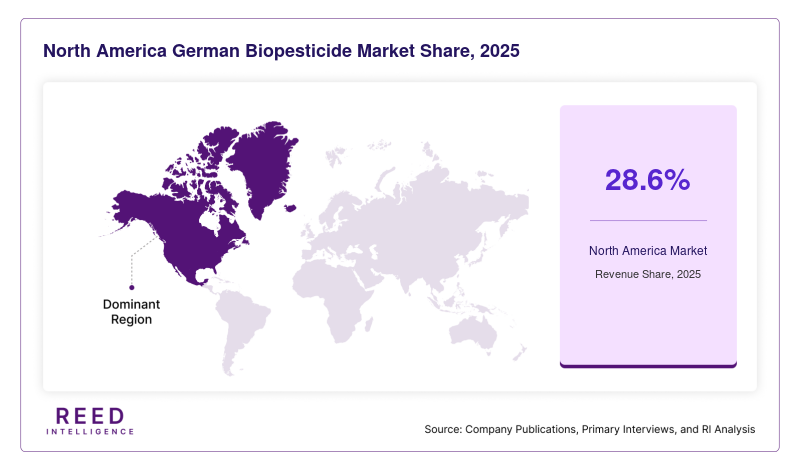
North America accounted for approximately 28.6% of the global German Biopesticide Market ecosystem in 2025 and is expected to expand at a CAGR of 11.4% during the forecast period. The region continues to experience strong demand for sustainable agricultural inputs as food producers focus on reducing chemical pesticide dependency. Increasing organic food consumption and rising environmental awareness are encouraging farmers to adopt biological crop protection products. Large agricultural enterprises in the United States and Canada are integrating microbial pesticides into integrated pest management programs to improve soil health and comply with export quality standards.
The United States remained the dominant country within the North American market due to strong investments in agricultural biotechnology and precision farming technologies. Commercial farms are increasingly utilizing advanced application systems that improve the effectiveness of microbial and biochemical pesticides. Rising adoption of sustainable farming certification programs and stronger retailer requirements for residue-free food products are supporting long-term market growth. In addition, government support for regenerative agriculture initiatives is encouraging growers to shift toward environmentally compatible crop protection practices.
Europe
Europe represented the largest regional share of 37.8% in 2025 and is projected to grow at a CAGR of 12.1% between 2026 and 2034. The region continues to lead global demand for biological crop protection products because of strict environmental regulations and rising adoption of sustainable farming systems. European Union policies focused on reducing synthetic pesticide usage are encouraging farmers to transition toward microbial and botanical alternatives. Increased awareness regarding biodiversity protection and soil conservation is also strengthening regional market demand across cereal crops, vineyards, and horticulture production.
Germany remained the dominant country within Europe due to its advanced agricultural infrastructure and strong organic farming sector. The country continues to invest heavily in agricultural research, biological formulation technologies, and sustainable farming practices. German food retailers are increasingly prioritizing low-residue agricultural supply chains, encouraging farmers to adopt biopesticides for high-value crop production. The expansion of greenhouse cultivation and precision agriculture technologies is also supporting broader commercial adoption of biological crop protection products throughout the country.
Asia Pacific
Asia Pacific held a market share of 21.4% in 2025 and is anticipated to register the fastest CAGR of 13.1% during the forecast period. Rapid population growth, rising food demand, and increasing awareness regarding sustainable agriculture are contributing to regional market expansion. Governments across China, India, Japan, and Australia are promoting biological farming solutions to reduce environmental pollution and improve agricultural productivity. Expanding organic farming acreage and rising investments in agricultural biotechnology are also supporting demand for microbial and biochemical pesticides across the region.
China emerged as the dominant country in the Asia Pacific market due to large-scale agricultural production and increasing policy support for eco-friendly farming inputs. Chinese agricultural companies are investing in biological pesticide manufacturing facilities and advanced microbial research capabilities. Rising export requirements for residue-free agricultural products are encouraging farmers to adopt biological crop protection systems. In addition, rapid adoption of digital agriculture technologies and precision farming solutions is improving the effectiveness of biopesticide application across commercial farming operations.
Middle East & Africa
The Middle East & Africa region accounted for approximately 6.8% of the market in 2025 and is expected to expand at a CAGR of 10.2% through 2034. Agricultural modernization efforts and increasing focus on water-efficient farming systems are contributing to regional demand for sustainable crop protection products. Governments in several Gulf countries are investing in greenhouse farming and controlled-environment agriculture to strengthen food security. These developments are creating favorable conditions for the adoption of biological pesticides across horticulture and specialty crop production systems.
Saudi Arabia remained the dominant country within the Middle East & Africa market due to increasing investments in protected agriculture and food security initiatives. Agricultural producers are adopting biological crop protection products to reduce chemical usage and improve crop quality in arid farming conditions. The expansion of hydroponic farming systems and government-backed sustainable agriculture programs are supporting demand for microbial pesticides. In addition, rising awareness regarding soil conservation and environmental sustainability is encouraging greater use of biological farming inputs.
Latin America
Latin America captured a market share of 5.4% in 2025 and is projected to grow at a CAGR of 11.0% during the forecast period. The region is experiencing increasing adoption of biological crop protection products across soybean, coffee, sugarcane, and fruit cultivation sectors. Agricultural exporters are focusing on sustainable farming practices to meet international food safety regulations and reduce pesticide residue levels. Rising investments in agricultural biotechnology and expanding integrated pest management programs are also contributing to market growth.
Brazil dominated the Latin American market because of its large agricultural economy and increasing demand for environmentally sustainable crop protection products. Brazilian farmers are adopting microbial pesticides to improve pest resistance management and maintain soil productivity in large-scale farming systems. Government support for sustainable agriculture initiatives and growing awareness regarding ecological farming practices are encouraging wider biopesticide adoption. The expansion of export-oriented agriculture and organic food production is expected to create additional growth opportunities across the country.
Competitive Landscape
The German Biopesticide Market is moderately consolidated, with several multinational agricultural input companies and specialized biological crop protection manufacturers competing through product innovation, strategic partnerships, and regional expansion initiatives. Companies are investing heavily in research and development activities focused on microbial formulation improvement, advanced fermentation technologies, and biological seed treatment solutions. Strategic collaborations between biotechnology firms and agricultural cooperatives are becoming increasingly common as market participants aim to strengthen distribution networks and improve farmer awareness regarding biological crop protection practices.
Bayer AG remained one of the leading companies in the market due to its extensive agricultural product portfolio, strong research capabilities, and broad distribution network across Europe. The company continues to invest in biological crop protection technologies and integrated pest management solutions targeting high-value crops and sustainable farming systems. BASF SE, Syngenta Group, UPL Limited, and Koppert Biological Systems also maintain significant market presence through continuous product launches and expansion of biological agriculture platforms.
Key Players
- Bayer AG
- BASF SE
- Syngenta Group
- UPL Limited
- Koppert Biological Systems
- Certis Biologicals
- Valent BioSciences LLC
- Marrone Bio Innovations
- Novozymes A/S
- Andermatt Group AG
- Bioworks Inc.
- FMC Corporation
- Sumitomo Chemical Co., Ltd.
- Corteva Agriscience
- Isagro S.p.A.
Recent Developments
- Bayer AG expanded its biological crop protection research operations in Germany in 2025 to strengthen microbial pesticide development for greenhouse agriculture.
- BASF SE introduced a new microbial fungicide platform in 2024 targeting sustainable cereal crop protection and integrated pest management programs.
- Syngenta Group entered a strategic partnership with an agricultural technology provider in 2025 to improve precision application systems for biological crop protection products.
- UPL Limited increased investments in biological seed treatment technologies aimed at improving crop resilience and reducing chemical pesticide dependency across European farming systems.
- Koppert Biological Systems launched advanced greenhouse biocontrol solutions in 2024 focused on horticulture and protected cultivation applications.
German Biopesticide Market Segments
Product Type
- Microbial Biopesticides
- Biochemical Biopesticides
- Plant-Incorporated Protectants
Crop Type
- Fruits and Vegetables
- Cereals and Grains
- Oilseeds and Pulses
- Turf and Ornamentals
- Other Crops
Application Method
- Foliar Spray
- Seed Treatment
- Soil Treatment
- Post-Harvest Applications
By Region
- North America
- Europe
- APAC
- Middle East and Africa
- LATAM