Gestational Trophoblastic Disease Market Size, Share & Demand Report By Type (Hydatidiform Mole, Choriocarcinoma, Placental Site Trophoblastic Tumor), By Treatment (Chemotherapy, Immunotherapy, Surgery), By End-Use (Hospitals, Specialty Clinics, Research Institutes), By Region & Segment Forecasts, 2026–2034
USD 3950
Market Overview
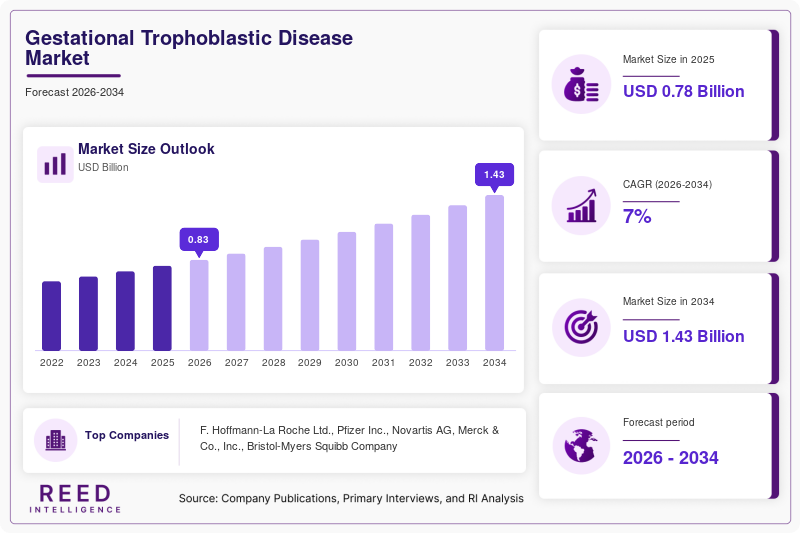
The Gestational Trophoblastic Disease Market size was valued at approximately USD 0.78 billion in 2026 and is projected to reach around USD 1.34 billion by 2034, expanding at a CAGR of 7.0% during the forecast period (2026–2034). This growth trajectory reflects increasing awareness of rare pregnancy-related disorders and advancements in early diagnostic technologies. Improved access to healthcare infrastructure in emerging economies has also supported market penetration, particularly in regions where maternal health initiatives are gaining momentum.
One global factor that has supported market growth is the rising adoption of early screening protocols in obstetrics and gynecology. Governments and healthcare organizations have expanded prenatal screening programs, enabling earlier detection of gestational trophoblastic diseases such as hydatidiform mole and choriocarcinoma. Additionally, improvements in chemotherapy regimens and minimally invasive surgical approaches have enhanced treatment outcomes, thereby encouraging higher diagnosis and treatment rates.
Key Highlights
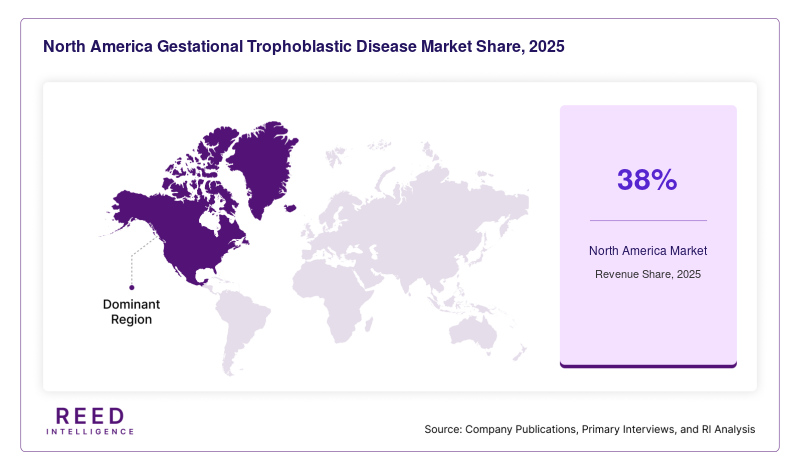
- North America dominated the market with a 38% share in 2025.
- Asia Pacific is expected to register the fastest growth at a CAGR of 8.4%. Among segments, chemotherapy remained the leading treatment type, while immunotherapy is anticipated to grow at the fastest rate with a CAGR of 9.1%.
- The United States recorded market values of USD 240 million in 2024 and USD 258 million in 2025, maintaining its position as the dominant country.
Market Trends
Increasing adoption of precision diagnostics
A significant trend shaping the Gestational Trophoblastic Disease Market is the increasing adoption of precision diagnostic tools. Advanced imaging technologies, combined with molecular diagnostics, are enabling clinicians to detect abnormalities at earlier stages. Techniques such as quantitative hCG monitoring and genetic profiling are improving diagnostic accuracy, reducing the likelihood of misdiagnosis. These innovations are particularly important in differentiating between benign and malignant forms of gestational trophoblastic disease, which require distinct treatment approaches.
Healthcare providers are also integrating artificial intelligence into diagnostic workflows, allowing faster analysis of patient data and improved clinical decision-making. This trend is driving demand for advanced diagnostic equipment and laboratory services. Furthermore, the growing use of telemedicine platforms is expanding access to diagnostic consultations in remote areas, thereby increasing early detection rates and contributing to market growth.
Expansion of targeted and combination therapies
Another important trend is the expansion of targeted and combination therapies in the treatment of gestational trophoblastic diseases. Traditional chemotherapy remains effective; however, the introduction of targeted drugs and immunotherapy is transforming treatment protocols. These therapies aim to improve patient outcomes while reducing side effects associated with conventional treatments.
Combination therapies that integrate chemotherapy with targeted agents are gaining traction, especially in resistant or recurrent cases. Clinical trials are exploring the efficacy of checkpoint inhibitors and other immunotherapeutic approaches. As a result, pharmaceutical companies are increasing investments in research and development, leading to a pipeline of innovative treatments. This trend is expected to enhance survival rates and create new revenue opportunities within the market.
Market Drivers
Rising awareness and early diagnosis initiatives
Growing awareness about maternal health and rare pregnancy-related disorders is a key driver of the Gestational Trophoblastic Disease Market. Governments and healthcare organizations are conducting awareness campaigns to educate women about early symptoms and the importance of prenatal care. These initiatives are particularly impactful in developing regions, where delayed diagnosis has historically been a challenge.
Early diagnosis not only improves treatment outcomes but also reduces healthcare costs associated with advanced-stage disease management. Screening programs, supported by public health policies, are increasing patient inflow into diagnostic and treatment facilities. This trend is encouraging healthcare providers to invest in specialized services and infrastructure, thereby driving overall market growth.
Advancements in treatment technologies
Technological advancements in treatment methods are significantly contributing to market expansion. Modern chemotherapy regimens have become more effective and less toxic, improving patient compliance and outcomes. Additionally, minimally invasive surgical techniques are reducing recovery times and hospital stays.
The introduction of personalized medicine approaches is further enhancing treatment efficacy. By tailoring therapies based on individual patient profiles, clinicians can achieve better results with fewer complications. These advancements are attracting investments from pharmaceutical companies and research institutions, fostering innovation and expanding the treatment landscape for gestational trophoblastic diseases.
Market Restraint
Limited awareness in low-income regions
Despite advancements, limited awareness in low-income regions remains a significant restraint for the Gestational Trophoblastic Disease Market. Many patients in these areas lack access to basic prenatal care and diagnostic services, leading to delayed or missed diagnoses. This issue is compounded by inadequate healthcare infrastructure and a shortage of trained medical professionals.
The impact of this restraint is evident in higher mortality rates and lower treatment success in underserved regions. For example, rural populations often rely on traditional healthcare practices, which may not recognize early symptoms of gestational trophoblastic disease. This delay in seeking medical attention reduces the effectiveness of available treatments. Addressing this challenge requires coordinated efforts from governments, non-governmental organizations, and healthcare providers to improve awareness and accessibility.
Market Opportunities
Expansion in emerging healthcare markets
Emerging economies present significant growth opportunities for the Gestational Trophoblastic Disease Market. Countries in Asia Pacific, Latin America, and Africa are investing in healthcare infrastructure and expanding access to maternal health services. These developments are creating a favorable environment for market growth.
Private healthcare providers are also entering these markets, offering specialized diagnostic and treatment services. The increasing adoption of health insurance and government-funded programs is improving affordability for patients. As a result, demand for advanced treatments and diagnostic tools is expected to rise, providing lucrative opportunities for market players.
Development of novel therapeutic approaches
The development of novel therapeutic approaches represents another major opportunity. Ongoing research in oncology and reproductive health is leading to the discovery of new drug targets and treatment modalities. Immunotherapy and targeted therapies are showing promising results in clinical trials, particularly for resistant cases.
Pharmaceutical companies are collaborating with research institutions to accelerate drug development and commercialization. These efforts are expected to expand the treatment portfolio and improve patient outcomes. Additionally, the integration of digital health technologies for patient monitoring and follow-up is enhancing treatment effectiveness, further supporting market growth.
Segmental Analysis
By Type
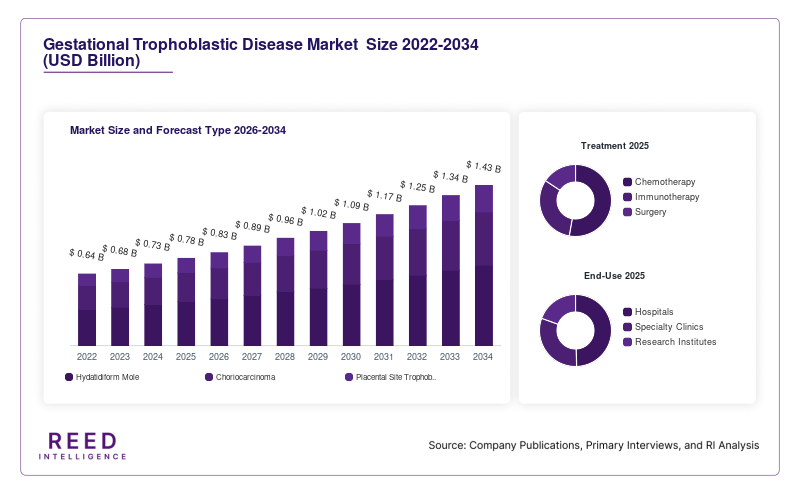
The hydatidiform mole segment dominated the Gestational Trophoblastic Disease Market in 2024, accounting for approximately 52% of the total share. This dominance is attributed to its higher prevalence compared to other types of gestational trophoblastic diseases. Early detection through routine prenatal screening has increased diagnosis rates, contributing to segment growth. Additionally, effective treatment options and high cure rates have encouraged timely medical intervention.
Choriocarcinoma is expected to be the fastest-growing subsegment, with a CAGR of 8.9% during the forecast period. The growth is driven by increasing awareness and advancements in diagnostic technologies that enable early detection of malignant cases. Improved treatment protocols and ongoing research in targeted therapies are further supporting the expansion of this subsegment.
By Treatment
Chemotherapy dominated the treatment segment in 2024, holding a share of around 60%. Its effectiveness in treating both benign and malignant forms of gestational trophoblastic disease has made it the preferred choice among healthcare providers. The availability of standardized treatment protocols and high success rates have further strengthened its position in the market.
Immunotherapy is projected to be the fastest-growing subsegment, with a CAGR of 9.1%. The growth is driven by increasing research and development activities focused on innovative treatment approaches. Immunotherapy offers potential benefits such as reduced side effects and improved patient outcomes, making it an attractive option for resistant or recurrent cases.
By End-Use
Hospitals accounted for the largest share of the end-use segment in 2024, contributing approximately 55% of the market. This dominance is due to the availability of comprehensive diagnostic and treatment facilities, as well as skilled healthcare professionals. Hospitals also serve as primary centers for advanced treatments, including chemotherapy and surgical interventions.
Specialty clinics are expected to witness the fastest growth, with a CAGR of 8.7% during the forecast period. The increasing demand for specialized care and personalized treatment approaches is driving the growth of this subsegment. Specialty clinics offer focused expertise and advanced diagnostic capabilities, attracting a growing number of patients.
Regional Analysis
North America
North America accounted for the largest share of the Gestational Trophoblastic Disease Market in 2025, contributing approximately 38% of the global revenue. The region is expected to maintain steady growth with a CAGR of 6.5% during the forecast period. This dominance is attributed to advanced healthcare infrastructure, high awareness levels, and strong presence of key market players. The availability of cutting-edge diagnostic and treatment technologies further supports market expansion.
The United States remains the dominant country in this region, driven by extensive research activities and favorable reimbursement policies. A unique growth factor is the strong integration of digital health solutions, which enable efficient patient monitoring and follow-up care. This technological adoption enhances treatment outcomes and supports long-term disease management.
Europe
Europe held a significant share of around 27% in 2025 and is projected to grow at a CAGR of 6.8% through 2034. The region benefits from well-established healthcare systems and increasing government initiatives focused on maternal health. Countries across Europe are investing in advanced diagnostic tools and expanding access to specialized treatment centers.
Germany leads the European market due to its robust healthcare infrastructure and high adoption of innovative therapies. A unique growth factor in this region is the emphasis on collaborative research programs, which facilitate the development of new treatment approaches. These initiatives are expected to drive market growth and improve patient outcomes.
Asia Pacific
Asia Pacific is the fastest-growing region, with a CAGR of 8.4% during the forecast period and a market share of approximately 22% in 2025. Rapid urbanization, increasing healthcare expenditure, and growing awareness about maternal health are key factors driving growth in this region. Governments are actively promoting early diagnosis and treatment through public health programs.
China dominates the Asia Pacific market due to its large population and expanding healthcare infrastructure. A unique growth factor is the increasing adoption of telemedicine services, which improve access to healthcare in remote areas. This trend is expected to enhance early detection rates and support market expansion.
Middle East & Africa
The Middle East & Africa region accounted for around 7% of the market in 2025 and is expected to grow at a CAGR of 7.2%. Improvements in healthcare infrastructure and increasing investments in medical facilities are driving market growth. However, challenges such as limited awareness and access to care persist in certain areas.
Saudi Arabia leads the regional market, supported by government initiatives aimed at improving maternal health services. A unique growth factor is the increasing participation of private healthcare providers, which is expanding access to advanced diagnostic and treatment options. This development is expected to contribute to steady market growth.
Latin America
Latin America held a market share of approximately 6% in 2025 and is projected to grow at a CAGR of 7.5% during the forecast period. The region is witnessing gradual improvements in healthcare infrastructure and increasing awareness about gestational trophoblastic diseases. Public health programs are playing a crucial role in promoting early diagnosis and treatment.
Brazil dominates the Latin American market due to its large population and growing healthcare sector. A unique growth factor is the expansion of government-funded healthcare programs, which improve access to medical services for underserved populations. This initiative is expected to drive market growth and enhance patient outcomes.
Competitive Landscape
The Gestational Trophoblastic Disease Market is characterized by the presence of several established pharmaceutical and healthcare companies. These players are focusing on research and development, strategic collaborations, and product innovations to strengthen their market position. The competitive environment is moderately consolidated, with a few key players dominating the market.
F. Hoffmann-La Roche Ltd. is a leading company in this market, known for its strong portfolio of oncology products. The company recently announced the development of a new targeted therapy aimed at improving treatment outcomes for gestational trophoblastic diseases. Other major players are also investing in clinical trials and expanding their product offerings to cater to the growing demand.
Key Players
- F. Hoffmann-La Roche Ltd.
- Pfizer Inc.
- Novartis AG
- Merck & Co., Inc.
- Bristol-Myers Squibb Company
- Johnson & Johnson
- AstraZeneca plc
- GlaxoSmithKline plc
- Sanofi S.A.
- Eli Lilly and Company
- Bayer AG
- AbbVie Inc.
- Amgen Inc.
- Takeda Pharmaceutical Company Limited
- Teva Pharmaceutical Industries Ltd.
Recent Developments
- A leading pharmaceutical company initiated a Phase III clinical trial for a novel immunotherapy drug targeting resistant gestational trophoblastic disease cases.
- Several healthcare providers expanded telemedicine services to improve patient monitoring and follow-up care.
- A strategic collaboration between research institutions and pharmaceutical companies led to the development of a new diagnostic biomarker for early detection.
Gestational Trophoblastic Disease Market Segments
Type
- Hydatidiform Mole
- Choriocarcinoma
- Placental Site Trophoblastic Tumor
Treatment
- Chemotherapy
- Immunotherapy
- Surgery
End-Use
- Hospitals
- Specialty Clinics
- Research Institutes
By Region
- North America
- Europe
- APAC
- Middle East and Africa
- LATAM