Giardiasis Treatment Market Size, Share & Demand Report By Drug Class (Nitroimidazoles, Anthelmintics, Combination Therapies), By Route of Administration (Oral, Parenteral), By Distribution Channel (Hospital Pharmacies, Retail Pharmacies, Online Pharmacies), By End User (Hospitals, Clinics, Homecare Settings), By Region & Segment Forecasts, 2026–2034
USD 3950
Market Overview
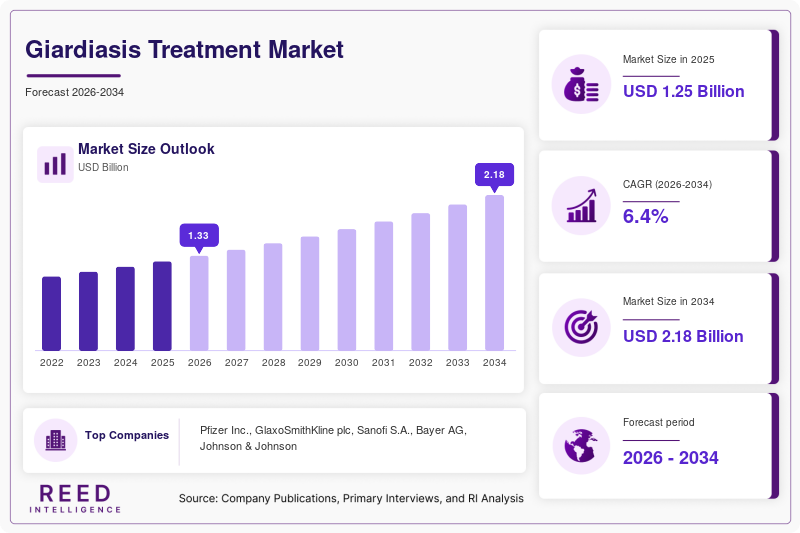
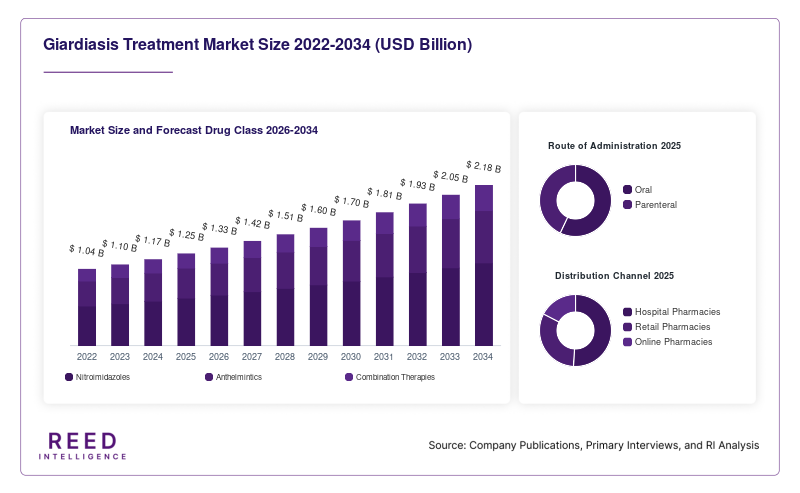
The Giardiasis Treatment Market size was valued at approximately USD 1.25 billion in 2026 and is projected to reach USD 2.05 billion by 2034, expanding at a CAGR of 6.4% during the forecast period (2026–2034). The market growth is primarily supported by the increasing global burden of parasitic infections, especially in regions with limited access to clean water and sanitation infrastructure. Giardiasis, caused by Giardia lamblia, remains one of the most common intestinal parasitic infections worldwide, driving consistent demand for effective pharmacological therapies.
A key global factor supporting the Giardiasis Treatment Market growth is the rising awareness regarding waterborne diseases and improved diagnostic capabilities. Public health initiatives and investments in sanitation programs have led to higher detection rates, which in turn has contributed to the increased adoption of treatment solutions. Furthermore, advancements in antiparasitic drug formulations have improved treatment outcomes and patient compliance.
Key Highlights:
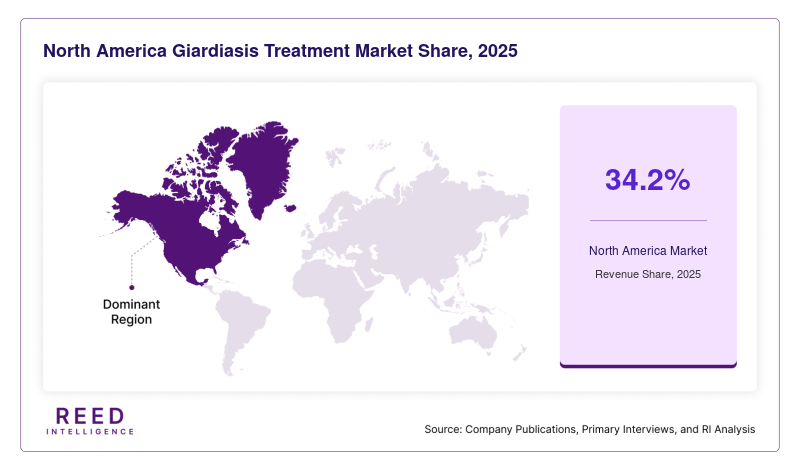
- North America dominated the market with a 34.2% share in 2025, while Asia Pacific is projected to register the fastest growth at a CAGR of 7.8%.
- Nitroimidazole drugs accounted for the leading subsegment with a 46.5% share, whereas combination therapies are anticipated to grow fastest at a CAGR of 7.2%.
- The United States remained the dominant country, with market values of USD 395 million in 2024 and USD 420 million in 2025.
Market Trends
Shift Toward Combination Therapies
The Giardiasis Treatment Market is witnessing a gradual shift toward combination drug therapies, particularly in cases involving recurrent or drug-resistant infections. Traditional monotherapies such as metronidazole have been widely used; however, emerging resistance patterns have encouraged healthcare providers to explore combination regimens. These therapies enhance treatment efficacy by targeting multiple biological pathways of the parasite. As clinical evidence supporting combination approaches continues to grow, pharmaceutical companies are increasingly investing in research to develop optimized treatment protocols. This trend is expected to strengthen the overall market outlook.
Expansion of Over-the-Counter (OTC) Treatment Options
Another notable trend shaping the Giardiasis Treatment Market is the expansion of over-the-counter treatment options in select regions. Regulatory bodies in developed economies are gradually approving certain antiparasitic drugs for OTC use, enabling easier access to treatment. This shift is particularly relevant in areas with high infection prevalence but limited access to healthcare facilities. Increased availability of OTC medications is also reducing the burden on healthcare systems while improving early-stage intervention rates. Additionally, digital health platforms and telemedicine services are facilitating remote diagnosis and treatment recommendations, further supporting the accessibility of giardiasis therapies.
Market Drivers
Rising Incidence of Waterborne Diseases
The increasing prevalence of waterborne diseases globally is a primary driver of the Giardiasis Treatment Market. Rapid urbanization, population growth, and inadequate sanitation infrastructure in developing regions have led to frequent outbreaks of giardiasis. Contaminated water sources remain a major transmission route, especially in rural and underserved areas. As a result, governments and healthcare organizations are emphasizing early diagnosis and treatment, driving demand for antiparasitic medications. The consistent occurrence of outbreaks ensures a steady demand pipeline for treatment products.
Advancements in Diagnostic Technologies
Technological advancements in diagnostic methods are significantly contributing to market growth. Modern diagnostic tools, including antigen-based tests and molecular assays, offer improved accuracy and faster detection compared to traditional microscopy techniques. Early and precise diagnosis enables timely treatment, reducing complications and transmission rates. The integration of advanced diagnostics into routine healthcare practices is increasing the detection rate of giardiasis cases, thereby boosting the demand for effective treatment options. This trend is particularly evident in developed regions, where healthcare infrastructure supports widespread adoption of innovative diagnostic technologies.
Market Restraint
Limited Access to Healthcare in Low-Income Regions
One of the key restraints affecting the Giardiasis Treatment Market is the limited access to healthcare services in low-income and remote regions. Despite the high prevalence of giardiasis in these areas, inadequate healthcare infrastructure and lack of trained medical personnel hinder timely diagnosis and treatment. Many cases remain undiagnosed or untreated, leading to prolonged infection cycles and increased transmission rates.
Additionally, the affordability of medications poses a challenge for economically disadvantaged populations. Even though generic drugs are available, financial constraints often limit access to consistent treatment. Supply chain inefficiencies and lack of distribution networks further exacerbate the issue, particularly in rural settings. These factors collectively restrict market penetration and limit the overall growth potential of the Giardiasis Treatment Market in certain regions.
Market Opportunities
Development of Novel Antiparasitic Drugs
The development of new antiparasitic drugs presents a significant opportunity in the Giardiasis Treatment Market. With increasing concerns about drug resistance and treatment failures, there is a growing need for innovative therapies with improved efficacy and safety profiles. Pharmaceutical companies are investing in research and development to identify novel compounds and mechanisms of action. The introduction of next-generation drugs is expected to enhance treatment outcomes and expand the market landscape.
Expansion in Emerging Markets
Emerging markets offer substantial growth opportunities due to their high disease burden and improving healthcare infrastructure. Countries in Asia Pacific, Latin America, and Africa are witnessing increased investments in healthcare systems, including disease surveillance and treatment programs. Government initiatives aimed at improving water quality and sanitation are also contributing to higher diagnosis rates. As awareness and access to healthcare improve, the demand for giardiasis treatment solutions is expected to rise significantly, creating lucrative opportunities for market players.
Segmental Analysis
By Drug Class
Nitroimidazoles dominated the Giardiasis Treatment Market with a 46.5% share in 2025, owing to their established efficacy and widespread usage as first-line treatments.
Combination therapies are expected to grow at the fastest CAGR of 7.2%, driven by their effectiveness in treating resistant infections and improving patient outcomes.
By Route of Administration
Oral administration accounted for the largest share of 72.4% in 2025, due to ease of use and high patient compliance.
Parenteral administration is projected to grow at a CAGR of 6.9%, particularly in severe cases requiring hospital-based treatment.
By Distribution Channel
Hospital pharmacies held a dominant share of 49.1% in 2025, supported by higher patient footfall and availability of prescription medications.
Online pharmacies are anticipated to grow at a CAGR of 8.1%, driven by increasing digital adoption and convenience.
By End User
Hospitals represented the largest segment with a 54.3% share in 2025, due to advanced diagnostic and treatment facilities.
Homecare settings are expected to grow at a CAGR of 7.5%, supported by the availability of oral medications and telemedicine services.
Regional Analysis
North America
North America accounted for 34.2% of the Giardiasis Treatment Market share in 2025 and is expected to grow at a CAGR of 5.8% during the forecast period. The region’s established healthcare infrastructure and high awareness levels supported its dominant position.
The United States led the regional market due to strong diagnostic capabilities and widespread access to healthcare services. Increased focus on disease surveillance and reporting contributed to higher treatment rates.
Europe
Europe held approximately 26.5% market share in 2025 and is projected to expand at a CAGR of 5.9%. The region benefited from robust public health systems and strict regulatory frameworks.
Germany emerged as the dominant country, driven by advanced laboratory diagnostics and government-backed health initiatives that support early detection and treatment.
Asia Pacific
Asia Pacific represented 21.8% of the market in 2025 and is expected to grow at the fastest CAGR of 7.8%. Rapid urbanization and increasing healthcare investments contributed to market expansion.
India dominated the region due to its high disease prevalence and improving access to healthcare services. Government programs aimed at sanitation and clean water access significantly supported market growth.
Middle East & Africa
The Middle East & Africa accounted for 9.7% market share in 2025 and is anticipated to grow at a CAGR of 6.6%. The region faced challenges related to healthcare access but showed gradual improvement.
South Africa led the regional market due to better healthcare infrastructure compared to neighboring countries and ongoing public health campaigns.
Latin America
Latin America captured 7.8% of the market share in 2025 and is forecasted to grow at a CAGR of 6.3%. Increasing awareness and healthcare reforms supported regional growth.
Brazil dominated the market, driven by improved diagnostic facilities and government initiatives targeting infectious diseases.
Competitive Landscape
The Giardiasis Treatment Market is moderately fragmented, with several global and regional players competing based on product offerings and geographic presence. Leading companies focus on expanding their portfolios through research and development initiatives and strategic collaborations.
Pfizer Inc. is recognized as a market leader, leveraging its strong distribution network and extensive pharmaceutical expertise. The company recently introduced an improved formulation of antiparasitic medication aimed at enhancing patient compliance.
Other prominent players are actively engaged in developing cost-effective generic drugs to cater to emerging markets. Competitive strategies also include partnerships with healthcare organizations to improve access to treatment in underserved regions.
Key Players List
- Pfizer Inc.
- GlaxoSmithKline plc
- Sanofi S.A.
- Bayer AG
- Johnson & Johnson
- Merck & Co., Inc.
- Novartis AG
- AbbVie Inc.
- Cipla Limited
- Sun Pharmaceutical Industries Ltd.
- Lupin Limited
- Teva Pharmaceutical Industries Ltd.
- Mylan N.V.
- Alkem Laboratories Ltd.
- Aurobindo Pharma Limited
Recent Developments
- In 2025, Pfizer Inc. launched a new extended-release formulation for giardiasis treatment.
- GlaxoSmithKline initiated clinical trials for a novel antiparasitic compound.
- Cipla Limited expanded its generic drug portfolio targeting emerging markets.
- Teva Pharmaceutical Industries strengthened its distribution network in Latin America.
- Sun Pharmaceutical Industries invested in R&D for combination therapies.
Giardiasis Treatment Market Segments
Drug Class
- Nitroimidazoles
- Anthelmintics
- Combination Therapies
Route of Administration
- Oral
- Parenteral
Distribution Channel
- Hospital Pharmacies
- Retail Pharmacies
- Online Pharmacies
End User
- Hospitals
- Clinics
- Homecare Settings
By Region
- North America
- Europe
- APAC
- Middle East and Africa
- LATAM