Gingival Retraction Cord Market Size, Share & Demand Report By Type (Braided Cords, Knitted Cords, Twisted Cords), By Material (Medicated Cords, Non-Medicated Cords), By Application (Crown and Bridge Procedures), By End Use (Dental Clinics, Hospitals, Specialty Dental Centers), By Distribution Channel (Direct Sales, Dental Distributors, Online Sales Channels) By Region & Segment Forecasts, 2026–2034
USD 3950
Market Overview
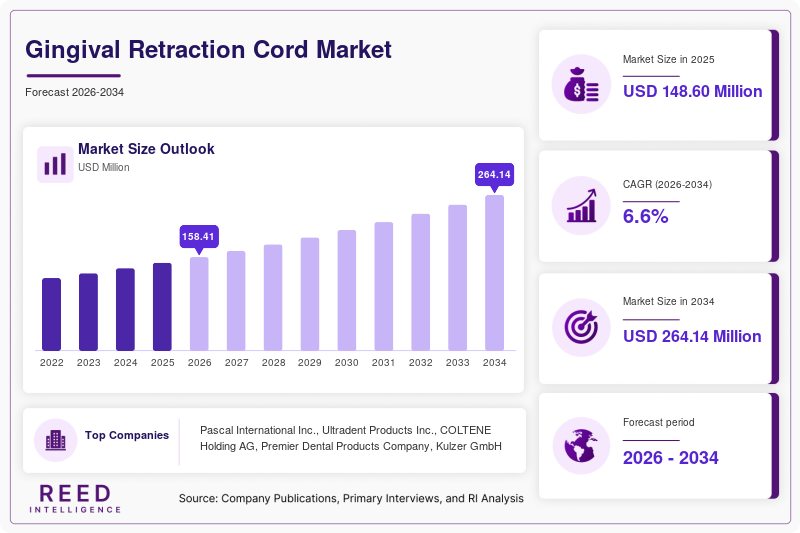
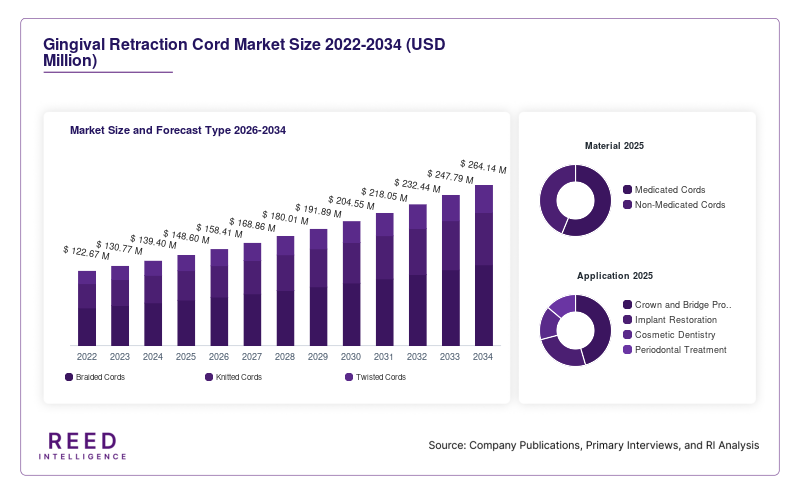
The Gingival Retraction Cord Market size was valued at USD 148.6 million in 2026 and is projected to reach USD 247.8 million by 2034, expanding at a CAGR of 6.6% during the forecast period from 2026 to 2034. The global Gingival Retraction Cord Market growth has been supported by the rising number of restorative and cosmetic dental procedures worldwide. Increasing awareness regarding oral hygiene, combined with greater access to advanced dental treatments, has accelerated the adoption of gingival management products across developed and emerging healthcare systems.
The Gingival Retraction Cord Market has experienced stable demand due to the growing prevalence of dental caries, periodontal diseases, and tooth restoration procedures. Gingival retraction cords are widely used to temporarily displace gingival tissue during crown preparation, impression taking, and restorative treatments. The products help dentists achieve better visibility and improve procedural precision, making them essential consumables in restorative dentistry.
Key Highlights
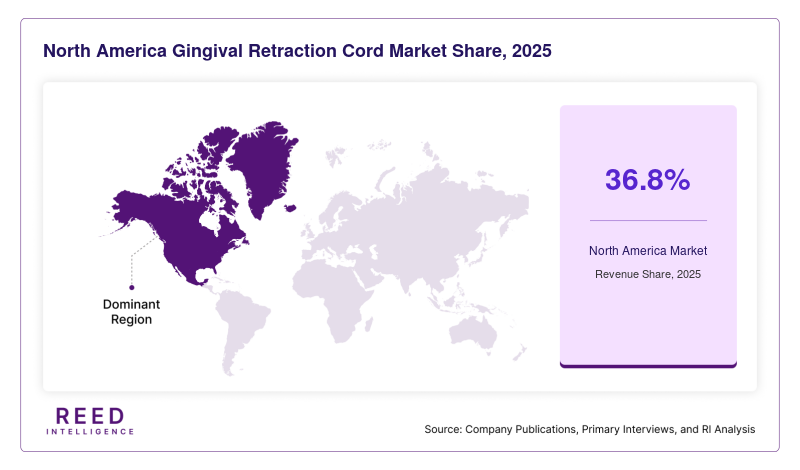
- North America accounted for 36.8% of the global Gingival Retraction Cord Market share in 2025, while Asia Pacific is projected to register the fastest CAGR of 7.9% during the forecast period.
- By type, braided cords held the leading market share of 41.7% in 2025, whereas knitted cords are anticipated to expand at a CAGR of 7.4% through 2034.
- By material, medicated cords dominated with 58.4% share in 2025, while aluminum chloride-based cords are forecast to grow at a CAGR of 7.2%.
- By application, crown and bridge procedures accounted for 46.1% of the Gingival Retraction Cord Market share in 2025, whereas implant restoration procedures are expected to grow at a CAGR of 8.1%.
- By end use, dental clinics represented 63.6% of the market share in 2025, while specialty dental centers are projected to register a CAGR of 7.7% during the study period.
- The U.S. Gingival Retraction Cord Market was valued at USD 39.8 million in 2024 and increased to USD 42.5 million in 2025 due to rising restorative dental treatment volumes.
Market Trends
Increasing Adoption of Non-Epinephrine Retraction Products
One of the significant trends shaping the Gingival Retraction Cord Market is the increasing adoption of non-epinephrine medicated products. Dental professionals are shifting toward aluminum chloride and ferric sulfate formulations because they reduce the risk of cardiovascular complications associated with epinephrine-containing products. This transition has encouraged manufacturers to expand their product portfolios with safer gingival management solutions.
Non-epinephrine products are also gaining popularity because they improve patient comfort and minimize tissue irritation. Dental clinics are increasingly integrating these products into routine restorative procedures to enhance clinical efficiency and patient satisfaction. The growing preference for patient-centered dentistry is expected to sustain this trend during the forecast period.
Expansion of Cosmetic and Digital Dentistry
The rapid expansion of cosmetic dentistry and digital restorative workflows has emerged as another important trend in the Gingival Retraction Cord Market. Patients are increasingly seeking veneers, crowns, implants, and aesthetic smile restoration procedures. These treatments require accurate soft tissue management for precise impressions and restoration fitting.
Dental practitioners are combining gingival retraction cords with digital impression systems to improve procedural accuracy. Manufacturers are responding by developing cords with improved absorbency and easier placement characteristics. The integration of conventional gingival management techniques with digital dentistry platforms is expected to create long-term opportunities for market participants.
Market Drivers
Rising Volume of Restorative Dental Procedures
The increasing number of restorative dental procedures has become a major driver for the Gingival Retraction Cord Market. Growing cases of tooth decay, gum disease, enamel wear, and tooth loss have increased the demand for crowns, bridges, and fixed prosthetics. Gingival retraction cords are essential during these procedures because they provide improved access and visibility around preparation margins.
The growing elderly population has further strengthened restorative treatment demand. Older individuals frequently require prosthodontic procedures that involve gingival tissue management. In addition, increasing awareness regarding preventive dental care has encouraged patients to seek restorative treatments at earlier stages, supporting consistent product utilization.
Expansion of Dental Tourism and Private Dental Infrastructure
The expansion of dental tourism has significantly contributed to the Gingival Retraction Cord Market growth. Countries such as India, Thailand, Turkey, and Mexico have emerged as important destinations for affordable restorative and cosmetic dental procedures. Rising patient inflow in these countries has increased demand for gingival management consumables.
Private dental clinics are also expanding rapidly across urban healthcare systems. Many clinics are investing in premium consumables and advanced restorative solutions to improve treatment quality and operational efficiency. This growth in organized dental care infrastructure has positively influenced procurement volumes for gingival retraction products.
Market Restraint
Availability of Alternative Gingival Displacement Methods
The availability of alternative gingival displacement methods remains a key restraint for the Gingival Retraction Cord Market. Dentists increasingly use retraction pastes, injectable gels, and laser-assisted soft tissue management systems in selected procedures. These alternatives may reduce chairside time and improve convenience during treatment.
Although gingival retraction cords remain widely used, the increasing preference for cordless systems in technologically advanced clinics may limit market penetration in some regions. In addition, higher equipment costs associated with alternative technologies may create uneven adoption patterns across healthcare systems.
Market Opportunities
Growing Demand from Implant Dentistry
The rapid expansion of implant dentistry presents a strong opportunity for the Gingival Retraction Cord Market. Dental implants require accurate soft tissue management during impression and restoration procedures. The increasing acceptance of implants among aging populations and middle-income consumers is expected to strengthen product demand.
Manufacturers are likely to introduce implant-specific gingival management products with enhanced moisture control and improved handling characteristics. The increasing number of implant-focused dental clinics worldwide is expected to support long-term market growth.
Expansion of Dental Care Access in Emerging Economies
Emerging healthcare economies present considerable growth opportunities for the Gingival Retraction Cord Market. Governments and private healthcare organizations across Asia Pacific, Latin America, and parts of the Middle East are investing in oral healthcare accessibility and awareness programs.
The expansion of dental insurance coverage and the establishment of new dental clinics are expected to improve procedural volumes in these regions. In addition, international dental product manufacturers are strengthening their regional distribution networks to capture unmet demand in developing economies.
Segmental Analysis
By Type
Based on type, the Gingival Retraction Cord Market is segmented into braided cords, knitted cords, and twisted cords.
Braided cords dominated the market with a 41.7% share in 2025 due to their durability, handling stability, and widespread clinical usage. These products were commonly preferred during restorative procedures because they maintain consistent placement around gingival margins.
Knitted cords are projected to witness the fastest CAGR of 7.4% during the forecast period. Their higher absorbency and adaptability to gingival contours are expected to support increased adoption among dental practitioners seeking efficient tissue displacement solutions.
By Material
Based on material, the Gingival Retraction Cord Market is categorized into medicated cords and non-medicated cords.
Medicated cords held the largest market share of 58.4% in 2025 because they provide hemostatic control and improve moisture management during impression procedures. Dental professionals widely used these products in crown preparation and prosthodontic applications.
Aluminum chloride-based medicated cords are expected to grow at a CAGR of 7.2% through 2034. Their lower risk of systemic side effects and compatibility with sensitive patients are anticipated to drive increased adoption across dental clinics.
By Application
Based on application, the Gingival Retraction Cord Market is segmented into crown and bridge procedures, implant restoration, cosmetic dentistry, and periodontal treatment.
Crown and bridge procedures accounted for the highest market share of 46.1% in 2025 due to the increasing frequency of fixed prosthodontic treatments worldwide. Gingival retraction cords remained essential during margin exposure and impression-taking procedures.
Implant restoration procedures are forecast to register the fastest CAGR of 8.1% during the study period. The growing popularity of dental implants and increasing acceptance of implant-supported restorations are expected to strengthen demand for precise tissue management products.
By End Use
Based on end use, the Gingival Retraction Cord Market is segmented into dental clinics, hospitals, and specialty dental centers.
Dental clinics dominated the market with a 63.6% share in 2025 because most restorative and cosmetic dental procedures are performed in outpatient clinical settings. The growing number of private dental chains further supported procurement volumes.
Specialty dental centers are projected to expand at a CAGR of 7.7% through 2034. Increasing patient preference for advanced prosthodontic and implant-focused treatment facilities is expected to support segment growth.
By Distribution Channel
Based on distribution channel, the Gingival Retraction Cord Market is segmented into direct sales, dental distributors, and online sales channels.
Dental distributors accounted for the leading market share of 49.3% in 2025 due to their extensive supply networks and strong relationships with private dental practices. These distributors played a critical role in ensuring consistent product availability across regional markets.
Online sales channels are expected to witness the fastest CAGR of 8.4% during the forecast period. Increasing digital procurement practices among dental clinics and the expansion of e-commerce healthcare platforms are likely to drive segment growth.
Regional Analysis
North America
North America accounted for 36.8% of the Gingival Retraction Cord Market share in 2025 and is expected to grow at a CAGR of 5.9% during the forecast period. The region maintained a strong position due to the widespread adoption of restorative dentistry and advanced dental technologies. High spending on cosmetic dental procedures also contributed to product demand.
The United States represented the dominant country within the regional market. The country experienced increased demand due to the growing utilization of crown and bridge procedures in private dental clinics. In addition, the strong presence of dental product manufacturers supported continuous product availability and technological advancements.
Europe
Europe held 28.4% of the global Gingival Retraction Cord Market share in 2025 and is projected to expand at a CAGR of 6.1% through 2034. The region benefited from well-established oral healthcare systems and increasing awareness regarding preventive dental care. Rising demand for aesthetic restorative procedures further supported market expansion.
Germany emerged as the leading country within Europe due to its advanced dental laboratory infrastructure and strong adoption of digital restorative workflows. The country also experienced rising demand for high-quality gingival management products in specialized prosthodontic practices.
Asia Pacific
Asia Pacific accounted for 22.6% of the Gingival Retraction Cord Market share in 2025 and is forecast to register the fastest CAGR of 7.9% during the study period. The regional market benefited from rising healthcare expenditure, growing dental tourism, and expanding access to oral healthcare services.
China represented the dominant country in the regional market due to the rapid expansion of urban dental clinics and increasing demand for cosmetic dental treatments. Rising middle-class income levels and growing awareness regarding oral aesthetics contributed to procedural growth across metropolitan healthcare centers.
Middle East & Africa
The Middle East & Africa region represented 6.5% of the Gingival Retraction Cord Market share in 2025 and is anticipated to grow at a CAGR of 6.3% during the forecast period. The market growth was supported by improving healthcare infrastructure and increasing investments in private dental services.
Saudi Arabia dominated the regional market due to the growing establishment of private dental hospitals and specialty oral healthcare centers. The country also witnessed rising demand for restorative dentistry among younger and middle-aged populations seeking aesthetic treatments.
Latin America
Latin America accounted for 5.7% of the Gingival Retraction Cord Market share in 2025 and is projected to grow at a CAGR of 6.5% through 2034. The regional market expanded because of increasing dental tourism activities and rising awareness regarding oral health maintenance.
Brazil emerged as the leading country within the region due to the increasing number of cosmetic dental procedures and expanding dental education infrastructure. The country also experienced rising procurement of restorative consumables across urban dental clinics.
Competitive Landscape
The Gingival Retraction Cord Market remains moderately competitive, with established dental consumable manufacturers focusing on product innovation, geographic expansion, and distribution partnerships. Companies are investing in advanced gingival management materials that improve handling efficiency, absorbency, and patient comfort.
Pascal International maintained a leading position in the market due to its broad portfolio of restorative dental consumables and strong distribution network across North America and Europe. The company recently introduced an aluminum chloride-based knitted retraction cord designed for enhanced moisture control during digital impression procedures.
Kulzer continued to strengthen its market presence through investments in restorative dentistry solutions and expanded partnerships with dental clinics. Ultradent Products Inc. focused on launching non-epinephrine formulations targeting patient safety and clinical efficiency.
Premier Dental Products Company concentrated on product portfolio expansion and training initiatives for restorative dentists. COLTENE Holding AG increased its regional penetration through strategic distribution agreements in Asia Pacific and Latin America.
Key Players List
- Pascal International Inc.
- Ultradent Products Inc.
- COLTENE Holding AG
- Premier Dental Products Company
- Kulzer GmbH
- Kerr Corporation
- Septodont Holding
- DENTSPLY Sirona Inc.
- GC Corporation
- VOCO GmbH
- ACTEON Group
- Ivoclar Vivadent AG
- Roeko Dental Products
- Medicom Group
- Produits Dentaires SA
Recent Developments
- In February 2026, Pascal International expanded its restorative consumables portfolio with the launch of a knitted aluminum chloride gingival retraction cord for digital restorative workflows.
- In April 2026, Ultradent Products Inc. introduced a non-epinephrine gingival management solution aimed at improving patient safety during restorative procedures.
- In June 2025, COLTENE Holding AG strengthened its distribution operations across Southeast Asia to improve access to restorative dental consumables.
- In September 2025, Premier Dental Products Company launched advanced training programs focused on gingival tissue management for prosthodontic specialists.
- In January 2026, Kulzer GmbH expanded its dental consumables manufacturing capacity to support rising global demand for restorative dentistry products.
Gingival Retraction Cord Market Segments
Type
- Braided Cords
- Knitted Cords
- Twisted Cords
Material
- Medicated Cords
- Non-Medicated Cords
Application
- Crown and Bridge Procedures
- Implant Restoration
- Cosmetic Dentistry
- Periodontal Treatment
End Use
- Dental Clinics
- Hospitals
- Specialty Dental Centers
Distribution Channel
- Direct Sales
- Dental Distributors
- Online Sales Channels
By Region
- North America
- Europe
- APAC
- Middle East and Africa
- LATAM