Glucagon Delivery Device Market Size, Share & Demand Report By Product Type (Autoinjectors, Prefilled Syringes, Nasal Devices), By Application (Severe Hypoglycemia, Exercise-Induced Hypoglycemia), By End-Use (Hospitals, Clinics, Homecare Settings), By Region & Segment Forecasts, 2026–2034
USD 3950
Market Overview
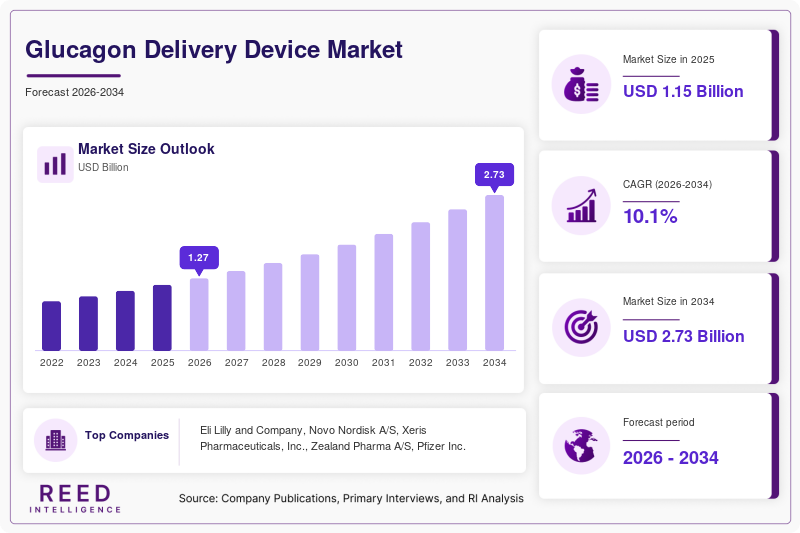
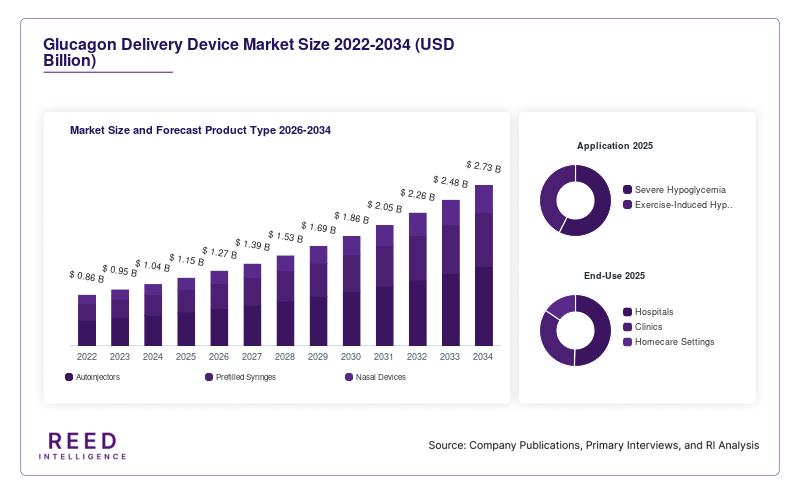
The Glucagon Delivery Device Market size was valued at approximately USD 1.15 billion in 2026 and is projected to reach USD 2.48 billion by 2034, expanding at a compound annual growth rate (CAGR) of 10.1% during the forecast period (2026–2034). The market growth is primarily supported by the rising global prevalence of diabetes, particularly insulin-dependent diabetes, which increases the risk of severe hypoglycemia and drives demand for emergency glucagon administration devices.
One of the major global factors contributing to market expansion is the increasing adoption of user-friendly, ready-to-use glucagon delivery systems. Traditional glucagon kits require reconstitution before use, which can delay emergency treatment. However, newer devices such as prefilled autoinjectors and nasal sprays simplify administration, enabling caregivers and patients to respond quickly to hypoglycemic events. These advancements are improving treatment adherence and boosting product demand across both developed and emerging markets.
Key Highlights
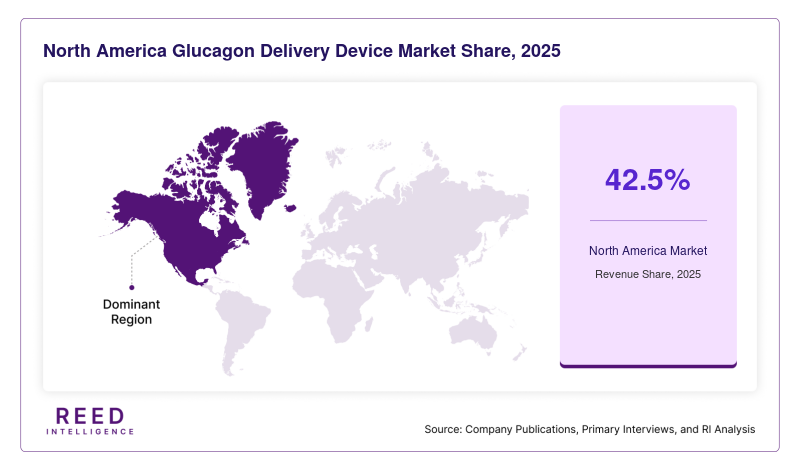
- North America dominated the market with a 42.5% share in 2025
- Asia Pacific is the fastest-growing region with a CAGR of 12.4%
- Autoinjectors led the product segment with 48% share, while nasal glucagon devices are the fastest-growing with a CAGR of 11.8%
- Hospitals dominated the end-use segment, while homecare settings are the fastest-growing with 12.1% CAGR
- The United States recorded market values of USD 410 million in 2024 and USD 445 million in 2025
Market Trends
Shift Toward Ready-to-Use and Non-Invasive Glucagon Devices
The market is experiencing a clear shift from traditional reconstitution-based glucagon kits toward ready-to-use delivery formats. These include prefilled autoinjectors and nasal sprays that eliminate the need for complex preparation during emergencies. Patients and caregivers prefer these devices because they are easy to use, require minimal training, and reduce administration errors. This trend is particularly relevant in homecare environments, where immediate response is critical. Pharmaceutical companies are investing in simplified formulations that maintain stability at room temperature, enhancing convenience and portability. This shift is expected to significantly increase adoption rates across both developed and emerging markets.
Integration with Digital Diabetes Management Ecosystems
Another important trend is the integration of glucagon delivery devices with broader digital diabetes management platforms. With the growing use of continuous glucose monitoring systems and insulin pumps, there is increasing interest in connected healthcare solutions. Some manufacturers are exploring smart glucagon devices that can communicate with monitoring systems to provide alerts or automate emergency responses. This trend aligns with the broader movement toward personalized and data-driven healthcare. As digital health adoption rises, these integrated systems are expected to enhance patient safety and improve clinical outcomes, supporting long-term market growth.
Market Drivers
Rising Prevalence of Diabetes and Hypoglycemic Events
The increasing global burden of diabetes is a primary driver for the glucagon delivery device market. A significant proportion of diabetic patients, especially those using insulin therapy, are at risk of severe hypoglycemia. These episodes can be life-threatening if not treated promptly. As the number of diabetic patients continues to grow, so does the need for reliable emergency treatment options. Healthcare providers are recommending glucagon kits as a standard component of diabetes management plans. This rising awareness among patients and caregivers is boosting demand for advanced delivery devices that offer quick and effective treatment.
Technological Advancements in Drug Delivery Systems
Technological innovation in drug delivery is another major factor driving market growth. Manufacturers are developing devices that improve ease of use, accuracy, and portability. Innovations such as autoinjectors and nasal delivery systems have transformed glucagon administration by eliminating the need for reconstitution. These advancements reduce the risk of dosing errors and make the devices more accessible to non-medical users. Furthermore, improvements in formulation stability have extended shelf life, making these products more practical for everyday use. Continuous research and development efforts are expected to further enhance device efficiency and expand their application scope.
Market Restraint
High Cost and Limited Accessibility in Emerging Markets
Despite technological advancements, the high cost of advanced glucagon delivery devices remains a significant restraint. Prefilled autoinjectors and nasal sprays are more expensive than traditional glucagon kits, which limits their adoption in low- and middle-income countries. In many regions, healthcare systems lack sufficient reimbursement policies, making these devices unaffordable for a large segment of the population. This cost barrier reduces market penetration and slows overall growth.
The impact of this restraint is particularly evident in rural and underserved areas, where access to advanced medical devices is limited. For example, patients in developing countries may rely on outdated reconstitution kits, which are less convenient and more prone to user error. This disparity highlights the need for cost-effective solutions that can bridge the accessibility gap. Manufacturers face challenges in balancing innovation with affordability, and without addressing pricing concerns, market expansion may remain uneven across different regions.
Market Opportunities
Expansion in Emerging Economies
Emerging economies present significant growth opportunities for the glucagon delivery device market. Countries in Asia Pacific, Latin America, and Africa are witnessing a rapid increase in diabetes prevalence due to urbanization, lifestyle changes, and aging populations. As healthcare infrastructure improves, there is growing demand for advanced diabetes management solutions. Governments and healthcare organizations are investing in awareness campaigns and screening programs, which can increase the adoption of glucagon devices. Companies that offer affordable and easy-to-use products tailored to these markets are likely to gain a competitive advantage.
Development of Dual-Hormone Artificial Pancreas Systems
The development of dual-hormone artificial pancreas systems represents another promising opportunity. These systems combine insulin and glucagon delivery to maintain optimal glucose levels automatically. As research in this area progresses, glucagon delivery devices will play a critical role in preventing hypoglycemia. This innovation has the potential to transform diabetes management by providing a more comprehensive and automated solution. Manufacturers that invest in partnerships and research collaborations can position themselves at the forefront of this emerging segment.
Segmental Analysis
By Product Type
Autoinjectors dominated the product type segment, accounting for 48% of the market share in 2024. These devices are widely preferred due to their ease of use and rapid administration capabilities. Autoinjectors eliminate the need for manual preparation, making them suitable for emergency situations. Their design ensures accurate dosing, which is critical for effective hypoglycemia management. The increasing adoption of these devices in homecare settings is further driving their dominance.
Nasal glucagon devices are the fastest-growing subsegment, with a projected CAGR of 11.8%. These devices offer a non-invasive alternative to injections, making them more acceptable to patients and caregivers. The ease of administration without needles reduces anxiety and improves compliance. Continuous innovation in nasal formulations is expected to drive further growth.
By Application
Severe hypoglycemia treatment dominated the application segment, accounting for 65% of the market share in 2024. Glucagon delivery devices are primarily used in emergency situations to treat severe hypoglycemia, which can lead to unconsciousness if not addressed promptly. The increasing prevalence of insulin-dependent diabetes is driving demand in this segment.
Exercise-induced hypoglycemia management is the fastest-growing application, with a CAGR of 10.9%. As awareness of diabetes management during physical activity increases, more patients are using glucagon devices as a preventive measure. This trend is particularly strong among younger and active populations.
By End-Use
Hospitals dominated the end-use segment, holding 52% of the market share in 2024. Hospitals are equipped with trained professionals and advanced medical equipment, making them the primary setting for emergency care. The availability of a wide range of glucagon delivery devices further supports this dominance.
Homecare settings are the fastest-growing segment, with a CAGR of 12.1%. The shift toward patient-centric care and the increasing availability of user-friendly devices are driving growth in this segment. Patients and caregivers prefer home-based solutions for managing hypoglycemic events, which is boosting demand.
Regional Analysis
North America
North America held the largest market share of 42.5% in 2025 and is expected to maintain steady growth with a CAGR of 9.4% during the forecast period. The region benefits from advanced healthcare infrastructure, high awareness of diabetes management, and strong reimbursement frameworks. The widespread adoption of innovative glucagon delivery devices, including autoinjectors and nasal sprays, further supports market growth.
The United States dominates the regional market due to its large diabetic population and strong presence of key market players. A unique growth factor is the high adoption of digital health technologies, which enhances patient monitoring and supports the integration of glucagon devices into comprehensive diabetes management systems.
Europe
Europe accounted for a significant market share of 26.3% in 2025, with a projected CAGR of 9.1%. The region’s growth is driven by increasing healthcare expenditure and supportive government policies promoting diabetes care. Countries across Western Europe are adopting advanced glucagon delivery systems to improve patient outcomes.
Germany leads the European market, supported by strong healthcare infrastructure and a focus on innovation. A unique growth factor is the region’s emphasis on preventive care, which encourages early adoption of emergency treatment devices and increases overall market demand.
Asia Pacific
Asia Pacific is the fastest-growing region, with a CAGR of 12.4% and a market share of 18.7% in 2025. Rapid urbanization, increasing diabetes prevalence, and improving healthcare infrastructure are key factors driving growth. The region offers significant opportunities for market expansion.
China dominates the Asia Pacific market due to its large population and rising healthcare investments. A unique growth factor is the increasing penetration of private healthcare providers, which enhances access to advanced medical devices and supports market growth.
Middle East & Africa
The Middle East & Africa region held a market share of 6.5% in 2025 and is expected to grow at a CAGR of 8.7%. Growth is supported by improving healthcare infrastructure and rising awareness of diabetes management. However, limited access to advanced devices remains a challenge.
Saudi Arabia leads the regional market due to high diabetes prevalence and government initiatives. A unique growth factor is the increasing investment in healthcare modernization, which is improving access to innovative treatment solutions.
Latin America
Latin America accounted for 6.0% of the market in 2025 and is projected to grow at a CAGR of 9.0%. The region’s growth is driven by increasing healthcare spending and rising awareness of chronic disease management.
Brazil dominates the Latin American market, supported by its large population and expanding healthcare sector. A unique growth factor is the growing role of public-private partnerships, which are improving access to advanced medical devices and supporting market growth.
Competitive Landscape
The glucagon delivery device market is moderately consolidated, with several global and regional players competing on innovation, pricing, and product differentiation. Leading companies are focusing on developing advanced delivery systems that improve ease of use and patient compliance. Strategic partnerships, mergers, and product launches are common strategies used to strengthen market position.
A leading player in the market is Eli Lilly and Company, which has established a strong presence through its innovative glucagon products. The company recently introduced an advanced nasal glucagon device that simplifies administration and enhances patient convenience. Other key players are investing in research and development to introduce next-generation delivery systems. The competitive landscape is expected to intensify as new entrants bring cost-effective solutions to the market.
Key Players
- Eli Lilly and Company
- Novo Nordisk A/S
- Xeris Pharmaceuticals, Inc.
- Zealand Pharma A/S
- Pfizer Inc.
- Sanofi S.A.
- Amgen Inc.
- AstraZeneca plc
- Becton, Dickinson and Company
- Teva Pharmaceutical Industries Ltd.
- Merck & Co., Inc.
- Johnson & Johnson
- AbbVie Inc.
- Bayer AG
- Roche Holding AG
Recent Developments
- In 2025, Eli Lilly launched an improved nasal glucagon formulation with enhanced stability and faster absorption.
- In 2024, Xeris Pharmaceuticals expanded its product portfolio with a ready-to-use liquid glucagon autoinjector.
- In 2025, Novo Nordisk announced a strategic collaboration to develop integrated glucagon delivery systems for artificial pancreas solutions.
Glucagon Delivery Device Market Segments
Product Type
- Autoinjectors
- Prefilled Syringes
- Nasal Devices
Application
- Severe Hypoglycemia
- Exercise-Induced Hypoglycemia
End-Use
- Hospitals
- Clinics
- Homecare Settings
By Region
- North America
- Europe
- APAC
- Middle East and Africa
- LATAM