Gluten Free Foods & Beverages Market Size, Share & Demand Report By Product Type (Bakery Products, Snacks, Beverages, Pasta & Noodles, Breakfast Cereals, Others), By Distribution Channel (Supermarkets & Hypermarkets, Convenience Stores, Specialty Stores, Online Retail, Others), By End User (Adults, Children), By Region & Segment Forecasts, 2026–2034
USD 3950
Market Overview
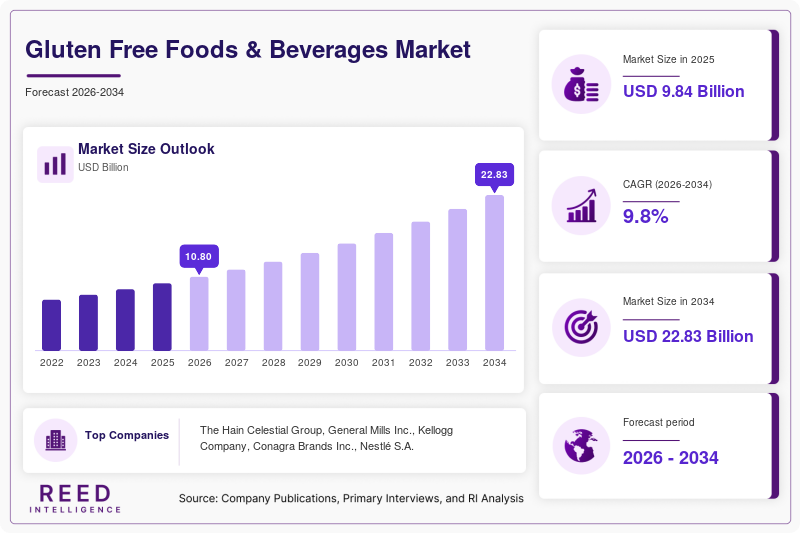
The global Gluten Free Foods & Beverages Market was valued at USD 9.84 billion in 2026 and is projected to reach USD 20.76 billion by 2034, expanding at a CAGR of 9.8% during 2026–2034. The market continues to witness steady expansion as consumers increasingly prioritize dietary wellness, digestive health, and clean-label nutrition. Gluten-free products have evolved from niche offerings designed primarily for individuals with celiac disease into mainstream food and beverage categories consumed by health-conscious consumers seeking improved lifestyle choices.
One of the primary global factors supporting market growth is the increasing prevalence of digestive disorders and food sensitivities. Rising awareness regarding gluten intolerance, wheat allergies, and celiac disease has encouraged consumers to adopt gluten-free dietary patterns. In addition, manufacturers are investing in product innovation across bakery products, snacks, beverages, ready-to-eat meals, and nutritional supplements. The availability of gluten-free alternatives through supermarkets, online retail channels, specialty stores, and foodservice outlets has significantly improved market penetration across developed and emerging economies.
Key Highlights
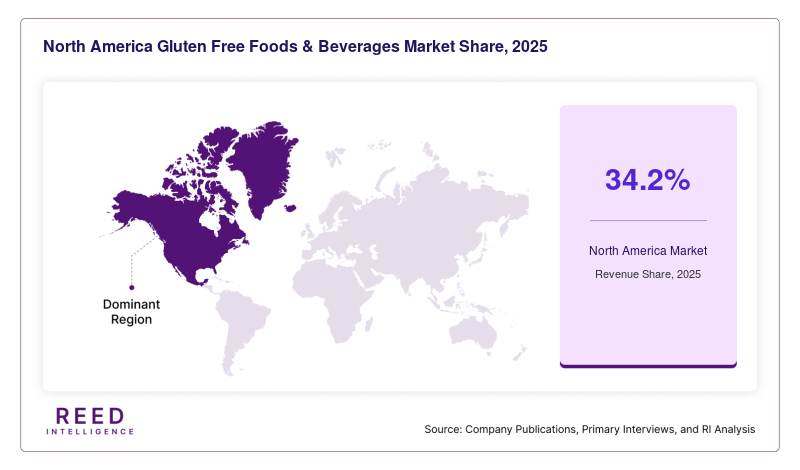
- North America dominated the market with a 34.2% share in 2025.
- while Asia Pacific is expected to grow at the fastest CAGR of 11.6% during 2026–2034.
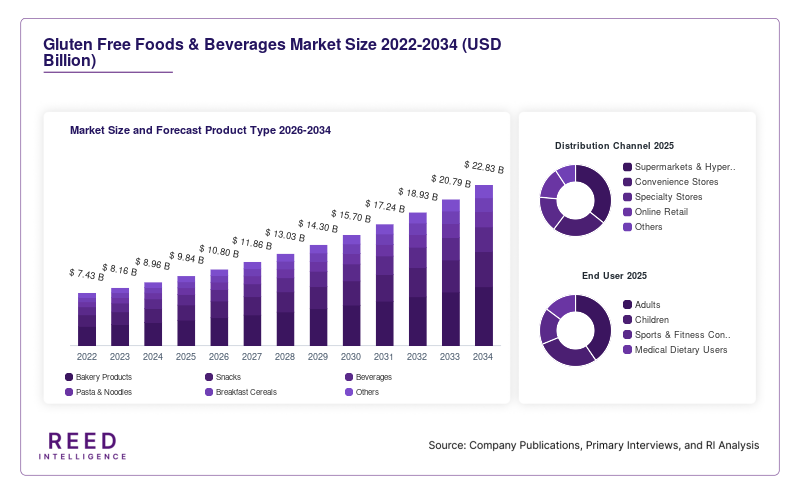
- By product type, bakery products accounted for the largest share of 36.8%.
- while gluten-free snacks are projected to grow at a CAGR of 11.9%.
- By distribution channel, supermarkets and hypermarkets held a 42.6% share.
- whereas online retail is expected to expand at a CAGR of 13.4%.
- By end user, adult consumers represented 58.3% of market demand.
- while sports and fitness consumers are projected to grow at a CAGR of 12.2%.
- The United States remained the dominant country, with market values of USD 2.74 billion in 2024 and USD 3.01 billion in 2025.
Market Trends
Expansion of Clean-Label and Functional Gluten-Free Products
The gluten-free foods and beverages industry is increasingly aligned with the clean-label movement. Consumers are carefully evaluating ingredient lists and preferring products that contain recognizable, natural, and minimally processed ingredients. As a result, manufacturers are replacing artificial additives with plant-based alternatives and incorporating nutrient-dense grains such as quinoa, millet, and buckwheat. Gluten-free products are no longer positioned solely as specialty dietary items but are marketed as healthier lifestyle choices. Product developers are also integrating protein, fiber, probiotics, and vitamins into gluten-free formulations. This combination of clean-label positioning and functional nutrition is helping companies appeal to broader consumer groups while increasing average product value and encouraging repeat purchases across retail channels.
Rising Demand for Convenient Gluten-Free Consumption
Consumer lifestyles continue to drive demand for convenient meal and snack options. Busy schedules, urbanization, and growing workforce participation have increased the popularity of ready-to-eat and ready-to-cook gluten-free products. Manufacturers are introducing frozen meals, snack bars, instant mixes, beverages, and portable nutrition products designed for on-the-go consumption. Foodservice operators are also expanding gluten-free menu options to meet changing dietary preferences. The availability of convenient gluten-free products through e-commerce platforms further strengthens accessibility. Digital grocery channels allow consumers to compare ingredients, explore specialized brands, and purchase products not readily available in traditional retail stores, creating a favorable environment for long-term market growth.
Market Drivers
Increasing Awareness of Gluten Intolerance and Celiac Disease
Growing awareness regarding celiac disease, non-celiac gluten sensitivity, and wheat allergies remains a significant growth driver for the Gluten Free Foods & Beverages Market. Healthcare organizations, nutrition professionals, and public health campaigns have contributed to greater understanding of gluten-related disorders. Improved diagnostic capabilities are helping identify affected individuals earlier, leading to greater adoption of gluten-free diets. Consumers diagnosed with gluten-related conditions often require lifelong dietary modifications, creating consistent demand for specialized products. Additionally, family members frequently adopt similar dietary habits, expanding the consumer base. As awareness continues to rise across both developed and developing economies, manufacturers are experiencing stronger demand for certified gluten-free products across multiple food and beverage categories.
Product Innovation Across Food and Beverage Categories
Continuous innovation is driving market expansion by improving product quality, taste, texture, and nutritional content. Historically, gluten-free products faced challenges related to flavor and consistency. However, advancements in ingredient technology and food processing techniques have significantly improved consumer acceptance. Manufacturers are investing in research and development to create products that closely resemble conventional alternatives while maintaining gluten-free certification. Innovations include high-protein bakery products, fortified beverages, gluten-free pasta, plant-based snacks, and functional nutrition products. These developments are helping brands attract both medically required consumers and lifestyle-focused buyers, resulting in broader market participation and increased revenue opportunities.
Market Restraint
Premium Pricing and Production Challenges
Despite favorable growth prospects, premium pricing remains a major restraint for the Gluten Free Foods & Beverages Market. Gluten-free products often require specialized ingredients, dedicated manufacturing facilities, contamination prevention measures, and certification processes. These factors contribute to higher production costs compared with conventional food products. Consequently, gluten-free items frequently carry premium retail prices, limiting affordability among price-sensitive consumers. The challenge is particularly evident in developing regions where disposable income levels may restrict adoption. In addition, maintaining product texture, shelf stability, and taste without gluten can increase formulation complexity and operational expenses. Smaller manufacturers often face difficulties achieving economies of scale, which further impacts competitiveness. For example, gluten-free bakery products generally require alternative flour blends and specialized processing methods, increasing both manufacturing and distribution costs. These factors may slow market penetration in certain regions despite rising consumer awareness and favorable long-term demand fundamentals.
Market Opportunities
Growth Potential in Emerging Economies
Emerging economies present substantial opportunities for market participants as awareness of digestive health and specialized nutrition continues to increase. Rising urbanization, improving healthcare access, and growing middle-class populations are encouraging consumers to explore healthier dietary options. Countries across Asia Pacific, Latin America, and the Middle East are witnessing greater demand for premium and specialty food products. International brands are expanding regional distribution networks while local manufacturers are introducing affordable gluten-free alternatives tailored to regional tastes. Educational campaigns regarding food sensitivities and nutritional wellness are further supporting adoption. As retail infrastructure improves and modern grocery formats expand, gluten-free products are expected to become more accessible, creating significant long-term growth opportunities.
Expansion of Online Retail and Direct-to-Consumer Channels
The rapid growth of digital commerce creates another attractive opportunity for industry participants. Online retail platforms enable manufacturers to reach niche consumer groups without extensive investments in physical distribution infrastructure. Consumers benefit from broader product selection, subscription services, personalized recommendations, and convenient home delivery options. Direct-to-consumer strategies also provide brands with valuable purchasing data that can support targeted marketing and product development initiatives. Smaller and emerging brands are particularly benefiting from digital channels because they can compete effectively alongside established companies. As internet penetration and digital payment adoption continue to improve globally, online sales are expected to become an increasingly important revenue contributor within the Gluten Free Foods & Beverages Market.
Segmental Analysis
By Product Type
Bakery products represented the dominant subsegment and accounted for approximately 36.8% of the market share in 2024. Gluten-free bread, cakes, cookies, muffins, and pastries continue to generate substantial demand because bakery products remain staple food items in many regions. Consumers diagnosed with gluten intolerance often seek direct replacements for conventional bakery products, supporting sustained demand. Manufacturers have improved product quality through innovative flour blends derived from rice, sorghum, millet, and quinoa. Enhanced texture and flavor profiles have significantly increased consumer acceptance. In addition, premium positioning and strong retail visibility contribute to revenue generation across both developed and emerging markets.
Gluten-free snacks are expected to be the fastest-growing subsegment, registering a CAGR of 11.9% through 2034. Demand is being driven by changing lifestyles, increasing preference for convenient nutrition, and growing interest in healthy snacking habits. Consumers are seeking products that provide functional benefits while accommodating dietary restrictions. Manufacturers are responding through the introduction of protein-rich chips, crackers, nutrition bars, and plant-based snack options. Product innovation, attractive packaging, and expanding online distribution channels are further supporting category growth. Younger consumers, fitness enthusiasts, and working professionals represent key customer groups driving demand for gluten-free snack products globally.
By Distribution Channel
Supermarkets and hypermarkets held the leading position, accounting for approximately 42.6% of total market share in 2024. These retail formats offer extensive product variety, competitive pricing, and strong brand visibility. Consumers benefit from convenient access to gluten-free products across multiple categories, including bakery items, beverages, snacks, and prepared meals. Large retail chains continue expanding dedicated health food sections, making gluten-free products easier to identify and purchase. Promotional campaigns, product sampling initiatives, and in-store educational materials further encourage consumer engagement. The established distribution infrastructure of supermarkets and hypermarkets continues to support high sales volumes and strong market penetration.
Online retail is anticipated to be the fastest-growing distribution channel, expanding at a CAGR of 13.4% during the forecast period. E-commerce platforms provide access to specialized products that may not be available through traditional retail outlets. Consumers increasingly appreciate the convenience of home delivery, subscription services, and personalized recommendations. Digital channels also allow manufacturers to reach niche audiences and gather valuable consumer insights. Improved logistics networks, secure payment systems, and increasing internet penetration are strengthening online purchasing behavior. As consumers become more comfortable buying specialty food products online, digital sales are expected to contribute significantly to future market growth.
By End User
Adult consumers accounted for the largest share of approximately 58.3% in 2024. This dominance is largely attributed to higher diagnosis rates of gluten intolerance among adults and increasing awareness regarding digestive health. Many consumers adopt gluten-free diets as part of broader wellness strategies focused on weight management, energy optimization, and healthy living. Adults typically possess greater purchasing power and are more likely to seek premium specialty food products. Product diversity across bakery items, beverages, snacks, and meal solutions further supports adoption. As awareness continues to increase, adult consumers are expected to remain the primary demand source within the market.
Sports and fitness consumers are projected to record the fastest CAGR of 12.2% through 2034. This growth is supported by rising interest in performance nutrition, clean eating habits, and functional food products. Athletes and active individuals increasingly seek dietary solutions that align with specific health goals while avoiding ingredients perceived as difficult to digest. Manufacturers are responding with high-protein gluten-free snacks, nutritional beverages, meal replacements, and recovery products. Marketing initiatives targeting fitness communities and growing participation in recreational sports activities further strengthen demand. The combination of health awareness and lifestyle-driven consumption is expected to accelerate growth within this consumer segment.
Regional Analysis
North America
North America accounted for approximately 34.2% of the global market in 2025 and maintained its position as the leading regional market. The region is expected to register a CAGR of 8.7% through 2034. High consumer awareness regarding gluten intolerance, strong purchasing power, and widespread availability of gluten-free products support market growth. Retailers continue expanding product portfolios, while foodservice operators increasingly offer gluten-free menu alternatives to address evolving dietary preferences and health-conscious consumer behavior.
The United States remains the dominant country within North America. A key growth factor is the advanced healthcare ecosystem that supports early diagnosis of celiac disease and gluten sensitivity. Consumers are highly receptive to functional nutrition trends and premium food products. Product innovation, certification programs, and extensive distribution networks further strengthen market development across supermarkets, specialty stores, and online retail channels.
Europe
Europe represented approximately 28.5% of the global market in 2025 and is anticipated to expand at a CAGR of 8.9% during the forecast period. The region benefits from stringent food labeling regulations and high consumer awareness regarding dietary requirements. Demand remains strong across bakery products, cereals, snacks, and beverages. Growing interest in clean-label nutrition and natural ingredients is encouraging manufacturers to launch innovative gluten-free product lines tailored to regional preferences.
Germany remains the dominant country in the European market. A unique growth factor is the strong consumer preference for premium organic and specialty food products. German consumers actively seek transparent ingredient information and certified food products. Retail chains continue expanding gluten-free shelf space, while domestic manufacturers invest in research and development activities to enhance product quality and nutritional profiles.
Asia Pacific
Asia Pacific held nearly 22.8% of the global market in 2025 and is projected to achieve the fastest CAGR of 11.6% through 2034. Rapid urbanization, rising disposable income levels, and increasing awareness of digestive wellness contribute to regional growth. Consumers are becoming more interested in specialized diets, creating opportunities for international and local manufacturers. Expanding modern retail infrastructure and growing e-commerce penetration are further accelerating market adoption across major economies.
China dominates the Asia Pacific market. A significant growth factor is the increasing demand for premium health-focused food products among urban consumers. Rising health consciousness and expanding middle-class populations support adoption of gluten-free alternatives. Domestic food manufacturers are introducing innovative products that combine traditional ingredients with gluten-free formulations, helping broaden consumer acceptance and market reach.
Middle East & Africa
The Middle East & Africa accounted for approximately 7.1% of the global market in 2025 and is forecast to register a CAGR of 9.4% during 2026–2034. Although still developing, the regional market benefits from increasing awareness of dietary health and growing availability of specialty food products. International food brands are expanding their presence through partnerships with regional distributors, improving access to gluten-free foods and beverages in urban centers.
Saudi Arabia remains the leading country within the region. A unique growth factor is the ongoing expansion of modern retail infrastructure and premium food retail formats. Consumers are increasingly adopting healthier lifestyles and showing greater interest in specialized nutrition products. Rising healthcare awareness and government initiatives supporting wellness-focused consumption further contribute to market development throughout the country.
Latin America
Latin America captured around 7.4% of the global market in 2025 and is expected to grow at a CAGR of 9.1% through 2034. The region is experiencing gradual growth due to increasing consumer awareness regarding food sensitivities and healthier eating habits. Retail modernization, improving economic conditions, and expanding product availability are encouraging adoption. Manufacturers are also introducing region-specific formulations that align with local taste preferences and dietary habits.
Brazil is the dominant country in the Latin American market. A key growth factor is the rising popularity of wellness-focused lifestyles among younger consumers. Social media influence, nutritional education, and increased access to specialty food products are supporting market expansion. Domestic producers are strengthening product portfolios, while international brands continue investing in local distribution partnerships to improve market penetration.
Competitive Landscape
The Gluten Free Foods & Beverages Market is characterized by a mix of multinational food corporations and specialized gluten-free product manufacturers. Companies focus on product innovation, acquisitions, strategic partnerships, and geographic expansion to strengthen market presence. Investments in clean-label formulations, plant-based ingredients, and functional nutrition products remain key competitive strategies.
The Hain Celestial Group continues to be one of the leading participants due to its diversified gluten-free portfolio and strong retail presence. A recent development involved the expansion of its gluten-free snack and bakery product offerings to support growing consumer demand for convenient nutrition solutions.
Other prominent companies are strengthening market positions through new product launches and enhanced digital distribution capabilities. Manufacturers are also investing in dedicated production facilities to ensure compliance with gluten-free certification standards. Increasing competition is encouraging innovation across ingredients, packaging, and nutritional formulations, creating a dynamic market environment through the forecast period.
Key Players
- The Hain Celestial Group
- General Mills Inc.
- Kellogg Company
- Conagra Brands Inc.
- Nestlé S.A.
- PepsiCo Inc.
- Dr. Schär AG
- Hero Group
- Bob's Red Mill Natural Foods
- Enjoy Life Foods
- Amy's Kitchen Inc.
- BFree Foods
- Freedom Foods Group
- Glutino
- Nature's Path Foods
Recent Developments
- A major gluten-free food manufacturer launched a new line of protein-enriched gluten-free snack products targeting active lifestyle consumers.
- A leading bakery company expanded its dedicated gluten-free production facility to increase manufacturing capacity and reduce cross-contamination risks.
- An international food brand introduced direct-to-consumer subscription services for gluten-free meal kits and specialty food products across multiple markets.
- Several regional retailers expanded shelf space allocated to certified gluten-free products in response to growing consumer demand.
- Manufacturers increased investments in alternative grain sourcing programs to improve supply chain stability and product innovation.
Gluten Free Foods & Beverages Market Segments
Product Type
- Bakery Products
- Snacks
- Beverages
- Pasta & Noodles
- Breakfast Cereals
- Others
Distribution Channel
- Supermarkets & Hypermarkets
- Convenience Stores
- Specialty Stores
- Online Retail
- Others
End User
- Adults
- Children
- Sports & Fitness Consumers
- Medical Dietary Users
By Region
- North America
- Europe
- APAC
- Middle East and Africa
- LATAM