Gluten-Free Oat Market Size, Share & Demand Report By Product Type (Rolled Oats, Steel-Cut Oats, Oat Flour, Instant Oats, Others), By Application (Bakery and Confectionery, Breakfast Cereals, Dairy Alternatives, Snacks and Convenience Foods, Nutritional Supplements), By Distribution Channel (Supermarkets and Hypermarkets, Convenience Stores, Specialty Stores, Online Retail, Others), By Region & Segment Forecasts, 2026–2034
USD 3950
Market Overview
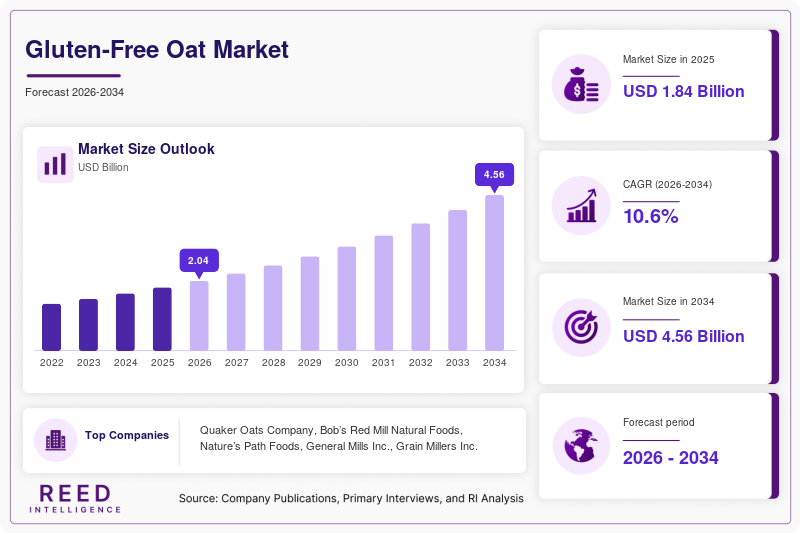
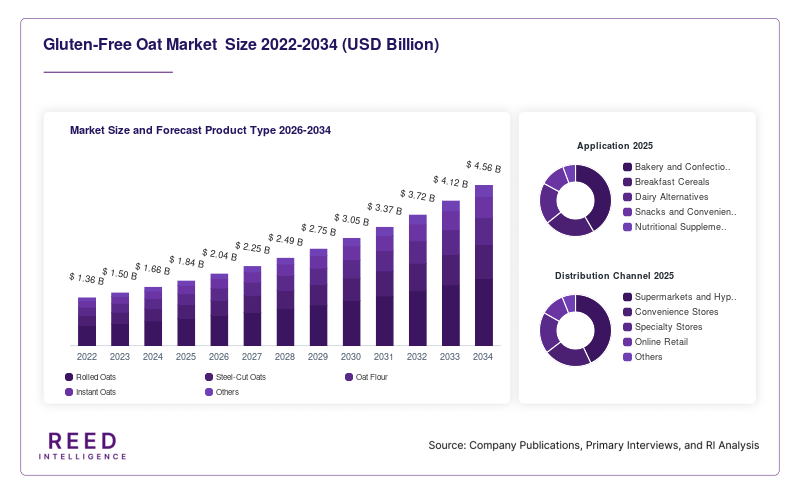
The global Gluten-Free Oat Market size was valued at approximately USD 1.84 billion in 2026 and is projected to reach nearly USD 4.12 billion by 2034, expanding at a compound annual growth rate (CAGR) of 10.6% during the forecast period from 2026 to 2034. Rising awareness regarding digestive health, food allergies, and clean-label nutrition continues to support the expansion of gluten-free food categories worldwide. Consumers diagnosed with celiac disease, gluten intolerance, and wheat sensitivity are increasingly shifting toward certified gluten-free grains, especially oats that offer high fiber, protein, and beta-glucan content. The growing inclusion of gluten-free oats in breakfast cereals, bakery products, snack bars, and dairy alternatives is creating sustained demand across retail and foodservice channels.
The market is also benefiting from the expansion of health-conscious consumer groups seeking functional foods with nutritional value beyond traditional grains. Food manufacturers are investing in contamination-free processing facilities and certified supply chains to improve consumer confidence in gluten-free oat products. E-commerce growth and the wider availability of gluten-free food options in supermarkets are further supporting market penetration across developed and emerging economies. In addition, the rising popularity of plant-based diets has strengthened the use of oats in vegan beverages, oat-based yogurt, and protein-rich snacks.
Key Highlights
- North America dominated the market with a 36.4% share in 2025.
- Asia Pacific is expected to grow at the fastest CAGR of 11.8% during 2026–2034.
- By product type, rolled oats accounted for the largest share of 39.7%.
- while oat flour is projected to grow at a CAGR of 12.2%.
- By application, bakery and confectionery led with a 34.5% share, whereas dairy alternatives are expected to expand at a CAGR of 13.1%.
- By distribution channel, supermarkets and hypermarkets held the dominant share of 43.9%, while online retail is forecast to grow at a CAGR of 14.4%.
- The United States remained the dominant country, with market values of USD 520 million in 2024 and USD 575 million in 2025.
Market Trends
Rising Adoption of Plant-Based and Functional Food Products
The growing preference for plant-based food products is emerging as a major trend in the Gluten-Free Oat Market. Consumers are increasingly choosing oat-based food and beverage products due to their nutritional profile and compatibility with vegan and gluten-free lifestyles. Gluten-free oats are widely used in oat milk, smoothies, protein bars, breakfast cereals, and snack products because they provide fiber, vitamins, and sustained energy. Food manufacturers are responding to this shift by launching innovative oat-based formulations with added protein, probiotics, and natural sweeteners. The trend is particularly visible among younger consumers who prioritize wellness, ingredient transparency, and digestive health. The expansion of plant-based retail shelves across supermarkets and convenience stores is also accelerating product visibility and consumer trial rates.
Expansion of Certified and Traceable Gluten-Free Supply Chains
Another significant trend influencing the market is the increasing focus on certified gluten-free production and traceability systems. Consumers with celiac disease require strict assurance that oat products are free from cross-contamination with wheat, barley, or rye. As a result, manufacturers are investing in dedicated farming practices, specialized storage systems, and contamination-free milling facilities. Certification labels are becoming a key purchasing factor, especially in North America and Europe where regulatory standards for gluten-free foods are well established. Companies are also adopting blockchain-supported supply monitoring and digital traceability tools to improve transparency. This trend is strengthening consumer trust while enabling premium pricing opportunities for certified gluten-free oat brands across retail and online sales channels.
Market Drivers
Increasing Prevalence of Gluten Intolerance and Digestive Disorders
The increasing incidence of celiac disease, gluten sensitivity, and digestive disorders is one of the primary growth drivers for the Gluten-Free Oat Market. Healthcare professionals and nutrition experts are encouraging consumers to adopt gluten-free diets to manage gastrointestinal discomfort and inflammatory conditions. This has increased demand for safe grain alternatives that maintain nutritional balance while avoiding gluten-containing ingredients. Gluten-free oats have become a preferred option because they provide dietary fiber, minerals, and heart-health benefits without compromising texture or taste. Demand is especially strong among urban consumers seeking healthier breakfast and snack alternatives. Food brands are also expanding their gluten-free portfolios to meet changing dietary preferences, further strengthening product availability and market growth.
Strong Growth in Health-Conscious Consumer Spending
Growing consumer spending on health-focused food products is supporting long-term expansion across the gluten-free food industry. Consumers are paying greater attention to ingredient quality, clean-label claims, and functional nutrition, which has increased the popularity of gluten-free oat products. The demand for minimally processed grains and high-fiber ingredients is encouraging manufacturers to develop organic oats, steel-cut oats, and fortified oat blends for premium retail segments. Rising disposable income in emerging economies is also contributing to greater adoption of specialty food categories. In addition, social media influence, wellness campaigns, and digital nutrition awareness programs are encouraging consumers to shift away from refined grains and toward healthier oat-based alternatives, creating favorable conditions for sustained market development.
Market Restraint
High Risk of Cross-Contamination and Elevated Production Costs
One of the major challenges limiting the growth of the Gluten-Free Oat Market is the high risk of cross-contamination during cultivation, transportation, and processing. Oats are commonly processed in facilities that also handle wheat, rye, and barley, which creates concerns among consumers requiring strict gluten-free diets. To maintain certification standards, manufacturers must invest in separate processing lines, advanced cleaning systems, and dedicated supply chain infrastructure. These additional operational requirements increase production costs and result in higher retail prices compared to conventional oat products. Smaller manufacturers often face financial barriers when establishing contamination-free operations, limiting their competitiveness in the market.
The restraint also affects consumer purchasing behavior in price-sensitive economies where gluten-free products remain expensive relative to traditional grains. Inconsistent regulatory standards across countries further complicate international trade and product labeling practices. For example, certain regional suppliers may struggle to meet strict gluten threshold requirements imposed by North American and European food authorities. Such challenges can reduce export opportunities and slow market penetration in developing regions. In addition, occasional product recalls related to contamination concerns can negatively affect consumer confidence and brand reputation, creating temporary disruptions across the supply chain.
Market Opportunities
Rising Demand for Gluten-Free Bakery and Snack Innovations
The increasing demand for gluten-free bakery products and healthy snacks presents a major opportunity for market participants. Consumers are seeking convenient food options that align with dietary restrictions while maintaining taste and texture quality. Gluten-free oats are being increasingly incorporated into cookies, muffins, granola bars, pancakes, and breakfast biscuits because of their nutritional content and versatility. Manufacturers are introducing innovative flavor combinations and fortified formulations containing protein, seeds, and natural sweeteners to attract a broader consumer base. Retailers are also dedicating more shelf space to specialty bakery products, improving visibility for gluten-free oat ingredients. This opportunity is expected to create strong demand among urban households, fitness-oriented consumers, and premium food buyers.
Expansion Potential in Emerging Economies and Online Retail
Emerging economies represent a substantial growth opportunity for the Gluten-Free Oat Market due to rising health awareness and expanding middle-class populations. Countries across Asia Pacific and Latin America are witnessing increasing demand for functional food products as consumers adopt western dietary habits and preventive healthcare practices. International food brands are expanding their regional presence through partnerships with local distributors and supermarket chains. At the same time, online retail channels are making gluten-free oat products more accessible to consumers living outside major metropolitan areas. E-commerce platforms provide opportunities for niche brands to reach targeted audiences without depending entirely on physical retail networks. Subscription-based health food deliveries and direct-to-consumer sales models are also expected to support long-term market penetration.
Segmental Analysis
By Product Type
Rolled oats accounted for the dominant share of the Gluten-Free Oat Market in 2024, contributing approximately 39.7% of total revenue. The segment maintains strong demand due to its affordability, convenience, and widespread application in breakfast meals and bakery products. Rolled oats are commonly used in granola, oatmeal, cookies, snack bars, and cereal formulations because they offer a balanced texture and nutritional profile. Consumers prefer rolled oats for their high fiber content and ability to support heart health and digestive wellness. The segment also benefits from increasing retail availability across supermarkets, convenience stores, and online grocery platforms. Food manufacturers continue to introduce flavored and fortified rolled oat products to attract health-conscious consumers seeking nutritious meal solutions.
Oat flour is projected to witness the fastest growth during the forecast period, expanding at a CAGR of 12.2%. The increasing demand for gluten-free baking ingredients is driving strong adoption across commercial bakeries and household consumers. Oat flour is widely used in bread, pancakes, muffins, cookies, and protein snacks because it improves texture while providing nutritional value. The segment is also benefiting from the growing popularity of clean-label and plant-based food products. Foodservice operators and packaged food brands are increasingly incorporating oat flour into gluten-free recipes to improve product differentiation. Rising consumer preference for homemade healthy meals and specialty baking products is expected to further accelerate demand for gluten-free oat flour globally.
By Application
Bakery and confectionery emerged as the largest application segment in 2024, accounting for nearly 34.5% of the overall market share. Gluten-free oats are extensively utilized in bread, biscuits, cakes, muffins, and cookies due to their versatility and nutritional composition. The segment benefits from rising consumer demand for healthier alternatives to conventional baked products. Manufacturers are focusing on improving taste, texture, and shelf stability to expand gluten-free bakery consumption among mainstream consumers. The increasing prevalence of food allergies and dietary restrictions has encouraged retail bakeries and packaged food brands to broaden their gluten-free product portfolios. In addition, premium bakery chains are introducing oat-based snack products targeted at fitness-conscious and wellness-focused consumers.
Dairy alternatives are expected to register the fastest CAGR of 13.1% during the forecast period. The increasing popularity of plant-based beverages and vegan diets is creating strong demand for gluten-free oats in oat milk, yogurt, creamers, and smoothie formulations. Oat-based dairy alternatives are gaining traction because they offer creamy texture, nutritional benefits, and compatibility with lactose-free and vegan lifestyles. Major beverage manufacturers are expanding production capacity and introducing flavored oat drinks to attract younger consumers. Cafes and coffee chains are also increasing the use of oat milk in beverages due to growing customer preference for plant-based options. Rising environmental awareness regarding sustainable food production further supports the long-term growth potential of this segment.
By Distribution Channel
Supermarkets and hypermarkets accounted for the largest share of the Gluten-Free Oat Market in 2024, representing approximately 43.9% of total revenue. These retail formats remain dominant because they provide broad product availability, competitive pricing, and strong consumer visibility. Large retail chains dedicate specialized shelves to gluten-free and organic food products, making it easier for consumers to identify certified oat products. Promotional campaigns, discount programs, and in-store product sampling also contribute to higher sales volumes. Consumers often prefer supermarkets for purchasing gluten-free oats because they can compare brands, packaging sizes, and nutritional information in one location. The expansion of premium grocery chains and modern retail infrastructure across emerging economies is expected to sustain segment growth.
Online retail is forecast to grow at the fastest CAGR of 14.4% through 2034. Digital commerce platforms are transforming the purchasing behavior of health-conscious consumers by offering convenient access to specialty food products. Consumers increasingly rely on e-commerce platforms to purchase certified gluten-free oats due to wider product variety, subscription models, and home delivery services. Online channels also allow niche and premium brands to reach consumers without relying heavily on physical retail networks. Social media advertising, influencer marketing, and personalized nutrition recommendations are further boosting online product visibility. In addition, consumers in smaller cities and remote regions benefit from easier access to imported gluten-free oat products through digital grocery applications.
Regional Analysis
North America
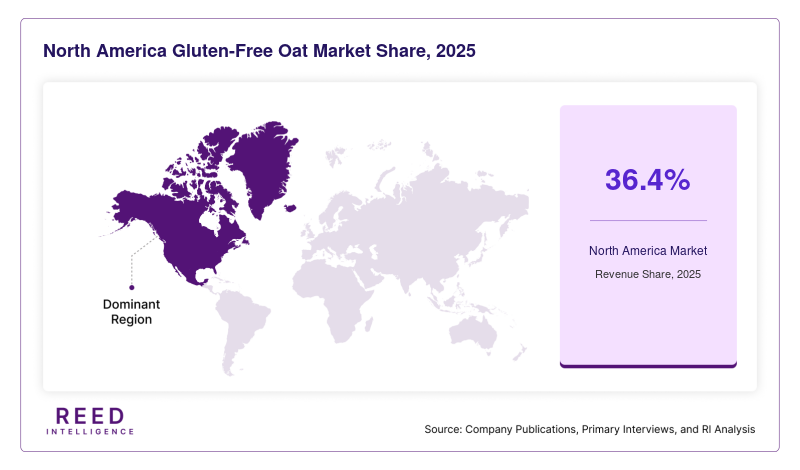
North America accounted for the largest share of the Gluten-Free Oat Market in 2025, representing approximately 36.4% of global revenue. The region is expected to maintain stable growth with a projected CAGR of 9.8% during the forecast period. High consumer awareness regarding celiac disease and digestive wellness continues to support strong demand for certified gluten-free products. The region benefits from well-developed retail infrastructure, strong product labeling regulations, and high penetration of health-oriented food brands. Demand for oat-based beverages, cereals, and snack products remains strong across the United States and Canada.
The United States remains the dominant country in the regional market due to widespread consumer preference for functional foods and plant-based nutrition. One major growth factor supporting the country’s expansion is the rapid increase in demand for oat milk and gluten-free breakfast products among younger consumers. Foodservice operators, cafes, and quick-service restaurant chains are also incorporating oat-based ingredients into beverages and menu offerings. In addition, strong investments in certified gluten-free farming and dedicated processing facilities are improving supply chain efficiency and strengthening consumer trust.
Europe
Europe represented nearly 28.1% of the global Gluten-Free Oat Market in 2025 and is projected to grow at a CAGR of 10.1% through 2034. The region has a mature gluten-free food industry supported by strict food safety regulations and rising demand for organic grains. Consumers across Europe are increasingly prioritizing clean-label and minimally processed food products, creating favorable conditions for premium oat brands. The expansion of vegan and flexitarian diets is also contributing to higher demand for gluten-free oats in dairy alternatives, breakfast products, and nutritional snacks.
Germany emerged as the dominant country within the European market due to strong health-conscious consumer behavior and expanding organic food consumption. A unique growth factor in the country is the increasing collaboration between retailers and local oat producers to strengthen sustainable and traceable supply chains. German consumers are highly responsive to environmentally responsible packaging and regional sourcing initiatives. Additionally, growing investments in private-label gluten-free products by supermarket chains are improving affordability and supporting wider consumer adoption across middle-income households.
Asia Pacific
Asia Pacific is expected to register the fastest growth in the Gluten-Free Oat Market, advancing at a CAGR of 11.8% during the forecast period. The region accounted for approximately 22.7% of the global market in 2025. Rapid urbanization, changing dietary patterns, and increasing awareness regarding digestive health are supporting strong regional expansion. Consumers are gradually incorporating gluten-free oats into breakfast meals, smoothies, and nutritional beverages. The growing influence of western food habits and fitness culture is also encouraging demand for high-fiber and protein-rich oat products across metropolitan markets.
China remains the leading country in the Asia Pacific market due to its large consumer base and expanding health food sector. One important growth factor driving demand is the increasing penetration of online grocery platforms and digital health-focused retail channels. Domestic and international brands are actively introducing gluten-free oat products through e-commerce campaigns and influencer marketing strategies. In addition, the expansion of premium supermarkets and imported food stores in urban areas is improving product accessibility and encouraging trial among middle-class consumers seeking healthier dietary alternatives.
Middle East & Africa
The Middle East & Africa region accounted for approximately 6.1% of the global Gluten-Free Oat Market in 2025 and is projected to grow at a CAGR of 8.7% over the forecast period. Although the regional market remains smaller compared to developed economies, rising awareness regarding specialty nutrition products is contributing to gradual expansion. Demand for gluten-free oats is increasing among affluent urban populations and expatriate communities. The growth of modern retail infrastructure and premium supermarket chains is also supporting wider availability of imported gluten-free products across several countries.
The United Arab Emirates leads the regional market due to strong demand for premium health foods and a rapidly expanding wellness-focused retail sector. A key growth factor in the country is the increasing popularity of fitness-oriented lifestyles and preventive healthcare practices among consumers. High tourism activity and the presence of international foodservice brands are also encouraging the introduction of oat-based breakfast menus and healthy snack offerings. Furthermore, digital grocery applications are helping consumers access imported gluten-free oat products more efficiently.
Latin America
Latin America held nearly 6.7% of the global Gluten-Free Oat Market in 2025 and is anticipated to expand at a CAGR of 9.2% through 2034. The region is witnessing rising demand for healthier food alternatives as awareness regarding nutrition and digestive wellness continues to improve. Urban consumers are increasingly adopting gluten-free diets due to lifestyle changes and exposure to global food trends. The expansion of organized retail and supermarket chains is creating stronger distribution opportunities for oat-based products, especially in major metropolitan centers.
Brazil remains the dominant country in the Latin American market due to growing consumer interest in functional foods and natural ingredients. One unique growth factor driving market expansion is the increasing use of gluten-free oats in sports nutrition and protein-enriched snack products. Fitness culture and gym memberships have expanded significantly across urban areas, increasing demand for healthy breakfast and snack solutions. In addition, regional food manufacturers are investing in affordable gluten-free product lines to attract middle-income consumers and improve category penetration.
Competitive Landscape
The Gluten-Free Oat Market is moderately fragmented, with global food manufacturers and regional specialty brands competing through product innovation, certification standards, and retail expansion strategies. Leading companies are investing in dedicated gluten-free processing facilities to reduce contamination risks and strengthen consumer trust. Product diversification remains a key competitive strategy, with manufacturers introducing flavored oats, organic variants, high-protein formulations, and oat-based beverages to capture changing consumer preferences.
Quaker Oats remains one of the leading participants in the market due to its strong brand recognition, extensive retail distribution network, and diversified oat product portfolio. The company has continued expanding its certified gluten-free product offerings to address increasing demand from health-conscious consumers. Several companies are also focusing on sustainable sourcing practices and environmentally responsible packaging to strengthen their market positioning.
Key Players
- Quaker Oats Company
- Bob’s Red Mill Natural Foods
- Nature’s Path Foods
- General Mills Inc.
- Grain Millers Inc.
- Avena Foods Limited
- Glutenfreeda Foods
- Richardson International
- Kellogg Company
- Blue Lake Milling
- Fazer Group
- Bagrry’s India Ltd.
- The Hain Celestial Group
- PepsiCo Inc.
Recent Developments
- In February 2026, Bob’s Red Mill expanded its certified gluten-free oat processing facility in North America to improve production capacity and reduce cross-contamination risks.
- In July 2025, General Mills introduced a new line of gluten-free oat-based snack bars targeting health-conscious consumers seeking high-fiber convenience foods.
- In November 2025, Nature’s Path Foods partnered with online grocery retailers across Asia Pacific to strengthen digital distribution of organic gluten-free oat products.
- In March 2026, Grain Millers Inc. invested in traceability technology solutions to improve transparency across its gluten-free oat supply chain.
Gluten-Free Oat Market Segments
Product Type
- Rolled Oats
- Steel-Cut Oats
- Oat Flour
- Instant Oats
- Others
Application
- Bakery and Confectionery
- Breakfast Cereals
- Dairy Alternatives
- Snacks and Convenience Foods
- Nutritional Supplements
Distribution Channel
- Supermarkets and Hypermarkets
- Convenience Stores
- Specialty Stores
- Online Retail
- Others
By Region
- North America
- Europe
- APAC
- Middle East and Africa
- LATAM