Glycoproteins Market Size, Share & Demand Report By Product Type (Therapeutic Glycoproteins, Glycoprotein Reagents and Analytical Kits), By Source (Mammalian Cell-Derived Glycoproteins), By Application (Drug Discovery and Development, Diagnostics, Proteomics Research), By End User (Pharmaceutical and Biotechnology Companies, Academic and Research Institutes), By Region & Segment Forecasts, 2026–2034
USD 3950
Market Overview
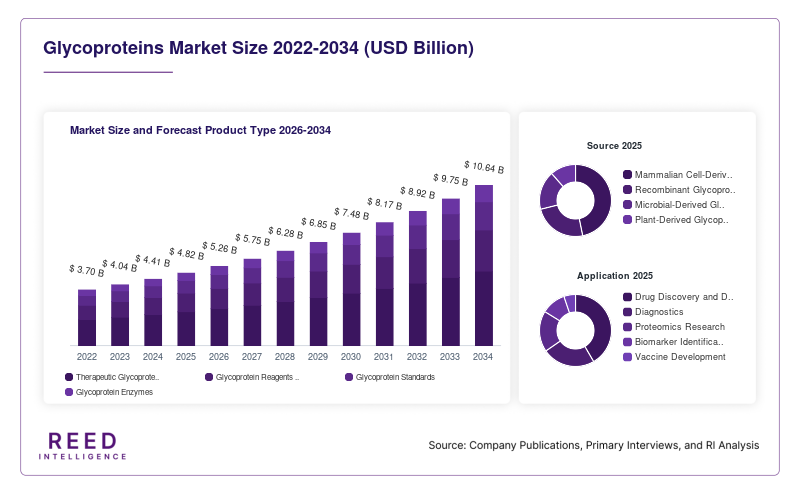
The Glycoproteins Market was valued at USD 4.82 billion in 2026 and is projected to reach USD 9.76 billion by 2034, expanding at a CAGR of 9.2% during 2026–2034. The market continues to gain momentum as glycoproteins become increasingly important in biopharmaceutical manufacturing, disease diagnostics, vaccine development, biomarker discovery, and advanced research applications. Glycoproteins are proteins containing carbohydrate chains covalently attached to amino acid side chains, and they play a vital role in cellular communication, immune responses, and therapeutic functions.
One of the major global factors supporting market expansion is the continued growth of the biologics industry. Pharmaceutical companies are investing heavily in monoclonal antibodies, recombinant proteins, therapeutic enzymes, and vaccine technologies, many of which depend on glycoprotein characterization and production processes. The increasing prevalence of chronic diseases, cancer, autoimmune disorders, and infectious diseases has accelerated research into glycoprotein-based therapeutics and diagnostics worldwide.
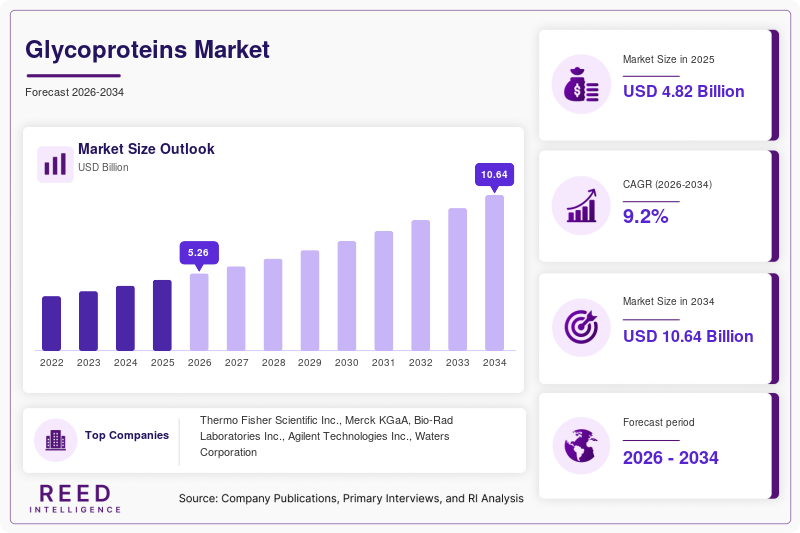
Key Highlights
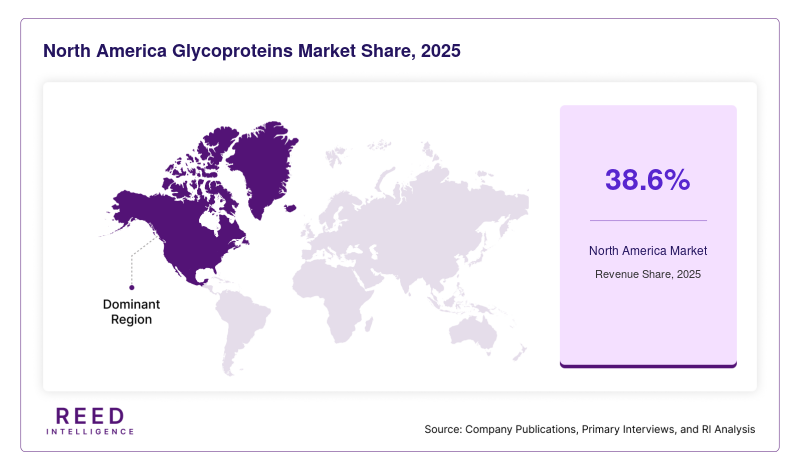
- North America dominated the market with 38.6% share in 2025, while Asia Pacific is expected to register the fastest CAGR of 10.8% during 2026–2034.
- By product type, therapeutic glycoproteins accounted for the largest share of 44.1% in 2025, while glycoprotein reagents and analytical kits are projected to grow at a CAGR of 11.4%.
- By source, mammalian cell-derived glycoproteins held 52.8% share in 2025, whereas recombinant glycoproteins are anticipated to expand at 10.9% CAGR.
- By application, drug discovery and development represented 36.4% share in 2025, while precision diagnostics are forecast to grow at 11.8% CAGR.
- By end user, pharmaceutical and biotechnology companies led with 47.3% share in 2025, while contract research organizations (CROs) are expected to grow at 10.7% CAGR.
- The United States remained the dominant country, with market values of USD 1.41 billion in 2024 and USD 1.54 billion in 2025.
Market Trends
Expansion of Glycoengineering Technologies
Glycoengineering has emerged as a major trend influencing the Glycoproteins Market. Pharmaceutical companies are increasingly modifying glycosylation structures to enhance therapeutic efficacy, improve pharmacokinetics, and reduce immunogenicity. Advanced cell engineering platforms are enabling the production of customized glycoproteins with optimized biological properties.
The adoption of glycoengineered monoclonal antibodies and recombinant proteins is increasing across oncology, immunology, and rare disease treatment applications. As regulatory agencies emphasize product consistency and efficacy, demand for sophisticated glycoengineering solutions continues to rise.
Growing Adoption of Glycoprotein Biomarkers in Precision Medicine
The integration of glycoprotein biomarkers into precision medicine programs is reshaping clinical diagnostics. Researchers are identifying disease-specific glycosylation patterns associated with cancer progression, neurological disorders, cardiovascular diseases, and autoimmune conditions.
Healthcare providers increasingly utilize biomarker-driven diagnostic strategies to improve treatment selection and disease monitoring. As precision healthcare models become more widespread, demand for glycoprotein analysis tools and biomarker research solutions is expected to expand substantially.
Market Drivers
Rising Demand for Biopharmaceutical Products
The increasing use of biologics has become a primary growth driver for the Glycoproteins Market. Therapeutic proteins, vaccines, hormones, enzymes, and monoclonal antibodies require extensive glycoprotein characterization throughout development and manufacturing processes. Pharmaceutical companies continue expanding biologics pipelines, generating sustained demand for glycoprotein products and analytical services.
Growing regulatory requirements regarding glycosylation consistency further encourage manufacturers to invest in advanced glycoprotein technologies. The rising commercialization of biologics is expected to support long-term market expansion.
Increasing Investment in Life Science Research
Government agencies, research institutes, and private organizations are allocating larger budgets toward molecular biology and proteomics research. Glycoproteins are essential components in studies involving cell signaling, disease progression, immune mechanisms, and protein interactions.
The expansion of biotechnology innovation centers and academic research collaborations has increased demand for glycoprotein reagents, standards, and analytical platforms. Enhanced research funding continues to stimulate product development and market growth.
Market Restraint
High Complexity of Glycoprotein Analysis
One of the major challenges facing the Glycoproteins Market is the technical complexity associated with glycoprotein characterization. Glycosylation patterns vary significantly among proteins, making analytical procedures time-consuming and resource intensive. Specialized equipment, highly trained personnel, and sophisticated analytical workflows increase operational costs and may limit adoption among smaller research organizations.
Market Opportunities
Expansion of Glycoprotein-Based Cancer Diagnostics
The growing use of glycoprotein biomarkers in oncology presents significant opportunities for market participants. Researchers are developing novel diagnostic platforms capable of detecting specific glycosylation changes associated with cancer development and progression. Increased adoption of early cancer screening technologies is expected to generate new revenue streams for glycoprotein solution providers.
Growth of Biopharmaceutical Manufacturing in Emerging Economies
Emerging biotechnology hubs across Asia Pacific, Latin America, and the Middle East are investing heavily in biologics manufacturing capabilities. New production facilities require glycoprotein characterization technologies, quality-control solutions, and research tools. This expansion is expected to create attractive opportunities for suppliers serving developing pharmaceutical markets.
Segmental Analysis
By Product Type
The Glycoproteins Market is segmented into therapeutic glycoproteins, glycoprotein reagents and analytical kits, glycoprotein standards, and glycoprotein enzymes.
Therapeutic glycoproteins dominated the market and accounted for 44.1% share in 2025. Their widespread use in biologic drug development, cancer therapy, and autoimmune disease treatment contributed significantly to market leadership. Pharmaceutical manufacturers increasingly utilized therapeutic glycoproteins for targeted treatment development.
Glycoprotein reagents and analytical kits are projected to grow at a CAGR of 11.4% through 2034. Increasing adoption of glycosylation analysis in drug development and biomarker discovery will drive demand for analytical solutions. Continuous improvements in assay sensitivity and workflow efficiency will further accelerate growth.
By Source
Based on source, the market includes mammalian cell-derived glycoproteins, recombinant glycoproteins, microbial-derived glycoproteins, and plant-derived glycoproteins.
Mammalian cell-derived glycoproteins held the largest market share of 52.8% in 2025. Their ability to replicate human glycosylation profiles made them highly suitable for therapeutic applications and biologics production.
Recombinant glycoproteins are anticipated to register a 10.9% CAGR during the forecast period. Advances in recombinant expression technologies will improve production efficiency and scalability, encouraging broader utilization across research and commercial applications.
By Application
The market is categorized into drug discovery and development, diagnostics, proteomics research, biomarker identification, and vaccine development.
Drug discovery and development accounted for 36.4% share in 2025. Glycoproteins played a critical role in therapeutic target identification, efficacy assessment, and candidate optimization across pharmaceutical pipelines.
Precision diagnostics within the diagnostics segment are expected to expand at 11.8% CAGR through 2034. Growing demand for biomarker-based disease detection and personalized healthcare solutions will support rapid market growth.
By End User
The market is segmented into pharmaceutical and biotechnology companies, academic and research institutes, contract research organizations, and diagnostic laboratories.
Pharmaceutical and biotechnology companies represented 47.3% of market revenue in 2025. Continuous biologics innovation and large-scale investment in therapeutic development contributed to segment dominance.
Contract research organizations (CROs) are expected to achieve a 10.7% CAGR during the forecast period. Outsourcing of complex analytical services and increasing demand for specialized glycoprotein testing capabilities will support future expansion.
Regional Analysis
North America
North America accounted for 38.6% of the Glycoproteins Market share in 2025. The region benefited from strong biotechnology infrastructure, extensive pharmaceutical R&D activities, and advanced analytical capabilities. Significant investments in biologics development and precision medicine supported market expansion.
The United States dominated the regional market due to its extensive biologics commercialization ecosystem. The country’s growth was supported by widespread adoption of glycoprotein characterization technologies across pharmaceutical development programs and clinical research initiatives.
North America is expected to grow at a CAGR of 8.7% during 2026–2034.
Europe
Europe represented 27.4% of the global market in 2025. The region benefited from robust academic research networks, established pharmaceutical manufacturing capabilities, and increasing focus on biosimilar development.
Germany emerged as the leading country within Europe. The country's growth was driven by strong investments in bioprocessing innovation and increasing adoption of advanced protein characterization technologies within pharmaceutical production facilities.
Europe is projected to expand at a CAGR of 8.9% through 2034.
Asia Pacific
Asia Pacific captured 22.1% market share in 2025 and is expected to become the fastest-growing regional market.
China dominated the regional landscape due to rapid expansion of biotechnology parks, increasing biologics manufacturing investments, and government support for life science innovation. Growing demand for advanced therapeutic development platforms further strengthened regional growth prospects.
Asia Pacific is forecast to register a CAGR of 10.8% during 2026–2034.
Middle East & Africa
The Middle East & Africa accounted for 6.3% of global revenue in 2025. The region experienced increasing healthcare modernization initiatives and gradual expansion of biotechnology research capabilities.
Saudi Arabia led the regional market owing to investments in biotechnology infrastructure development and growing emphasis on domestic healthcare innovation programs. National research initiatives continue supporting scientific advancement within the region.
The market in Middle East & Africa is anticipated to grow at a CAGR of 8.1% through 2034.
Latin America
Latin America held 5.6% share of the Glycoproteins Market in 2025. Market growth was supported by expanding pharmaceutical research activities and increasing healthcare investments across major economies.
Brazil remained the dominant country due to strengthening biotechnology research capabilities and rising participation in international pharmaceutical development programs. Enhanced research collaborations contributed to market expansion.
Latin America is expected to register a CAGR of 8.4% during the forecast period.
Competitive Landscape
The Glycoproteins Market is characterized by the presence of biotechnology firms, life science reagent providers, analytical technology companies, and pharmaceutical manufacturers. Companies compete through product innovation, strategic partnerships, research collaborations, and expansion of analytical service portfolios.
Thermo Fisher Scientific remained the market leader due to its extensive portfolio of glycoprotein analysis instruments, reagents, and proteomics solutions. The company recently expanded its advanced glycan analysis workflow offerings designed to improve characterization efficiency in biologics development.
Merck KGaA continues strengthening its bioprocessing and analytical capabilities through investments in life science technologies.
Bio-Rad Laboratories maintains a strong position by providing specialized protein analysis tools and glycoprotein research solutions.
Agilent Technologies focuses on expanding mass spectrometry and chromatography platforms tailored for glycosylation characterization.
Waters Corporation remains active in high-performance analytical instrumentation supporting pharmaceutical quality control and glycoprotein research applications.
Key Players List
- Thermo Fisher Scientific Inc.
- Merck KGaA
- Bio-Rad Laboratories Inc.
- Agilent Technologies Inc.
- Waters Corporation
- Danaher Corporation
- Shimadzu Corporation
- Bruker Corporation
- PerkinElmer Inc.
- New England Biolabs Inc.
- Promega Corporation
- Takara Bio Inc.
- Sartorius AG
- Lonza Group AG
- Bio-Techne Corporation
Recent Developments
- In 2025, several biotechnology companies expanded glycoengineering programs to improve therapeutic protein performance and manufacturing consistency.
- Multiple analytical technology providers introduced upgraded mass spectrometry solutions optimized for glycosylation characterization workflows.
- Pharmaceutical manufacturers increased investment in glycoprotein biomarker research programs focused on oncology and autoimmune disease applications.
- Contract research organizations expanded specialized glycoprotein testing capabilities to support biologics development projects.
- Life science companies launched advanced glycan profiling kits designed to accelerate therapeutic development and quality-control procedures.
- Research institutions strengthened collaborations with biotechnology firms to explore novel glycoprotein-based diagnostic technologies.
- Several bioprocessing facilities adopted automated glycoprotein characterization platforms to improve productivity and regulatory compliance.
Glycoproteins Market Segments
Product Type
- Therapeutic Glycoproteins
- Glycoprotein Reagents and Analytical Kits
- Glycoprotein Standards
- Glycoprotein Enzymes
Source
- Mammalian Cell-Derived Glycoproteins
- Recombinant Glycoproteins
- Microbial-Derived Glycoproteins
- Plant-Derived Glycoproteins
Application
- Drug Discovery and Development
- Diagnostics
- Proteomics Research
- Biomarker Identification
- Vaccine Development
End User
- Pharmaceutical and Biotechnology Companies
- Academic and Research Institutes
- Contract Research Organizations (CROs)
- Diagnostic Laboratories
By Region
- North America
- Europe
- APAC
- Middle East and Africa
- LATAM