GM1 Gangliosidosis Market Size, Share Demand Report By Therapy Type (Gene Therapy, Enzyme Replacement Therapy, Substrate Reduction Therapy), By Disease Type (Type 1 (Infantile), Type 2 (Juvenile), Type 3 (Adult/Chronic)), By Treatment Modality (Pharmacological Treatment, Gene Editing, Supportive Care), By End-Use (Hospitals, Specialty Clinics, Research Institutes), By Distribution Channel (Hospital Pharmacies, Retail Pharmacies, Online Pharmacies), By Region & Segment Forecasts, 2025–2034
USD 3950
Market Overview
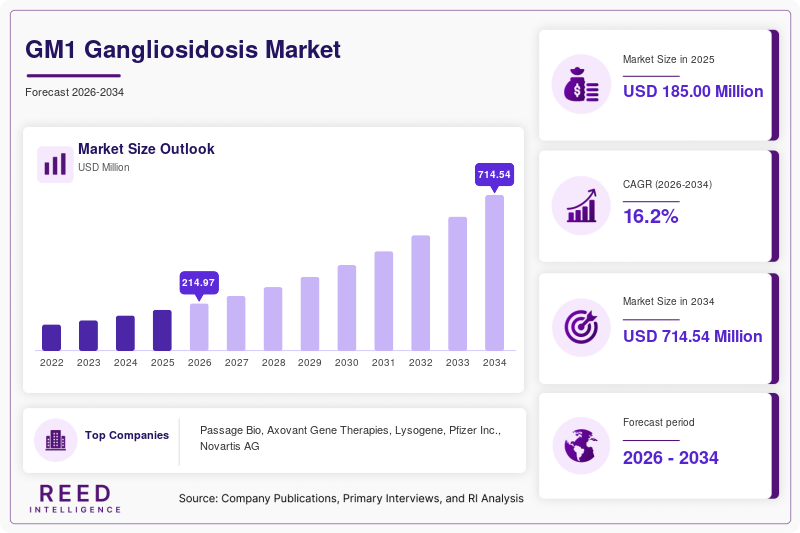
The GM1 Gangliosidosis Market size was valued at approximately USD 185 million in 2025 and is projected to reach USD 720 million by 2034, expanding at a CAGR of 16.2% during 2025–2034. This growth trajectory reflects increasing clinical focus on rare genetic disorders and the expansion of precision medicine pipelines targeting lysosomal storage diseases.
A key global factor supporting market growth is the advancement in gene therapy platforms, which has significantly improved the therapeutic outlook for previously untreatable neurodegenerative disorders. Increasing regulatory flexibility for orphan drugs, combined with rising patient advocacy initiatives, has enhanced funding availability and accelerated clinical trial activity.
Key Highlights:
- North America dominated the market with a 41% share in 2025, while Asia Pacific is projected to grow at the fastest CAGR of 18.9%.
- By therapy type, gene therapy led with a 46% share, while enzyme replacement therapy (ERT) is expected to register the fastest CAGR of 17.5%.
- By end-use, hospitals accounted for the largest share, whereas specialty clinics are projected to grow at a CAGR of 18.1%.
- The United States remained the dominant country, with market values of USD 68 million in 2025 and USD 78 million in 2026.
Market Trends
Rise of Gene Therapy Innovations
The GM1 Gangliosidosis Market is witnessing a strong shift toward gene therapy-based solutions. Companies are increasingly focusing on adeno-associated virus (AAV) vectors to deliver functional copies of defective genes. This trend reflects a broader movement toward curative treatments rather than symptom management. Clinical pipelines are expanding rapidly, and early-stage trial outcomes have shown promising efficacy, boosting investor confidence.
Expansion of Early Diagnosis Programs
Another significant trend is the expansion of newborn screening and genetic testing programs. Governments and healthcare systems are integrating rare disease screening into standard protocols, enabling earlier identification of GM1 gangliosidosis cases. This trend is improving treatment outcomes and increasing the addressable patient population. The growing use of digital health platforms and AI-based diagnostics is further enhancing disease detection accuracy and efficiency.
Market Drivers
Increasing Investment in Rare Disease Research
Rising investments from both public and private sectors are driving the GM1 Gangliosidosis Market. Pharmaceutical companies and biotech firms are allocating substantial resources to develop targeted therapies for rare genetic disorders. Incentives such as orphan drug designation, tax credits, and extended market exclusivity are encouraging innovation and accelerating drug development timelines.
Growing Awareness and Patient Advocacy
Awareness initiatives led by patient advocacy groups are significantly influencing market growth. These organizations are playing a crucial role in educating stakeholders, supporting research funding, and facilitating clinical trial participation. Increased awareness among healthcare professionals is also leading to improved diagnosis rates and earlier treatment initiation, thereby expanding market demand.
Market Restraint
High Cost of Treatment and Limited Accessibility
One of the primary challenges in the GM1 Gangliosidosis Market is the high cost associated with advanced therapies, particularly gene therapies. These treatments often involve complex manufacturing processes and stringent regulatory requirements, resulting in elevated pricing. Limited reimbursement frameworks in developing regions further restrict patient access. Additionally, the rarity of the disease poses challenges in achieving economies of scale, which impacts affordability. These factors collectively hinder widespread adoption and create disparities in treatment accessibility across different regions.
Market Opportunities
Expansion into Emerging Markets
Emerging economies present significant growth opportunities for the GM1 Gangliosidosis Market. Improvements in healthcare infrastructure, increasing government support for rare diseases, and rising awareness are creating a favorable environment for market expansion. Companies entering these markets early can establish strong distribution networks and gain a competitive advantage.
Development of Combination Therapies
The development of combination therapies integrating gene therapy, enzyme replacement, and supportive treatments offers a promising opportunity. Such approaches can enhance therapeutic efficacy and address multiple aspects of disease progression. Ongoing research into synergistic treatment models is expected to open new revenue streams and improve patient outcomes.
Segmental Analysis
By Therapy Type
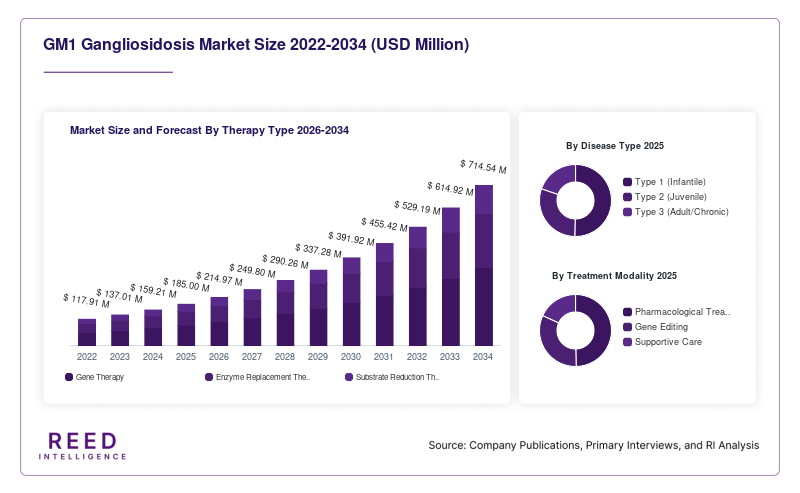
Gene therapy dominated the GM1 Gangliosidosis Market, accounting for 46% share in 2025. Its leadership was attributed to its potential to address the root genetic cause of the disease, making it a preferred focus for research and development.
Enzyme replacement therapy (ERT) will emerge as the fastest-growing segment, expanding at a CAGR of 17.5%. Its growth will be driven by advancements in enzyme stabilization technologies, which improve delivery efficiency and therapeutic effectiveness.
By Disease Type
Type 1 (infantile) GM1 gangliosidosis held the largest share at 52% in 2025, due to higher diagnosis rates and severity requiring immediate intervention.
Type 2 (late infantile/juvenile) is projected to grow at a CAGR of 17.8%, driven by improved diagnostic capabilities that enable earlier detection and treatment.
By Treatment Modality
Pharmacological treatments dominated with a 44% share in 2025, supported by the availability of supportive care drugs.
Gene-editing-based therapies will grow at a CAGR of 18.3%, fueled by innovations in CRISPR and related technologies that offer precision targeting.
By End-Use
Hospitals accounted for the largest share of 48% in 2025, as they provide comprehensive care and access to advanced treatment options.
Specialty clinics will witness the fastest growth at a CAGR of 18.1%, driven by increasing specialization in rare disease management.
By Distribution Channel
Hospital pharmacies dominated with a 51% share in 2025, due to centralized treatment delivery.
Online pharmacies are expected to grow at a CAGR of 17.2%, supported by digital health adoption and improved logistics networks.
Regional Analysis
North America
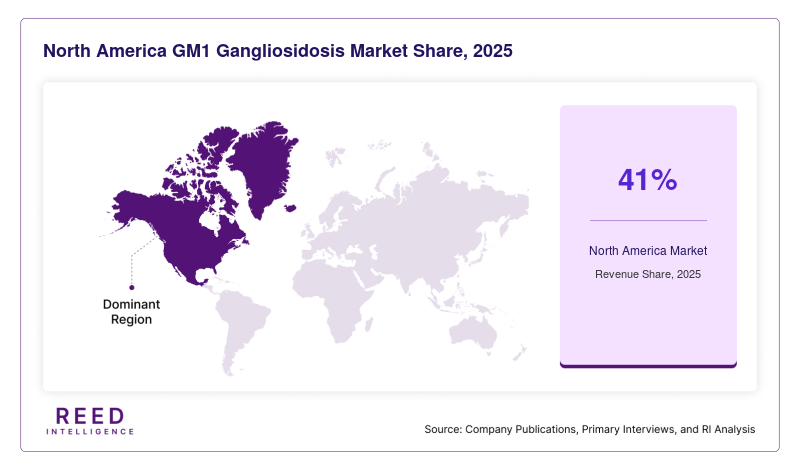
North America accounted for 41% of the GM1 Gangliosidosis Market share in 2025 and will continue to grow at a CAGR of 15.4% through 2034. The region’s dominance was driven by strong research infrastructure and high adoption of advanced therapies.
The United States led the region due to its robust clinical trial ecosystem. A key growth factor is the presence of specialized treatment centers focusing on rare neurological disorders, enabling efficient patient management and access to experimental therapies.
Europe
Europe held approximately 28% market share in 2025 and is expected to grow at a CAGR of 15.8% during the forecast period. The region benefited from supportive regulatory frameworks for orphan drugs and increasing funding for rare disease research.
Germany emerged as the dominant country, driven by strong government-backed healthcare systems. A key growth factor is the integration of genetic testing into routine diagnostics, improving early detection rates.
Asia Pacific
Asia Pacific captured around 17% of the market share in 2025 and will register the fastest growth at a CAGR of 18.9%. Rapid healthcare modernization and increasing awareness of rare diseases contributed to this growth.
China dominated the region, supported by expanding biotech investments. A major growth factor is the rising number of domestic pharmaceutical companies entering the gene therapy space, enhancing local treatment availability.
Middle East & Africa
The Middle East & Africa region held about 7% share in 2025 and is projected to grow at a CAGR of 16.5%. Market expansion was influenced by improving healthcare infrastructure and growing focus on rare disease management.
Saudi Arabia led the region due to increased healthcare spending. A key growth factor is government initiatives aimed at establishing genetic disease registries and specialized care centers.
Latin America
Latin America accounted for nearly 7% of the GM1 Gangliosidosis Market in 2025 and will grow at a CAGR of 16.1%. The region showed steady progress due to rising awareness and gradual healthcare improvements.
Brazil dominated the market, supported by expanding public healthcare programs. A significant growth factor is the adoption of partnerships with international biotech firms to improve treatment access.
Competitive Landscape
The GM1 Gangliosidosis Market is characterized by a mix of established pharmaceutical companies and emerging biotech firms. The competitive environment is shaped by innovation, strategic partnerships, and clinical advancements.
Passage Bio is a leading player, focusing on gene therapy solutions and advancing its clinical pipeline. The company recently announced positive interim results from its GM1 gene therapy trial, strengthening its market position.
Other companies are actively investing in R&D and forming collaborations to accelerate product development. The market remains highly competitive, with firms prioritizing regulatory approvals and expanding geographic reach.
Key Players List
- Passage Bio
- Axovant Gene Therapies
- Lysogene
- Pfizer Inc.
- Novartis AG
- Sanofi S.A.
- Takeda Pharmaceutical Company
- Amicus Therapeutics
- Regenxbio Inc.
- Sarepta Therapeutics
- Ultragenyx Pharmaceutical
- Bluebird Bio
- Abeona Therapeutics
- Orchard Therapeutics
- Spark Therapeutics
Recent Developments
- 2024: Passage Bio expanded its gene therapy clinical trials for GM1 gangliosidosis.
- 2024: Lysogene received regulatory support for advancing its AAV-based therapy pipeline.
- 2025: Regenxbio entered a strategic collaboration to enhance gene delivery technologies.
- 2025: Novartis invested in rare disease R&D infrastructure to support neurological therapies.
- 2025: Amicus Therapeutics initiated early-stage research on enzyme stabilization approaches.
GM1 Gangliosidosis Market Segments
By Therapy Type
- Gene Therapy
- Enzyme Replacement Therapy
- Substrate Reduction Therapy
By Disease Type
- Type 1 (Infantile)
- Type 2 (Juvenile)
- Type 3 (Adult/Chronic)
By Treatment Modality
- Pharmacological Treatment
- Gene Editing
- Supportive Care
By End-Use
- Hospitals
- Specialty Clinics
- Research Institutes
By Distribution Channel
- Hospital Pharmacies
- Retail Pharmacies
- Online Pharmacies
By Region
- North America
- Europe
- APAC
- Middle East and Africa
- LATAM