Gonorrhea Treatment Market Size, Share Demand Report By Drug Class (Cephalosporins, Macrolides, Fluoroquinolones, Combination Therapies), By Route of Administration (Injectable, Oral), By End-Use (Hospitals, Clinics, Diagnostic Centers), By Region & Segment Forecasts, 2026–2034
USD 3950
Market Overview
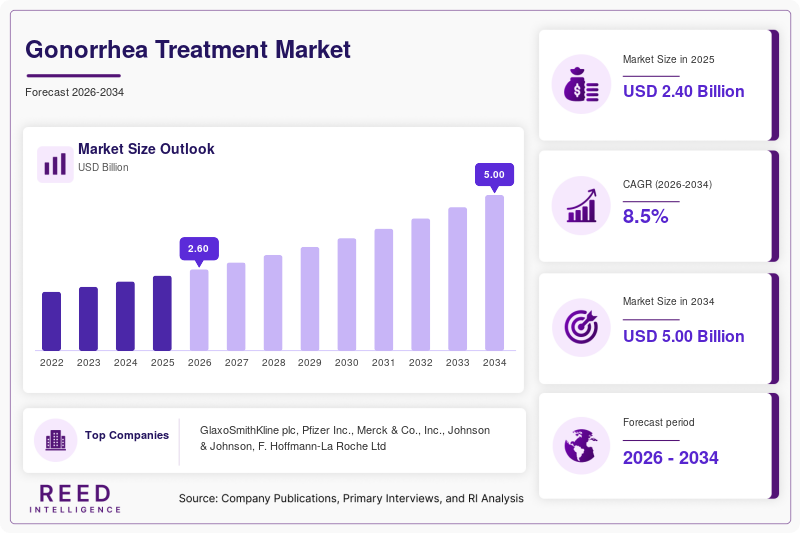
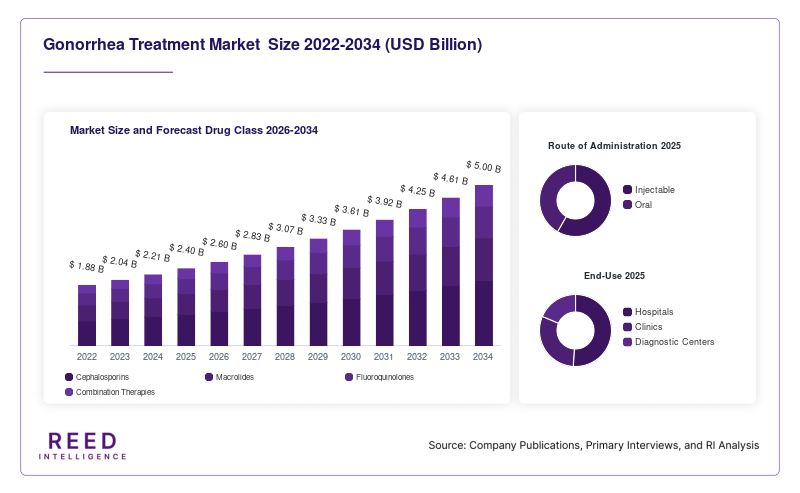
The Gonorrhea Treatment Market size was valued at approximately USD 2.4 billion in 2026 and is projected to reach USD 4.6 billion by 2034, expanding at a compound annual growth rate (CAGR) of 8.5% during the forecast period from 2026 to 2034. The steady growth trajectory of this market is primarily driven by the rising global prevalence of sexually transmitted infections (STIs), particularly in developing and densely populated regions. Increasing awareness initiatives, improved diagnostic capabilities, and government-backed screening programs have significantly enhanced early detection rates, thereby boosting demand for effective treatment solutions.
A key global factor supporting market expansion is the growing concern over antimicrobial resistance (AMR). As traditional antibiotic therapies face declining efficacy due to resistant strains of Neisseria gonorrhoeae, pharmaceutical companies and healthcare organizations are accelerating research and development efforts to introduce novel therapeutics and combination regimens. This shift is encouraging innovation and expanding the treatment landscape.
Key Highlights
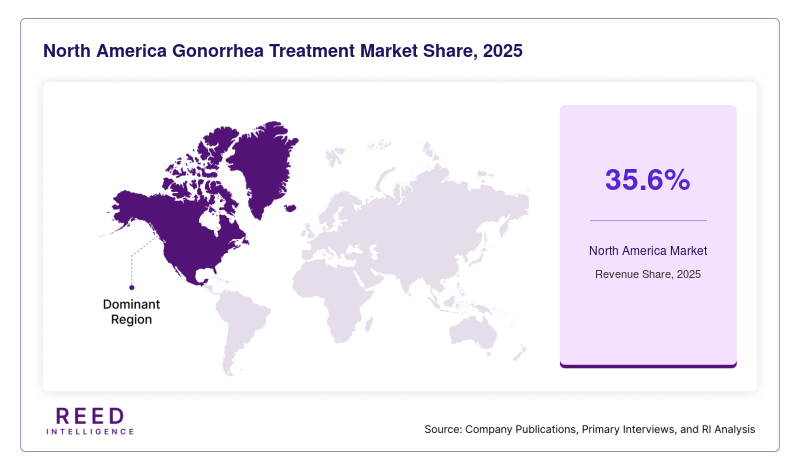
- North America dominated the market with a 35.6% share in 2025.
- Asia Pacific is expected to grow at the fastest CAGR of 10.9% during 2026–2034.
- By drug class, cephalosporins accounted for the largest share of 42.8%.
- while combination therapies are projected to grow at a CAGR of 11.7%.
- By route of administration, injectable treatments led with a 46.3% share, whereas oral therapies are expected to expand at a CAGR of 10.5%.
- The United States remained the dominant country, with market values of USD 620 million in 2024 and USD 670 million in 2025.
Market Trends
Increasing adoption of combination antibiotic therapies
The Gonorrhea Treatment Market is witnessing a notable shift toward combination antibiotic therapies, particularly in response to increasing antimicrobial resistance. Healthcare providers are moving away from single-drug regimens and adopting dual or multi-drug approaches to enhance treatment efficacy and reduce the risk of resistance development. This trend is supported by updated clinical guidelines recommending combination therapies, such as cephalosporins combined with macrolides. Pharmaceutical companies are also investing in fixed-dose combination products that simplify administration and improve patient compliance. As resistance patterns evolve globally, the demand for such advanced therapeutic approaches is expected to rise, strengthening the overall market outlook.
Expansion of point-of-care diagnostics and rapid testing
Another significant trend shaping the market is the expansion of point-of-care diagnostics and rapid testing technologies. Early and accurate detection of gonorrhea is critical for timely treatment and preventing transmission. The integration of rapid diagnostic kits in primary healthcare settings, pharmacies, and community clinics has improved accessibility and reduced diagnostic delays. This trend is particularly prominent in emerging economies, where healthcare infrastructure is improving. Enhanced testing capabilities not only increase diagnosis rates but also drive demand for treatment, thereby contributing to market growth. The combination of rapid diagnostics and targeted therapy is expected to redefine disease management strategies.
Market Drivers
Rising global prevalence of sexually transmitted infections
The increasing incidence of gonorrhea worldwide remains a primary driver for the Gonorrhea Treatment Market. Factors such as urbanization, changing sexual behaviors, and limited access to preventive healthcare in certain regions have contributed to the growing burden of the disease. Public health organizations have intensified screening and awareness campaigns, leading to higher diagnosis rates. As more individuals seek medical treatment, the demand for effective therapeutic options continues to rise. This sustained increase in patient population directly influences market growth, encouraging healthcare providers and pharmaceutical companies to expand their offerings and improve treatment accessibility.
Advancements in pharmaceutical research and drug development
Continuous advancements in drug development are significantly contributing to market expansion. With the emergence of drug-resistant strains, there is a strong emphasis on developing novel antibiotics and alternative treatment strategies. Biotechnology firms and pharmaceutical companies are focusing on innovative mechanisms of action, including new classes of antimicrobials and targeted therapies. Clinical trials for next-generation treatments are gaining momentum, supported by funding from global health organizations. These developments not only address the limitations of existing therapies but also create new growth avenues for the market, enhancing its long-term sustainability.
Market Restraint
Growing antimicrobial resistance and limited treatment options
One of the most critical challenges in the Gonorrhea Treatment Market is the increasing resistance of Neisseria gonorrhoeae to commonly used antibiotics. Over time, the pathogen has developed resistance to multiple drug classes, including penicillins, tetracyclines, and fluoroquinolones. This has significantly narrowed the range of effective treatment options available to healthcare providers. The emergence of extensively drug-resistant strains poses a serious threat to public health and complicates treatment protocols. For example, certain regions have reported reduced effectiveness of standard dual therapy, necessitating alternative approaches that may be costlier or less accessible. This restraint not only impacts treatment outcomes but also increases the burden on healthcare systems, limiting overall market growth potential.
Market Opportunities
Development of novel antimicrobial agents
The growing threat of drug-resistant gonorrhea presents a significant opportunity for the development of new antimicrobial agents. Pharmaceutical companies are investing in research programs aimed at discovering innovative compounds with unique mechanisms of action. These efforts are supported by global health initiatives and funding agencies that recognize the urgent need for effective treatments. The introduction of novel drugs can address current treatment gaps and improve patient outcomes. Additionally, regulatory incentives such as fast-track approvals and extended exclusivity periods are encouraging innovation in this space. This opportunity is expected to drive long-term growth and reshape the competitive landscape of the market.
Expansion in emerging healthcare markets
Emerging economies offer substantial growth opportunities for the Gonorrhea Treatment Market. Countries in Asia Pacific, Latin America, and Africa are experiencing improvements in healthcare infrastructure, increased healthcare spending, and rising awareness of sexually transmitted infections. Government initiatives aimed at strengthening public health systems and expanding access to diagnostic and treatment services are further supporting market expansion. The growing availability of affordable medications and diagnostic tools in these regions is expected to boost treatment rates. As a result, pharmaceutical companies are focusing on expanding their presence in these markets, leveraging partnerships and localized strategies to capture untapped potential.
Segmental Analysis
By Drug Class
Cephalosporins emerged as the dominant subsegment within the Gonorrhea Treatment Market, accounting for approximately 42.8% of the market share in 2024. These antibiotics are widely used as first-line treatments due to their effectiveness against Neisseria gonorrhoeae. The high adoption rate is supported by established clinical guidelines and widespread availability. Cephalosporins, particularly third-generation variants, offer strong efficacy and safety profiles, making them a preferred choice among healthcare providers. Their role in combination therapies further strengthens their position in the market, ensuring consistent demand across various healthcare settings.
Combination therapies represent the fastest-growing subsegment, with a projected CAGR of 11.7% during the forecast period. The increasing prevalence of drug-resistant strains has necessitated the use of multiple antibiotics to enhance treatment effectiveness. This approach reduces the likelihood of resistance development and improves patient outcomes. Pharmaceutical companies are focusing on developing fixed-dose combinations to simplify treatment regimens. The growing adoption of combination therapies is expected to drive significant growth in this segment, supported by evolving clinical practices and regulatory recommendations.
By Route of Administration
Injectable treatments dominated the market in 2024, holding a share of approximately 46.3%. These treatments are preferred in clinical settings due to their rapid action and high efficacy. Injectable antibiotics are commonly used for severe or complicated cases of gonorrhea, ensuring immediate therapeutic effects. The reliability and effectiveness of this route of administration make it a standard choice in hospitals and specialized clinics. Additionally, healthcare providers often prefer injectable treatments for ensuring patient compliance, as they are administered under medical supervision.
Oral therapies are expected to be the fastest-growing subsegment, with a CAGR of 10.5% during the forecast period. The convenience and ease of administration associated with oral medications are key factors driving their adoption. Patients prefer oral treatments due to their non-invasive nature and suitability for outpatient care. Advances in drug formulation are improving the effectiveness of oral antibiotics, making them a viable alternative to injectables. The increasing focus on patient-centric care and home-based treatment options is further supporting the growth of this segment.
By End-Use
Hospitals accounted for the largest share of the Gonorrhea Treatment Market in 2024, capturing approximately 48.9% of the market. This dominance is attributed to the availability of advanced diagnostic facilities and specialized healthcare professionals. Hospitals serve as primary centers for the diagnosis and treatment of sexually transmitted infections, particularly in severe cases. The presence of comprehensive treatment protocols and access to a wide range of medications further support their leading position. Additionally, hospitals play a crucial role in managing complications associated with gonorrhea, ensuring high-quality care.
Clinics and outpatient centers are projected to be the fastest-growing subsegment, with a CAGR of 10.8% during the forecast period. The increasing demand for accessible and cost-effective healthcare services is driving the growth of this segment. Clinics offer convenient and timely treatment options, making them an attractive choice for patients. The expansion of primary healthcare networks and the integration of rapid diagnostic tools are enhancing the capabilities of clinics. This trend is expected to continue, supported by efforts to decentralize healthcare services and improve accessibility.
Regional Analysis
North America
North America held the largest share of the Gonorrhea Treatment Market in 2025, accounting for approximately 35.6% of the global revenue. The region is expected to maintain steady growth with a CAGR of 7.8% during the forecast period. This dominance is attributed to well-established healthcare infrastructure, high awareness levels, and widespread availability of advanced diagnostic and treatment options. Government initiatives and funding for STI prevention programs further support market growth.
The United States remains the dominant country in this region, driven by a high prevalence of gonorrhea cases and strong public health interventions. A unique growth factor is the integration of digital health platforms for STI management, enabling remote consultations and prescription services. This approach improves access to treatment and enhances patient engagement, contributing to sustained market expansion.
Europe
Europe represents a significant share of the market, supported by robust healthcare systems and comprehensive screening programs. The region accounted for around 27.4% of the market in 2025 and is projected to grow at a CAGR of 7.5% through 2034. Increased government efforts to control STI transmission and rising investments in healthcare innovation are key contributors to growth.
Germany stands out as the dominant country in Europe, benefiting from advanced medical infrastructure and strong research capabilities. A unique growth factor in this region is the emphasis on antimicrobial stewardship programs, which promote the responsible use of antibiotics. These initiatives are helping to mitigate resistance issues and ensure the effectiveness of treatment regimens.
Asia Pacific
Asia Pacific is the fastest-growing region in the Gonorrhea Treatment Market, with a projected CAGR of 10.9% from 2026 to 2034. The region held a share of approximately 20.3% in 2025. Rapid population growth, increasing urbanization, and rising awareness of sexual health are driving demand for diagnostic and treatment services.
China leads the regional market due to its large population base and expanding healthcare infrastructure. A unique growth factor is the government's focus on public health campaigns aimed at reducing STI prevalence. These initiatives, combined with improved access to healthcare services, are significantly boosting the demand for gonorrhea treatment solutions.
Middle East & Africa
The Middle East & Africa region accounted for a smaller share of around 8.7% in 2025 but is expected to grow at a CAGR of 8.2% during the forecast period. Market growth is driven by increasing healthcare investments and efforts to improve disease surveillance and reporting systems.
South Africa is a key contributor to the regional market, supported by targeted public health programs addressing HIV and other STIs. A unique growth factor is the integration of gonorrhea treatment into broader sexual health initiatives, which enhances diagnosis and treatment rates. This holistic approach is expected to support market expansion in the region.
Latin America
Latin America held a market share of approximately 8.0% in 2025 and is projected to grow at a CAGR of 8.6% through 2034. The region is witnessing improvements in healthcare access and increasing awareness of sexually transmitted infections, which are driving market growth.
Brazil is the dominant country in this region, benefiting from government-led healthcare programs and expanding access to medical services. A unique growth factor is the growing adoption of community-based healthcare models, which improve outreach and accessibility. These initiatives are playing a crucial role in increasing treatment rates and supporting market development.
Competitive Landscape
The Gonorrhea Treatment Market is characterized by the presence of several established pharmaceutical companies and emerging biotechnology firms. The competitive landscape is shaped by ongoing research and development activities aimed at addressing antimicrobial resistance and improving treatment outcomes. Companies are focusing on strategic collaborations, product innovation, and geographic expansion to strengthen their market positions.
GlaxoSmithKline stands out as a leading player in the market, driven by its strong portfolio of antibiotics and ongoing research initiatives. A recent development includes the advancement of a novel antibiotic candidate targeting drug-resistant gonorrhea strains, highlighting the company’s commitment to innovation. Other key players are also investing in clinical trials and partnerships to develop next-generation therapies. The competitive environment is expected to remain dynamic, with continuous advancements shaping the future of the market.
Key Players List
- GlaxoSmithKline plc
- Pfizer Inc.
- Merck & Co., Inc.
- Johnson & Johnson
- F. Hoffmann-La Roche Ltd
- Novartis AG
- Sanofi S.A.
- AstraZeneca plc
- Bayer AG
- Teva Pharmaceutical Industries Ltd
- Cipla Limited
- Sun Pharmaceutical Industries Ltd
- Lupin Limited
- Aurobindo Pharma Limited
- Hikma Pharmaceuticals plc
Recent Developments
- A leading pharmaceutical company initiated a Phase III clinical trial for a novel antibiotic targeting multidrug-resistant gonorrhea strains.
- Several healthcare organizations launched integrated screening and treatment programs to improve early diagnosis and management of STIs.
- A biotechnology firm announced a strategic partnership to develop next-generation antimicrobial therapies, focusing on innovative mechanisms of action.
Gonorrhea Treatment Market Segments
Drug Class
- Cephalosporins
- Macrolides
- Fluoroquinolones
- Combination Therapies
Route of Administration
- Injectable
- Oral
End-Use
- Hospitals
- Clinics
- Diagnostic Centers
By Region
- North America
- Europe
- APAC
- Middle East and Africa
- LATAM