Goodpasture Syndrome Treatment Market Size, Share & Demand Report By Treatment Type (Immunosuppressive Therapy, Corticosteroids, Plasma Exchange Therapy, Biologic Therapies, Supportive Care), By Route of Administration (Injectable, Oral, Intravenous), By End User (Hospitals, Specialty Clinics, Ambulatory Surgical Centers, Academic and Research Institutes), By Region & Segment Forecasts, 2026–2034
USD 3950
Market Overview
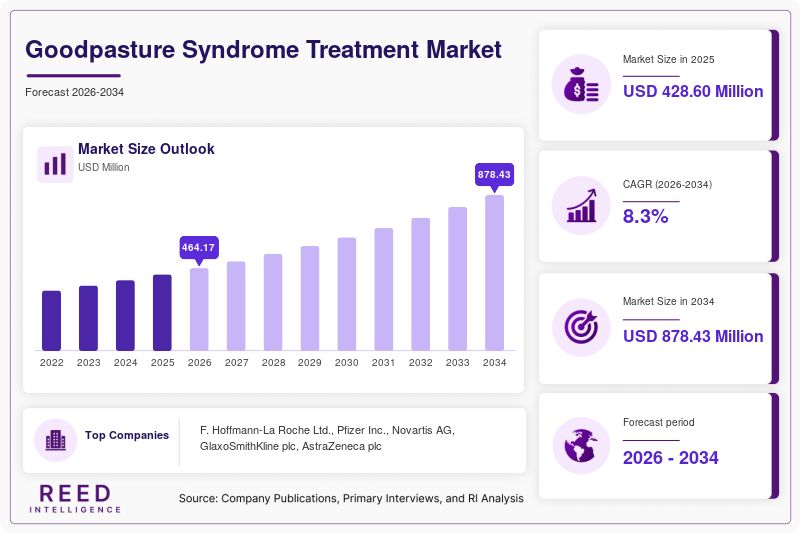
The global Goodpasture Syndrome Treatment Market size was valued at USD 428.6 million in 2026 and is projected to reach USD 812.4 million by 2034, expanding at a CAGR of 8.3% during the forecast period. The market is gaining steady momentum due to rising awareness regarding autoimmune disorders, growing availability of advanced immunosuppressive therapies, and improving diagnosis rates in both developed and emerging healthcare systems. Goodpasture syndrome remains a rare autoimmune disease that primarily affects the kidneys and lungs, creating demand for rapid treatment intervention, plasma exchange therapies, corticosteroids, and biologic medications. Increasing investments in rare disease research and expanding support from healthcare organizations have also contributed to market expansion.
The growing burden of autoimmune diseases worldwide has emerged as a major factor supporting market growth. Healthcare providers are focusing on early-stage diagnosis and multidisciplinary treatment approaches to reduce organ damage and improve survival outcomes. Technological advancements in diagnostic testing, including anti-glomerular basement membrane antibody testing and advanced renal imaging, are enabling physicians to initiate treatment earlier than in previous years. Pharmaceutical companies are also accelerating research into targeted biologic therapies that reduce complications associated with long-term steroid use.
Key Highlights
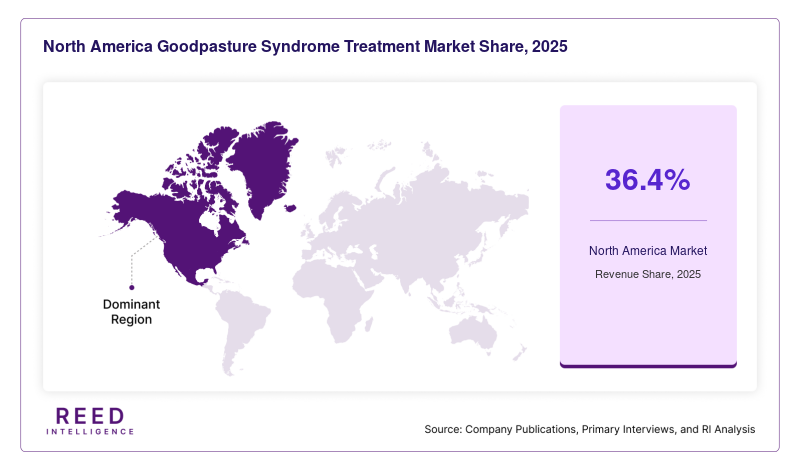
- North America dominated the market with a 36.4% share in 2025, while Asia Pacific is expected to grow at the fastest CAGR of 10.8% during 2026–2034.
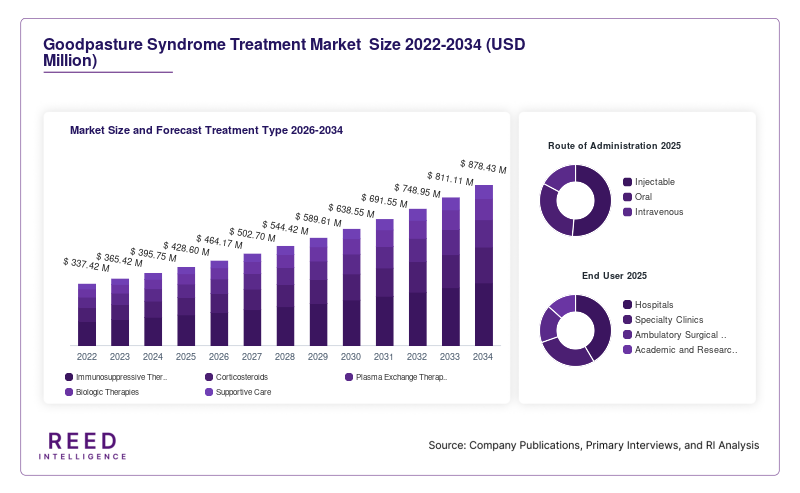
- By treatment type, immunosuppressive therapy accounted for the largest share of 42.7%, while biologic therapies are projected to grow at a CAGR of 11.6%.
- By route of administration, injectable therapies led with a 58.9% share, whereas oral therapies are expected to expand at a CAGR of 9.7%.
- By end user, hospitals held a 47.8% share, while specialty clinics are projected to grow at a CAGR of 10.3%.
- The United States remained the dominant country, with market values of USD 142 million in 2024 and USD 156 million in 2025.
Market Trends
Rising Adoption of Biologic Therapies in Autoimmune Disease Management
The Goodpasture Syndrome Treatment Market is witnessing increasing adoption of biologic therapies as healthcare providers seek treatment options with improved targeting capabilities and fewer long-term side effects. Conventional treatment approaches, including corticosteroids and cyclophosphamide, remain widely used; however, concerns regarding toxicity and prolonged immunosuppression are encouraging clinicians to evaluate biologic alternatives. Pharmaceutical manufacturers are investing in monoclonal antibody development and precision therapies aimed at reducing inflammation while preserving kidney function. Hospitals and specialty clinics are increasingly integrating biologic therapies into severe disease management protocols, especially for patients with recurrent symptoms or inadequate response to traditional medications. Growing clinical trials focused on autoimmune kidney diseases are also contributing to physician confidence in advanced therapies. The shift toward personalized treatment planning is expected to support sustained demand for biologics over the forecast period.
Expansion of Early Diagnostic Programs and Rare Disease Awareness Campaigns
Healthcare organizations across several countries are increasing awareness initiatives focused on rare autoimmune disorders, including Goodpasture syndrome. These programs are encouraging earlier diagnosis and improving patient referral rates to nephrology and pulmonary specialists. Diagnostic laboratories are expanding access to antibody testing and renal biopsy services, enabling faster confirmation of disease presence. Governments and nonprofit healthcare groups are also supporting educational campaigns aimed at primary care physicians to improve recognition of early symptoms such as pulmonary hemorrhage and rapidly progressive glomerulonephritis. The growing use of digital health platforms and teleconsultation services has improved access to specialists in remote areas. As awareness improves, patient screening rates are expected to increase, resulting in higher treatment adoption across both developed and developing healthcare systems.
Market Drivers
Increasing Prevalence of Autoimmune and Renal Disorders
The increasing incidence of autoimmune diseases and chronic kidney disorders is a major driver supporting the growth of the Goodpasture Syndrome Treatment Market. Changes in environmental exposure, lifestyle factors, and genetic susceptibility have contributed to a broader rise in autoimmune conditions globally. Patients diagnosed with kidney-related autoimmune complications often require long-term immunosuppressive therapy and specialized nephrology care, which increases treatment demand. Healthcare systems are also improving screening processes for patients presenting with respiratory bleeding and kidney dysfunction, allowing faster diagnosis of Goodpasture syndrome. The growing aging population in developed economies has further increased vulnerability to renal complications and immune-mediated diseases. Pharmaceutical companies are responding to this trend by expanding their autoimmune therapy portfolios and increasing research investments in rare disease treatment development.
Growing Healthcare Investments and Access to Specialized Care
Increasing healthcare expenditure and expansion of specialized treatment centers are supporting market growth across both mature and emerging economies. Governments and private healthcare providers are investing in nephrology infrastructure, intensive care capabilities, and advanced diagnostic laboratories to improve outcomes for patients with rare autoimmune conditions. The availability of plasma exchange therapy in tertiary hospitals has increased significantly over the last few years, particularly in urban healthcare networks. Insurance coverage for rare disease treatment has also improved in several developed countries, reducing financial barriers for patients requiring prolonged therapy. In addition, pharmaceutical partnerships with academic research institutions are accelerating clinical research related to targeted immunotherapy. These developments are strengthening patient access to treatment and creating favorable conditions for long-term market expansion.
Market Restraint
High Treatment Costs and Limited Disease Awareness in Developing Regions
The high cost associated with diagnosis, hospitalization, and long-term immunosuppressive therapy remains a significant restraint for the Goodpasture Syndrome Treatment Market. Many patients require intensive plasma exchange procedures, prolonged corticosteroid administration, renal monitoring, and hospitalization during severe disease episodes. These treatments can create a substantial financial burden, particularly in low-income and middle-income countries where reimbursement coverage for rare diseases remains limited. In several developing regions, awareness regarding Goodpasture syndrome is still relatively low among general practitioners, resulting in delayed diagnosis and increased risk of organ failure. Limited availability of specialized nephrology centers and advanced laboratory testing further restricts treatment access in rural healthcare systems. Delayed treatment initiation often leads to poor patient outcomes, increasing healthcare costs and reducing treatment effectiveness. In addition, pharmaceutical manufacturers face challenges associated with small patient populations, which can limit commercial incentives for large-scale drug development and distribution.
Market Opportunities
Expansion of Precision Medicine and Targeted Therapy Research
The growing focus on precision medicine presents a major opportunity for companies operating in the Goodpasture Syndrome Treatment Market. Researchers are increasingly exploring targeted therapies that address specific immune pathways associated with anti-glomerular basement membrane disease. Advances in biomarker identification and genomic analysis are supporting the development of personalized treatment strategies aimed at improving patient outcomes and reducing adverse effects. Pharmaceutical companies are also evaluating combination therapies that integrate biologics with conventional immunosuppressive drugs to improve disease control. As clinical research expands, healthcare providers are expected to adopt more individualized treatment protocols based on patient severity, genetic predisposition, and immune response patterns. The increasing number of rare disease research collaborations between biotechnology firms and academic institutions is likely to create additional opportunities for innovative therapy development.
Rising Demand for Rare Disease Treatment in Emerging Economies
Emerging economies across Asia Pacific, Latin America, and the Middle East are creating new growth opportunities for the market due to improving healthcare infrastructure and rising investments in specialty care. Governments in these regions are focusing on expanding access to advanced diagnostic testing and critical care services for autoimmune disorders. Medical tourism growth in countries such as India, Thailand, and the United Arab Emirates is also contributing to demand for specialized renal and pulmonary treatment services. Increasing urbanization and expanding private healthcare networks are enabling faster adoption of advanced therapies and plasma exchange procedures. In addition, awareness campaigns conducted by healthcare organizations are encouraging earlier patient screening and treatment initiation. As healthcare spending continues to rise in emerging countries, pharmaceutical companies are expected to strengthen their regional distribution networks and partnerships with specialty hospitals.
Segmental Analysis
By Treatment Type
Immunosuppressive therapy accounted for the largest share of the Goodpasture Syndrome Treatment Market in 2024, representing 42.7% of total revenue. The dominance of this subsegment is primarily linked to the widespread clinical use of corticosteroids and cyclophosphamide in disease management protocols. Physicians frequently prescribe immunosuppressive drugs to reduce immune system activity and prevent further kidney and lung damage. Hospitals and specialty clinics continue to rely on these therapies because they remain part of established treatment guidelines for anti-glomerular basement membrane disease. Increasing diagnosis rates and growing physician awareness regarding early-stage intervention have also supported demand for immunosuppressive treatment. In addition, the availability of generic corticosteroids across both developed and developing economies has improved patient accessibility. The continued use of combination therapy involving corticosteroids and plasma exchange procedures further strengthens the segment’s market leadership.
By Route of Administration
Injectable therapies dominated the Goodpasture Syndrome Treatment Market in 2024 with a share of 58.9%, supported by the widespread use of intravenous corticosteroids, biologics, and plasma exchange-related medications. Patients with severe disease symptoms often require immediate hospital-based treatment, making injectable administration a preferred option among healthcare providers. Intravenous therapies provide rapid drug absorption and allow physicians to manage acute pulmonary hemorrhage and kidney complications more effectively. Hospitals continue to invest in advanced infusion infrastructure and intensive care capabilities, which further strengthens demand for injectable treatment solutions. The increasing prevalence of severe autoimmune flare-ups requiring emergency intervention has also contributed to the strong adoption of injectable therapies. In addition, biologic medications used in autoimmune disease management are commonly administered through intravenous or subcutaneous routes, reinforcing segment dominance.
By End User
Hospitals held the largest share of the Goodpasture Syndrome Treatment Market in 2024, accounting for 47.8% of global revenue. The dominance of this subsegment is closely associated with the need for intensive care services, plasma exchange procedures, and multidisciplinary disease management during acute disease stages. Patients diagnosed with severe pulmonary hemorrhage or rapidly progressive glomerulonephritis often require hospitalization for continuous monitoring and emergency intervention. Hospitals also maintain access to advanced diagnostic laboratories, renal replacement therapy systems, and specialized nephrology teams, enabling comprehensive treatment delivery. The increasing number of tertiary care hospitals equipped with autoimmune disease treatment capabilities has further strengthened segment growth. In addition, favorable reimbursement structures in developed healthcare systems encourage patients to seek treatment in hospital settings, particularly for high-risk disease complications.
Regional Analysis
North America
North America accounted for the largest share of the Goodpasture Syndrome Treatment Market in 2025, representing 36.4% of global revenue. The region is expected to maintain a steady CAGR of 7.9% during the forecast period due to strong healthcare infrastructure and widespread availability of advanced autoimmune disease treatment options. Hospitals across the United States and Canada continue to adopt advanced plasma exchange systems, biologic therapies, and intensive nephrology care services. The region also benefits from a well-established reimbursement framework that supports access to high-cost rare disease treatments. Rising research funding and increasing participation in clinical trials are further supporting long-term market expansion.
Europe
Europe represented a substantial share of the Goodpasture Syndrome Treatment Market in 2025 and is projected to expand at a CAGR of 7.6% through 2034. The region benefits from universal healthcare systems, strong rare disease support programs, and increasing availability of advanced diagnostic technologies. Countries across Western Europe are emphasizing early disease detection and integrated care pathways for autoimmune disorders affecting renal and pulmonary systems. Hospitals and specialty nephrology centers are increasingly adopting biologic therapies alongside conventional immunosuppressive treatment protocols. Rising investments in biotechnology innovation and autoimmune disease research are also contributing to steady market growth.
Asia Pacific
Asia Pacific is expected to register the fastest CAGR of 10.8% during the forecast period due to rapid healthcare modernization and increasing awareness regarding autoimmune disorders. The region accounted for a growing share of the Goodpasture Syndrome Treatment Market in 2025 as countries expanded investments in tertiary care hospitals and specialty diagnostic services. Rising disposable income and improving insurance coverage have enabled more patients to access advanced renal care and plasma exchange therapies. Pharmaceutical companies are also increasing their presence across Asia Pacific through regional partnerships and expanded distribution channels for autoimmune disease medications.
Middle East & Africa
The Middle East & Africa market is experiencing moderate growth and is projected to expand at a CAGR of 6.9% during the forecast period. Improving healthcare infrastructure and increasing government spending on specialty care services are supporting demand for Goodpasture syndrome treatment across the region. Several Gulf countries are investing heavily in hospital modernization, intensive care expansion, and advanced diagnostic technologies to improve rare disease management. The availability of plasma exchange services and specialized nephrology departments has improved significantly in urban healthcare centers, contributing to greater treatment accessibility.
Latin America
Latin America accounted for a smaller yet steadily growing share of the Goodpasture Syndrome Treatment Market in 2025 and is expected to expand at a CAGR of 7.1% through 2034. Increasing healthcare awareness and gradual improvements in hospital infrastructure are contributing to regional market growth. Governments across Latin America are focusing on expanding access to specialized healthcare services and advanced laboratory diagnostics. Urban hospitals are increasingly adopting plasma exchange therapies and immunosuppressive treatment protocols for autoimmune renal diseases. Rising healthcare investments and partnerships with multinational pharmaceutical companies are also strengthening market presence across the region.
Competitive Landscape
The Goodpasture Syndrome Treatment Market is moderately consolidated, with major pharmaceutical companies focusing on autoimmune disease therapies, biologic drug development, and rare disease treatment expansion. Leading market participants are strengthening their product portfolios through strategic collaborations, research partnerships, and acquisitions aimed at improving treatment effectiveness. Companies are also investing in clinical trials focused on targeted therapies and advanced immunosuppressive formulations to address unmet patient needs.
F. Hoffmann-La Roche Ltd. remained one of the leading companies in the market due to its strong biologics portfolio and ongoing investments in autoimmune disease research. The company has expanded collaborations with healthcare institutions to accelerate development of targeted therapies for rare renal disorders. Pfizer Inc., Novartis AG, GlaxoSmithKline plc, and AstraZeneca plc are also actively involved in research related to immune-mediated diseases and advanced biologic treatment approaches.
Key Players
- F. Hoffmann-La Roche Ltd.
- Pfizer Inc.
- Novartis AG
- GlaxoSmithKline plc
- AstraZeneca plc
- Sanofi S.A.
- Bristol-Myers Squibb Company
- Amgen Inc.
- AbbVie Inc.
- Eli Lilly and Company
- Takeda Pharmaceutical Company Limited
- Johnson & Johnson
- CSL Behring
- Baxter International Inc.
- Biogen Inc.
Recent Developments
- In February 2025, Roche expanded its autoimmune disease research program with additional investment in biologic therapies targeting rare renal disorders.
- In August 2024, Novartis announced a collaborative clinical study focused on advanced immunotherapy approaches for severe autoimmune kidney diseases.
- In January 2025, Pfizer strengthened its specialty care distribution network across Asia Pacific to improve access to rare disease therapies and plasma exchange support medications.
- In October 2024, AstraZeneca partnered with regional healthcare institutions to support early diagnosis programs for autoimmune pulmonary and renal disorders.
- In March 2025, Sanofi increased investment in precision medicine research aimed at improving long-term outcomes for patients with immune-mediated diseases.
Goodpasture Syndrome Treatment Market Segments
Treatment Type
- Immunosuppressive Therapy
- Corticosteroids
- Plasma Exchange Therapy
- Biologic Therapies
- Supportive Care
Route of Administration
- Injectable
- Oral
- Intravenous
End User
- Hospitals
- Specialty Clinics
- Ambulatory Surgical Centers
- Academic and Research Institutes
By Region
- North America
- Europe
- APAC
- Middle East and Africa
- LATAM