Gorlin Syndrome Market Size, Share & Demand Report By Treatment Type (Hedgehog Pathway Inhibitors, Surgical Treatments, Photodynamic Therapy, Gene-Targeted Therapies), By Diagnosis Type (Genetic Testing, Clinical Examination, Imaging Techniques, Advanced Molecular Diagnostics), By End-Use (Hospitals, Specialty Dermatology Clinics, Research Institutes), By Region & Segment Forecasts, 2025–2034
USD 3950
Market Overview
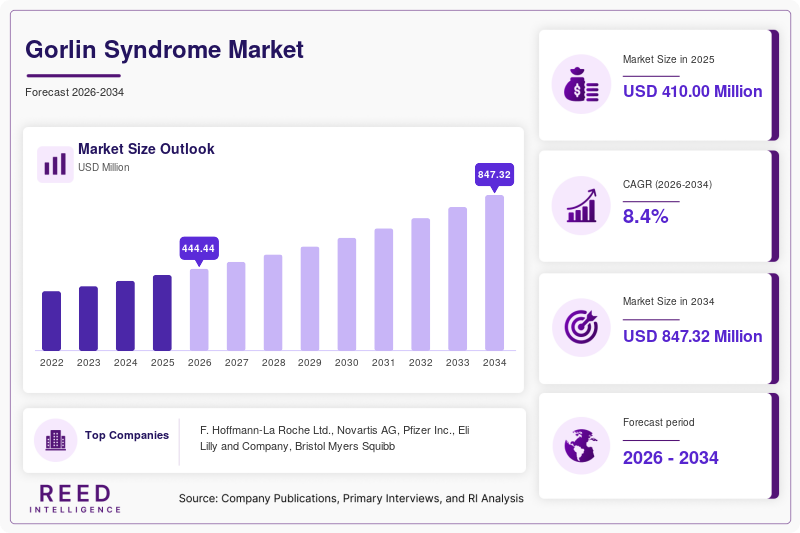
The Gorlin Syndrome Market size was valued at USD 410 million in 2025 and is projected to reach USD 845 million by 2034, expanding at a CAGR of 8.4% during the forecast period (2025–2034). Gorlin syndrome, also known as nevoid basal cell carcinoma syndrome, is a rare genetic disorder characterized by the development of multiple basal cell carcinomas, jaw cysts, and skeletal abnormalities. The market growth is supported by advances in rare disease therapeutics, improved genetic diagnostics, and increasing awareness among clinicians regarding early identification and treatment.
One global factor supporting the expansion of the Gorlin Syndrome Market is the growing focus on precision medicine and orphan drug development. Pharmaceutical companies and research institutions are increasingly investing in targeted therapies and genetic diagnostics aimed at rare conditions. Regulatory incentives such as orphan drug designations, accelerated approval pathways, and extended exclusivity periods have encouraged companies to develop therapies addressing rare diseases, including Gorlin syndrome. These incentives have resulted in increased research collaborations, improved treatment pipelines, and broader clinical trial activity.
Key Highlights
- North America dominated the Gorlin Syndrome Market with a 42% share in 2025, while Asia Pacific is projected to register the fastest CAGR of 9.6% through 2034.
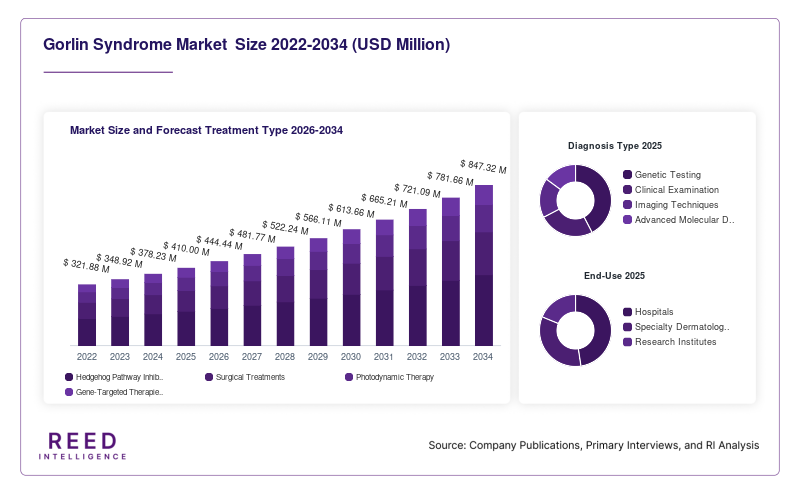
- By Treatment Type, Hedgehog pathway inhibitors held the leading share of 48% in 2025, while gene-targeted therapies are expected to grow at a CAGR of 10.2%.
- By Diagnosis Type, genetic testing accounted for the largest share of 45%, while advanced molecular diagnostics will expand at a CAGR of 9.8%.
- The United States led the market, with values estimated at USD 150 million in 2025 and USD 163 million in 2026.
Market Trends
Expansion of Genetic Diagnostics and Screening Programs
The growing integration of genetic testing technologies is a notable trend shaping the Gorlin Syndrome Market. Genetic diagnostics help identify mutations in the PTCH1 gene, which are responsible for the development of the disorder. Healthcare providers increasingly rely on next-generation sequencing (NGS) platforms and molecular diagnostics to confirm the presence of the syndrome in early stages. Earlier diagnosis allows physicians to initiate monitoring programs for skin cancers and other complications associated with the disease.
In addition, the expansion of rare disease registries and screening initiatives is improving patient identification rates. Hospitals and diagnostic laboratories are increasingly adopting multi-gene panels that detect hereditary cancer syndromes, including Gorlin syndrome. These developments are expected to enhance early diagnosis and improve treatment outcomes, contributing to long-term market growth.
Increasing Clinical Research in Targeted Therapies
Another emerging trend in the Gorlin Syndrome Market is the rising number of clinical studies focusing on targeted therapies. Researchers are developing treatments that inhibit the Hedgehog signaling pathway, which plays a key role in the disease mechanism. Targeted therapies have shown potential in controlling basal cell carcinoma development in Gorlin syndrome patients.
Pharmaceutical companies are also exploring gene-based therapies and personalized treatment approaches. The use of advanced biotechnology platforms is enabling researchers to design therapies that specifically address the underlying genetic mutation responsible for the disorder. These innovations are expected to reshape treatment strategies and influence the future outlook of the Gorlin Syndrome Market.
Market Drivers
Rising Awareness of Rare Genetic Disorders
Growing awareness about rare genetic disorders is one of the primary drivers supporting the Gorlin Syndrome Market. Medical communities, patient advocacy groups, and healthcare organizations are actively promoting education regarding early symptoms and diagnostic criteria of rare diseases. Increased awareness enables earlier detection and encourages patients to seek specialized treatment.
Healthcare systems across several countries are also introducing rare disease programs and funding research initiatives aimed at improving treatment accessibility. These programs help expand diagnostic capabilities and promote collaboration among healthcare professionals. As awareness continues to increase, more patients are expected to be diagnosed, supporting the overall expansion of the market.
Expansion of Orphan Drug Development Programs
The development of orphan drugs has significantly influenced the growth of the Gorlin Syndrome Market. Governments and regulatory bodies provide financial incentives, tax credits, and extended market exclusivity to companies developing therapies for rare diseases. These incentives encourage pharmaceutical firms to invest in research targeting disorders with smaller patient populations.
Biotechnology companies are actively developing drugs designed to regulate the molecular pathways involved in Gorlin syndrome. As more therapies receive regulatory approval, treatment options for patients will expand. This growing pipeline of targeted drugs is expected to drive the market forward during the forecast period.
Market Restraint
High Cost of Rare Disease Treatments
One major restraint affecting the Gorlin Syndrome Market is the high cost associated with rare disease treatments. Targeted therapies and advanced diagnostic procedures require specialized technologies, extensive research, and long clinical trial timelines. These factors contribute to high treatment costs, making therapies less accessible in several healthcare systems.
In many regions, reimbursement coverage for rare disease treatments remains limited. Patients often face significant out-of-pocket expenses, particularly in countries where healthcare infrastructure is still developing. Limited access to specialized diagnostic centers can also delay diagnosis and treatment. These challenges may restrict the overall growth potential of the market, particularly in emerging economies where healthcare spending is comparatively lower.
Market Opportunities
Development of Gene-Based Therapeutic Approaches
Gene-based therapies represent a promising opportunity for the Gorlin Syndrome Market. Since the disorder is caused by genetic mutations, therapies targeting the underlying genetic mechanisms could offer long-term solutions. Advances in gene editing technologies and molecular biology are enabling researchers to explore novel therapeutic strategies.
Biotechnology companies are investing in research to develop treatments that correct or regulate the genetic pathways involved in the disease. As gene-based therapies progress through clinical development stages, they may provide more effective treatment options and reduce recurrence of basal cell carcinomas associated with the condition.
Growth of Tele-Dermatology and Digital Health Platforms
Another emerging opportunity in the Gorlin Syndrome Market lies in the adoption of digital health technologies. Tele-dermatology platforms allow patients with rare skin conditions to consult specialists remotely. This approach is particularly beneficial for individuals living in regions with limited access to dermatology experts.
Digital monitoring tools and mobile applications also enable patients to track skin changes and share data with healthcare providers. These technologies facilitate early detection of new lesions and improve long-term disease management. As digital healthcare adoption increases globally, tele-dermatology solutions may expand patient access to specialized care and support market growth.
Segmental Analysis
By Treatment Type
Dominant Subsegment: Hedgehog Pathway Inhibitors
Hedgehog pathway inhibitors represented the largest share of 48% in 2025 within the Gorlin Syndrome Market. These therapies target the molecular signaling pathway responsible for abnormal cell growth associated with the syndrome. Dermatologists widely prescribe these medications to manage basal cell carcinomas in patients diagnosed with the condition. Their established clinical effectiveness and availability in several healthcare markets have supported their dominant position.
Fastest-Growing Subsegment: Gene-Targeted Therapies
Gene-targeted therapies are projected to expand at a CAGR of 10.2% during the forecast period. These treatments aim to address the underlying genetic mutation responsible for the disorder. Advances in biotechnology and gene-editing technologies are enabling researchers to design therapies that regulate gene expression or correct genetic abnormalities. The development of such innovative treatment approaches will support the long-term growth of this segment.
By Diagnosis Type
Dominant Subsegment: Genetic Testing
Genetic testing accounted for 45% of the Gorlin Syndrome Market share in 2025. Molecular diagnostics help confirm the presence of gene mutations linked to the condition. Hospitals and diagnostic laboratories increasingly rely on genetic testing to establish accurate diagnoses, particularly for patients with a family history of the disorder.
Fastest-Growing Subsegment: Advanced Molecular Diagnostics
Advanced molecular diagnostic technologies will expand at a CAGR of 9.8% through 2034. Innovations such as next-generation sequencing and multi-gene panels enable faster and more precise detection of genetic abnormalities. As these technologies become more accessible, healthcare providers will adopt them to improve diagnostic accuracy and patient outcomes.
By End-Use
Dominant Subsegment: Hospitals
Hospitals accounted for 52% of the market share in 2025. These facilities provide comprehensive diagnostic services, surgical procedures, and long-term monitoring for patients with rare genetic disorders. The availability of multidisciplinary medical teams enables hospitals to manage complex conditions such as Gorlin syndrome.
Fastest-Growing Subsegment: Specialty Dermatology Clinics
Specialty dermatology clinics will grow at a CAGR of 9.4% during the forecast period. These clinics focus on skin-related conditions and often adopt advanced diagnostic and treatment technologies. Their specialized expertise and patient-centered care models are expected to attract a growing number of patients seeking targeted dermatological treatments.
Regional Analysis
North America
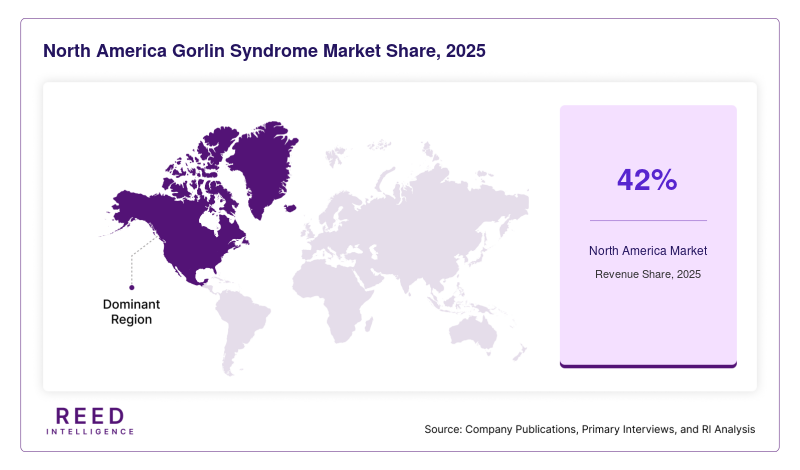
North America accounted for 42% of the Gorlin Syndrome Market share in 2025, representing the largest regional segment. The market in this region will expand at a CAGR of 8.1% between 2025 and 2034. The region’s leadership is attributed to the presence of advanced healthcare infrastructure, established rare disease research programs, and high adoption of genetic diagnostic technologies.
The United States dominated the regional market due to strong investment in rare disease research and well-established dermatology treatment networks. Research institutions and biotechnology companies in the country are actively conducting clinical studies focused on targeted therapies for genetic disorders. The availability of specialized dermatology centers and patient support programs has contributed to early diagnosis and effective management of Gorlin syndrome. These factors will continue to support market expansion in the region.
Europe
Europe held approximately 28% of the global Gorlin Syndrome Market in 2025. The region will grow at a CAGR of 8.2% through 2034. The market development in Europe is influenced by expanding rare disease research initiatives and increasing collaboration between academic institutions and pharmaceutical companies.
Germany represented the leading country in the region due to its strong biomedical research sector and well-developed healthcare system. The country has several specialized dermatology clinics and diagnostic laboratories that support early identification of genetic disorders. Government funding for rare disease research and the presence of biotechnology firms engaged in targeted therapy development will contribute to steady market growth.
Asia Pacific
Asia Pacific accounted for 18% of the Gorlin Syndrome Market in 2025 and will register the fastest CAGR of 9.6% during the forecast period. Rising healthcare expenditure and improving access to advanced diagnostic technologies are contributing to the expansion of the market in the region.
China emerged as the dominant country due to its expanding biotechnology sector and increasing investment in medical research. Government initiatives aimed at strengthening healthcare infrastructure and supporting rare disease research programs are also playing a role in market development. As diagnostic capabilities improve and healthcare access expands, the number of identified cases is expected to increase.
Middle East & Africa
The Middle East & Africa represented 7% of the Gorlin Syndrome Market share in 2025 and will grow at a CAGR of 7.4% through 2034. The region is gradually improving its rare disease management capabilities through investments in healthcare infrastructure and specialized treatment centers.
Saudi Arabia led the regional market due to ongoing healthcare modernization initiatives. The country has been expanding dermatology services and introducing advanced diagnostic technologies in major hospitals. Government healthcare investment programs and collaborations with international medical institutions are expected to improve access to rare disease treatments.
Latin America
Latin America accounted for 5% of the global Gorlin Syndrome Market in 2025 and will grow at a CAGR of 7.8% during the forecast period. Increasing awareness regarding genetic disorders and improvements in healthcare access are influencing the regional market.
Brazil dominated the Latin American market due to the presence of major dermatology research institutions and expanding diagnostic capabilities. Public healthcare programs in the country are increasingly focusing on early disease detection and patient management for rare conditions. The growing adoption of advanced dermatological treatments and improved diagnostic technologies will support the development of the Gorlin Syndrome Market in the region.
Competitive Landscape
The Gorlin Syndrome Market includes pharmaceutical companies, biotechnology firms, and research organizations developing targeted therapies and diagnostic solutions. Market participants focus on clinical research collaborations, drug development, and expanding treatment portfolios for rare genetic disorders.
Among the leading players, F. Hoffmann-La Roche Ltd. has maintained a strong market position due to its expertise in oncology and molecular diagnostics. The company has invested in research programs focused on targeted therapies for genetic disorders. Recently, Roche announced a collaborative initiative with academic institutions to advance molecular diagnostics related to hereditary cancer syndromes.
Other companies are also strengthening their presence through strategic partnerships and clinical trial programs aimed at improving treatment outcomes for Gorlin syndrome patients.
Key Players
- F. Hoffmann-La Roche Ltd.
- Novartis AG
- Pfizer Inc.
- Eli Lilly and Company
- Bristol Myers Squibb
- Amgen Inc.
- Regeneron Pharmaceuticals
- Sanofi S.A.
- AstraZeneca PLC
- GlaxoSmithKline PLC
- AbbVie Inc.
- Merck & Co., Inc.
- Bayer AG
- Takeda Pharmaceutical Company Limited
- BioMarin Pharmaceutical Inc.
Recent Developments
- In 2024, a biotechnology company initiated a Phase II clinical trial evaluating a targeted therapy designed to regulate Hedgehog pathway signaling in Gorlin syndrome patients.
- In 2023, several diagnostic laboratories introduced expanded genetic testing panels capable of identifying hereditary cancer syndromes including Gorlin syndrome.
- In 2024, pharmaceutical companies announced research collaborations with academic institutions to accelerate the development of gene-based therapies for rare dermatological disorders.
Gorlin Syndrome Market Segments
Treatment Type
- Hedgehog Pathway Inhibitors
- Surgical Treatments
- Photodynamic Therapy
- Gene-Targeted Therapies
Diagnosis Type
- Genetic Testing
- Clinical Examination
- Imaging Techniques
- Advanced Molecular Diagnostics
End-Use
- Hospitals
- Specialty Dermatology Clinics
- Research Institutes
By Region
- North America
- Europe
- APAC
- Middle East and Africa
- LATAM