Granulomatous Lobular Mastitis Treatment Market Size, Share & Demand Report By Treatment Type (Corticosteroid Therapy, Immunosuppressive Therapy, Antibiotic Therapy, Surgical Treatment), By Diagnosis Method (Biopsy, Ultrasound Imaging, Magnetic Resonance Imaging (MRI), Mammography), By End-Use (Hospitals, Specialty Clinics, Diagnostic Centers), By Region & Segment Forecasts, 2025–2034
USD 3950
Market Overview
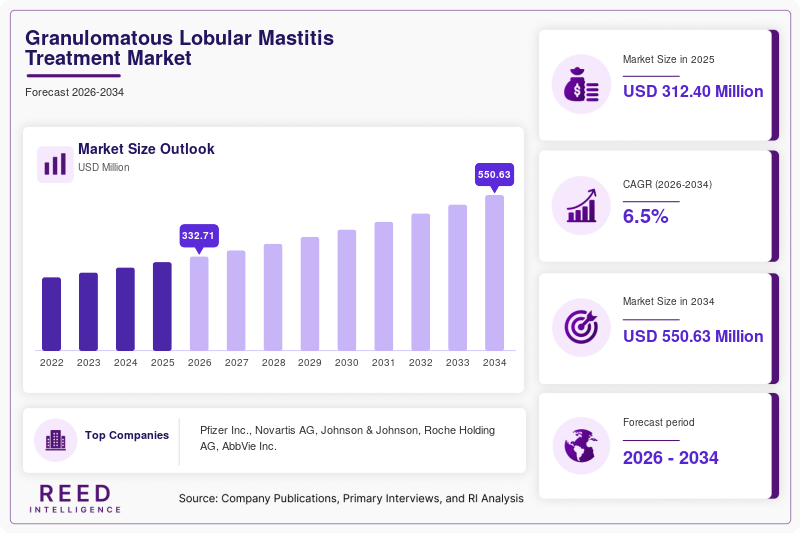
The Granulomatous Lobular Mastitis Treatment Market size was estimated at USD 312.4 million in 2025 and is projected to reach USD 548.7 million by 2034, expanding at a compound annual growth rate (CAGR) of 6.5% from 2025 to 2034. Granulomatous lobular mastitis (GLM) is a rare inflammatory breast disease that primarily affects women of reproductive age, creating growing demand for accurate diagnosis and effective treatment solutions. The market is evolving as healthcare providers adopt targeted therapies and multidisciplinary clinical approaches for disease management.
One global factor that supported the expansion of the Granulomatous Lobular Mastitis Treatment Market was the rising awareness of rare inflammatory breast diseases and improved diagnostic imaging capabilities. Increasing utilization of high-resolution ultrasound, MRI, and biopsy-based diagnosis has improved detection rates of granulomatous mastitis. As a result, healthcare providers are identifying more cases and initiating early treatment interventions. This trend has encouraged pharmaceutical manufacturers and healthcare providers to invest in therapies including corticosteroids, immunosuppressive drugs, and minimally invasive surgical procedures.
Key Highlights
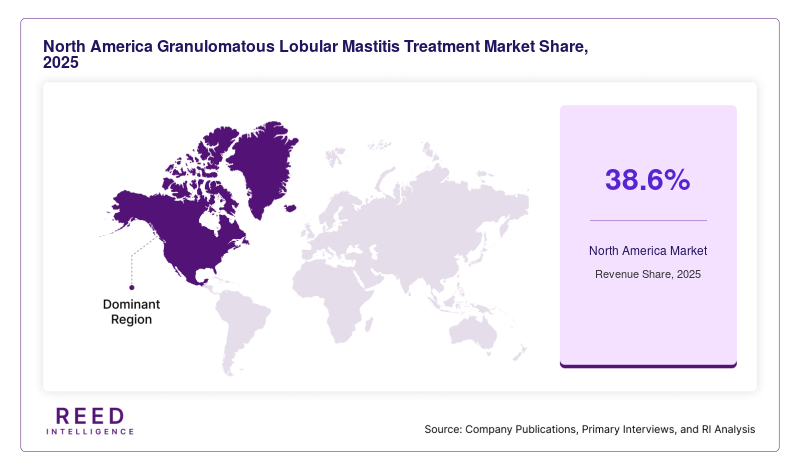
- North America held the dominant regional share of 38.6% in 2025, while Asia Pacific is projected to grow fastest at a 7.9% CAGR during the forecast period.
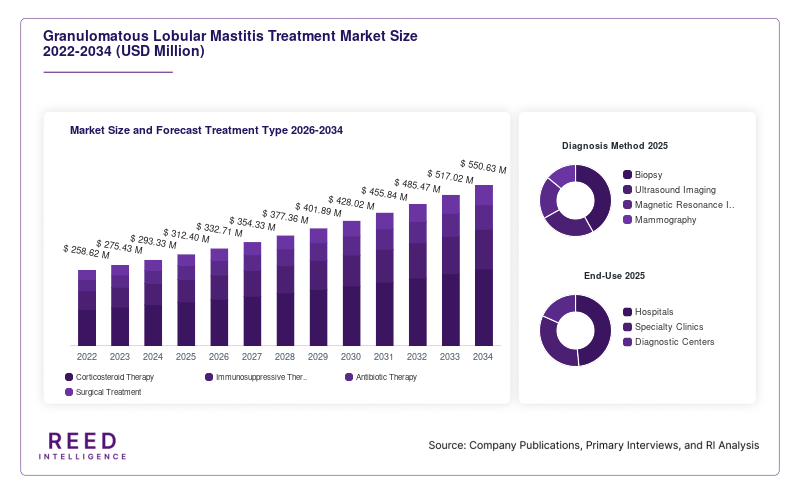
- By treatment type, corticosteroid therapy led with 34.2% share in 2025, while immunosuppressive therapy is expected to grow fastest at 7.6% CAGR.
- By end-use, hospitals accounted for 52.8% market share, while specialty clinics are projected to expand at 7.4% CAGR.
- United States remained the dominant country with a market value of USD 102.5 million in 2025, increasing to USD 108.8 million in 2026.
Market Trends
Increasing Adoption of Combination Therapy Approaches
Combination treatment strategies are becoming a notable trend in the Granulomatous Lobular Mastitis Treatment Market. Physicians increasingly prescribe corticosteroids along with immunosuppressive medications such as methotrexate to improve therapeutic outcomes and reduce recurrence rates. Combination therapy allows clinicians to control inflammation while minimizing prolonged steroid exposure. This approach has gained traction in hospital-based treatment settings, where multidisciplinary care teams collaborate to optimize treatment protocols. As more clinical research supports integrated treatment strategies, pharmaceutical companies are exploring new anti-inflammatory formulations and targeted immune therapies.
Expansion of Minimally Invasive Surgical Techniques
Another emerging trend shaping the Granulomatous Lobular Mastitis Treatment Market is the increasing use of minimally invasive surgical procedures. Techniques such as ultrasound-guided abscess drainage and limited excision are being used as alternatives to traditional wide surgical resection. These procedures reduce recovery time and preserve breast tissue, which is particularly important for younger patients. The availability of improved surgical instruments and imaging technologies has further encouraged adoption of minimally invasive approaches. Hospitals and specialty clinics are increasingly integrating these procedures into treatment protocols, contributing to procedural volume growth within the market.
Market Drivers
Rising Diagnosis Rates of Rare Breast Inflammatory Diseases
The increasing identification of granulomatous lobular mastitis cases is a key driver of the Granulomatous Lobular Mastitis Treatment Market. Improved clinical awareness among healthcare professionals has resulted in more accurate differentiation between inflammatory breast diseases and malignant tumors. As physicians become more familiar with GLM symptoms, including painful breast masses and inflammatory lesions, diagnostic testing rates have increased. Early diagnosis allows for timely treatment interventions such as corticosteroid therapy or targeted immunosuppressive drugs. The growing patient pool receiving proper treatment is therefore contributing to steady market expansion.
Advancements in Pharmacological Treatment Options
Another factor supporting the Granulomatous Lobular Mastitis Treatment Market is the development of improved pharmacological therapies for chronic inflammatory conditions. Pharmaceutical manufacturers are exploring anti-inflammatory agents and immunomodulatory drugs that can regulate immune system activity associated with granulomatous mastitis. Clinical research is also examining biologic therapies that may reduce inflammation more effectively than conventional treatments. These innovations create new therapeutic options for patients with recurrent or treatment-resistant disease. The expanding portfolio of medications available for inflammatory breast conditions is expected to support long-term growth in the treatment market.
Market Restraint
Limited Disease Awareness in Developing Healthcare Systems
Despite improving diagnosis rates, limited awareness of granulomatous lobular mastitis remains a challenge for the Granulomatous Lobular Mastitis Treatment Market. In many healthcare systems, the condition is frequently misdiagnosed as breast cancer or bacterial mastitis due to similar clinical symptoms. This diagnostic confusion can delay appropriate treatment and lead to unnecessary surgical interventions.
Another challenge is the rarity of the disease itself. Because GLM occurs relatively infrequently compared to other breast disorders, large-scale clinical studies are limited. The lack of standardized treatment guidelines across different healthcare systems also creates variability in patient management approaches. Some physicians prefer conservative medical therapy, while others rely on surgical procedures. This inconsistency may slow the adoption of specific therapies and reduce market predictability.
Furthermore, healthcare providers in developing regions often lack specialized diagnostic tools such as advanced imaging or biopsy analysis. As a result, cases remain underreported or incorrectly categorized. Limited disease recognition and diagnostic capability therefore act as restraints on market growth. Expanding physician education and clinical awareness programs will be necessary to address these challenges and improve treatment accessibility.
Market Opportunities
Growth in Women’s Health Specialty Clinics
The expansion of specialty clinics focusing on women’s health presents a notable opportunity for the Granulomatous Lobular Mastitis Treatment Market. These clinics provide targeted diagnostic and treatment services for breast diseases and inflammatory conditions. As healthcare systems emphasize preventive and specialized care, the number of dedicated breast health centers continues to increase. These facilities offer comprehensive diagnostic services including ultrasound imaging, biopsy procedures, and clinical management of rare inflammatory diseases. The growth of such clinics will expand access to accurate diagnosis and treatment options for patients with granulomatous mastitis.
Emerging Research in Immunomodulatory Therapies
Ongoing clinical research into immune-targeted therapies creates another opportunity for the Granulomatous Lobular Mastitis Treatment Market. Researchers are exploring novel immunomodulatory drugs that can regulate abnormal inflammatory responses associated with GLM. Biologic therapies and targeted anti-inflammatory agents may improve treatment outcomes and reduce recurrence rates compared with traditional steroid therapy. Pharmaceutical companies are investing in research programs aimed at inflammatory and autoimmune diseases, which may indirectly benefit GLM treatment strategies. As new therapeutic options enter clinical evaluation, the market may experience additional growth through improved patient outcomes and expanded treatment pathways.
Segmental Analysis
By Treatment Type
Corticosteroid therapy represented the dominant subsegment in the Granulomatous Lobular Mastitis Treatment Market, accounting for 34.2% share in 2025. Corticosteroids are commonly prescribed to reduce inflammation associated with granulomatous mastitis. Physicians often use oral or topical steroid treatments to control immune-mediated inflammatory responses in affected breast tissue. The widespread clinical familiarity with corticosteroid medications has supported their adoption as a primary treatment option. Hospitals frequently use these therapies as first-line management for patients with moderate inflammatory symptoms.
The immunosuppressive therapy subsegment is projected to grow at the fastest CAGR of 7.6% during the forecast period. Medications such as methotrexate and azathioprine are increasingly being used to treat recurrent or steroid-resistant cases of granulomatous mastitis. These therapies help regulate immune system activity and reduce chronic inflammation. As physicians seek alternatives to long-term steroid treatment, immunosuppressive drugs are expected to gain wider adoption across hospital and specialty clinic settings.
By Diagnosis Method
Biopsy-based diagnosis accounted for the largest share of 41.5% in 2025 within the Granulomatous Lobular Mastitis Treatment Market. Core needle biopsy and tissue sampling procedures are commonly used to confirm the presence of granulomatous inflammation in breast tissue. These diagnostic methods allow clinicians to differentiate granulomatous mastitis from malignant breast tumors. Accurate histopathological analysis ensures that patients receive appropriate treatment for inflammatory disease rather than unnecessary cancer therapies.
Magnetic resonance imaging (MRI) is expected to emerge as the fastest-growing diagnostic subsegment with a projected CAGR of 7.1%. MRI provides detailed visualization of breast tissue structures and inflammatory lesions. The technology helps physicians evaluate disease progression and treatment response in patients with granulomatous mastitis. As imaging equipment becomes more widely available in tertiary hospitals and diagnostic centers, MRI utilization for inflammatory breast disease evaluation will increase.
By End-Use
Hospitals represented the dominant end-use segment with 52.8% share in 2025. Hospitals serve as primary treatment centers for complex inflammatory diseases, including granulomatous mastitis. These facilities provide comprehensive diagnostic services such as imaging, biopsy procedures, and clinical consultations. Multidisciplinary medical teams within hospital environments often coordinate patient care, ensuring appropriate treatment planning and follow-up monitoring.
Specialty clinics are projected to be the fastest-growing end-use segment with a CAGR of 7.4% through 2034. These clinics focus specifically on breast health and women’s healthcare services. Many specialty centers provide targeted treatment for inflammatory breast conditions, offering both pharmacological therapies and minimally invasive procedures. The increasing number of specialized breast care facilities will contribute to expanding treatment accessibility for patients diagnosed with granulomatous mastitis.
Regional Analysis
North America
North America accounted for 38.6% of the Granulomatous Lobular Mastitis Treatment Market share in 2025, reflecting the region’s advanced healthcare infrastructure and well-established diagnostic systems. The market in this region is expected to grow at a 6.1% CAGR between 2025 and 2034. Hospitals and specialty breast clinics across the United States and Canada have adopted advanced imaging technologies that enable accurate diagnosis of inflammatory breast conditions. The availability of experienced clinicians and well-developed treatment protocols has supported stable market demand.
The United States represented the dominant country in the North American Granulomatous Lobular Mastitis Treatment Market. One factor supporting growth in the country is the strong presence of specialized breast care centers and academic medical institutions that focus on inflammatory breast diseases. These facilities conduct clinical research and develop treatment guidelines that influence patient management strategies. Increasing healthcare expenditure and widespread availability of diagnostic imaging tools also contribute to treatment adoption across hospitals and specialty clinics.
Europe
Europe represented 26.4% of the global Granulomatous Lobular Mastitis Treatment Market share in 2025. The regional market is projected to expand at a 6.3% CAGR during the forecast period. European healthcare systems emphasize early disease detection and structured patient care pathways. Hospitals across Western Europe have integrated breast disease screening programs that facilitate identification of rare inflammatory conditions.
Germany remained the dominant country in the European Granulomatous Lobular Mastitis Treatment Market. The country’s healthcare system places significant focus on specialized clinical care and diagnostic precision. Germany’s network of university hospitals and breast cancer centers often manages complex inflammatory breast disorders, including granulomatous mastitis. These institutions support clinical training programs and patient management strategies that promote standardized treatment practices. The strong healthcare reimbursement framework also enables patients to access diagnostic imaging and pharmaceutical therapies for inflammatory breast diseases.
Asia Pacific
Asia Pacific held 21.8% of the Granulomatous Lobular Mastitis Treatment Market share in 2025 and is anticipated to grow at the fastest CAGR of 7.9% from 2025 to 2034. The region’s expanding healthcare infrastructure and growing population of women seeking specialized medical care are supporting market expansion. Hospitals across countries such as China, India, and South Korea are increasing their focus on breast health services.
China emerged as the dominant country in the Asia Pacific Granulomatous Lobular Mastitis Treatment Market. One factor contributing to growth in the country is the rapid expansion of urban hospitals and diagnostic centers. Healthcare reforms aimed at improving medical accessibility have increased the number of patients receiving diagnostic evaluations for breast disorders. Additionally, China’s large population and increasing healthcare awareness among women have contributed to rising demand for treatment options for inflammatory breast diseases.
Middle East & Africa
The Middle East & Africa region accounted for 7.2% of the Granulomatous Lobular Mastitis Treatment Market share in 2025 and is expected to grow at a 5.7% CAGR through 2034. The region’s healthcare sector is gradually expanding with investments in hospital infrastructure and specialized medical services. Several countries in the Middle East are developing advanced medical facilities to provide treatment for complex diseases.
Saudi Arabia represented the dominant country in the regional Granulomatous Lobular Mastitis Treatment Market. One factor supporting market development in the country is government investment in healthcare modernization programs. These initiatives aim to improve access to specialized medical services and advanced diagnostic technologies. The expansion of tertiary care hospitals and women’s health clinics has improved the availability of treatment services for inflammatory breast conditions.
Latin America
Latin America captured 6.0% of the Granulomatous Lobular Mastitis Treatment Market share in 2025 and is projected to grow at a 5.9% CAGR during the forecast period. The region is experiencing gradual improvements in healthcare infrastructure and diagnostic capabilities. Hospitals and medical institutions are increasing their focus on women’s health services, including breast disease management.
Brazil remained the dominant country in the Latin American Granulomatous Lobular Mastitis Treatment Market. The country’s public and private healthcare sectors are expanding diagnostic imaging services and specialized clinical care centers. Breast disease awareness campaigns and improved patient referral systems have encouraged more individuals to seek medical evaluation for inflammatory breast conditions. As healthcare access improves, treatment adoption for granulomatous mastitis is expected to increase steadily across the region.
Competitive Landscape
The Granulomatous Lobular Mastitis Treatment Market includes pharmaceutical manufacturers, biotechnology companies, and healthcare organizations that focus on anti-inflammatory and immunomodulatory therapies. Companies in the market primarily develop medications used to treat inflammatory and autoimmune diseases, which are also applied in the management of granulomatous mastitis.
Pfizer Inc. is recognized as a leading participant due to its extensive portfolio of anti-inflammatory and immunomodulatory medications. The company continues to expand research programs focused on immune-mediated diseases. A recent development involved the advancement of clinical research initiatives related to inflammatory treatment solutions, which may support broader therapeutic applications.
Other companies such as Novartis AG, Johnson & Johnson, Roche Holding AG, and AbbVie Inc. are also active in the market. These organizations maintain strong pharmaceutical research capabilities and global distribution networks. Their continued investment in immunology and inflammatory disease research is expected to support innovation within the Granulomatous Lobular Mastitis Treatment Market.
Key Players List
- Pfizer Inc.
- Novartis AG
- Johnson & Johnson
- Roche Holding AG
- AbbVie Inc.
- Sanofi S.A.
- Merck & Co., Inc.
- GlaxoSmithKline plc
- AstraZeneca plc
- Bristol Myers Squibb
- Teva Pharmaceutical Industries Ltd.
- Hikma Pharmaceuticals
- Amgen Inc.
- Cipla Limited
- Sun Pharmaceutical Industries Ltd.
- Dr. Reddy’s Laboratories
- Lupin Limited
Recent Developments
- 2024: A pharmaceutical manufacturer initiated clinical research evaluating immunomodulatory drugs for inflammatory breast diseases, including granulomatous mastitis.
- 2024: Several hospitals in North America adopted new diagnostic imaging protocols to improve differentiation between inflammatory breast disease and malignancy.
- 2023: A biotechnology firm expanded research programs focusing on targeted immune therapies for chronic inflammatory disorders.
- 2023: Specialty breast clinics across Europe introduced minimally invasive surgical techniques for managing recurrent granulomatous mastitis cases.
- 2022: Healthcare institutions in Asia Pacific expanded breast health centers aimed at improving early diagnosis of inflammatory breast conditions.
Granulomatous Lobular Mastitis Treatment Market Segments
Treatment Type
- Corticosteroid Therapy
- Immunosuppressive Therapy
- Antibiotic Therapy
- Surgical Treatment
Diagnosis Method
- Biopsy
- Ultrasound Imaging
- Magnetic Resonance Imaging (MRI)
- Mammography
End-Use
- Hospitals
- Specialty Clinics
- Diagnostic Centers
By Region
- North America
- Europe
- APAC
- Middle East and Africa
- LATAM