Graves Ophthalmopathy Market Size, Share & Demand Report By Treatment Type (Biologic Therapies, Corticosteroids), By Disease Severity (Mild Graves Ophthalmopathy, Moderate-to-Severe Graves Ophthalmopathy), By Route of Administration (Intravenous, Oral, Subcutaneous, Topical), By End User (Hospitals, Specialty Eye Clinics), By Distribution Channel (Hospital Pharmacies, Retail Pharmacies, Specialty Pharmacies), By Region & Segment Forecasts, 2026–2034
USD 3950
Market Overview
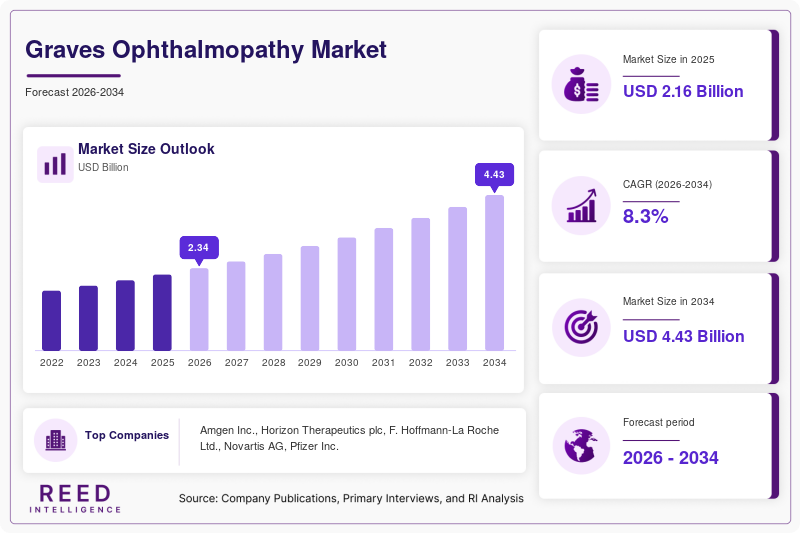
The global Graves Ophthalmopathy Market size was valued at USD 2.16 billion in 2026 and is projected to reach USD 4.08 billion by 2034, expanding at a CAGR of 8.3% during the forecast period (2026–2034). The market growth was supported by the increasing prevalence of autoimmune thyroid disorders and rising awareness regarding early diagnosis and treatment of thyroid eye disease across developed and emerging healthcare systems.
The growing demand for targeted biologic therapies, advancements in orbital imaging technologies, and increasing access to specialty ophthalmology care significantly contributed to the expansion of the Graves Ophthalmopathy Market. Healthcare providers increasingly focused on integrated treatment approaches involving endocrinologists, ophthalmologists, and immunology specialists to improve patient outcomes. In addition, rising healthcare expenditure and the expansion of specialty clinics globally strengthened market development.
Key Highlights
- North America accounted for 38.6% of the global Graves Ophthalmopathy Market share in 2025, while Asia Pacific is projected to register the fastest CAGR of 9.4% during the forecast period.
- By treatment type, biologic therapies held the leading share of 34.1% in 2025, whereas monoclonal antibody therapies are expected to witness the fastest CAGR of 10.2% through 2034.
- By disease severity, moderate-to-severe Graves ophthalmopathy dominated with a 47.5% share in 2025, while active Graves ophthalmopathy is forecast to grow at a CAGR of 9.8%.
- By route of administration, intravenous therapies accounted for 41.3% of the market share in 2025, while subcutaneous administration is projected to expand at a CAGR of 9.6%.
- By end user, hospitals and specialty eye clinics represented the largest share of 52.8% in 2025, whereas ambulatory surgical centers are anticipated to record the fastest CAGR of 8.9%.
- The United States Graves Ophthalmopathy Market was valued at USD 548 million in 2024 and reached USD 589 million in 2025.
Market Trends
Increasing Adoption of Targeted Biologic Therapies
The adoption of targeted biologic therapies emerged as a major trend shaping the Graves Ophthalmopathy Market. Healthcare providers increasingly preferred advanced biologic treatments capable of reducing orbital inflammation and improving eye function with fewer systemic complications. Biologic therapies targeting insulin-like growth factor-1 receptor (IGF-1R) and immune pathways gained strong clinical acceptance in moderate-to-severe thyroid eye disease treatment.
Pharmaceutical companies continued investing in research programs focused on next-generation immunotherapies for Graves ophthalmopathy. The availability of improved treatment protocols and favorable clinical outcomes accelerated adoption across specialty ophthalmology centers and endocrine clinics.
Expansion of Multidisciplinary Thyroid Eye Disease Clinics
Multidisciplinary treatment centers dedicated to thyroid eye disease management gained momentum globally. Hospitals and specialty healthcare providers increasingly established integrated care models involving ophthalmologists, endocrinologists, radiologists, and immunologists.
These clinics improved treatment coordination and enabled faster disease assessment through advanced diagnostic technologies. The trend also supported earlier intervention strategies, reducing complications associated with progressive Graves ophthalmopathy. Increasing patient preference for specialized treatment environments contributed to the growth outlook of the Graves Ophthalmopathy Market.
Market Drivers
Rising Prevalence of Autoimmune Thyroid Disorders
The increasing prevalence of autoimmune thyroid disorders significantly supported the growth of the Graves Ophthalmopathy Market. Rising incidence of Graves’ disease globally contributed to higher diagnosis rates of thyroid-associated ophthalmopathy.
Changing lifestyle patterns, increasing stress levels, and growing autoimmune disease burden accelerated demand for effective ophthalmic therapies. Healthcare systems also improved screening initiatives for thyroid-related eye disorders, contributing to earlier disease identification and treatment adoption.
Growing Availability of Advanced Diagnostic Imaging
The increasing availability of advanced imaging technologies supported market growth. Orbital MRI scans, CT imaging, and high-resolution ophthalmic diagnostic systems enabled accurate disease staging and improved treatment planning for Graves ophthalmopathy patients.
Healthcare facilities increasingly adopted advanced imaging solutions to monitor orbital inflammation, muscle enlargement, and optic nerve involvement. Enhanced diagnostic precision improved clinical decision-making and strengthened demand for specialized treatment interventions within the Graves Ophthalmopathy Market.
Market Restraint
Limited Accessibility to Specialized Therapies in Developing Regions
Limited access to advanced biologic therapies and specialty ophthalmology care restrained market expansion in several developing economies. High treatment costs and inadequate reimbursement structures reduced patient access to targeted therapies. In addition, shortages of trained ophthalmology specialists and limited awareness regarding thyroid eye disease delayed diagnosis and treatment initiation in certain regions.
Market Opportunities
Increasing Clinical Research for Novel Immunotherapies
The growing number of clinical trials focused on immunomodulatory therapies presents substantial opportunities in the Graves Ophthalmopathy Market. Pharmaceutical companies are actively developing advanced monoclonal antibodies and targeted immune therapies aimed at improving treatment efficacy and reducing relapse rates.
Emerging immunotherapy candidates are expected to expand treatment options for patients with severe and treatment-resistant disease conditions. Continuous innovation in autoimmune disease management is likely to support future market growth.
Expansion of Teleophthalmology Services
The rapid adoption of teleophthalmology services is expected to create favorable opportunities for the market. Remote consultation platforms and digital eye assessment technologies are improving patient access to specialty care, particularly in underserved regions.
Telemedicine-based thyroid eye disease monitoring programs are anticipated to improve treatment continuity and facilitate early intervention. The increasing use of digital healthcare infrastructure will continue supporting market accessibility.
Segmental Analysis
By Treatment Type
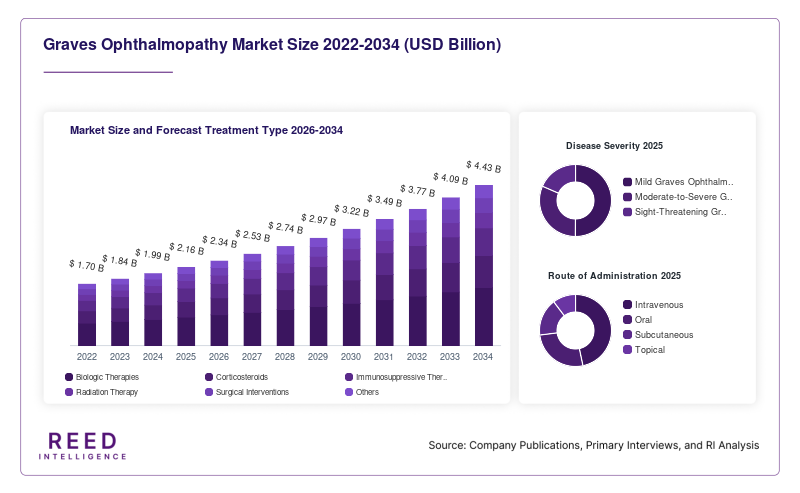
Based on treatment type, the Graves Ophthalmopathy Market is segmented into biologic therapies, corticosteroids, immunosuppressive therapies, radiation therapy, surgical interventions, and others.
Biologic therapies accounted for the largest market share of 34.1% in 2025. Their dominance was attributed to increasing clinical preference for targeted treatment approaches capable of reducing inflammation and orbital tissue expansion. Biologic therapies demonstrated improved symptom control and reduced long-term disease progression compared to traditional treatment methods.
Healthcare providers increasingly prescribed biologic agents for moderate-to-severe Graves ophthalmopathy due to their effectiveness in reducing proptosis and improving visual outcomes. The growing availability of advanced monoclonal antibody therapies further strengthened segment expansion.
Monoclonal antibody therapies are projected to register the fastest CAGR of 10.2% during the forecast period. Their growth is expected to be driven by ongoing clinical advancements and increasing regulatory approvals for targeted autoimmune therapies. Pharmaceutical manufacturers will continue investing in advanced biologic drug development to improve treatment response and reduce relapse frequency.
Corticosteroids also maintained a considerable market share due to their widespread use as first-line anti-inflammatory treatment options. These therapies remained commonly prescribed for managing acute orbital inflammation and disease flare-ups.
By Disease Severity
Based on disease severity, the Graves Ophthalmopathy Market is categorized into mild, moderate-to-severe, and sight-threatening Graves ophthalmopathy.
Moderate-to-severe Graves ophthalmopathy dominated the market with a 47.5% share in 2025. The segment growth was supported by increasing diagnosis rates among patients experiencing significant orbital inflammation, diplopia, and proptosis. Patients within this category frequently required combination therapies involving corticosteroids, biologics, and surgical interventions.
Healthcare facilities increasingly focused on specialized management programs for moderate-to-severe disease conditions to prevent long-term visual impairment and improve quality of life. Rising patient awareness regarding symptom progression also contributed to treatment adoption.
Active Graves ophthalmopathy is projected to grow at a CAGR of 9.8% during the forecast period. Growth will be supported by increasing emphasis on early intervention and rapid disease activity assessment. Physicians are expected to prioritize aggressive treatment during active inflammatory phases to minimize permanent orbital damage.
Sight-threatening Graves ophthalmopathy is also anticipated to witness stable growth due to increasing utilization of orbital decompression procedures and advanced immunotherapies for optic nerve compression management.
By Route of Administration
Based on route of administration, the Graves Ophthalmopathy Market is divided into intravenous, oral, subcutaneous, and topical administration.
Intravenous therapies accounted for the leading market share of 41.3% in 2025. The segment dominance was attributed to the widespread use of intravenous corticosteroids and biologic therapies for moderate-to-severe disease management. Intravenous administration enabled rapid therapeutic action and improved treatment effectiveness in acute inflammatory conditions.
Hospitals and specialty clinics increasingly preferred intravenous therapies for patients requiring intensive disease management and close monitoring. Improved infusion center infrastructure further supported segment growth.
Subcutaneous administration is projected to register the fastest CAGR of 9.6% during the forecast period. The growth will be driven by increasing demand for convenient outpatient treatment options and self-administration capabilities. Pharmaceutical companies are expected to develop additional subcutaneous biologic formulations to improve patient compliance and reduce hospital visits.
Oral therapies are also anticipated to maintain steady demand due to their accessibility and cost-effectiveness for mild disease management.
By End User
Based on end user, the Graves Ophthalmopathy Market is segmented into hospitals, specialty eye clinics, ambulatory surgical centers, and others.
Hospitals and specialty eye clinics held the largest market share of 52.8% in 2025. Their dominance was supported by the availability of multidisciplinary treatment teams and advanced diagnostic infrastructure. These facilities offered comprehensive disease management involving imaging, infusion therapies, and surgical procedures.
Patients increasingly preferred specialty eye clinics due to improved access to experienced ophthalmologists and personalized treatment protocols. The growing establishment of thyroid eye disease centers further contributed to segment expansion.
Ambulatory surgical centers are projected to register the fastest CAGR of 8.9% during the forecast period. Their growth will be supported by increasing adoption of minimally invasive orbital decompression and eyelid correction procedures in outpatient settings. Cost efficiency and reduced hospitalization durations are expected to encourage patient preference for ambulatory care facilities.
By Distribution Channel
Based on distribution channel, the Graves Ophthalmopathy Market is segmented into hospital pharmacies, retail pharmacies, specialty pharmacies, and online pharmacies.
Hospital pharmacies accounted for the dominant market share in 2025 due to increasing administration of biologic therapies and injectable medications within hospital settings. These pharmacies maintained strong control over specialty drug distribution and treatment coordination.
Specialty pharmacies are projected to witness the fastest CAGR during the forecast period due to rising demand for high-cost biologic therapies and patient support services. Expanding cold-chain logistics and specialty drug management programs will support segment growth.
Regional Analysis
North America
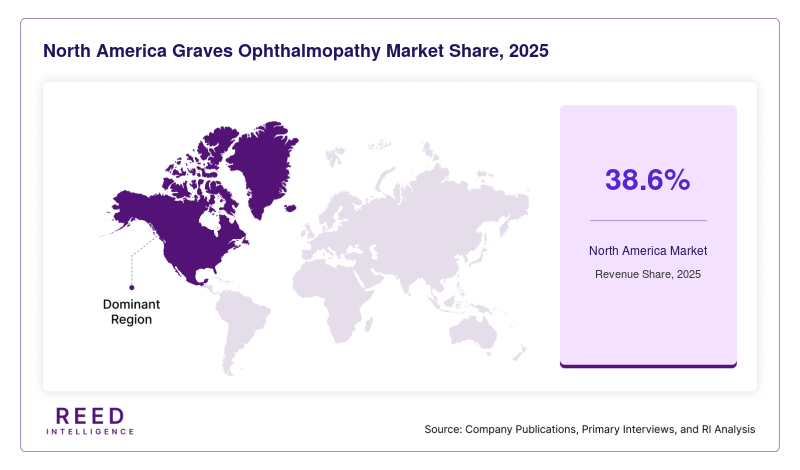
North America held 38.6% of the global Graves Ophthalmopathy Market share in 2025 and is projected to expand at a CAGR of 7.6% during the forecast period. The region maintained a strong market position due to advanced healthcare infrastructure and increasing adoption of biologic therapies.
The United States dominated the regional market owing to the widespread presence of specialty endocrinology and ophthalmology treatment centers. Increasing investments in autoimmune disease research and favorable reimbursement policies for targeted therapies contributed to regional market expansion.
Europe
Europe accounted for 29.1% of the Graves Ophthalmopathy Market share in 2025 and is anticipated to grow at a CAGR of 7.9% through 2034. The region experienced steady growth due to increasing awareness regarding thyroid eye disease diagnosis and treatment.
Germany led the European market due to the strong presence of advanced ophthalmology clinics and increasing healthcare spending on autoimmune disease management. Growing adoption of minimally invasive orbital decompression procedures further supported market development in the country.
Asia Pacific
Asia Pacific represented 20.8% of the global Graves Ophthalmopathy Market share in 2025 and is expected to register the fastest CAGR of 9.4% during the forecast period. The region witnessed expanding demand due to improving healthcare access and rising thyroid disorder prevalence.
China dominated the regional market due to increasing investments in hospital infrastructure and growing awareness regarding autoimmune eye diseases. Expanding health insurance coverage and rising specialty care accessibility accelerated treatment adoption across the country.
Middle East & Africa
The Middle East & Africa accounted for 6.2% of the Graves Ophthalmopathy Market share in 2025 and is forecast to grow at a CAGR of 7.1% during the forecast period. Rising healthcare modernization initiatives and increasing specialty clinic development contributed to regional growth.
Saudi Arabia emerged as the dominant country due to expanding ophthalmology treatment networks and government investments in advanced healthcare services. Increasing adoption of digital diagnostic technologies also supported regional demand.
Latin America
Latin America held 5.3% of the global Graves Ophthalmopathy Market share in 2025 and is projected to expand at a CAGR of 7.3% during the forecast period. The regional market benefited from increasing awareness campaigns related to thyroid disorders and autoimmune diseases.
Brazil dominated the Latin American market due to the growing number of ophthalmology specialists and expanding healthcare access in urban centers. Increasing patient education regarding thyroid-associated eye disease supported treatment demand within the country.
Competitive Landscape
The Graves Ophthalmopathy Market remains moderately competitive with several pharmaceutical and biotechnology companies focusing on targeted autoimmune therapies and specialty ophthalmic treatments. Market participants continue investing in clinical research, biologic drug development, and strategic collaborations to strengthen their product portfolios.
Amgen maintained a strong position in the market due to its growing autoimmune therapy pipeline and expanding biologic treatment capabilities. The company recently advanced clinical programs focused on immune-mediated ophthalmic disorders to strengthen its specialty therapeutics portfolio.
Other prominent companies such as Horizon Therapeutics, Roche, Novartis, and Pfizer focused on expanding immunotherapy research and improving treatment accessibility across specialty healthcare networks. Several manufacturers also pursued regulatory approvals for advanced monoclonal antibody therapies aimed at reducing orbital inflammation and improving long-term disease outcomes in Graves ophthalmopathy patients.
Key Players List
- Amgen Inc.
- Horizon Therapeutics plc
- F. Hoffmann-La Roche Ltd.
- Novartis AG
- Pfizer Inc.
- AbbVie Inc.
- Johnson & Johnson
- Sanofi S.A.
- Bristol-Myers Squibb Company
- Eli Lilly and Company
- AstraZeneca plc
- Regeneron Pharmaceuticals, Inc.
- Teva Pharmaceutical Industries Ltd.
- Merck & Co., Inc.
- Bayer AG
Recent Developments
- In 2025, Horizon Therapeutics expanded clinical studies evaluating targeted biologic therapies for moderate-to-severe thyroid eye disease.
- Roche advanced immunology research programs focused on autoimmune ophthalmic disorders and orbital inflammation therapies.
- Novartis strengthened its ophthalmology pipeline through investments in monoclonal antibody development for autoimmune conditions.
- Pfizer increased collaborations with specialty healthcare providers to improve access to advanced immune therapies.
- Amgen enhanced research activities involving biologic treatment candidates for inflammatory eye diseases.
- Sanofi expanded autoimmune disease clinical programs focused on immune modulation therapies.
- Regeneron Pharmaceuticals continued development of targeted immunotherapies for ophthalmic inflammatory disorders.
Graves Ophthalmopathy Market Segments
Treatment Type
- Biologic Therapies
- Corticosteroids
- Immunosuppressive Therapies
- Radiation Therapy
- Surgical Interventions
- Others
Disease Severity
- Mild Graves Ophthalmopathy
- Moderate-to-Severe Graves Ophthalmopathy
- Sight-Threatening Graves Ophthalmopathy
Route of Administration
- Intravenous
- Oral
- Subcutaneous
- Topical
End User
- Hospitals
- Specialty Eye Clinics
- Ambulatory Surgical Centers
- Others
Distribution Channel
- Hospital Pharmacies
- Retail Pharmacies
- Specialty Pharmacies
- Online Pharmacies
By Region
- North America
- Europe
- APAC
- Middle East and Africa
- LATAM