Guanylate Cyclase C Agonist Market Size, Share, Demand Report By Drug Type (Linaclotide, Plecanatide), By Application (IBS-C, Chronic Idiopathic Constipation), By Distribution Channel (Hospital Pharmacies, Retail Pharmacies, Online Pharmacies), By End User (Hospitals, Clinics, Homecare Settings), By Region & Segment Forecasts, 2026–2034
USD 3950
Market Overview
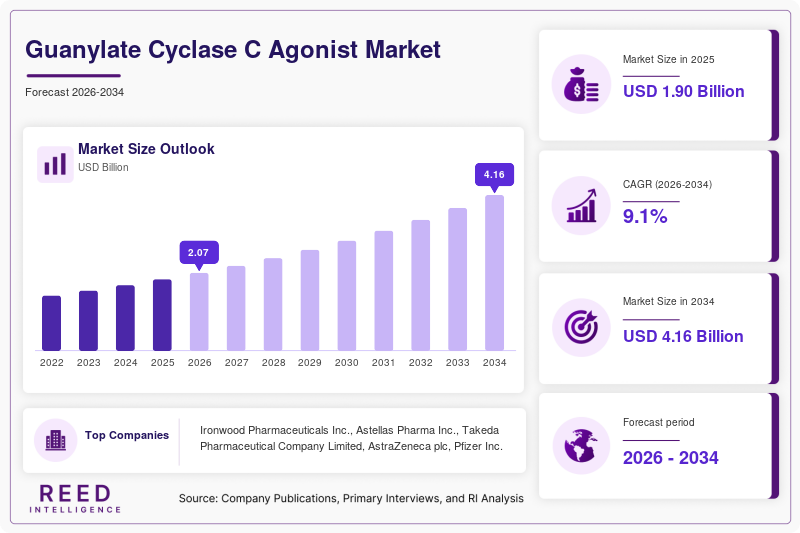
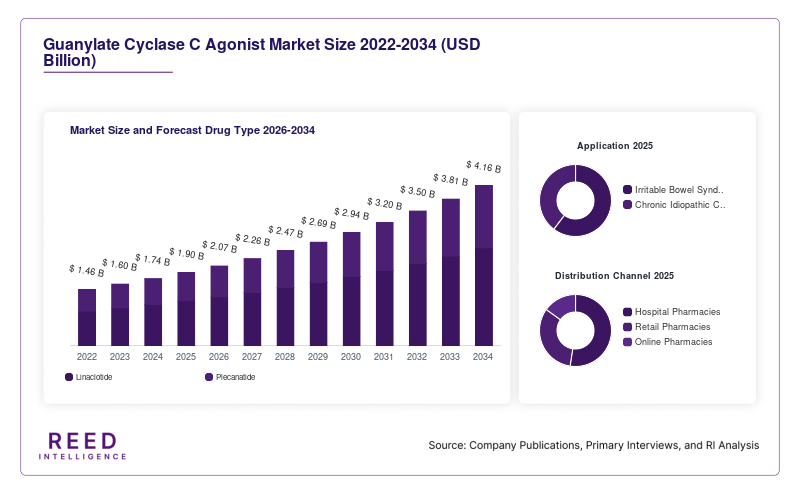
The global Guanylate Cyclase C Agonist Market was valued at approximately USD 1.9 billion in 2026 and is projected to reach USD 3.8 billion by 2034, expanding at a CAGR of 9.1% during 2026–2034. Growth is primarily driven by the rising burden of functional gastrointestinal disorders such as irritable bowel syndrome with constipation and chronic idiopathic constipation. Increasing clinical preference for receptor-targeted therapies that directly regulate intestinal fluid secretion is strengthening demand across both developed and emerging healthcare systems.
A key factor supporting expansion is improved diagnostic awareness of gastrointestinal motility disorders, which has led to higher treatment rates and earlier intervention. The increasing shift from symptomatic laxatives to mechanism-based prescription therapies is further enhancing adoption of Guanylate Cyclase C agonists. Pharmaceutical innovation, expanding clinical indications, and rising healthcare expenditure are collectively shaping market development.
Key Market Insights
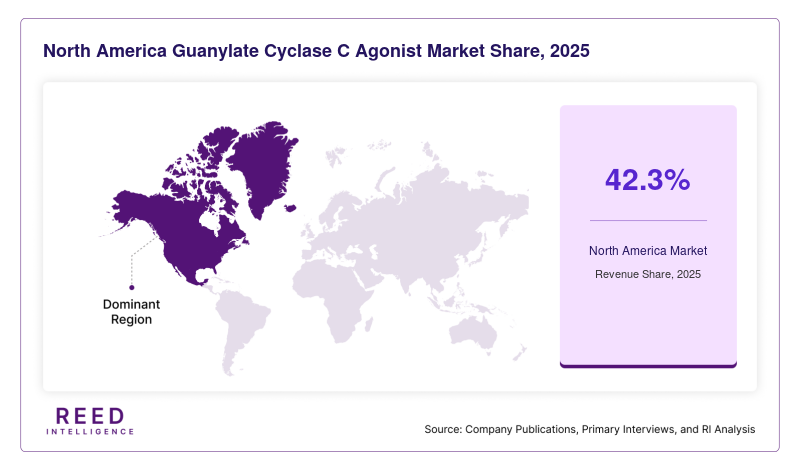
- North America held 42.3% share, while Asia Pacific is expected to grow at 10.8% CAGR
- Linaclotide accounted for 63.5% share, while plecanatide is expanding at 9.8% CAGR
- IBS-C dominated with 55.2% share, while CIC is growing at 9.5% CAGR
- U.S. market size reached USD 720 million in 2024 and USD 780 million in 2025
Market Trends
Expansion of therapeutic applications
The use of Guanylate Cyclase C agonists is expanding beyond traditional gastrointestinal conditions into additional therapeutic areas such as opioid-induced constipation. Ongoing clinical studies are evaluating their effectiveness in broader digestive disorders, which is expected to widen the patient pool and strengthen long-term market penetration.
Shift toward improved patient compliance
Drug manufacturers are increasingly focusing on formulations that improve tolerability and reduce adverse effects. Enhanced dosing convenience and once-daily oral therapies are improving adherence rates. This shift toward patient-friendly treatment approaches is supporting stronger prescription continuity and improving overall therapeutic outcomes.
Market Drivers
Increasing prevalence of digestive disorders
Rising cases of chronic constipation and IBS-related conditions are significantly driving demand for Guanylate Cyclase C agonists. Lifestyle changes, dietary patterns, and stress-related disorders are contributing to a higher global disease burden, increasing reliance on targeted gastrointestinal therapies.
Advancements in pharmaceutical research
Continuous innovation in drug development is improving safety profiles and expanding clinical applications. Pharmaceutical companies are focusing on next-generation molecules and improved formulations, while faster regulatory approvals are accelerating product availability across major markets.
Market Restraints
High treatment cost limiting adoption
The cost of branded therapies remains a major barrier in several regions. Limited reimbursement coverage and affordability challenges in emerging economies restrict patient access. Availability of lower-cost alternatives also impacts prescription volumes, particularly in price-sensitive healthcare systems.
Market Opportunities
Expansion into emerging healthcare systems
Developing regions are witnessing rapid improvements in healthcare infrastructure and diagnostic capabilities. Rising awareness of gastrointestinal health and increasing healthcare spending are expected to create new demand opportunities for advanced prescription therapies.
Development of combination-based therapies
Research into combination treatments involving Guanylate Cyclase C agonists is increasing. These approaches aim to enhance efficacy while minimizing side effects, potentially improving treatment outcomes and expanding clinical use cases in the long term.
Segment Analysis
Drug type segment
Linaclotide held the dominant position in 2025 with 63.5% share due to its strong clinical efficacy and established usage in gastrointestinal disorders. Its widespread prescription across major markets continues to support leadership.
Plecanatide is expected to grow at a faster pace during the forecast period due to improved tolerability and reduced adverse effects. Increasing physician preference for safer therapeutic alternatives is supporting its adoption.
Application segment
IBS-C remained the leading application with 55.2% share in 2025 due to high disease prevalence and strong diagnosis rates. Increasing patient awareness and treatment-seeking behavior further supported dominance.
Chronic idiopathic constipation is expected to grow at a faster rate due to improving diagnostic accuracy and rising awareness of long-term gastrointestinal conditions.
Distribution channel segment
Hospital pharmacies dominated in 2025 with 48.7% share due to high prescription volumes and physician-led treatment decisions. Strong hospital infrastructure supported continued demand.
Online pharmacies are expected to grow rapidly due to digital healthcare adoption, convenience, and expanding e-prescription systems.
End-user segment
Hospitals held the largest share in 2025 with 51.4% due to availability of specialized care and diagnostic capabilities. Strong patient inflow for gastrointestinal disorders supported dominance.
Homecare settings are expected to expand faster due to increasing preference for outpatient care and remote monitoring solutions.
Regional Analysis
North America
North America accounted for 42.3% share in 2025 and is expected to grow steadily during the forecast period. Strong healthcare infrastructure, high diagnosis rates, and widespread adoption of prescription gastrointestinal therapies supported regional dominance. Increasing clinical research activity and strong insurance coverage systems further contributed to market penetration.
The United States led the region due to high IBS-C prevalence and advanced treatment accessibility. Strong pharmaceutical presence and continuous innovation in drug development further strengthened market leadership.
Europe
Europe held 27.6% share in 2025 and is expected to grow at a steady rate through 2034. Growing awareness of gastrointestinal disorders and strong healthcare systems supported regional demand. Increasing focus on early diagnosis and chronic disease management also contributed to adoption of targeted therapies.
Germany remained the leading country due to its strong pharmaceutical research ecosystem and high treatment adoption rates. Advanced healthcare infrastructure supported consistent utilization of prescription-based therapies.
Asia Pacific
Asia Pacific accounted for 18.9% share in 2025 and is projected to register the fastest growth during the forecast period. Rising urbanization, dietary changes, and increasing gastrointestinal disease burden are key growth factors. Expanding healthcare access and rising disposable income levels are also supporting market expansion.
China dominated the region due to its large patient base and increasing healthcare modernization. Government initiatives supporting pharmaceutical production and access to treatment are further strengthening demand.
Middle East & Africa
The region held 6.2% share in 2025 and is expected to grow moderately over the forecast period. Improving healthcare infrastructure and rising awareness of chronic digestive disorders are supporting demand. However, limited access to advanced therapies continues to restrict broader adoption.
Saudi Arabia led the region due to strong healthcare investments and modernization initiatives in medical infrastructure. Growing focus on chronic disease management supported increased therapy adoption.
Latin America
Latin America accounted for 5.0% share in 2025 and is expected to grow steadily. Rising healthcare awareness and gradual improvement in treatment access are supporting regional expansion. Economic development and healthcare reforms are also contributing to increased adoption of prescription therapies.
Brazil remained the dominant country due to its large population base and expanding healthcare system. Increasing investment in healthcare services supported steady growth in therapeutic adoption.
Competitive Landscape
The market is moderately consolidated with key pharmaceutical companies focusing on innovation, clinical expansion, and geographic diversification. Strong emphasis is placed on improving drug safety, expanding indications, and strengthening distribution networks. Leading companies continue to invest in gastrointestinal research and partnership strategies to enhance market presence.
Key Players List
- Ironwood Pharmaceuticals Inc.
- Allergan plc
- Synergy Pharmaceuticals Inc.
- Astellas Pharma Inc.
- Takeda Pharmaceutical Company Limited
- AstraZeneca plc
- Pfizer Inc.
- Johnson & Johnson
- Novartis AG
- Sanofi S.A.
- GlaxoSmithKline plc
- Bayer AG
- Merck & Co. Inc.
- AbbVie Inc.
- Eli Lilly and Company
Recent Developments
- Expansion of gastrointestinal drug pipelines focused on new therapeutic indications
- Regulatory approvals for improved formulations enhancing patient compliance
- Strategic partnerships strengthening regional distribution networks
- Growth in digital pharmacy adoption improving prescription accessibility
- Increased R&D investments supporting next-generation agonist development
Guanylate Cyclase C Agonist Market Segments
Drug Type
- Linaclotide
- Plecanatide
Application
- Irritable Bowel Syndrome with Constipation (IBS-C)
- Chronic Idiopathic Constipation (CIC)
Distribution Channel
- Hospital Pharmacies
- Retail Pharmacies
- Online Pharmacies
End User
- Hospitals
- Clinics
- Homecare Settings
By Region
- North America
- Europe
- APAC
- Middle East and Africa
- LATAM