Guar Hydroxypropyltrimonium Chloride Market Size, Share & Demand Report By Type (Cationic Guar Derivatives, Modified Guar Derivatives), By Application (Hair Care, Skin Care), By End-Use (Personal Care & Cosmetics, Pharmaceutical & Industrial), By Region & Segment Forecasts, 2025–2034
USD 3950
Market Overview
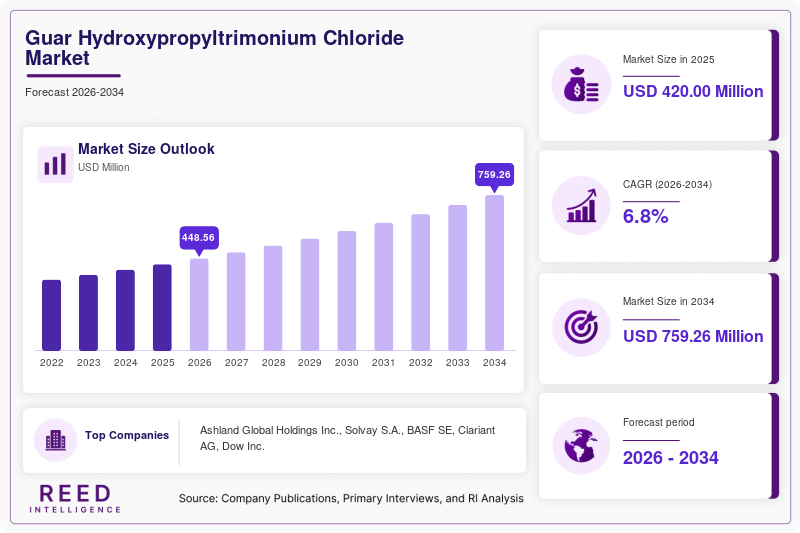
The Guar Hydroxypropyltrimonium Chloride Market size is witnessing steady expansion, driven by the growing demand for conditioning agents in personal care and cosmetic formulations. In 2025, the global market size is estimated at USD 420 million, and it is projected to reach approximately USD 455 million in 2026. Over the forecast period from 2025 to 2034, the market is expected to grow at a CAGR of 6.8%, reaching nearly USD 780 million by 2034. This growth reflects increasing consumer awareness regarding hair and skin care ingredients, along with rising demand for natural and plant-derived additives.
Guar hydroxypropyltrimonium chloride, a cationic derivative of guar gum, is widely used in shampoos, conditioners, and other cosmetic formulations due to its ability to improve hair manageability, reduce static, and enhance softness. The market is benefiting from the shift toward sulfate-free and mild formulations, especially in premium and organic personal care segments. Additionally, regulatory pressure against synthetic polymers has pushed manufacturers to explore bio-based alternatives, further strengthening demand.
Key Highlights
- Market size reached USD 420 million in 2025
- Expected to grow to USD 780 million by 2034
- CAGR of 6.8% during 2025–2034
- Strong demand from personal care and cosmetics sector
- Rising preference for natural and biodegradable ingredients
Market Trends
Rising Demand for Natural and Bio-Based Ingredients
A key trend shaping the Guar Hydroxypropyltrimonium Chloride Market is the increasing preference for natural and plant-derived ingredients in cosmetic formulations. Consumers are becoming more aware of ingredient safety, leading to a shift away from synthetic chemicals toward naturally sourced alternatives. Guar hydroxypropyltrimonium chloride, derived from guar beans, fits well into this trend due to its biodegradable and renewable nature. Manufacturers are actively promoting formulations that are free from parabens, sulfates, and silicones, where this ingredient serves as an effective conditioning agent. This trend is particularly prominent in premium and organic personal care segments.
Expansion of Premium Hair Care Products
Another significant trend is the growth of premium and specialized hair care products. Consumers are increasingly investing in products that offer targeted benefits such as anti-frizz, deep conditioning, and scalp nourishment. Guar hydroxypropyltrimonium chloride is widely used in these formulations due to its superior conditioning properties and compatibility with other ingredients. The rise of salon-quality products and professional hair care solutions has also contributed to demand. Additionally, brands are focusing on product differentiation through advanced formulations, further driving the adoption of multifunctional conditioning agents in the market.
Market Drivers
Growth of the Global Personal Care Industry
The rapid expansion of the global personal care industry is a major driver for the Guar Hydroxypropyltrimonium Chloride Market. Increasing consumer spending on grooming and hygiene products, particularly in developing regions, is fueling demand for high-performance ingredients. The rising influence of social media and beauty trends has also contributed to higher consumption of hair care and skin care products. As manufacturers strive to enhance product performance and appeal, they are incorporating conditioning agents like guar hydroxypropyltrimonium chloride. This ingredient helps improve product texture, stability, and effectiveness, making it a preferred choice among formulators.
Regulatory Push Toward Safer Ingredients
Stringent regulations regarding the use of synthetic chemicals in cosmetics are encouraging the adoption of safer and more sustainable alternatives. Regulatory bodies in various regions are restricting the use of certain polymers and additives due to environmental and health concerns. This has created opportunities for natural derivatives such as guar hydroxypropyltrimonium chloride. Its non-toxic and biodegradable properties make it compliant with regulatory standards, allowing manufacturers to meet both legal requirements and consumer expectations. This shift toward clean-label formulations is expected to continue driving market growth.
Market Restraint
Fluctuations in Raw Material Supply
One of the primary challenges in the Guar Hydroxypropyltrimonium Chloride Market is the volatility in the supply and pricing of raw materials. Guar gum, the base material for this derivative, is primarily sourced from specific regions, making it susceptible to agricultural uncertainties such as weather conditions, crop yields, and geopolitical factors. Fluctuations in guar production can lead to inconsistent pricing, affecting the overall cost structure for manufacturers. This variability can create challenges in maintaining stable supply chains and profit margins.
The impact of this restraint is particularly evident in regions heavily dependent on imports. For example, a poor harvest season in major producing countries can result in supply shortages, leading to increased costs for end-use industries. This may prompt manufacturers to explore alternative conditioning agents, potentially limiting market growth. Additionally, smaller manufacturers may face difficulties in securing long-term contracts for raw materials, further intensifying competition within the industry.
Market Opportunities
Growth in Emerging Markets
Emerging economies present significant growth opportunities for the Guar Hydroxypropyltrimonium Chloride Market. Rapid urbanization, increasing disposable incomes, and changing lifestyle patterns are driving demand for personal care products in these regions. Consumers are becoming more conscious of grooming and hygiene, leading to higher consumption of shampoos, conditioners, and skincare products. This creates a favorable environment for the adoption of advanced conditioning agents. Manufacturers are also expanding their presence in these markets through partnerships and localized production, further boosting growth prospects.
Innovation in Product Formulations
Continuous innovation in cosmetic formulations offers another promising opportunity for market expansion. Companies are investing in research and development to create multifunctional ingredients that provide enhanced performance and compatibility. Guar hydroxypropyltrimonium chloride can be modified to meet specific formulation requirements, making it suitable for a wide range of applications. The development of customized solutions for different hair types and environmental conditions is expected to drive demand. Additionally, the integration of this ingredient into new product categories such as leave-in treatments and styling products is opening new avenues for growth.
Segmental Analysis
By Type
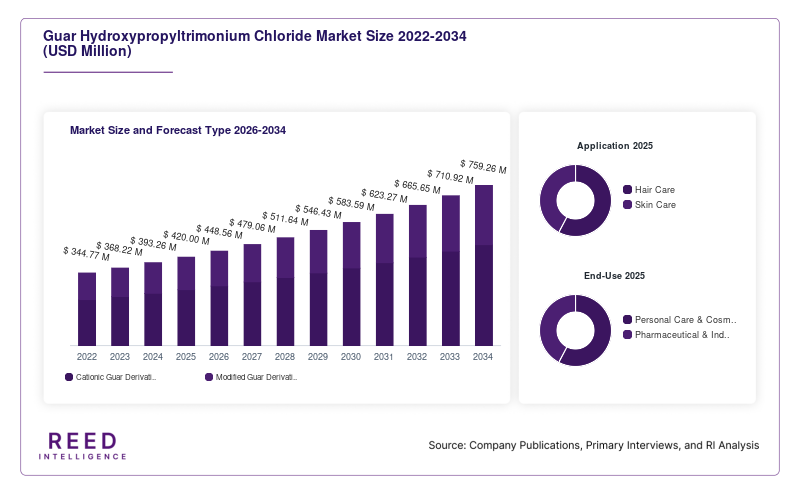
The cationic guar derivative segment dominated the market in 2024, accounting for approximately 68% of the total share. This dominance is attributed to its widespread use in hair care products such as shampoos and conditioners. The ability of cationic guar derivatives to provide superior conditioning, detangling, and anti-static properties makes them highly preferred among manufacturers. Additionally, their compatibility with a wide range of surfactants and other ingredients enhances their applicability in various formulations. The increasing demand for multifunctional ingredients that improve product performance is further driving the growth of this segment.
The modified guar derivatives segment is expected to be the fastest-growing, with a projected CAGR of 7.5% during the forecast period. This growth is driven by ongoing research and development activities aimed at enhancing the functional properties of guar-based ingredients. Manufacturers are focusing on creating customized derivatives that cater to specific formulation requirements, such as improved solubility and stability. The rising demand for innovative and high-performance cosmetic products is expected to support the expansion of this segment.
By Application
The hair care segment held the largest share in 2024, accounting for nearly 72% of the market. Guar hydroxypropyltrimonium chloride is extensively used in shampoos, conditioners, and hair masks due to its excellent conditioning properties. The growing consumer focus on hair health and appearance is driving demand for advanced hair care products. Additionally, the increasing popularity of sulfate-free and mild formulations has boosted the use of natural conditioning agents. The ability of this ingredient to enhance product texture and performance makes it a key component in hair care formulations.
The skin care segment is expected to witness the fastest growth, with a CAGR of 7.2% over the forecast period. This growth is driven by the expanding use of conditioning agents in lotions, creams, and cleansers. Guar hydroxypropyltrimonium chloride helps improve product consistency and provides a smooth feel on the skin. The rising demand for multifunctional skincare products that offer both hydration and conditioning benefits is expected to drive the growth of this segment.
By End-Use
The personal care and cosmetics segment dominated the market in 2024, accounting for approximately 75% of the total share. This segment includes a wide range of products such as shampoos, conditioners, lotions, and creams. The increasing demand for high-quality and performance-driven products is driving the adoption of guar hydroxypropyltrimonium chloride. Manufacturers are focusing on developing innovative formulations that meet consumer expectations for effectiveness and safety.
The pharmaceutical and industrial segment is projected to be the fastest-growing, with a CAGR of 6.9%. This growth is driven by the expanding use of guar derivatives in various applications, including drug delivery systems and industrial formulations. The unique properties of guar hydroxypropyltrimonium chloride, such as its ability to improve viscosity and stability, make it suitable for diverse applications. The increasing focus on research and development is expected to further support the growth of this segment.
Regional Analysis
North America
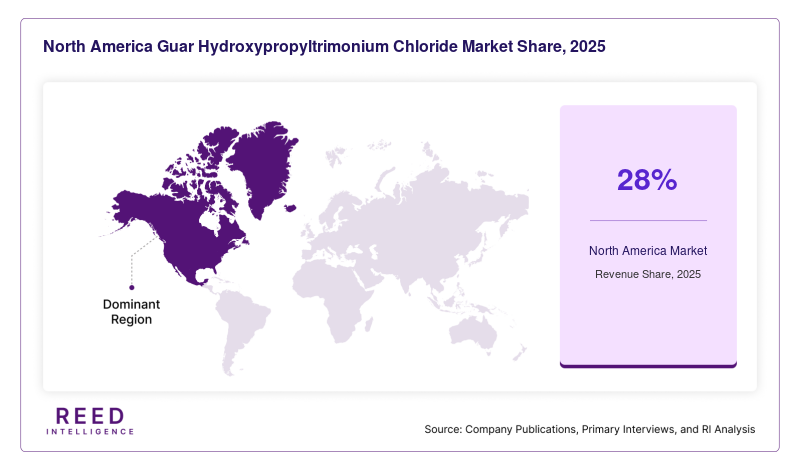
North America accounted for a significant share of the Guar Hydroxypropyltrimonium Chloride Market in 2025, contributing approximately 28% of the global revenue. The region is expected to maintain steady growth with a CAGR of around 5.9% during the forecast period. The presence of established personal care brands and a high level of consumer awareness regarding product ingredients are key factors supporting market growth. Demand for premium and organic hair care products continues to rise across the region.
The United States dominates the regional market, driven by strong demand for clean-label and sulfate-free formulations. A unique growth factor in this region is the increasing adoption of sustainable packaging and eco-friendly ingredients. Consumers are actively seeking products that align with environmental values, encouraging manufacturers to incorporate biodegradable conditioning agents like guar hydroxypropyltrimonium chloride.
Europe
Europe held around 24% of the global market share in 2025 and is projected to grow at a CAGR of 5.7% through 2034. The region’s growth is influenced by stringent regulations governing cosmetic ingredients and a strong emphasis on sustainability. European consumers prioritize product safety and environmental impact, which has led to increased adoption of natural and plant-based ingredients in personal care formulations.
Germany is a leading market within Europe, supported by its well-established cosmetic industry and focus on innovation. A unique growth factor in this region is the strong regulatory framework that encourages the use of biodegradable ingredients. This has created a favorable environment for guar hydroxypropyltrimonium chloride, as manufacturers aim to comply with environmental standards while maintaining product performance.
Asia Pacific
Asia Pacific is the largest and fastest-growing region, accounting for approximately 32% of the global market in 2025 and expected to grow at a CAGR of 7.8%. The region’s growth is driven by a rapidly expanding population, increasing disposable incomes, and rising demand for personal care products. Countries such as China and India are major contributors to market expansion.
India stands out as a dominant country due to its strong agricultural base and availability of guar gum. A unique growth factor in this region is the integration of traditional and modern formulations in personal care products. Consumers are increasingly seeking products that combine natural ingredients with advanced performance, boosting demand for guar-derived conditioning agents.
Middle East & Africa
The Middle East & Africa region accounted for around 8% of the global market share in 2025 and is projected to grow at a CAGR of 6.2%. The market is supported by increasing urbanization and rising awareness of personal grooming. The demand for hair care products is particularly strong due to climatic conditions that require specialized formulations.
The United Arab Emirates is a key market in this region, driven by a high concentration of premium beauty brands. A unique growth factor is the growing influence of international beauty trends and the expansion of retail channels. This has led to increased demand for high-performance ingredients in cosmetic formulations.
Latin America
Latin America held approximately 8% of the global market share in 2025 and is expected to grow at a CAGR of 6.0%. The region is experiencing steady growth due to rising consumer spending on personal care products and increasing awareness of product ingredients. The market is also supported by the expansion of local manufacturing capabilities.
Brazil is the dominant country in this region, driven by a strong beauty and personal care industry. A unique growth factor is the high demand for hair care products tailored to diverse hair types. This has encouraged manufacturers to develop specialized formulations, increasing the use of conditioning agents like guar hydroxypropyltrimonium chloride.
Competitive Landscape
The Guar Hydroxypropyltrimonium Chloride Market is moderately fragmented, with several key players operating at both global and regional levels. Companies are focusing on product innovation, strategic partnerships, and expansion of production capacities to strengthen their market position. The competitive landscape is characterized by a mix of established chemical manufacturers and specialized ingredient suppliers.
Ashland Global Holdings Inc. is considered a leading player in the market, known for its strong portfolio of personal care ingredients. The company has recently invested in expanding its production facilities to meet growing demand. Other major players are also focusing on sustainable sourcing and eco-friendly production processes to align with market trends. Continuous research and development efforts are helping companies introduce advanced formulations and maintain a competitive edge.
Key Players
- Ashland Global Holdings Inc.
- Solvay S.A.
- BASF SE
- Clariant AG
- Dow Inc.
- Lubrizol Corporation
- Croda International Plc
- Evonik Industries AG
- Galaxy Surfactants Ltd.
- Vikas WSP Ltd.
- Rama Gum Industries
- Alzo International Inc.
- Kao Corporation
- Innospec Inc.
- Stepan Company
Recent Developments
- A leading manufacturer expanded its production capacity in Asia to meet rising demand for natural conditioning agents.
- A major company introduced a new grade of guar hydroxypropyltrimonium chloride with enhanced solubility for premium formulations.
- Several players have formed strategic partnerships with raw material suppliers to ensure stable guar gum sourcing and pricing stability.
Guar Hydroxypropyltrimonium Chloride Market Segments
Type
- Cationic Guar Derivatives
- Modified Guar Derivatives
Application
- Hair Care
- Skin Care
End-Use
- Personal Care & Cosmetics
- Pharmaceutical & Industrial
By Region
- North America
- Europe
- APAC
- Middle East and Africa
- LATAM