Gynecomastia Treatment Market Size, Share Demand Report By Treatment Type (Surgical, Non-Surgical), By End-Use (Hospitals, Cosmetic Clinics, Ambulatory Surgical Centers), By Patient Age Group (Adolescents, Adults, Elderly) By Region & Segment Forecasts, 2025–2034
USD 3950
Market Overview
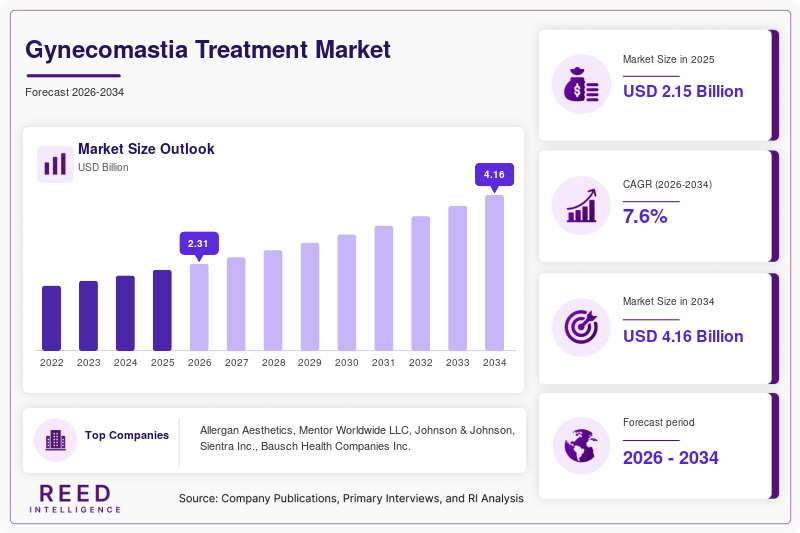
The Gynecomastia Treatment Market size was estimated at USD 2.15 billion in 2025 and is projected to reach approximately USD 2.32 billion in 2026. Over the forecast period, the market is expected to grow at a CAGR of 7.6% from 2025 to 2034, reaching a valuation of nearly USD 4.05 billion by 2034. This growth trajectory reflects a combination of medical necessity and cosmetic demand, particularly among younger and middle-aged male populations.
One of the primary growth factors is the increasing prevalence of hormonal imbalances, obesity, and lifestyle-related conditions that contribute to gynecomastia. Rising obesity rates globally have significantly increased the incidence of pseudo-gynecomastia, which often requires medical or surgical intervention. Additionally, advancements in surgical technologies such as liposuction-assisted mastectomy and laser-based procedures are improving treatment outcomes, thereby encouraging adoption.
Key Highlights
- Market size is projected to reach USD 4.05 billion by 2034, indicating steady expansion across medical and cosmetic treatment segments.
This growth reflects increasing patient awareness and improved accessibility to advanced treatment options globally. - The market is expected to grow at a CAGR of 7.6% during the forecast period (2025–2034), driven by consistent demand.
Stable growth trends across developed and emerging economies are supporting long-term market expansion. - Rising obesity levels and hormonal disorders are significantly driving demand for gynecomastia treatment worldwide.
These conditions are increasing diagnosis rates and expanding the overall patient pool requiring intervention. - Increasing acceptance of male cosmetic procedures is contributing to higher treatment adoption rates.
Shifting social norms and growing focus on physical appearance are encouraging more men to seek medical solutions.
Market Trends
Rising Preference for Minimally Invasive Procedures
The Gynecomastia Treatment Market is experiencing a clear shift toward minimally invasive and non-invasive treatment methods. Patients increasingly prefer procedures such as laser-assisted lipolysis and ultrasound-based fat reduction due to reduced recovery time, minimal scarring, and lower procedural risks. These methods are gaining traction among working professionals who seek quick recovery and minimal disruption to daily routines. Additionally, advancements in anesthesia and surgical precision tools are improving safety profiles, making these procedures more accessible to a wider patient demographic. Clinics are also promoting same-day discharge procedures, which further enhances patient convenience and satisfaction, contributing to sustained market growth.
Growing Integration of Telemedicine and Digital Consultations
Digital transformation in healthcare is influencing the gynecomastia treatment ecosystem. Teleconsultations are increasingly used for initial diagnosis, follow-up assessments, and treatment planning. This trend is particularly prominent in urban areas where patients prefer discreet consultations for sensitive conditions. Digital platforms also enable surgeons to provide personalized treatment plans using imaging tools and AI-based simulations. This improves patient confidence and decision-making. Moreover, online awareness campaigns and social media influence are playing a role in educating potential patients about treatment options, risks, and outcomes, thereby driving higher engagement and conversion rates.
Market Drivers
Increasing Prevalence of Obesity and Hormonal Imbalances
The rising incidence of obesity is a major driver for the Gynecomastia Treatment Market. Excess fat accumulation in the chest area often leads to pseudo-gynecomastia, prompting individuals to seek medical or surgical intervention. Additionally, hormonal imbalances caused by aging, medication use, or underlying health conditions are contributing to the development of true gynecomastia. The growing awareness of these conditions is encouraging early diagnosis and treatment. Healthcare providers are also offering comprehensive treatment packages that include lifestyle management and surgical options, further supporting market growth. The increasing focus on preventive healthcare is expected to sustain demand over the forecast period.
Growing Demand for Male Aesthetic Procedures
The acceptance of cosmetic procedures among men has grown significantly over the past decade. Changing societal norms and increased focus on physical appearance are encouraging men to seek treatments for body contouring and aesthetic enhancement. Gynecomastia treatment is one of the most commonly performed procedures in male cosmetic surgery. Clinics are tailoring their services to male patients, offering customized treatment plans and privacy-focused care. Marketing campaigns targeting male consumers are also contributing to increased awareness. This shift in consumer behavior is expected to drive consistent growth in the market, especially in urban and developed regions.
Market Restraint
High Cost of Surgical Procedures and Limited Insurance Coverage
One of the primary restraints in the Gynecomastia Treatment Market is the high cost associated with surgical procedures. Treatments such as liposuction and gland excision can be expensive, especially in developed regions where healthcare costs are high. Additionally, gynecomastia is often classified as a cosmetic condition rather than a medical necessity, leading to limited or no insurance coverage. This creates a financial barrier for many patients, particularly in low- and middle-income countries. The lack of reimbursement policies discourages individuals from seeking timely treatment, resulting in delayed interventions and reduced market penetration. Furthermore, the cost disparity between surgical and non-surgical options can lead to inconsistent treatment outcomes, impacting patient satisfaction and overall market growth.
Market Opportunities
Expansion in Emerging Markets
Emerging economies present significant growth opportunities for the Gynecomastia Treatment Market. Rapid urbanization, increasing disposable income, and improving healthcare infrastructure are enabling greater access to cosmetic and medical treatments. Countries in Asia Pacific and Latin America are witnessing a rise in specialized clinics offering affordable procedures. Medical tourism is also playing a crucial role, as patients from developed regions travel to these countries for cost-effective treatments. Governments are investing in healthcare modernization, which is expected to further support market expansion. The growing awareness of male health and aesthetics in these regions is likely to drive long-term demand.
Development of Non-Surgical and Pharmacological Treatments
The development of non-surgical treatment options represents a promising opportunity in the market. Pharmaceutical companies are focusing on hormone-regulating drugs and selective estrogen receptor modulators to treat gynecomastia without surgery. These treatments are particularly appealing to patients who prefer non-invasive options or are not suitable candidates for surgery. Ongoing research and clinical trials are expected to introduce more effective and targeted therapies. Additionally, combination treatments that integrate medication with lifestyle interventions are gaining popularity. This diversification of treatment options is expected to attract a broader patient base and enhance market growth.
Segmental Analysis
By Treatment Type
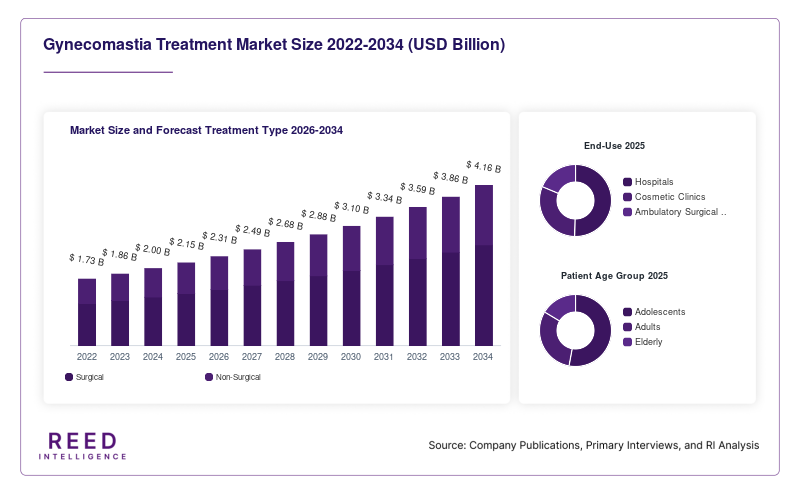
The surgical treatment segment dominated the Gynecomastia Treatment Market in 2024, accounting for approximately 62% of the total share. Procedures such as liposuction and gland excision are widely preferred due to their effectiveness in providing permanent results. The availability of advanced surgical techniques and experienced surgeons has further strengthened this segment. Patients with severe gynecomastia often opt for surgical solutions, as non-surgical methods may not provide adequate results. Additionally, clinics are offering customized surgical packages, which include pre- and post-operative care, enhancing patient satisfaction.
The non-surgical segment is expected to be the fastest-growing, with a CAGR of 8.3% during the forecast period. This growth is driven by increasing demand for less invasive options and advancements in pharmacological treatments. Hormone therapy and fat reduction techniques are gaining popularity among patients seeking alternatives to surgery. The convenience and lower cost of non-surgical treatments are also contributing to their growing adoption.
By End-Use
Hospitals held the largest share of the market in 2024, accounting for around 48%. These facilities offer comprehensive treatment options, including advanced surgical procedures and post-operative care. The presence of skilled healthcare professionals and access to advanced equipment make hospitals the preferred choice for patients undergoing gynecomastia treatment.
Cosmetic clinics are expected to be the fastest-growing segment, with a CAGR of 8.7%. These clinics specialize in aesthetic procedures and offer personalized treatment plans. The increasing number of specialized clinics and their focus on patient experience are driving growth. Additionally, shorter waiting times and competitive pricing are attracting more patients to these facilities.
By Patient Age Group
The adult segment dominated the market in 2024, accounting for approximately 55% of the total share. Adults are more likely to seek treatment due to lifestyle factors and increased awareness. This segment benefits from higher disposable income and greater acceptance of cosmetic procedures.
The adolescent segment is expected to grow at the fastest rate, with a CAGR of 7.9%. Increasing awareness among parents and early diagnosis are driving demand in this segment. Pediatric specialists are also recommending early intervention in severe cases, contributing to market growth.
Regional Analysis
North America
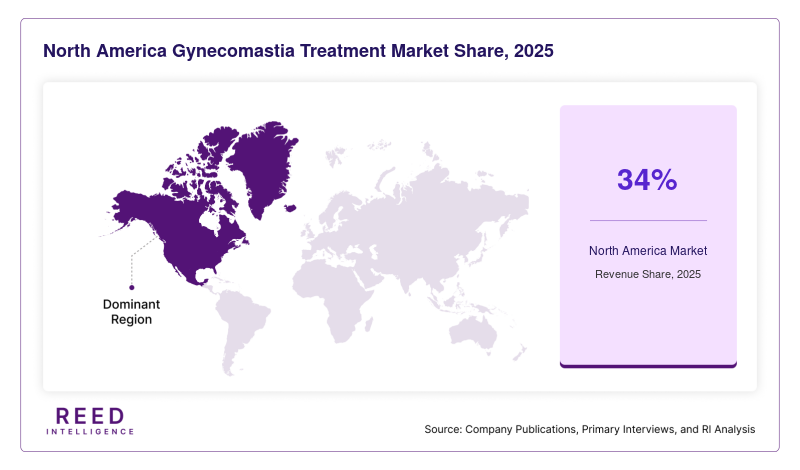
North America accounted for the largest share of the Gynecomastia Treatment Market in 2025, holding approximately 34% of the global market. The region is expected to grow at a CAGR of 7.2% during the forecast period. High awareness levels, advanced healthcare infrastructure, and the presence of experienced cosmetic surgeons are key factors supporting market growth. The demand for minimally invasive procedures is particularly strong in this region.
The United States dominates the regional market due to its well-established cosmetic surgery industry. A unique growth factor is the high adoption of advanced surgical technologies and personalized treatment approaches. Patients in the country are more willing to invest in aesthetic procedures, which further drives market expansion.
Europe
Europe held a significant market share of around 26% in 2025 and is projected to grow at a CAGR of 6.9% through 2034. The region benefits from a strong healthcare system and increasing acceptance of male cosmetic procedures. Regulatory support and standardized treatment protocols are also contributing to market stability.
Germany leads the European market, driven by its advanced medical infrastructure and growing demand for aesthetic treatments. A unique growth factor is the increasing focus on medical tourism within the region, attracting patients from neighboring countries seeking high-quality procedures.
Asia Pacific
Asia Pacific is expected to witness the fastest growth, with a CAGR of 8.5% during the forecast period. The region accounted for approximately 22% of the market in 2025. Rapid urbanization, rising disposable income, and growing awareness are key factors driving demand.
India dominates the regional market due to its cost-effective treatment options and expanding network of cosmetic clinics. A unique growth factor is the increasing popularity of medical tourism, attracting international patients seeking affordable gynecomastia treatments.
Middle East & Africa
The Middle East & Africa region held a market share of around 10% in 2025 and is expected to grow at a CAGR of 6.5%. Increasing healthcare investments and rising awareness of aesthetic procedures are supporting market growth.
The UAE is the dominant country in this region, driven by its advanced healthcare facilities and growing medical tourism sector. A unique growth factor is the strong presence of international cosmetic surgery clinics offering specialized treatments.
Latin America
Latin America accounted for approximately 8% of the market in 2025 and is projected to grow at a CAGR of 7.1%. The region is witnessing increasing demand for cosmetic procedures due to changing lifestyle patterns and rising awareness.
Brazil leads the market in this region, supported by its well-established cosmetic surgery industry. A unique growth factor is the cultural acceptance of aesthetic procedures, which encourages higher adoption rates among the male population.
Competitive Landscape
The Gynecomastia Treatment Market is moderately fragmented, with several global and regional players competing based on technology, pricing, and service quality. Leading companies are focusing on expanding their product portfolios and enhancing treatment outcomes through innovation. Strategic collaborations, mergers, and acquisitions are common strategies adopted by market players to strengthen their market position.
Allergan Aesthetics is considered a leading player in the market due to its strong presence in the aesthetic medicine segment. The company has recently introduced advanced body contouring solutions that complement gynecomastia treatments. Other companies are investing in research and development to introduce non-invasive treatment options. The competitive landscape is also influenced by the growing number of specialized cosmetic clinics, which are offering customized treatment packages to attract patients.
Key Players List
- Allergan Aesthetics
- Mentor Worldwide LLC
- Johnson & Johnson
- Sientra Inc.
- Bausch Health Companies Inc.
- Cutera Inc.
- Cynosure LLC
- Alma Lasers
- Lumenis Ltd.
- Solta Medical
- Syneron Medical Ltd.
- Venus Concept
- Merz Pharma
- Galderma S.A.
- AbbVie Inc.
Recent Developments
- Allergan Aesthetics launched a new body contouring system aimed at improving surgical outcomes in gynecomastia procedures.
- Cynosure introduced an advanced laser-based fat reduction technology for non-invasive treatment.
- Alma Lasers expanded its product portfolio with a new ultrasound-based device targeting male chest fat reduction.
Gynecomastia Treatment Market Segments
Treatment Type
- Surgical
- Non-Surgical
End-Use
- Hospitals
- Cosmetic Clinics
- Ambulatory Surgical Centers
Patient Age Group
- Adolescents
- Adults
- Elderly
By Region
- North America
- Europe
- APAC
- Middle East and Africa
- LATAM