Halitosis Treatment Industry Market Size, Share & Trends Analysis Report By Type (Pathological Halitosis, Physiological Halitosis), By Diagnostic Tests (Halimeter, Gas Chromatography, BANA Test, β-Galactosidase Activity Assay), By Distribution Channel (Hospital Pharmacy, Online Pharmacy, Retail Pharmacy), By End User (Hospitals, Homecare, Specialty Centers) Forecasts 2026–2034
USD 3950
Halitosis Treatment Industry Market Size
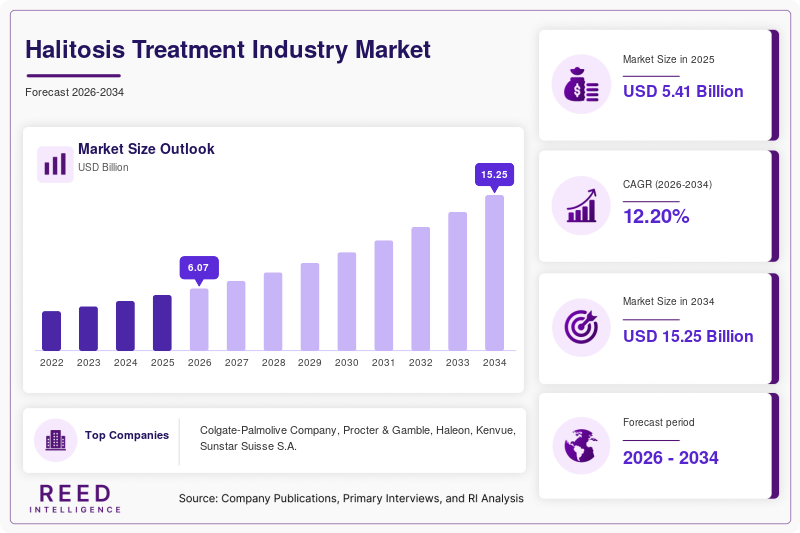
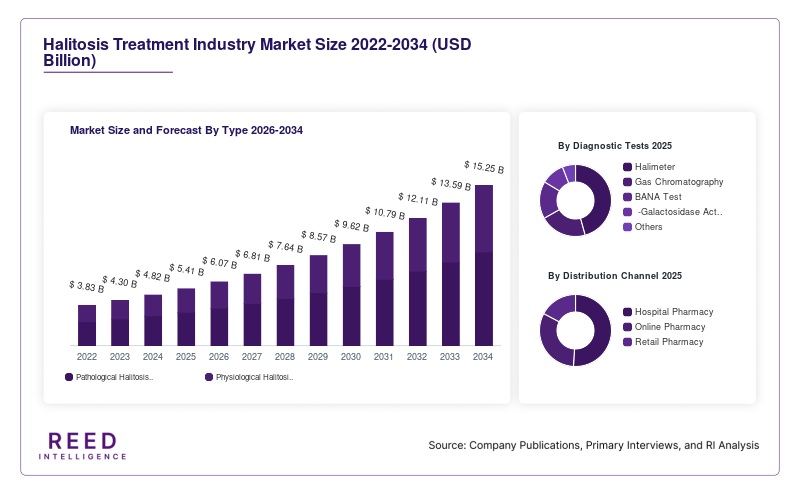
The global halitosis treatment industry market size was valued at USD 5.41 billion in 2025 and is projected to grow from USD 6.07 billion in 2026 to USD 15.25 billion by 2034, registering a CAGR of 12.20% during the forecast period from 2026 to 2034.
Halitosis treatment encompasses consumer oral-care products, diagnostic technologies and professional interventions used to identify, reduce or manage persistent oral malodor. The market includes mouthwashes, toothpaste, oral hygiene products, professional periodontal treatment and diagnostic systems such as gas chromatography and volatile-sulfur-compound monitors. The commercial opportunity therefore extends beyond breath-freshening products into condition-specific oral healthcare.
Clinical evidence increasingly favors treatment approaches that address the mechanism producing malodor. Most halitosis cases are associated with intraoral factors, particularly tongue coating, periodontal disease and poor oral hygiene. Bacterial degradation of sulfur-containing amino acids produces volatile sulfur compounds, including hydrogen sulfide and methyl mercaptan. This mechanism supports demand for formulations and professional treatments that reduce odor-producing microorganisms or neutralize the resulting compounds rather than merely masking odor.
Halitosis Treatment Industry Market Drivers
Rising Oral Health Awareness and Halitosis Recognition
Greater awareness of oral health is increasing attention toward conditions that previously received limited clinical consideration. Halitosis can affect social interaction, perceived personal hygiene and quality of life, encouraging consumers to search for dedicated products and professional evaluation. Digital health information and oral-care education are also reducing the informational barrier around identifying persistent bad breath as a potentially treatable condition.
The broader oral-health burden reinforces this demand. WHO reports that oral diseases remain among the most prevalent noncommunicable diseases globally, with prevention and treatment access still uneven across countries. Increased awareness therefore has two effects on the halitosis treatment industry market it expands consumer demand for everyday preventive products while also increasing referrals for professional diagnosis when conventional breath-freshening products provide insufficient relief.
Expansion of Specialized Oral-Care Formulations
Formulation development is shifting the market from simple odor masking toward products targeting bacteria and volatile sulfur compounds. Zinc compounds, cetylpyridinium chloride, chlorhexidine and oxidizing agents have been investigated for their ability to reduce or neutralize compounds associated with oral malodor. Clinical reviews indicate that active-ingredient mouthwashes can reduce oral-malodor measurements, although the strength and duration of evidence vary among formulations.
This mechanism creates room for premium products positioned around specific functional benefits such as longer-lasting freshness, antimicrobial activity, gum health and sensitivity management. Recent product innovation also shows that sensory characteristics influence adherence: Kenvue's 2026 LISTERINE launch introduced multiple mouthwash intensity levels, including an alcohol-free Extra Mild formulation, explicitly targeting consumers seeking a milder experience.
Increasing Access to Diagnosis and Professional Oral Care
Persistent halitosis increasingly intersects with dental diagnosis because the underlying condition can involve periodontal pockets, tongue coating, dental infection, xerostomia or other oral abnormalities. The 2026 clinical guideline identifies organoleptic assessment, gas chromatography and sulfide monitoring among diagnostic approaches and recommends tailoring treatment according to the underlying cause.
This expands the addressable market beyond consumer products. Dental practices, hospitals and specialty centers can combine diagnostic assessment with scaling, periodontal treatment, oral-hygiene instruction and take-home products. The commercial mechanism is therefore a broader treatment pathway in which professional diagnosis can generate demand for both clinical services and recurring consumer oral-care products.
Halitosis Treatment Industry Market Restraints
Limited Efficacy of Symptom-Masking Products
A major limitation is the difference between temporary freshness and treatment of the underlying cause. Some mouthwashes, gums and sprays can reduce perceived odor for a limited period without resolving periodontal disease, tongue coating, dental infection or other causative conditions. Clinical reviews consequently distinguish odor masking from interventions that reduce microbial activity or volatile sulfur compounds.
This creates a performance challenge for manufacturers because consumers may discontinue products when perceived benefits do not persist. It also increases the importance of claims substantiation, ingredient selection and professional recommendation. Products that cannot demonstrate sustained or clinically meaningful improvement face greater substitution pressure within an increasingly differentiated oral-care category.
Multifactorial Etiology and Diagnostic Complexity
Halitosis does not have a single cause, making standardized treatment difficult. Current clinical guidance identifies both intraoral and extraoral sources and emphasizes that treatment should follow etiological diagnosis. Consequently, a consumer product designed for routine oral malodor may not address breath odor caused by a systemic or respiratory condition.
Diagnostic accessibility also varies considerably between markets. Sophisticated techniques such as gas chromatography can provide detailed analysis of volatile compounds, while simpler approaches are more accessible in routine dental settings. This creates a trade-off between diagnostic precision, cost and availability and can limit adoption of advanced halitosis-management pathways in lower-resource markets.
Opportunities
Oral Microbiome and Probiotic-Based Solutions
The oral microbiome represents an emerging area for product development because volatile sulfur compounds are produced through microbial metabolism. Research is increasingly examining whether selected probiotic strains can alter microbial communities associated with malodor. A 2025 systematic review of randomized controlled trials identified probiotics as a developing therapeutic approach, while also indicating that the evidence base remains an active research area.
Commercial opportunities include probiotic lozenges, toothpaste, mouthrinses and combination products that integrate microbial modulation with conventional oral hygiene. The opportunity is strongest where manufacturers can connect microbiome claims with measurable clinical outcomes rather than relying solely on consumer perceptions of freshness.
Digital Diagnostics and Personalized Oral Care
Portable breath-analysis technologies and digitally enabled dental workflows can increase the market's diagnostic reach. The 2026 clinical guideline identifies AI-based olfaction and advanced diagnostic approaches among emerging developments alongside established organoleptic assessment, gas chromatography and sulfide monitoring.
Personalization is also becoming relevant at the consumer-product level. Kenvue's 2026 LISTERINE launch illustrates how formulation intensity and sensory preferences can be incorporated into product architecture. Similar personalization could extend to products selected according to dry mouth, periodontal conditions, microbial profiles or diagnostic measurements, creating a bridge between consumer oral care and professional treatment.
Segmental Analysis
By Type
Pathological halitosis is the dominant type segment. It covers malodor associated with identifiable oral or systemic conditions, including periodontal disease, dental infections, xerostomia and certain respiratory or metabolic conditions. Its clinical relevance supports demand for diagnostic assessment and targeted treatment rather than temporary odor masking.
Physiological halitosis generally involves transient or non-disease-related causes and is more closely associated with routine oral hygiene, diet and temporary changes in oral conditions. Its treatment pathway is therefore more heavily oriented toward everyday oral-care products, while pathological cases can generate demand across diagnostic, professional and therapeutic categories.
By Diagnostic Tests
Gas chromatography holds the dominant position among diagnostic-test segments. It can identify specific volatile compounds associated with oral malodor and therefore provides detailed information for treatment planning. Halimeters remain important because they provide more accessible measurement of volatile sulfur compounds in clinical environments.
BANA testing and β-galactosidase activity assays provide additional approaches for identifying microbial or enzymatic indicators associated with malodor. Emerging diagnostics, including microbiome analysis and sensor-based technologies, create a pathway toward more precise classification of halitosis causes.
By Distribution Channel
Retail pharmacies represent the dominant distribution channel. Their advantage is immediate access to over-the-counter mouthwashes, toothpaste and other oral-hygiene products, allowing consumers to address bad breath without an initial clinical appointment. This channel also supports repeat purchasing and broad product visibility.
Online pharmacies are expanding the range of products accessible to consumers and provide greater convenience, product comparison and information access. Hospital pharmacies remain more closely connected with severe or professionally managed cases where diagnosis and treatment occur within healthcare institutions.
By End User
Hospitals are the dominant end-user segment in the source market structure because they provide access to advanced diagnostic equipment, professional treatment and management of cases associated with more complex conditions. Specialty centers provide another focused treatment environment for patients requiring dedicated halitosis assessment.
Homecare remains commercially important because much of halitosis management involves recurring oral-hygiene practices. Mouthwash, toothpaste, tongue-cleaning products and other daily-use solutions can generate repeat demand even when the initial condition has been clinically evaluated.
Halitosis Treatment Industry Market Regional Analysis
North America Halitosis Treatment Industry Market
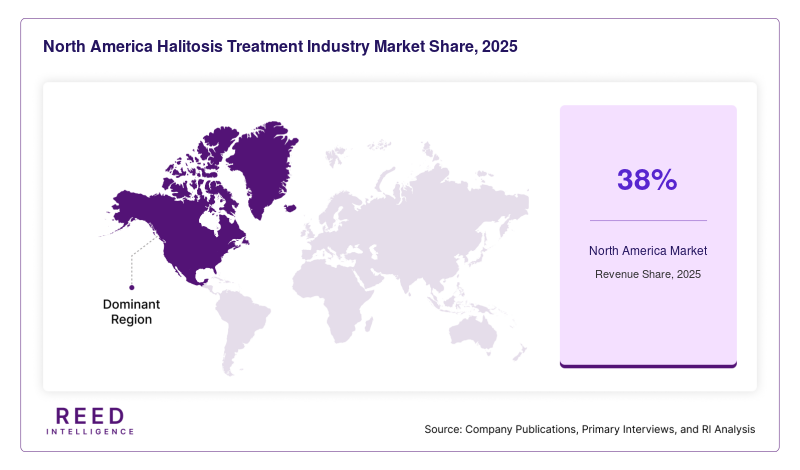
North America is the dominant regional market, accounting for 38% of global halitosis treatment industry market share in 2025. The region benefits from high oral-health awareness, developed dental infrastructure, established oral-care brands and comparatively strong access to professional diagnosis. Portable breath-analysis technologies and specialized oral-care products further support market development.
The United States represents the principal regional demand center, supported by extensive dental networks and strong consumer participation in preventive oral care. Product innovation is increasingly focused on personalization and adherence; Kenvue's 2026 LISTERINE intensity range demonstrates how manufacturers are adapting mouthwash formulations to different sensory preferences.
Europe Halitosis Treatment Industry Market
Europe has an established dental-care ecosystem and relatively high consumer awareness of preventive oral hygiene. The United Kingdom, Germany, France and other Western European markets support demand for specialized mouthwashes, toothpaste and professional treatment. The region's mature oral-care infrastructure also creates opportunities for clinically differentiated formulations.
Demand is influenced by preventive dentistry, consumer interest in natural and specialized formulations and the increasing integration of oral health into broader health discussions. Product manufacturers face a comparatively mature market, making differentiation through efficacy, ingredients, sustainability and consumer experience important commercial factors.
Asia Pacific Halitosis Treatment Industry Market
Asia Pacific is identified as the fastest-growing regional market. China, India and Japan represent important demand centers, while increasing disposable income, urbanization and oral-health awareness are expanding access to specialized products and professional services.
India and China provide particularly important expansion opportunities because large populations combine growing consumer-health expenditure with uneven historical access to dental services. Haleon reported strong 2026 Oral Health momentum in APAC and highlighted India and China as investment markets, including new oral-health manufacturing capacity in both countries.
Latin America Halitosis Treatment Industry Market
Latin America is supported by increasing awareness of preventive oral care and broader availability of consumer healthcare products. Brazil and Mexico are key markets because of their population scale, developing retail infrastructure and expanding access to oral-care products.
The regional market remains sensitive to affordability and distribution reach. Manufacturers that offer smaller pack sizes, accessible pricing and retail availability can broaden adoption among consumers who may not regularly access professional dental services.
Middle East & Africa Halitosis Treatment Industry Market
The Middle East & Africa market is supported by urbanization, rising healthcare awareness and expansion of modern retail and professional healthcare infrastructure. Gulf markets provide relatively strong purchasing power and access to premium oral-care products, while South Africa represents an established market for consumer oral-health products.
The principal commercial challenge is uneven access to dental services and differences in healthcare infrastructure across countries. This increases the relevance of affordable consumer products, pharmacy distribution and awareness campaigns while creating longer-term demand for professional diagnostic and treatment services.
Halitosis Treatment Industry Market Competitive Landscape
The competitive environment combines large multinational oral-care companies with specialized halitosis brands and dental-treatment providers. Colgate-Palmolive competes through its broad oral-care portfolio, global distribution network, professional relationships and continued investment in oral-health education. Its portfolio spans toothpaste, mouthwash and other oral-care products, allowing halitosis-related needs to be addressed within broader daily oral-hygiene routines.
Kenvue, through LISTERINE, competes strongly in therapeutic and cosmetic mouthwash. Its 2026 product-intensity launch illustrates a strategy centered on consumer personalization, product-format differentiation and increasing routine adherence. The launch introduced Extra Mild, Mild and Intense options, with Extra Mild positioned as alcohol-free and designed for consumers seeking a gentler sensory experience.
Key Market Players
- Colgate-Palmolive Company
- Procter & Gamble
- Haleon
- Kenvue
- Sunstar Suisse S.A.
- Church & Dwight Co., Inc.
- Lion Corporation
- TheraBreath
Recent Market Developments
- June 2026 - Kenvue: LISTERINE launched a new range of mouthwash intensities, including Extra Mild, Mild and Intense variants. The initiative focused on personalization and reducing sensory barriers to regular mouthwash use.
- June 2026 - Haleon: Haleon announced a £175 million investment in a new oral-health manufacturing facility in Madhya Pradesh, India, alongside expanded rural distribution. The investment is intended to increase local manufacturing capacity and access to oral-health products.
Halitosis Treatment Industry Market Segments
By Type
- Pathological Halitosis
- Physiological Halitosis
By Diagnostic Tests
- Halimeter
- Gas Chromatography
- BANA Test
- β-Galactosidase Activity Assay
- Others
By Distribution Channel
- Hospital Pharmacy
- Online Pharmacy
- Retail Pharmacy
By Region
- North America
- Europe
- APAC
- Middle East and Africa
- LATAM