Helicopter Ice Protection System Market Size, Share & Demand Report By System Type (Electrothermal Ice Protection Systems, Pneumatic Ice Protection Systems, Bleed Air Ice Protection Systems, Hybrid Ice Protection Systems), By Application (Military Helicopters, Commercial Helicopters, Emergency Medical Service Helicopters, Offshore Utility Helicopters, Search and Rescue Helicopters), By Component (Sensors and Controllers, Heating Elements, Windshield Protection Systems, Smart Monitoring Software,
USD 3950
Market Overview
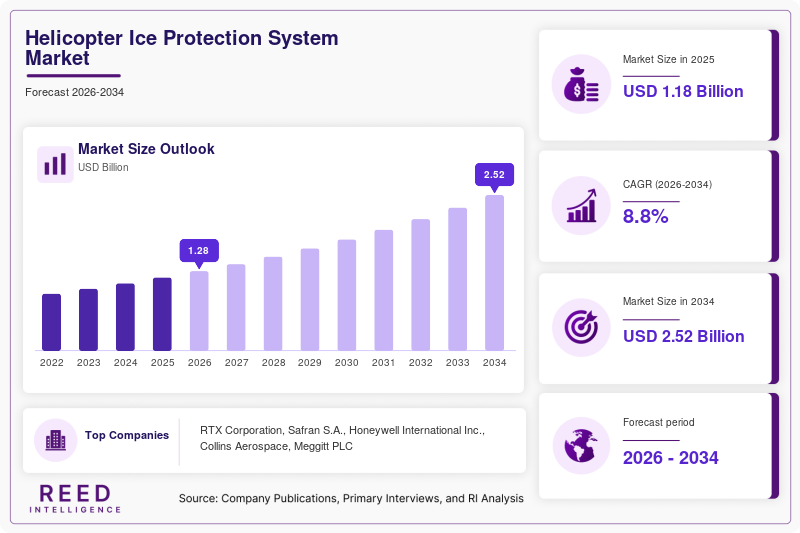
The global Helicopter Ice Protection System Market size was valued at USD 1.18 billion in 2026 and is projected to reach USD 2.31 billion by 2034, expanding at a CAGR of 8.8% during the forecast period from 2026 to 2034. The market continues to gain momentum due to rising investments in rotorcraft safety technologies, increasing demand for emergency medical helicopters, and expanding military helicopter modernization programs across developed and emerging economies. Helicopter ice protection systems are critical for maintaining aircraft performance and operational safety during adverse weather conditions, especially in cold and high-altitude environments where icing can affect rotor blades, engines, windshields, and air intake systems.
Growing global demand for all-weather aviation operations has supported the adoption of advanced ice detection and de-icing technologies in both civil and defense helicopters. Governments and aviation authorities are emphasizing compliance with strict safety regulations, leading helicopter manufacturers and operators to integrate electrothermal, pneumatic, and bleed-air-based anti-icing systems into new-generation rotorcraft. In addition, offshore energy operations, search and rescue missions, border patrol activities, and military deployments in cold climates are contributing to the expansion of the market. Technological advancements in lightweight composite materials and smart sensing systems are also improving the efficiency and reliability of helicopter ice protection systems.
Key Highlights
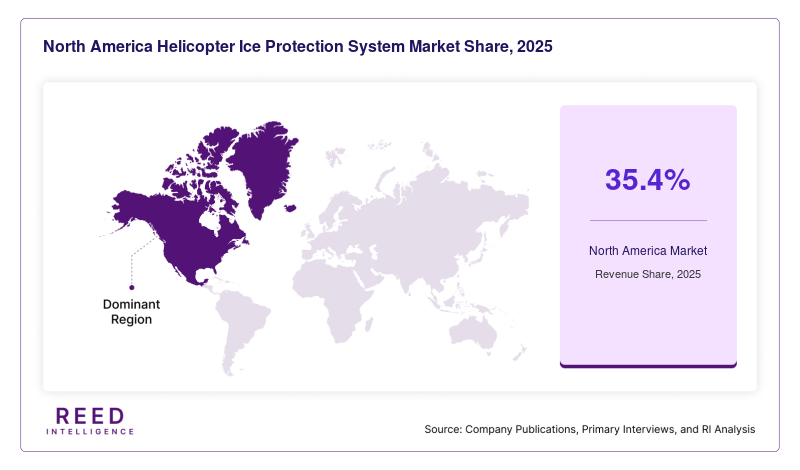
- North America dominated the market with a 35.4% share in 2025.
- Asia Pacific is expected to grow at the fastest CAGR of 10.9% during 2026–2034.
- By system type, electrothermal ice protection systems accounted for the largest share of 39.1%, while hybrid ice protection systems are projected to grow at a CAGR of 11.7%.
- By application, military helicopters led with a 44.6% share, whereas emergency medical service helicopters are expected to expand at a CAGR of 10.8%.
- By component, sensors and controllers held the dominant share of 33.8%, while smart monitoring software is projected to grow at a CAGR of 12.1%.
- The United States remained the dominant country, with market values of USD 430 million in 2024 and USD 468 million in 2025.
Market Trends
Integration of Smart Ice Detection Technologies
The helicopter industry is increasingly integrating smart ice detection technologies into modern rotorcraft platforms to improve operational safety and reduce maintenance complexity. Advanced sensor-based systems can identify ice accumulation in real time and activate anti-icing systems automatically, helping operators improve fuel efficiency and reduce pilot workload. These technologies are becoming particularly important in military operations, offshore transportation, and emergency medical missions where helicopters must operate in severe weather conditions. Manufacturers are also incorporating artificial intelligence and predictive analytics into monitoring platforms to improve fault detection and operational planning.
The trend toward digital aviation systems is accelerating the adoption of integrated ice protection technologies across both newly manufactured and retrofit helicopters. Aircraft operators are prioritizing systems that support condition-based maintenance and remote diagnostics to reduce operational downtime. Smart ice detection systems also help operators comply with aviation safety regulations related to flight performance in icing environments. The increasing use of connected avionics systems and automated flight management platforms is expected to strengthen the demand for intelligent helicopter ice protection solutions over the forecast period.
Rising Adoption of Lightweight Electrothermal Systems
Helicopter manufacturers are increasingly shifting toward lightweight electrothermal ice protection systems due to their improved efficiency and compatibility with advanced rotorcraft designs. Traditional pneumatic and bleed-air systems often increase aircraft weight and fuel consumption, creating operational challenges for commercial and defense operators. Electrothermal systems offer faster response times and more precise temperature control, making them suitable for modern helicopters operating in high-altitude and low-temperature environments.
The adoption of lightweight materials and compact heating elements is helping manufacturers reduce overall aircraft weight while improving performance reliability. The trend is particularly visible in next-generation military helicopters and commercial utility helicopters designed for long-distance operations. Advancements in power management systems are also supporting the integration of electrothermal solutions into electric and hybrid-electric aircraft platforms. As aviation companies continue to focus on reducing operational costs and improving energy efficiency, demand for lightweight electrothermal ice protection systems is expected to increase steadily.
Market Drivers
Expansion of Military Helicopter Modernization Programs
Growing investments in military helicopter modernization programs are significantly supporting the growth of the Helicopter Ice Protection System Market. Defense organizations across North America, Europe, and Asia Pacific are upgrading aging helicopter fleets with advanced avionics, safety technologies, and mission-critical systems. Ice protection systems are becoming an essential component of these upgrades because military helicopters frequently operate in challenging climates and high-risk environments. Countries are increasing procurement of multi-role helicopters capable of performing rescue missions, surveillance, combat support, and logistics operations under adverse weather conditions.
Modern military operations require helicopters to maintain reliable performance in snow-covered and freezing regions, increasing the demand for efficient anti-icing technologies. Governments are also investing in Arctic defense capabilities, creating additional demand for rotorcraft equipped with advanced de-icing systems. The integration of modern sensors, thermal systems, and automated control platforms into military helicopters is expected to strengthen market growth. Long-term defense contracts and growing geopolitical tensions are likely to sustain investments in helicopter ice protection technologies throughout the forecast period.
Increasing Demand for Emergency Medical and Rescue Helicopters
The rising deployment of emergency medical service helicopters and search-and-rescue aircraft is driving the adoption of helicopter ice protection systems globally. Medical evacuation helicopters often operate in harsh weather conditions where rapid response capabilities are critical for saving lives. Ice accumulation on rotor blades or engine components can reduce aircraft stability and create operational risks, encouraging operators to invest in reliable anti-icing technologies.
Many countries are expanding air ambulance networks to improve healthcare accessibility in remote and mountainous regions. This expansion is increasing demand for helicopters capable of safe operation during winter and low-visibility conditions. Rescue organizations and disaster response agencies are also investing in advanced helicopters equipped with efficient de-icing systems to support missions in cold climates. The growth of tourism activities in mountainous areas and increasing offshore rescue operations are further contributing to demand. As emergency aviation services continue to expand globally, the need for advanced helicopter ice protection systems is expected to increase steadily.
Market Restraint
High Installation and Maintenance Costs Limiting Adoption
The high installation and maintenance costs associated with helicopter ice protection systems remain a significant challenge for market growth. Advanced anti-icing technologies involve sophisticated sensors, heating components, electronic control systems, and monitoring software that increase overall aircraft manufacturing and operating expenses. Smaller commercial helicopter operators and regional aviation service providers often face budget limitations that restrict investments in advanced ice protection technologies.
Maintenance complexity also creates operational challenges because helicopter ice protection systems require regular inspections, calibration, and component replacement to maintain reliability. Downtime associated with maintenance activities can affect fleet availability and increase operational costs for helicopter operators. Retrofit installations are particularly expensive because older aircraft platforms may require structural modifications and electrical system upgrades to support modern anti-icing technologies. In developing economies, limited access to specialized maintenance infrastructure and trained aviation technicians further restricts adoption.
Market Opportunities
Growth Potential in Offshore Energy and Maritime Operations
The expansion of offshore energy exploration and maritime transportation activities is creating strong opportunities for the Helicopter Ice Protection System Market. Helicopters play an essential role in transporting personnel and equipment to offshore oil and gas platforms located in cold and remote environments. These operations often require flights under challenging weather conditions, increasing the importance of reliable ice protection technologies.
Energy companies are investing in advanced helicopters equipped with modern safety systems to improve operational continuity and reduce weather-related risks. Offshore wind energy projects are also increasing the use of helicopters for maintenance and emergency support operations in coastal regions with unpredictable weather patterns. The growing focus on worker safety and operational efficiency is encouraging fleet operators to adopt advanced anti-icing solutions. In addition, maritime patrol and coast guard operations are expanding in northern regions, further supporting demand for helicopters capable of operating in icing conditions.
Increasing Demand for Retrofit and Fleet Upgrade Programs
The growing need to modernize aging helicopter fleets is creating significant opportunities for companies operating in the helicopter ice protection industry. Many commercial and military helicopters currently in operation were designed without advanced anti-icing capabilities, creating a strong market for retrofit installations and technology upgrades. Aviation authorities are implementing stricter safety regulations related to rotorcraft operations in adverse weather conditions, encouraging operators to upgrade older aircraft.
Retrofit programs are particularly important for defense organizations seeking to extend the operational life of existing helicopter fleets while improving mission reliability. Commercial operators are also investing in upgrades to improve passenger safety and operational flexibility during winter operations. Manufacturers are introducing modular ice protection systems that simplify installation and reduce downtime, making retrofit programs more attractive for fleet owners.
Segmental Analysis
By System Type
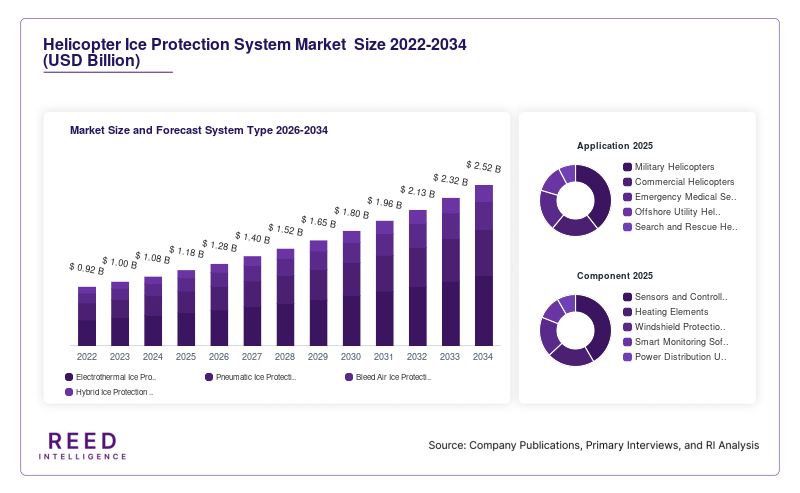
Electrothermal ice protection systems accounted for the largest share of the Helicopter Ice Protection System Market in 2024, representing nearly 39.1% of total revenue. These systems are widely adopted because they provide efficient heating performance, rapid response capability, and improved compatibility with modern helicopter platforms. Electrothermal technologies use electrically powered heating elements integrated into rotor blades, engine inlets, and windshields to prevent ice accumulation during flight operations. Commercial helicopter operators and military organizations prefer these systems because they improve operational reliability while reducing maintenance requirements associated with traditional pneumatic technologies.
The increasing use of lightweight composite materials and digital power management systems is further supporting the adoption of electrothermal solutions across advanced rotorcraft platforms. Manufacturers are also focusing on improving energy efficiency to reduce fuel consumption and overall aircraft weight. Growing investments in next-generation helicopters equipped with advanced avionics and automated safety systems are expected to sustain demand for electrothermal technologies. In addition, the expansion of emergency medical and offshore transportation operations in cold-weather environments continues to strengthen the market position of electrothermal ice protection systems.
By Application
Military helicopters represented the dominant application segment in the Helicopter Ice Protection System Market in 2024, accounting for approximately 44.6% of total revenue. Defense agencies around the world are investing heavily in helicopters designed for combat support, surveillance, logistics, and rescue operations in harsh environmental conditions. Ice protection systems are essential for maintaining flight safety and mission readiness during operations in snow-covered and high-altitude regions. Countries with expanding defense modernization programs are integrating advanced anti-icing technologies into newly procured rotorcraft as well as existing military fleets.
Military helicopters often operate in unpredictable climates where ice accumulation can significantly affect rotor performance and aircraft stability. This operational requirement is increasing demand for advanced electrothermal and hybrid ice protection systems capable of supporting long-duration missions. Governments are also investing in Arctic defense operations and border surveillance programs, creating additional opportunities for anti-icing technology providers. The growing integration of digital avionics, smart sensors, and automated safety systems is expected to strengthen the adoption of advanced helicopter ice protection technologies within military aviation applications.
By Component
Sensors and controllers held the largest share of the Helicopter Ice Protection System Market in 2024, accounting for around 33.8% of total revenue. These components play a critical role in detecting ice accumulation, monitoring environmental conditions, and controlling the activation of anti-icing systems. Advanced sensors help improve operational efficiency by enabling real-time monitoring and automated system responses, reducing pilot workload and enhancing flight safety. Modern helicopters increasingly rely on digital control systems integrated with avionics platforms to optimize ice protection performance.
The adoption of smart sensors and advanced control modules is increasing across military, commercial, and emergency service helicopters due to growing emphasis on predictive maintenance and operational reliability. Manufacturers are investing in compact and lightweight electronic components that support energy-efficient helicopter designs. The increasing use of connected aviation systems and digital flight management technologies is also driving demand for intelligent sensors and controllers. As aviation operators continue to prioritize automated safety systems and operational efficiency, this component segment is expected to maintain its dominant market position.
Regional Analysis
North America
North America accounted for the largest share of the Helicopter Ice Protection System Market in 2025, representing approximately 35.4% of global revenue. The region is projected to expand at a CAGR of 8.2% during the forecast period due to strong defense spending, advanced aviation infrastructure, and high adoption of safety technologies across commercial helicopter operations. The presence of major helicopter manufacturers and defense contractors continues to support product innovation and technological development. Demand for advanced anti-icing systems is particularly high in Canada and northern parts of the United States where helicopters frequently operate in freezing weather conditions.
The United States remained the dominant country within the regional market due to its extensive military helicopter fleet and growing emergency medical aviation sector. Increasing investments in defense modernization and Arctic operational capabilities are creating demand for advanced rotorcraft safety systems. Offshore oil and gas transportation activities in Alaska and the Gulf region also contribute to market growth. In addition, aviation authorities in the country continue to strengthen safety standards related to icing operations, encouraging helicopter operators to invest in advanced protection technologies and retrofit programs.
Europe
Europe held a significant share of the Helicopter Ice Protection System Market in 2025 and is expected to witness stable growth throughout the forecast period with a CAGR of 8.5%. Demand is supported by the region’s strong aerospace manufacturing sector and growing emphasis on aviation safety regulations. European helicopter operators increasingly require reliable anti-icing technologies for rescue operations, military deployments, and offshore transportation services. Countries with colder climates are investing heavily in advanced helicopter systems capable of operating in severe winter environments.
Germany emerged as the dominant country within Europe due to increasing investments in defense aviation modernization and aerospace engineering capabilities. The country’s focus on advanced aviation technology development has encouraged the integration of electrothermal and hybrid anti-icing systems into military and commercial helicopters. Offshore wind energy projects in Northern Europe are also supporting regional demand because helicopters are widely used for maintenance and emergency support activities. Strong collaboration between aerospace manufacturers and defense organizations is expected to strengthen market expansion across the region.
Asia Pacific
Asia Pacific is projected to record the fastest growth rate in the Helicopter Ice Protection System Market during the forecast period, with an estimated CAGR of 10.9%. Rapid expansion of defense budgets, increasing investments in civil aviation infrastructure, and growing demand for emergency rescue helicopters are supporting market development across the region. Countries including China, India, Japan, and South Korea are increasing procurement of advanced rotorcraft for military surveillance, border security, and disaster response operations.
China remained the dominant country in the regional market due to expanding domestic helicopter manufacturing activities and rising defense aviation investments. The country is increasingly deploying helicopters for rescue operations, logistics transportation, and offshore missions in remote regions. Harsh winter conditions in northern provinces are creating demand for advanced ice protection technologies capable of supporting safe flight operations. In addition, government initiatives focused on strengthening indigenous aerospace production capabilities are encouraging partnerships between local manufacturers and international aviation technology providers.
Middle East & Africa
The Middle East & Africa region represented a moderate share of the Helicopter Ice Protection System Market in 2025 and is expected to grow at a CAGR of 7.6% through 2034. Demand is primarily driven by military aviation procurement, offshore energy transportation, and emergency rescue operations. Although the region experiences limited freezing weather conditions in some areas, high-altitude operations and international deployments are increasing the requirement for helicopters equipped with advanced anti-icing systems.
Saudi Arabia remained the leading country within the regional market due to rising defense investments and expanding modernization programs for military aviation fleets. The country is increasingly acquiring multi-role helicopters capable of operating in diverse environmental conditions. Offshore energy projects and border security operations are also contributing to demand for advanced rotorcraft technologies. Aviation authorities and defense agencies are focusing on operational readiness and flight safety, encouraging the adoption of modern ice protection systems for both newly procured and upgraded helicopters.
Latin America
Latin America accounted for a smaller but steadily growing share of the Helicopter Ice Protection System Market in 2025 and is expected to expand at a CAGR of 7.9% during the forecast period. Growth is supported by increasing investments in emergency medical aviation, law enforcement helicopters, and offshore transportation services. Several countries in the region are modernizing aviation fleets to improve operational safety and support infrastructure development in remote regions.
Brazil emerged as the dominant country in the regional market due to its expanding aerospace industry and growing use of helicopters in offshore oil and gas operations. Helicopters are widely utilized for transportation to offshore platforms and rescue operations in challenging weather conditions along coastal regions. The country is also investing in military helicopter modernization programs to improve operational capabilities. Partnerships between domestic aerospace companies and international technology providers are supporting the adoption of advanced anti-icing systems across commercial and defense aviation sectors.
Competitive Landscape
The Helicopter Ice Protection System Market is characterized by the presence of established aerospace manufacturers, component suppliers, and aviation technology companies competing through product innovation, strategic partnerships, and long-term defense contracts. Market participants are focusing on developing lightweight, energy-efficient, and digitally integrated anti-icing systems to address evolving aviation safety requirements. Companies are also expanding their retrofit service capabilities to support aging helicopter fleets across commercial and military sectors.
Collaboration between helicopter manufacturers and electronic systems providers is increasing as operators demand integrated solutions that improve operational efficiency and reduce maintenance complexity. Several companies are investing in advanced electrothermal technologies and intelligent monitoring software to strengthen product performance and regulatory compliance. The competitive environment is also influenced by growing investments in autonomous flight technologies and connected aviation systems.
Key Players
- RTX Corporation
- Safran S.A.
- Honeywell International Inc.
- Collins Aerospace
- Meggitt PLC
- Parker Hannifin Corporation
- Curtiss-Wright Corporation
- Cox & Company Inc.
- Liebherr Group
- ITT Inc.
- AeroControlex Group
- ESCO Technologies Inc.
- TransDigm Group Incorporated
- Kaman Corporation
- Leonardo S.p.A.
Recent Developments
- In February 2026, Honeywell International Inc. launched a next-generation electrothermal anti-icing controller designed for military and utility helicopters operating in extreme weather conditions.
- In July 2025, Safran S.A. partnered with a European helicopter manufacturer to develop lightweight hybrid ice protection systems aimed at improving fuel efficiency and reducing maintenance requirements.
- In October 2025, Collins Aerospace expanded its aviation electronics facility in North America to increase production capacity for helicopter ice detection sensors and monitoring software platforms.
- In March 2026, Leonardo S.p.A. introduced upgraded anti-icing technologies for multi-role helicopters used in offshore transportation and emergency rescue operations.
- In December 2025, RTX Corporation secured a defense modernization contract for supplying advanced rotor blade ice protection systems to military helicopter fleets in North America.
Helicopter Ice Protection System Market Segments
System Type
- Electrothermal Ice Protection Systems
- Pneumatic Ice Protection Systems
- Bleed Air Ice Protection Systems
- Hybrid Ice Protection Systems
Application
- Military Helicopters
- Commercial Helicopters
- Emergency Medical Service Helicopters
- Offshore Utility Helicopters
- Search and Rescue Helicopters
Component
- Sensors and Controllers
- Heating Elements
- Windshield Protection Systems
- Smart Monitoring Software
- Power Distribution Units
By Region
- North America
- Europe
- APAC
- Middle East and Africa
- LATAM