Hemochromatosis Treatment Market Size, Share & Demand Report By Treatment Type (Therapeutic Phlebotomy, Iron Chelation Therapy, Dietary Management, Combination Therapy), By Disease Type (Hereditary Hemochromatosis, Secondary Hemochromatosis), By End User (Hospitals, Specialty Clinics, Ambulatory Surgical Centers, Homecare Settings), By Region & Segment Forecasts, 2026–2034
USD 3950
Market Overview
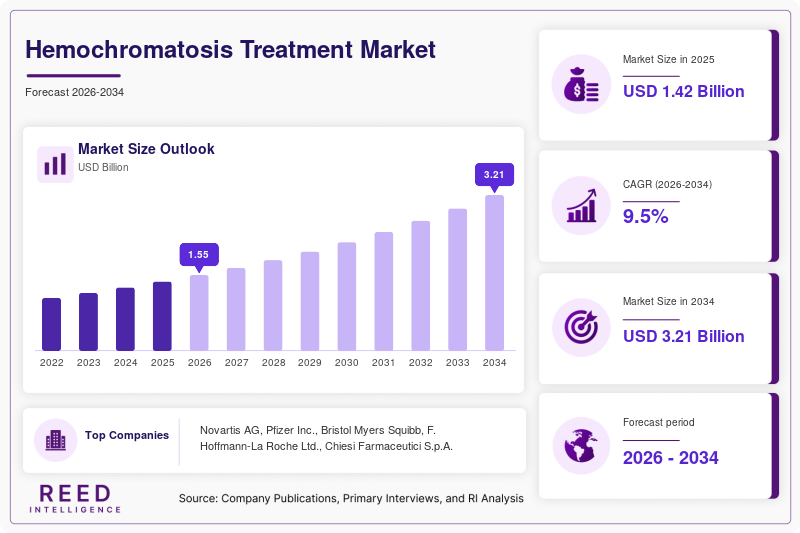
The global Hemochromatosis Treatment Market size was valued at USD 1.42 billion in 2026 and is projected to reach USD 2.94 billion by 2034, expanding at a CAGR of 9.5% during the forecast period from 2026 to 2034. The market continues to gain momentum due to rising awareness regarding iron overload disorders, growing adoption of genetic screening programs, and increasing diagnosis rates across developed and emerging economies. Hemochromatosis treatment has become a major focus area within the rare disease therapeutics industry as healthcare systems improve access to early-stage testing and long-term disease management solutions.
One of the major global factors supporting market expansion is the increasing prevalence of hereditary hemochromatosis linked with genetic mutations among aging populations. Healthcare providers are emphasizing early intervention to prevent liver cirrhosis, diabetes, cardiac complications, and joint disorders associated with iron accumulation. This shift toward preventive healthcare has increased the adoption of therapeutic phlebotomy, iron chelation therapy, and advanced monitoring solutions. In addition, pharmaceutical companies are investing in innovative chelation drugs with improved tolerability profiles, while hospitals and specialty clinics are integrating personalized treatment pathways for chronic iron overload conditions.
Key Highlights
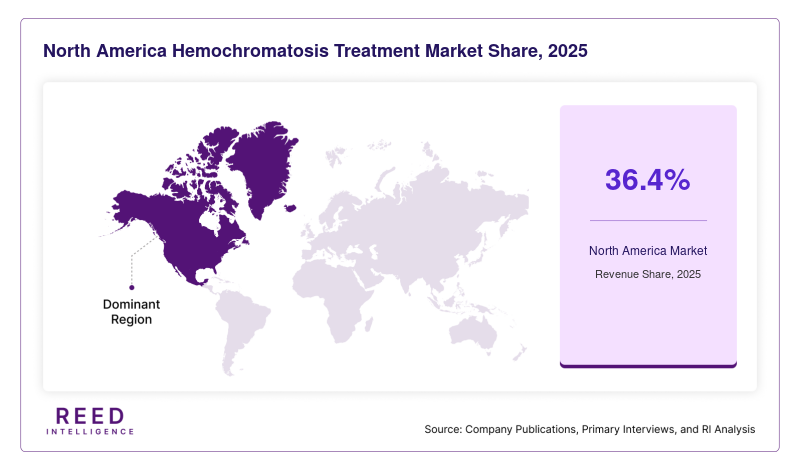
- North America dominated the market with a 36.4% share in 2025, while Asia Pacific is expected to grow at the fastest CAGR of 11.4% during 2026–2034.
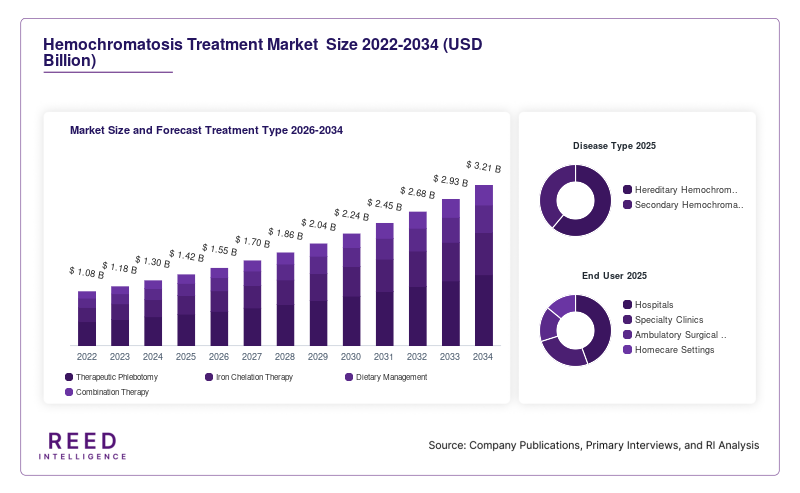
- By treatment type, therapeutic phlebotomy accounted for the largest share of 44.1%, while iron chelation therapy is projected to grow at a CAGR of 10.8%.
- By disease type, hereditary hemochromatosis led with a 63.8% share, whereas secondary hemochromatosis is expected to expand at a CAGR of 10.2%.
- By end user, hospitals held the leading share of 47.6%, while specialty clinics are anticipated to grow at a CAGR of 11.1%.
- The United States remained the dominant country, with market values of USD 470 million in 2024 and USD 521 million in 2025.
Market Trends
Rising Adoption of Genetic Screening and Early Diagnosis Programs
Healthcare systems across several developed economies are increasingly adopting genetic screening programs to identify hereditary hemochromatosis during the early stages of disease progression. Public health organizations are encouraging routine screening for individuals with a family history of iron overload disorders, particularly in North America and Europe. This trend is improving treatment outcomes because early diagnosis allows physicians to initiate therapeutic phlebotomy before severe organ damage develops. Diagnostic laboratories are also introducing cost-effective genetic testing panels that support broader patient accessibility.
The trend is further supported by technological advancements in molecular diagnostics and digital patient monitoring systems. Healthcare providers are integrating electronic health records with genetic risk assessment tools to identify high-risk populations more efficiently. This shift toward preventive disease management is expected to increase demand for long-term treatment solutions and follow-up care services. Pharmaceutical manufacturers and diagnostic companies are also forming partnerships to develop integrated testing and treatment platforms, strengthening the overall growth potential of the Hemochromatosis Treatment Market.
Increasing Development of Advanced Iron Chelation Therapies
Pharmaceutical companies are focusing on the development of next-generation iron chelation therapies with improved efficacy, lower toxicity, and better patient compliance. Traditional chelation therapies often require long treatment durations and may cause gastrointestinal or renal complications. As a result, manufacturers are investing in oral formulations and combination therapies designed to improve treatment convenience for patients with chronic iron overload conditions.
The demand for advanced iron chelation therapies is particularly increasing among patients with secondary hemochromatosis associated with blood transfusion disorders such as thalassemia and sickle cell disease. Research organizations are also conducting clinical studies to evaluate targeted therapies capable of regulating iron metabolism at the molecular level. This trend is expanding the commercial opportunities for biotechnology firms and specialty pharmaceutical companies. The growing focus on personalized medicine and precision therapeutics is expected to create a favorable environment for innovation within the global Hemochromatosis Treatment Market during the forecast period.
Market Drivers
Growing Prevalence of Iron Overload Disorders Worldwide
The increasing prevalence of hereditary and secondary hemochromatosis is a major factor driving market growth. Rising awareness regarding genetic disorders and chronic transfusion-related complications has contributed to higher diagnosis rates across hospitals and specialty care centers. Many patients previously remained undiagnosed until advanced liver or cardiac complications emerged, but improved screening initiatives are changing the clinical landscape. Healthcare providers are now emphasizing routine iron level monitoring for at-risk individuals, which is expanding the patient pool requiring long-term treatment.
The growing burden of chronic diseases requiring repeated blood transfusions is also supporting market demand. Patients with conditions such as thalassemia, myelodysplastic syndromes, and sickle cell disease often develop secondary iron overload, creating sustained demand for iron chelation therapies and supportive treatment services. In addition, aging populations in developed countries are increasing the incidence of metabolic and liver-related complications linked to iron accumulation. These factors collectively continue to strengthen revenue generation opportunities for pharmaceutical manufacturers and healthcare service providers operating in the Hemochromatosis Treatment Market.
Expanding Healthcare Infrastructure and Specialty Treatment Access
Rapid improvements in healthcare infrastructure across emerging economies are significantly supporting the adoption of hemochromatosis treatment solutions. Countries in Asia Pacific, Latin America, and the Middle East are investing in diagnostic laboratories, specialty clinics, and chronic disease management programs. This expansion is enabling healthcare providers to diagnose iron overload conditions earlier and provide consistent treatment access for larger patient populations.
The growing availability of trained hematologists and gastroenterologists is also improving treatment quality and patient outcomes. Hospitals are increasingly adopting multidisciplinary treatment approaches involving genetic counseling, nutritional management, and long-term monitoring. In addition, government reimbursement initiatives and insurance coverage for rare disease management are improving patient affordability in several developed markets. Telemedicine services and digital health platforms are further enhancing access to specialist consultations, especially in remote regions. These developments are creating a supportive ecosystem for sustained expansion of the Hemochromatosis Treatment Market over the coming years.
Market Restraint
Limited Awareness and Underdiagnosis in Developing Economies
Despite ongoing advancements in treatment and diagnostics, limited awareness regarding hemochromatosis remains a major challenge for market growth. In many developing countries, symptoms such as fatigue, joint pain, abdominal discomfort, and diabetes are often misdiagnosed or overlooked because healthcare professionals may not immediately associate them with iron overload disorders. This underdiagnosis delays treatment initiation and increases the risk of severe complications, including liver failure and cardiovascular disease.
The lack of widespread genetic screening infrastructure and insufficient reimbursement policies also restrict market penetration in low- and middle-income economies. Many patients in rural areas have limited access to specialized diagnostic laboratories and hematology care centers, reducing early detection rates. In addition, therapeutic iron chelation drugs can be expensive for uninsured patients, creating affordability challenges for long-term treatment adherence. Smaller healthcare facilities may also lack the equipment and trained personnel required for effective therapeutic phlebotomy procedures. These barriers continue to affect patient outcomes and restrict revenue opportunities for market participants, particularly in regions with underdeveloped healthcare systems.
Market Opportunities
Expansion of Personalized Medicine and Precision Treatment Approaches
The growing focus on personalized medicine is creating significant opportunities within the Hemochromatosis Treatment Market. Healthcare providers are increasingly using genetic profiling and biomarker analysis to customize treatment strategies according to patient-specific iron metabolism patterns and disease severity. Personalized treatment pathways can improve therapeutic effectiveness while reducing the risk of complications associated with overtreatment or delayed intervention.
Biotechnology companies are investing in research programs aimed at developing targeted therapies capable of regulating iron absorption and transport mechanisms at the molecular level. These innovations may reduce dependence on repetitive phlebotomy procedures and improve quality of life for patients requiring long-term care. The integration of artificial intelligence and predictive analytics into disease management platforms is also supporting individualized monitoring and treatment optimization. As healthcare systems continue to adopt precision medicine frameworks, demand for advanced therapeutic solutions and companion diagnostics is expected to increase substantially during the forecast period.
Increasing Investments in Rare Disease Research and Orphan Drug Development
Rising investments in rare disease research are creating favorable growth opportunities for pharmaceutical manufacturers and biotechnology firms operating in the market. Regulatory agencies across North America and Europe are providing incentives such as orphan drug designations, accelerated approval pathways, and research grants for companies developing therapies targeting iron overload disorders. These supportive regulatory frameworks are encouraging clinical innovation and expanding the pipeline of novel treatment candidates.
Strategic collaborations between academic institutions, biotechnology companies, and healthcare organizations are also accelerating the development of advanced therapeutics for hereditary and secondary hemochromatosis. Venture capital investments in rare disease startups have increased steadily, supporting the commercialization of innovative treatment technologies and diagnostic platforms. In addition, patient advocacy groups are playing a larger role in promoting awareness campaigns and encouraging participation in clinical trials. These factors are expected to strengthen research activity and create long-term commercial opportunities within the global Hemochromatosis Treatment Market.
Segmental Analysis
By Treatment Type
Therapeutic phlebotomy accounted for the largest share of the Hemochromatosis Treatment Market in 2024, representing 44.1% of total revenue. The dominance of this subsegment is primarily linked to its cost-effectiveness, clinical efficiency, and widespread adoption as the first-line treatment for hereditary hemochromatosis. Therapeutic phlebotomy helps reduce excess iron levels by removing blood at regular intervals, thereby minimizing the risk of organ damage and metabolic complications. Hospitals and specialty clinics continue to rely heavily on this treatment approach because it remains accessible across both developed and emerging healthcare systems.
The procedure is also supported by strong clinical guidelines recommending regular phlebotomy sessions for patients diagnosed during the early stages of disease progression. Many healthcare providers prefer therapeutic phlebotomy because it offers long-term disease control without requiring expensive pharmaceutical intervention. The increasing prevalence of hereditary hemochromatosis and growing awareness regarding preventive treatment are further contributing to sustained demand for this treatment category.
By Disease Type
Hereditary hemochromatosis dominated the Hemochromatosis Treatment Market in 2024 with a share of 63.8%. The high share of this subsegment is attributed to the widespread prevalence of genetic mutations associated with iron overload disorders, particularly among populations of European ancestry. Healthcare providers are increasingly identifying hereditary cases through family screening programs and preventive diagnostic initiatives. Early diagnosis has improved significantly due to advancements in genetic testing technologies and broader awareness among healthcare professionals.
Patients diagnosed with hereditary hemochromatosis often require lifelong disease management, creating consistent demand for therapeutic phlebotomy, laboratory monitoring, and supportive care services. Hospitals and diagnostic centers are integrating genetic counseling into treatment pathways to help families understand disease risks and preventive strategies. The availability of reimbursement support for genetic testing in several developed countries is also contributing to sustained market dominance. In addition, research institutions are exploring targeted therapies aimed at regulating abnormal iron absorption mechanisms linked to hereditary disease progression.
By End User
Hospitals represented the leading end-user segment in the Hemochromatosis Treatment Market in 2024, accounting for 47.6% of total revenue. The dominance of this segment is supported by the availability of specialized healthcare professionals, advanced diagnostic infrastructure, and integrated treatment services. Hospitals serve as primary centers for therapeutic phlebotomy procedures, iron level monitoring, and multidisciplinary disease management for patients with hereditary and secondary hemochromatosis.
Large healthcare institutions are increasingly establishing dedicated hematology and gastroenterology departments focused on chronic metabolic disorders and rare diseases. The growing adoption of electronic health records and digital patient monitoring systems is also improving treatment coordination and long-term disease management within hospital settings. In addition, hospitals often participate in clinical trials and research programs evaluating novel therapies for iron overload disorders. Rising patient preference for comprehensive care and specialist consultations continues to strengthen the position of hospitals as the dominant end-user segment.
Regional Analysis
North America
North America accounted for the largest share of the Hemochromatosis Treatment Market in 2025, representing 36.4% of global revenue. The region is projected to maintain steady growth at a CAGR of 8.9% during the forecast period due to strong diagnostic infrastructure and high awareness regarding hereditary iron overload disorders. The presence of advanced healthcare systems and favorable reimbursement policies continues to support widespread adoption of therapeutic phlebotomy and iron chelation therapies. In addition, increasing genetic testing initiatives across the United States and Canada are contributing to earlier diagnosis and improved disease management.
The United States remained the dominant country within the regional market due to its strong pharmaceutical industry and high healthcare expenditure. One unique growth factor supporting the country is the increasing integration of genetic counseling services into primary healthcare settings. Hospitals and specialty clinics are expanding access to preventive screening programs for individuals with a family history of hereditary hemochromatosis. Research institutions are also conducting clinical studies focused on advanced iron metabolism therapies, further strengthening the country’s leadership position in the market.
Europe
Europe held a significant share of the global Hemochromatosis Treatment Market in 2025 and is expected to register a CAGR of 8.6% during the forecast period. The regional market benefits from strong public healthcare systems, rising awareness regarding rare genetic disorders, and widespread adoption of early screening programs. Countries across Western Europe are emphasizing preventive healthcare initiatives aimed at reducing long-term complications associated with untreated iron overload conditions. The region also demonstrates strong demand for specialized hematology and gastroenterology services.
Germany emerged as the dominant country in the European market due to its advanced clinical research ecosystem and strong healthcare reimbursement structure. A unique factor supporting market growth in Germany is the increasing collaboration between academic medical centers and biotechnology companies for rare disease research. These partnerships are supporting the development of innovative diagnostic technologies and patient monitoring systems. In addition, the country’s aging population is increasing demand for long-term management solutions for chronic metabolic and liver disorders associated with iron accumulation.
Asia Pacific
Asia Pacific is anticipated to witness the fastest growth in the Hemochromatosis Treatment Market, expanding at a CAGR of 11.4% during the forecast period. Although the region accounted for a comparatively smaller market share in 2025, rapid healthcare modernization and increasing investments in diagnostic infrastructure are supporting strong expansion. Countries across the region are improving access to specialized treatment centers and introducing awareness campaigns focused on hereditary disorders and chronic disease prevention.
China dominated the Asia Pacific market due to its large patient population and expanding healthcare spending. One unique growth factor driving the Chinese market is the rapid expansion of domestic biotechnology companies focused on rare disease therapeutics and molecular diagnostics. Government support for healthcare innovation and increased investment in genomic medicine are accelerating the adoption of genetic screening programs. Urban hospitals are also integrating advanced digital health platforms that improve patient monitoring and long-term treatment management for iron overload disorders.
Middle East & Africa
The Middle East & Africa region represented a developing but increasingly important market for hemochromatosis treatment in 2025. The regional market is projected to expand at a CAGR of 9.1% during the forecast period due to improving healthcare infrastructure and growing awareness regarding genetic disorders. Governments in Gulf countries are investing in specialized medical facilities and advanced diagnostic laboratories to strengthen rare disease management capabilities. Rising healthcare expenditure and increasing adoption of private healthcare services are also contributing to market expansion.
Saudi Arabia remained the dominant country within the regional market due to its ongoing healthcare transformation initiatives and strong investment in medical technology. A unique factor driving growth in the country is the increasing implementation of national genomic programs focused on hereditary disease screening. Healthcare authorities are encouraging early diagnosis through public awareness campaigns and integrated preventive healthcare strategies. In addition, partnerships with international pharmaceutical companies are improving access to advanced treatment options and specialist care services.
Latin America
Latin America accounted for a moderate share of the Hemochromatosis Treatment Market in 2025 and is expected to grow at a CAGR of 8.8% during the forecast period. The regional market is supported by improving healthcare access, rising chronic disease awareness, and gradual expansion of diagnostic capabilities across urban healthcare centers. Governments and non-profit organizations are increasingly focusing on rare disease education programs aimed at improving early diagnosis and treatment adoption.
Brazil emerged as the leading country in the Latin American market due to its large healthcare network and growing investments in specialty care services. One unique growth factor supporting the Brazilian market is the expansion of public-private partnerships aimed at strengthening rare disease diagnostics and treatment accessibility. Healthcare providers are increasing the availability of genetic counseling and long-term disease monitoring services in major metropolitan areas. In addition, pharmaceutical distributors are expanding the regional supply chain for iron chelation therapies and supportive treatment products.
Competitive Landscape
The Hemochromatosis Treatment Market is moderately fragmented, with several global pharmaceutical companies, biotechnology firms, and specialty healthcare providers competing through product innovation, strategic collaborations, and geographic expansion initiatives. Companies are focusing on strengthening their rare disease portfolios and improving access to advanced iron chelation therapies and diagnostic solutions. The market is also witnessing increased investment in genetic testing technologies and personalized medicine platforms designed to improve long-term patient outcomes.
Novartis AG remains one of the leading companies in the market due to its established presence in iron chelation therapy and strong global distribution network. The company recently expanded its rare disease research initiatives through partnerships focused on advanced hematology treatments and molecular diagnostics. Other major companies are emphasizing clinical trials, regulatory approvals, and acquisitions to strengthen their market positions.
Key Players
- Novartis AG
- Pfizer Inc.
- Bristol Myers Squibb
- F. Hoffmann-La Roche Ltd.
- Chiesi Farmaceutici S.p.A.
- Silence Therapeutics plc
- Ionis Pharmaceuticals, Inc.
- Vifor Pharma
- Cipla Limited
- Apotex Inc.
- Bluebird Bio, Inc.
- La Jolla Pharmaceutical Company
- Sun Pharmaceutical Industries Ltd.
- Teva Pharmaceutical Industries Ltd.
- Sanofi S.A.
Recent Developments
- In February 2026, Novartis AG announced the expansion of its rare hematology research program focused on next-generation iron regulation therapies for chronic iron overload disorders.
- In September 2025, Silence Therapeutics plc initiated a clinical study evaluating RNA-based treatment approaches targeting iron metabolism pathways in hereditary hemochromatosis patients.
- In June 2025, Takeda Pharmaceutical Company Limited partnered with a European diagnostic technology firm to improve genetic screening accessibility for iron overload disorders across regional healthcare systems.
- In January 2026, Cipla Limited expanded its specialty care portfolio in Asia Pacific by increasing distribution capacity for oral iron chelation therapies in emerging healthcare markets.
- In November 2025, Roche introduced an upgraded digital monitoring platform designed to support long-term disease management and patient adherence tracking for chronic hematology conditions.
Hemochromatosis Treatment Market Segments
Treatment Type
- Therapeutic Phlebotomy
- Iron Chelation Therapy
- Dietary Management
- Combination Therapy
Disease Type
- Hereditary Hemochromatosis
- Secondary Hemochromatosis
End User
- Hospitals
- Specialty Clinics
- Ambulatory Surgical Centers
- Homecare Settings
By Region
- North America
- Europe
- APAC
- Middle East and Africa
- LATAM