Hepatic Encephalopathy Treatment Market Size, Share Demand Report By Drug Class (Rifaximin, Lactulose, L-ornithine L-aspartate, Antibiotics, Microbiome-based Therapies), By Disease Type (Overt Hepatic Encephalopathy, Minimal Hepatic Encephalopathy), By Distribution Channel (Hospital Pharmacies, Retail Pharmacies, Online Pharmacies), By Region & Segment Forecasts, 2026–2034
USD 3950
Market Overview
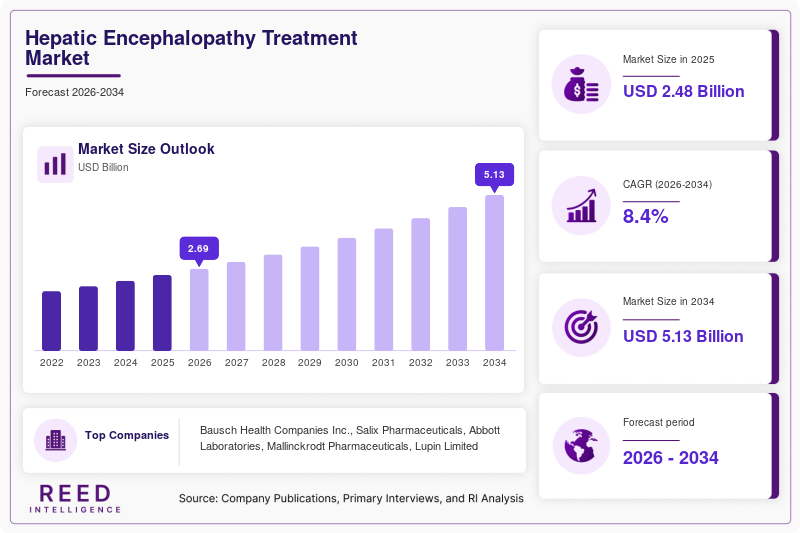
The global Hepatic Encephalopathy Treatment Market size was valued at USD 2.48 billion in 2026 and is projected to reach USD 4.71 billion by 2034, expanding at a CAGR of 8.4% during the forecast period from 2026 to 2034. Hepatic encephalopathy treatment demand is rising steadily due to the increasing prevalence of chronic liver diseases, cirrhosis, alcohol-associated liver damage, viral hepatitis, and metabolic dysfunction-associated steatotic liver disease. Growing awareness regarding early diagnosis and preventive treatment in patients with liver dysfunction has significantly strengthened global market penetration. The expanding geriatric population, which is more vulnerable to advanced liver disorders and recurrent neurocognitive complications, is also supporting long-term market growth. Pharmaceutical advancements in ammonia-lowering agents, gut microbiota modulation therapies, and combination regimens are reshaping treatment protocols worldwide. Increased hospitalization rates linked to recurrent overt hepatic encephalopathy episodes have encouraged healthcare systems to prioritize maintenance therapies, especially in developed markets. Broader reimbursement frameworks, improved specialist access, and ongoing research into microbiome-targeted therapies continue to improve therapeutic adoption. Digital health monitoring tools and outpatient disease management programs are also enhancing treatment adherence, reducing relapse frequency, and supporting overall market expansion.
Key Highlights
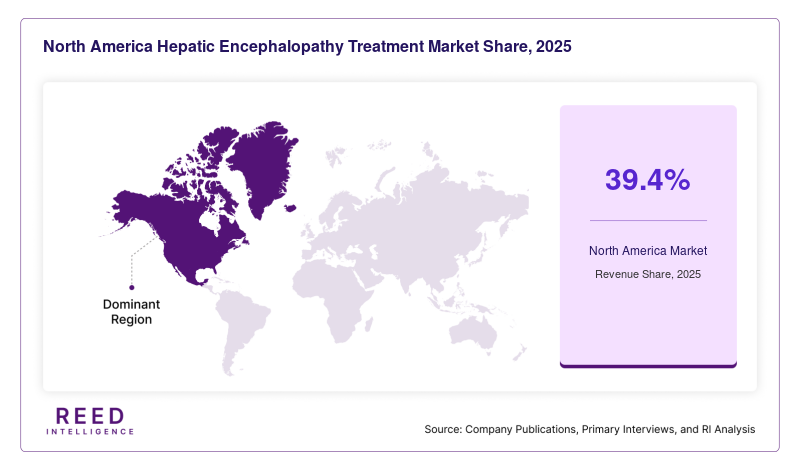
- North America dominated the market with a 39.4% share in 2025.
- Asia Pacific is expected to grow at the fastest CAGR of 9.8% during 2026–2034.
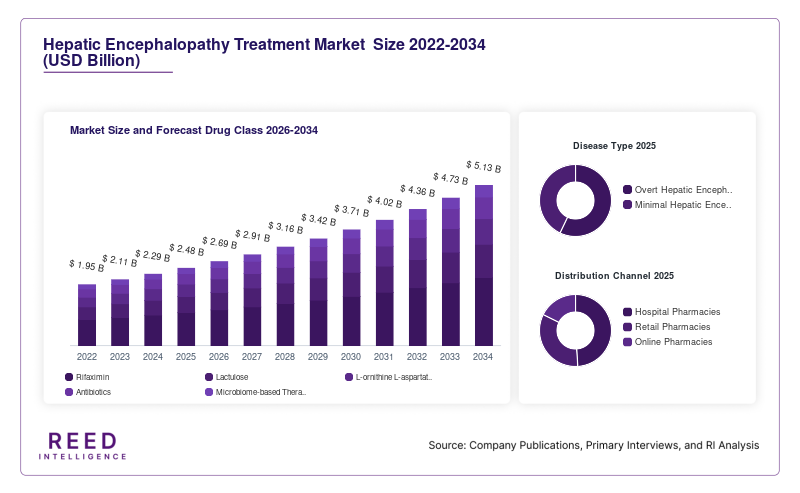
- By drug class, rifaximin accounted for the largest share of 42.8%, while microbiome-based therapies are projected to grow at a CAGR of 12.6%.
- By disease type, overt hepatic encephalopathy led with a 61.3% share, whereas minimal hepatic encephalopathy is expected to expand at a CAGR of 10.9%.
- By distribution channel, hospital pharmacies held a 47.2% share, while online pharmacies are projected to grow at a CAGR of 11.8%.
- The United States remained the dominant country, with market values of USD 790 million in 2024 and USD 846 million in 2025.
Market Trends
Expanding adoption of rifaximin-lactulose combination therapy
Clinical preference is shifting toward combination regimens involving rifaximin and lactulose for recurrent hepatic encephalopathy prevention. Physicians increasingly favor dual therapy because it reduces hospitalization frequency, recurrence episodes, and ammonia accumulation more effectively than monotherapy. Treatment guidelines in major healthcare markets are also supporting broader prescription volumes. As hospital systems focus on lowering readmission costs, combination treatment has become a standard maintenance strategy for moderate-to-severe patients. This trend is especially visible in North America and Europe, where reimbursement support and clinical evidence have improved patient retention. Pharmaceutical manufacturers are also investing in lifecycle management strategies to strengthen branded treatment penetration.
Growth in microbiome-targeted and next-generation therapeutics
The hepatic encephalopathy treatment industry is witnessing rising investment in microbiome-focused therapeutics, including fecal microbiota transplantation derivatives, probiotics, and synthetic biological formulations. Researchers increasingly recognize gut-brain-liver interactions as critical pathways in disease progression. This has accelerated innovation beyond traditional ammonia-lowering treatments. Emerging biotech firms are developing microbiota restoration platforms aimed at reducing systemic inflammation and neurotoxicity. These therapies may offer longer-term disease management benefits with improved patient tolerance. As precision medicine expands in hepatology, microbiome interventions are expected to gain regulatory attention and commercial momentum, particularly in high-growth Asia Pacific and specialized tertiary care centers globally.
Market Drivers
Rising global burden of chronic liver disease and cirrhosis
A major growth driver for the Hepatic Encephalopathy Treatment Market is the increasing incidence of chronic liver disorders worldwide. Liver cirrhosis caused by alcohol misuse, hepatitis B and C infections, and nonalcoholic steatohepatitis has significantly expanded the patient pool susceptible to hepatic encephalopathy. Advanced liver dysfunction frequently leads to recurrent cognitive impairment, requiring sustained pharmacological intervention. The growing burden in both developed and emerging economies has intensified healthcare spending on liver disease management. Public health initiatives targeting liver screening have also improved diagnosis rates, leading to earlier treatment adoption and broader pharmaceutical demand.
Increasing healthcare expenditure and hospitalization prevention strategies
Healthcare systems are placing stronger emphasis on reducing preventable hospital admissions associated with hepatic encephalopathy recurrence. Recurrent episodes often create substantial treatment costs, intensive care needs, and caregiver burdens. As a result, providers are investing more heavily in maintenance therapies that lower readmission rates. Insurance support for chronic disease management has expanded in several countries, particularly for evidence-based agents such as rifaximin. Enhanced physician awareness, better patient education, and telehealth-led medication monitoring are also improving compliance. This systemic shift from episodic emergency treatment toward long-term prevention is significantly driving sustained market revenue.
Market Restraint
High treatment costs and limited accessibility in lower-income markets
Despite positive growth, the Hepatic Encephalopathy Treatment Market faces notable barriers due to high branded drug costs, especially for rifaximin-based therapies. In low- and middle-income countries, many patients rely on lower-cost generic lactulose despite lower adherence and gastrointestinal side effects. Limited reimbursement, inconsistent liver disease screening, and inadequate hepatology infrastructure restrict access to advanced treatment options. Rural populations often experience delayed diagnosis, reducing intervention effectiveness. In some healthcare systems, specialist shortages also hinder disease management continuity. These limitations create treatment disparities, particularly across parts of Africa, Southeast Asia, and Latin America, where affordability remains a major barrier to optimized therapeutic outcomes.
Market Opportunities
Expansion of generic and biosimilar treatment penetration
Patent expirations and increased generic drug manufacturing present strong opportunities for broader market access. Affordable formulations of rifaximin analogs, improved lactulose preparations, and regionally manufactured supportive therapies can substantially increase treatment adoption in cost-sensitive populations. Generic competition may lower therapy costs and support healthcare equity. Emerging pharmaceutical companies in India, China, and Brazil are increasingly focusing on affordable hepatology portfolios. This trend may reshape pricing structures globally while improving treatment accessibility in underserved regions. Wider generic penetration is expected to expand patient reach and stimulate volume-driven market growth.
Digital patient monitoring and outpatient management innovation
Remote patient management tools create meaningful opportunities in hepatic encephalopathy care. Cognitive monitoring applications, medication adherence platforms, and ammonia-level biomarker innovations are improving outpatient disease control. These technologies may reduce hospitalization burdens by identifying early neurocognitive decline. As healthcare providers move toward value-based care, integrating digital monitoring with pharmacotherapy could improve outcomes and lower costs. Telemedicine expansion in chronic liver disease management is particularly relevant in geographically dispersed populations. This opportunity supports pharmaceutical partnerships, device integration, and broader ecosystem development across developed and emerging healthcare markets.
Segmental Analysis
By Drug Class
Rifaximin dominated the Hepatic Encephalopathy Treatment Market in 2024 with a 42.8% share due to its proven efficacy in reducing recurrence risk and hospitalization frequency. Physicians widely prescribe rifaximin as a maintenance therapy because of favorable tolerability compared to traditional alternatives. Strong reimbursement support in developed countries and broad clinical validation have supported its premium positioning. The segment also benefits from established prescribing habits and high patient adherence.
Microbiome-based therapies are expected to register the fastest CAGR of 12.6% during the forecast period. These treatments target gut dysbiosis, a critical factor in hepatic encephalopathy pathogenesis. Research advancements, clinical trial expansion, and precision medicine strategies are accelerating segment growth. As biotechnology innovation progresses, microbiome therapeutics may reshape future treatment standards.
By Disease Type
Overt hepatic encephalopathy held the largest market share of 61.3% in 2024 due to its higher diagnosis rates, urgent symptom burden, and substantial hospitalization needs. Overt cases often require immediate intervention, making them the primary revenue contributor for healthcare systems and pharmaceutical providers. Greater symptom visibility also improves treatment-seeking behavior and clinical intervention rates.
Minimal hepatic encephalopathy is projected to expand at the fastest CAGR of 10.9% due to rising diagnostic awareness and improved neuropsychological testing. Early-stage cognitive impairment recognition is increasing among hepatologists seeking preventive treatment. Expanded screening tools and outpatient care models are improving treatment initiation in this underdiagnosed population.
By Distribution Channel
Hospital pharmacies accounted for the dominant 47.2% share in 2024 due to the acute care nature of many hepatic encephalopathy episodes. Hospital-based treatment remains central for severe recurrence management, inpatient stabilization, and specialist prescription access. Institutional treatment pathways also support branded medication utilization and treatment continuity.
Online pharmacies are projected to grow at the fastest CAGR of 11.8% during 2026–2034. Digital pharmacy adoption is rising due to convenience, chronic medication refill demand, and telemedicine expansion. Improved digital infrastructure and broader e-prescription integration are accelerating this channel, particularly among stable outpatient populations.
Regional Analysis
North America
North America accounted for 39.4% of the global Hepatic Encephalopathy Treatment Market share in 2025 and is projected to maintain leadership through 2034, growing at a CAGR of 7.9%. Strong healthcare reimbursement systems, high diagnosis rates, and broad physician awareness support market dominance. The region benefits from advanced hepatology networks, specialist access, and robust pharmaceutical commercialization, especially for premium maintenance therapies.
The United States dominates the regional market due to its substantial cirrhosis patient population and strong branded drug utilization. Rising alcohol-associated liver disease and metabolic dysfunction-associated liver disease prevalence are expanding treatment demand. A unique growth factor is the region’s extensive integration of hospital readmission prevention frameworks, which prioritize long-term outpatient pharmacotherapy.
Europe
Europe held 27.1% of the market in 2025 and is forecast to grow at a CAGR of 7.6%. Universal healthcare systems, strong liver disease awareness campaigns, and established clinical guidelines are contributing to treatment consistency. Western Europe, in particular, demonstrates significant uptake of evidence-based therapies and supportive neurocognitive care pathways.
Germany remains Europe’s leading country due to strong pharmaceutical access and liver disease screening infrastructure. A unique regional factor is the rising prevalence of aging populations with chronic liver dysfunction, which is increasing long-term therapeutic needs while supporting specialist-led hepatic care expansion.
Asia Pacific
Asia Pacific represented 21.6% of the global market in 2025 and is anticipated to register the fastest CAGR of 9.8% through 2034. Rapid healthcare infrastructure improvements, expanding liver disease prevalence, and growing generic drug manufacturing are major contributors. Increasing hepatitis-related cirrhosis cases also support patient volume growth.
China dominates the region due to its large hepatitis burden and expanding healthcare reforms. A unique factor is the rapid development of domestic pharmaceutical manufacturing, which is improving affordability and access to ammonia-lowering therapies while supporting regional treatment expansion.
Middle East & Africa
Middle East & Africa captured 6.3% market share in 2025 and is projected to grow at a CAGR of 8.1%. Growth is supported by improving tertiary care centers, rising liver disease awareness, and expanding urban healthcare systems. Gulf countries are leading infrastructure modernization, while Africa remains comparatively underserved.
Saudi Arabia leads regional demand due to healthcare investment and specialist expansion. A unique growth factor is increasing metabolic syndrome prevalence, which contributes to liver disease progression and supports rising diagnosis of hepatic complications requiring treatment.
Latin America
Latin America held 5.6% of the market in 2025 and is expected to grow at a CAGR of 8.4%. Healthcare modernization, improving pharmaceutical distribution, and rising awareness of chronic liver disease are enhancing market penetration. Public-private partnerships are improving treatment access in several countries.
Brazil dominates the Latin American market due to its broad healthcare system and expanding pharmaceutical manufacturing. A unique factor is the country’s rising focus on chronic disease management programs, which are improving access to hepatology diagnostics and maintenance therapies.
Competitive Landscape
The Hepatic Encephalopathy Treatment Market remains moderately consolidated, with established pharmaceutical firms focusing on gastrointestinal and hepatology portfolios. Bausch Health Companies leads the market through strong rifaximin commercialization and broad physician penetration. The company continues expanding patient support initiatives and regional accessibility. Mallinckrodt Pharmaceuticals, Abbott Laboratories, Salix Pharmaceuticals, and Lupin Limited also hold notable positions. Competitive strategies include generic expansion, lifecycle management, and microbiome-focused R&D. Recent industry developments increasingly center on advanced formulations, strategic licensing, and emerging market penetration.
Key Players
- Bausch Health Companies
- Salix Pharmaceuticals
- Abbott Laboratories
- Mallinckrodt Pharmaceuticals
- Lupin Limited
- Sun Pharmaceutical Industries
- Alfasigma S.p.A.
- Norgine B.V.
- Bausch + Lomb Healthcare
- Aurobindo Pharma
- Cipla Limited
- Pfizer Inc.
- Takeda Pharmaceutical Company
- Axcella Therapeutics
- Cosmo Pharmaceuticals
Recent Developments
- Several leading manufacturers introduced adherence-focused patient support initiatives and regional expansion strategies during 2025 to strengthen long-term maintenance treatment uptake.
- Biotech firms accelerated phase-stage microbiome-targeted therapeutic programs aimed at improving cognitive outcomes and reducing recurrence rates.
- Major pharmaceutical manufacturers in India and China expanded low-cost hepatic encephalopathy treatment portfolios, improving accessibility across emerging markets.
Hepatic Encephalopathy Treatment Market Segments
Drug Class
- Rifaximin
- Lactulose
- L-ornithine L-aspartate
- Antibiotics
- Microbiome-based Therapies
Disease Type
- Overt Hepatic Encephalopathy
- Minimal Hepatic Encephalopathy
Distribution Channel
- Hospital Pharmacies
- Retail Pharmacies
- Online Pharmacies
By Region
- North America
- Europe
- APAC
- Middle East and Africa
- LATAM