Hepatoprotective Supplement Market Size, Share & Demand Report By Ingredient Type (Herbal Extracts, Vitamins and Minerals, Amino Acid-Based Supplements), By Formulation (Gummies, Functional Beverages, Liquid Extracts), By Distribution Channel (Pharmacies and Drug Stores, Supermarkets and Hypermarkets, Specialty Health Stores, Online Retail Platforms), By Region & Segment Forecasts, 2026–2034
USD 3950
Market Overview
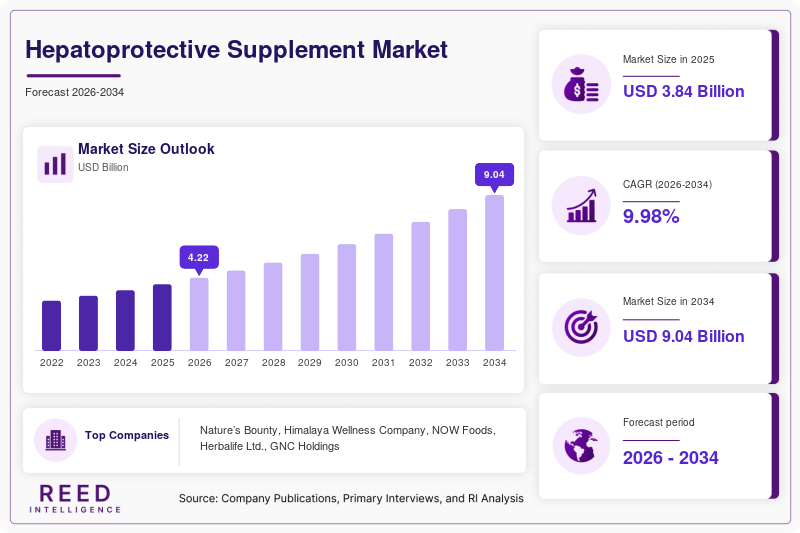
The global Hepatoprotective Supplement Market size was valued at USD 3.84 billion in 2026 and is projected to reach USD 8.21 billion by 2034, expanding at a CAGR of 9.98% during the forecast period from 2026 to 2034. The market continues to gain momentum due to the growing prevalence of liver-related health disorders, changing dietary patterns, increasing alcohol consumption, and rising awareness regarding preventive healthcare. Consumers across developed and emerging economies are increasingly adopting herbal and nutritional supplements that support liver detoxification, improve metabolic function, and reduce oxidative stress. The demand for hepatoprotective supplements has also accelerated as healthcare systems focus more on wellness-oriented treatment approaches and non-prescription health management solutions.
One of the primary global factors supporting market growth is the increasing incidence of non-alcoholic fatty liver disease (NAFLD) and lifestyle-associated liver complications. Urbanization, obesity, high sugar intake, and sedentary lifestyles have contributed to a larger patient population seeking preventive liver health products. Manufacturers are responding by introducing plant-based formulations containing milk thistle, turmeric extract, dandelion root, artichoke extract, and amino acid blends. In addition, online health retail platforms and direct-to-consumer wellness brands have improved product accessibility across multiple age groups.
Key Highlights
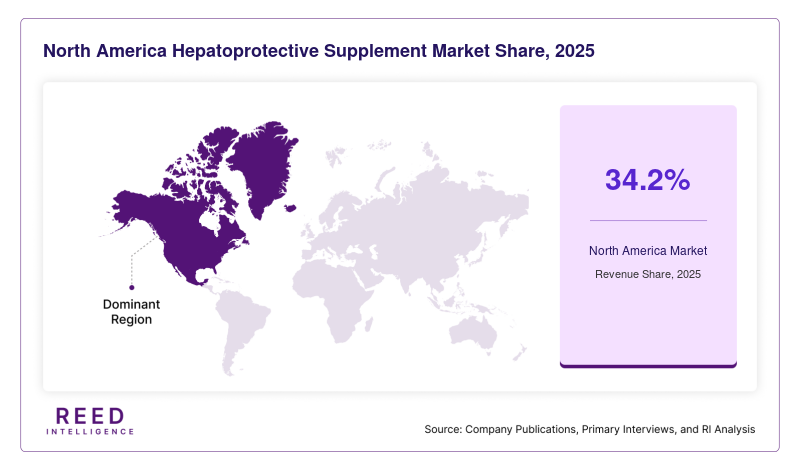
- North America dominated the market with a 34.2% share in 2025.
- Asia Pacific is expected to grow at the fastest CAGR of 11.4% during 2026–2034.
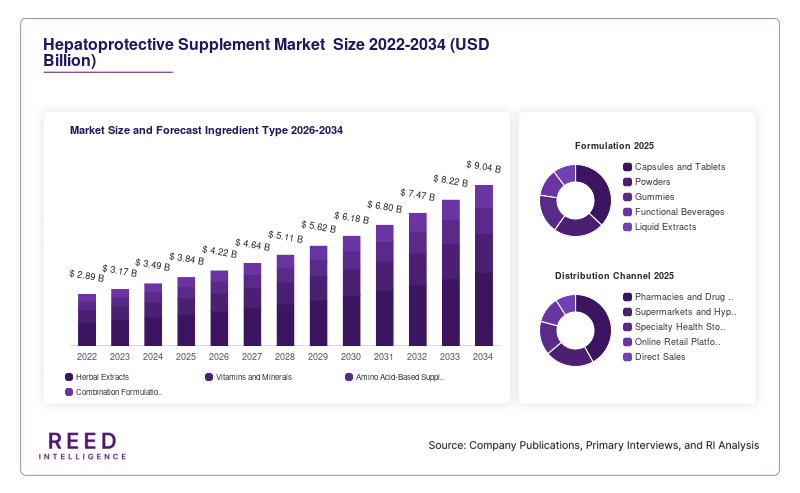
- By ingredient type, herbal extracts accounted for the largest share of 46.8%.
- while amino acid-based supplements are projected to grow at a CAGR of 12.1%.
- By formulation, capsules and tablets led with a 49.6% share.
- whereas functional beverages are expected to expand at a CAGR of 12.6%.
- By distribution channel, pharmacies and drug stores accounted for the largest share of 39.7%.
- while online retail platforms are projected to grow at a CAGR of 13.3%.
- The United States remained the dominant country, with market values of USD 870 million in 2024 and USD 948 million in 2025.
Market Trends
Rising Consumer Preference for Herbal and Plant-Based Liver Support Products
The Hepatoprotective Supplement Market is witnessing strong consumer demand for herbal and plant-derived ingredients due to increasing awareness regarding natural healthcare solutions. Consumers are showing greater interest in products formulated with milk thistle, turmeric, licorice root, schisandra berry, and artichoke extract because these ingredients are commonly associated with liver detoxification and antioxidant support. The growing popularity of clean-label supplements and chemical-free formulations has encouraged manufacturers to focus on botanical extracts with clinically supported health claims. Many wellness-focused consumers now prefer supplements with transparent sourcing information, vegan certification, and minimal synthetic additives.
The trend is particularly visible among millennials and middle-aged consumers who seek preventive healthcare products instead of reactive treatment solutions. Companies are expanding product portfolios with organic and plant-based variants to strengthen their presence in premium supplement categories. Functional combinations containing probiotics, vitamins, and herbal compounds are also gaining traction as consumers seek holistic digestive and liver health management solutions. Increasing social media influence, health education campaigns, and wellness influencers have further accelerated product visibility and adoption across online retail channels.
Expansion of Personalized Nutrition and Digital Wellness Platforms
Personalized nutrition has emerged as an important trend influencing the Hepatoprotective Supplement Market. Consumers are increasingly using digital health applications, wearable devices, and online wellness platforms to track health metrics and select customized supplement solutions. Several nutraceutical companies are partnering with telehealth providers and wellness technology firms to offer individualized liver health programs based on lifestyle habits, age, body composition, and metabolic indicators.
The integration of artificial intelligence and health analytics into supplement recommendations has improved customer engagement and repeat purchases. Subscription-based supplement models are also becoming more common, especially in North America and parts of Europe. Consumers are seeking tailored formulations designed for alcohol detox support, fatty liver management, sports recovery, or metabolic wellness. This trend has encouraged companies to introduce flexible dosage formats such as gummies, sachets, powders, and ready-to-drink products. As personalized healthcare continues to expand globally, manufacturers are expected to invest more heavily in digital consumer engagement strategies and data-driven product development initiatives.
Market Drivers
Increasing Prevalence of Lifestyle-Associated Liver Disorders
The rising prevalence of liver disorders associated with unhealthy lifestyles is a major factor driving the growth of the Hepatoprotective Supplement Market. Increasing rates of obesity, diabetes, alcohol consumption, and high-fat dietary habits have contributed to the growing burden of fatty liver disease and metabolic liver complications worldwide. Consumers are becoming more proactive about maintaining liver health due to increasing awareness regarding the long-term consequences of untreated liver conditions. This shift in consumer behavior has significantly increased demand for preventive dietary supplements that support liver detoxification and regeneration.
Healthcare professionals and nutritionists are also recommending liver-support supplements as part of broader wellness and weight management programs. The growing elderly population has further strengthened market demand because aging individuals are more vulnerable to reduced liver function and medication-related liver stress. Additionally, rising healthcare costs have encouraged consumers to adopt affordable preventive health products, creating favorable conditions for hepatoprotective supplement manufacturers. The combination of lifestyle-related disease prevalence and preventive healthcare awareness is expected to sustain long-term market expansion.
Growth of E-Commerce and Direct-to-Consumer Supplement Sales
The rapid growth of e-commerce platforms and direct-to-consumer distribution channels has significantly improved the accessibility of hepatoprotective supplements worldwide. Online retail channels provide consumers with detailed ingredient information, product comparisons, subscription services, and customer reviews, making supplement purchasing more convenient and transparent. Smaller wellness brands are increasingly using digital marketing strategies and social commerce platforms to expand their global customer base without relying heavily on traditional retail networks.
Cross-border e-commerce has also enabled regional supplement manufacturers to enter international markets more efficiently. The availability of mobile health applications and digital payment systems has further strengthened online supplement adoption, particularly in emerging economies. Companies are investing in influencer partnerships, targeted wellness advertising, and educational campaigns to improve customer trust and brand recognition. In addition, online platforms allow manufacturers to launch niche formulations for specific health concerns, such as liver cleansing, alcohol recovery, or metabolic detoxification. This growing digital ecosystem is expected to remain a major growth catalyst for the market during the forecast period.
Market Restraint
Regulatory Variability and Limited Clinical Standardization
The Hepatoprotective Supplement Market faces significant challenges due to varying regulatory frameworks and limited clinical standardization across countries. Dietary supplement regulations differ substantially between North America, Europe, Asia Pacific, and other regions, creating complexities for manufacturers involved in international distribution. In several countries, supplement products are categorized differently from pharmaceutical products, resulting in varying labeling standards, health claim restrictions, and ingredient approval procedures. These inconsistencies increase operational costs for manufacturers and slow down product launches in multiple regional markets.
Another major restraint is the limited availability of universally accepted clinical evidence supporting the effectiveness of certain hepatoprotective ingredients. While many herbal compounds are traditionally associated with liver health benefits, scientific validation remains inconsistent for some formulations. This issue can affect consumer confidence, especially among healthcare professionals who require evidence-based recommendations. Product quality variation among low-cost manufacturers has also created concerns regarding ingredient purity and dosage accuracy. For example, supplements containing non-standardized herbal extracts may deliver inconsistent therapeutic outcomes, affecting brand reputation and long-term customer trust.
In addition, stricter government monitoring of supplement advertising claims is increasing compliance pressure on manufacturers. Regulatory agencies in multiple regions are implementing tighter scrutiny regarding unsupported detoxification claims and misleading health marketing strategies. Smaller companies with limited regulatory expertise may face difficulties adapting to these evolving standards. As a result, regulatory complexity and inconsistent clinical substantiation continue to limit the full growth potential of the global market.
Market Opportunities
Expansion Potential in Emerging Economies
Emerging economies present substantial growth opportunities for the Hepatoprotective Supplement Market due to improving healthcare awareness, expanding middle-class populations, and rising disposable income levels. Countries across Asia Pacific, Latin America, and parts of the Middle East are witnessing growing consumer interest in preventive healthcare products and nutritional supplementation. Urbanization and changing dietary patterns have increased the incidence of lifestyle-related liver complications, creating stronger demand for liver health management solutions.
Manufacturers are increasingly targeting these markets through localized product launches, affordable pricing strategies, and partnerships with regional distributors. Herbal medicine traditions in countries such as India and China also create favorable consumer acceptance for plant-based hepatoprotective products. Government initiatives promoting nutritional wellness and expansion of retail pharmacy networks are supporting broader supplement accessibility in rural and semi-urban regions. As internet penetration continues to increase, online supplement sales are expected to accelerate rapidly in emerging markets. These factors collectively create strong long-term opportunities for both global and regional market participants.
Product Innovation in Functional Foods and Beverages
The growing popularity of functional foods and beverages is creating new opportunities for companies operating in the Hepatoprotective Supplement Market. Consumers increasingly prefer convenient health solutions integrated into everyday dietary habits rather than relying solely on traditional capsules or tablets. This shift has encouraged manufacturers to develop liver-support beverages, nutritional shots, gummies, flavored powders, and fortified snacks containing hepatoprotective ingredients.
Functional beverage products enriched with turmeric, antioxidants, probiotics, and amino acids are gaining traction among fitness-focused consumers and younger demographics. Companies are also introducing sugar-free and vegan formulations to align with evolving dietary preferences. The combination of convenience, taste, and health functionality is expected to improve consumer adherence and repeat purchases. In addition, partnerships between nutraceutical companies and beverage manufacturers are accelerating product innovation and retail expansion. As demand for multifunctional wellness products continues to rise globally, functional food and beverage integration is expected to become a major revenue-generating opportunity during the forecast period.
Segmental Analysis
By Ingredient Type
Herbal extracts represented the dominant subsegment in the Hepatoprotective Supplement Market in 2024, accounting for approximately 46.8% of total revenue. The strong market position of this segment is primarily linked to growing consumer preference for plant-based wellness products and long-standing awareness regarding traditional herbal remedies for liver health. Ingredients such as milk thistle, turmeric, dandelion root, schisandra berry, and licorice root continue to witness high demand because consumers perceive them as safer alternatives to synthetic formulations. Manufacturers are increasingly investing in standardized botanical extraction technologies to improve product quality, consistency, and bioavailability. In addition, clean-label trends and increasing demand for organic supplements are supporting the widespread adoption of herbal hepatoprotective products across developed and emerging markets.
Amino acid-based supplements are expected to register the fastest CAGR of 12.1% during the forecast period due to increasing interest in metabolic health and sports nutrition applications. Amino acids such as glutathione, N-acetyl cysteine, and L-carnitine are increasingly incorporated into liver support formulations because of their antioxidant and detoxification properties. Consumers focused on athletic recovery, weight management, and metabolic wellness are driving demand for these products. Manufacturers are also launching combination formulations that integrate amino acids with herbal compounds to enhance functional benefits. Clinical research highlighting the role of amino acids in oxidative stress reduction and liver cell protection is further strengthening consumer confidence. The growing popularity of functional beverages and powder-based nutritional supplements is expected to accelerate segment growth over the coming years.
By Formulation
Capsules and tablets dominated the Hepatoprotective Supplement Market in 2024 with a market share of nearly 49.6%. The segment maintains strong consumer preference because these formats offer convenience, accurate dosage control, extended shelf life, and broad retail availability. Capsules are particularly popular among adults seeking daily preventive wellness routines due to their portability and ease of consumption. Manufacturers continue to introduce delayed-release and plant-based capsule technologies to improve ingredient absorption and align with vegan product trends. Pharmacies and healthcare practitioners also prefer capsule and tablet formats because they allow easier recommendation and dosage standardization. The strong retail presence of these products in supermarkets, pharmacies, and online wellness platforms has further reinforced segment dominance across global markets.
Functional beverages are anticipated to grow at the fastest CAGR of 12.6% during the forecast period as consumers increasingly seek convenient and lifestyle-oriented nutritional products. Ready-to-drink detox beverages, wellness shots, and flavored nutritional drinks containing turmeric, antioxidants, amino acids, and probiotics are gaining popularity among younger demographics and fitness-conscious consumers. Beverage-based supplements are particularly attractive because they integrate wellness support into regular dietary habits. Manufacturers are expanding flavor profiles, reducing sugar content, and introducing plant-based formulations to improve market appeal. Strategic partnerships between nutraceutical companies and beverage brands are also accelerating innovation and retail expansion. The rapid growth of convenience stores, gyms, and wellness cafés is expected to create additional distribution opportunities for functional liver-support beverages globally.
By Distribution Channel
Pharmacies and drug stores held the largest share of the Hepatoprotective Supplement Market in 2024, accounting for approximately 39.7% of total revenue. Consumers continue to trust pharmacy-based retail channels because they provide professional guidance, product authenticity, and convenient access to established supplement brands. Healthcare practitioners frequently recommend liver-support products through pharmacies, particularly for consumers managing metabolic disorders, medication-related liver stress, or preventive wellness routines. The strong presence of chain pharmacies in urban markets has further improved product visibility and customer accessibility. Manufacturers also prefer pharmacy partnerships because these outlets support brand credibility and allow targeted health education initiatives. In many countries, pharmacy retail channels remain an important source of consumer trust for dietary supplement purchases.
Online retail platforms are projected to witness the fastest CAGR of 13.3% during the forecast period due to rapid digitalization and changing consumer purchasing behavior. E-commerce channels allow consumers to compare ingredients, review customer feedback, and access subscription-based wellness programs from home. Online platforms also support personalized supplement recommendations and direct-to-consumer marketing strategies, enabling brands to build stronger customer relationships. Social media advertising and wellness influencers continue to play a major role in driving online supplement sales, particularly among younger consumers. In addition, cross-border e-commerce is enabling regional manufacturers to access international markets more efficiently. The growing use of mobile shopping applications and digital payment systems is expected to sustain strong long-term growth for online distribution channels.
Regional Analysis
North America
North America accounted for the largest share of the Hepatoprotective Supplement Market in 2025, representing approximately 34.2% of global revenue. The region is projected to expand at a CAGR of 8.9% between 2026 and 2034 due to strong consumer awareness regarding preventive healthcare and nutritional supplementation. Rising obesity levels, alcohol-related liver conditions, and metabolic disorders continue to support demand for liver health products across the United States and Canada. The presence of established nutraceutical companies, advanced retail infrastructure, and strong online supplement penetration further contributes to regional market dominance.
The United States remains the dominant country in the regional market due to increasing healthcare spending and widespread consumer adoption of wellness supplements. One unique growth factor supporting the market is the high integration of personalized nutrition services and subscription-based wellness platforms. Consumers increasingly seek customized liver support solutions through digital health applications and online wellness consultations. In addition, the growing influence of fitness culture and holistic health trends has encouraged younger consumers to adopt preventive liver care supplements as part of broader wellness routines.
Europe
Europe represented a significant share of the Hepatoprotective Supplement Market in 2025 and is expected to grow at a CAGR of 8.4% during the forecast period. The market benefits from strong consumer preference for herbal formulations and natural healthcare products. Countries across Western Europe are witnessing increasing demand for clean-label supplements supported by transparent ingredient sourcing and sustainability certifications. Regulatory oversight regarding product quality has also improved consumer confidence in premium liver health supplements throughout the region.
Germany remains the leading country in the European market due to its established nutraceutical industry and strong pharmacy distribution network. A unique growth factor in the country is the increasing collaboration between supplement manufacturers and healthcare practitioners promoting preventive wellness programs. Consumers are increasingly using liver-support products alongside detox diets and weight management programs. The aging population in Germany has also contributed to growing demand for supplements targeting metabolic health and medication-related liver stress.
Asia Pacific
Asia Pacific is expected to register the fastest CAGR of 11.4% in the Hepatoprotective Supplement Market from 2026 to 2034. Rapid urbanization, increasing disposable income, and growing awareness regarding lifestyle-related liver diseases are driving regional demand. Consumers across China, India, Japan, and Southeast Asia are adopting preventive healthcare solutions at a faster pace due to rising healthcare education and expanding wellness product availability. Traditional herbal medicine practices in the region also support favorable consumer perception of plant-based hepatoprotective formulations.
China dominates the Asia Pacific market due to its large consumer base and extensive use of traditional herbal supplements. One unique growth factor supporting the country’s market expansion is the strong integration of traditional medicine principles with modern nutraceutical manufacturing technologies. Domestic companies are investing heavily in standardized herbal extraction processes and e-commerce distribution strategies. In addition, rising middle-class spending on health and wellness products continues to strengthen demand for premium liver-support supplements throughout urban Chinese markets.
Middle East & Africa
The Middle East & Africa region is gradually emerging as a promising market for hepatoprotective supplements and is projected to grow at a CAGR of 7.8% during the forecast period. Growing healthcare awareness, rising rates of obesity and diabetes, and expanding urban populations are contributing to market growth. Countries within the Gulf Cooperation Council are witnessing increasing demand for dietary supplements as consumers become more health conscious and proactive regarding preventive wellness management.
Saudi Arabia remains the dominant country within the regional market due to increasing healthcare investments and strong retail pharmacy expansion. A unique growth factor in the country is the rapid adoption of digital healthcare services and wellness-focused mobile applications that encourage supplement usage. Consumers are becoming more aware of metabolic health risks associated with changing dietary habits and sedentary lifestyles. The presence of international supplement brands and increasing availability of imported nutraceutical products are also supporting market development across the country.
Latin America
Latin America accounted for a moderate share of the Hepatoprotective Supplement Market in 2025 and is anticipated to grow at a CAGR of 8.1% through 2034. Rising consumer awareness regarding preventive healthcare and increasing supplement availability through retail pharmacies are contributing to regional growth. Economic development in several countries has improved consumer purchasing power for wellness and nutritional products. Additionally, the growing prevalence of obesity and alcohol-related liver complications has increased demand for hepatoprotective formulations.
Brazil remains the leading country in the Latin American market due to its expanding nutraceutical sector and strong consumer interest in herbal wellness products. One unique growth factor supporting market growth is the increasing popularity of fitness and sports nutrition culture among younger consumers. Many consumers are integrating liver health supplements into broader detoxification and metabolic wellness routines. Local manufacturers are also introducing affordable herbal formulations to improve accessibility among middle-income populations, further strengthening market penetration.
Competitive Landscape
The Hepatoprotective Supplement Market is characterized by the presence of established nutraceutical companies, regional herbal supplement manufacturers, and emerging wellness startups competing through product innovation, ingredient quality, and digital marketing strategies. Leading companies are increasingly investing in research and development activities to improve ingredient standardization and expand clinically supported formulations. Product diversification across capsules, gummies, powders, and functional beverages remains a major competitive strategy.
Nature’s Bounty continues to maintain a strong market position due to its extensive global distribution network and broad portfolio of herbal liver health supplements. The company recently expanded its premium plant-based supplement line with new formulations containing turmeric and milk thistle extracts designed for metabolic wellness support. Several market participants are also focusing on strategic acquisitions and partnerships with e-commerce platforms to improve online sales capabilities.
Manufacturers are increasingly emphasizing clean-label certifications, vegan formulations, and sustainable ingredient sourcing to strengthen brand positioning. Competitive intensity is also increasing as private-label supplement brands enter online retail channels with lower-priced alternatives. Companies operating in the market are expected to continue investing in clinical validation studies, influencer marketing campaigns, and personalized wellness solutions to improve customer retention and expand global market share.
Key Players
- Nature’s Bounty
- Himalaya Wellness Company
- NOW Foods
- Herbalife Ltd.
- GNC Holdings
- Amway Corporation
- Jarrow Formulas
- Solgar Inc.
- Blackmores Limited
- Swisse Wellness
- Nestlé Health Science
- Integria Healthcare
- Life Extension
- Pure Encapsulations
- Thorne HealthTech
Recent Developments
- In February 2026, Himalaya Wellness Company introduced a new liver health supplement range containing standardized milk thistle and turmeric extracts targeting preventive wellness consumers.
- In August 2025, Nestlé Health Science expanded its functional beverage portfolio with a liver-support nutritional drink developed for metabolic health management.
- In November 2025, Herbalife Ltd. announced a partnership with a digital wellness platform to provide personalized supplement subscription services for liver and digestive health support.
- In March 2026, Blackmores Limited increased investment in botanical ingredient research to improve the clinical validation of herbal hepatoprotective formulations.
Hepatoprotective Supplement Market Segments
Ingredient Type
- Herbal Extracts
- Vitamins and Minerals
- Amino Acid-Based Supplements
- Combination Formulations
Formulation
- Capsules and Tablets
- Powders
- Gummies
- Functional Beverages
- Liquid Extracts
Distribution Channel
- Pharmacies and Drug Stores
- Supermarkets and Hypermarkets
- Specialty Health Stores
- Online Retail Platforms
- Direct Sales
By Region
- North America
- Europe
- APAC
- Middle East and Africa
- LATAM