Hepatorenal Syndrome Treatment Market Size, Share & Demand Report By Treatment Type (Vasoconstrictor Therapy, Albumin Therapy, Dialysis Support, Liver Transplantation Support Therapies, Combination Therapy), By Disease Type (Type 1 Hepatorenal Syndrome, Type 2 Hepatorenal Syndrome), By End User (Hospitals, Specialty Liver Clinics, Ambulatory Care Centers, Transplant Centers) By Region & Segment Forecasts, 2026–2034
USD 3950
Market Overview
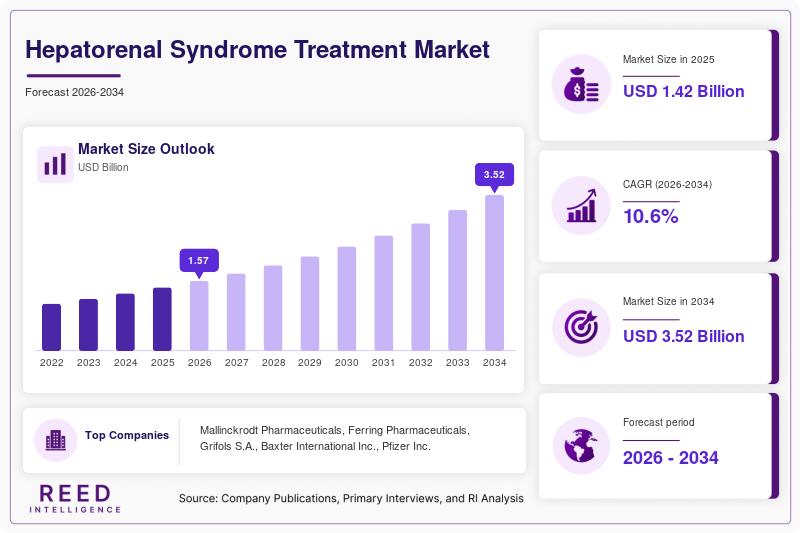
The global Hepatorenal Syndrome Treatment Market size was valued at USD 1.42 billion in 2026 and is projected to reach USD 3.18 billion by 2034, expanding at a CAGR of 10.6% during the forecast period from 2026 to 2034. The market continues to gain momentum due to the growing prevalence of advanced liver diseases, increasing hospitalization rates associated with cirrhosis complications, and rising awareness regarding early diagnosis of hepatorenal syndrome (HRS). Healthcare systems across developed and emerging economies are focusing on improving intensive care management and liver disease treatment pathways, which has strengthened the demand for pharmacological therapies and supportive care solutions for HRS patients.
A major global factor supporting market expansion is the rising burden of alcohol-related liver disorders and chronic hepatitis infections. These conditions have significantly increased the incidence of liver cirrhosis, which remains the primary precursor for hepatorenal syndrome. In addition, healthcare providers are increasingly adopting vasoconstrictor therapies, albumin-based treatments, and liver transplantation support protocols to reduce mortality rates among critically ill patients. Advancements in hospital infrastructure, broader access to specialty hepatology care, and favorable reimbursement frameworks in several countries are also contributing to market growth.
Key Highlights
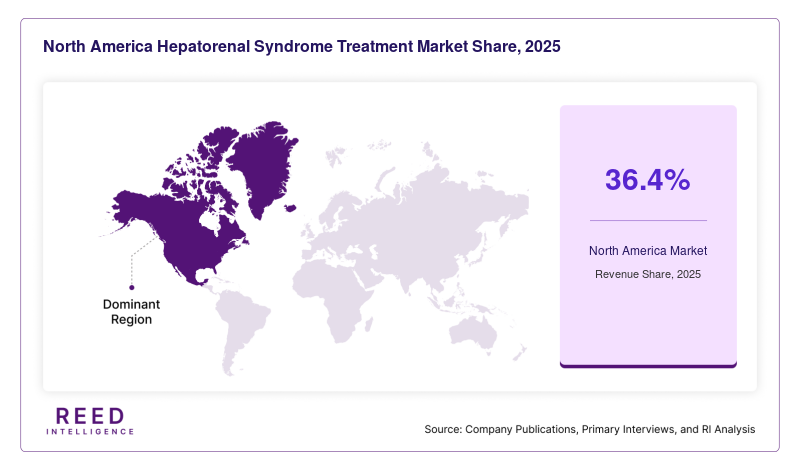
- North America dominated the market with a 36.4% share in 2025, while Asia Pacific is expected to grow at the fastest CAGR of 11.9% during 2026–2034.
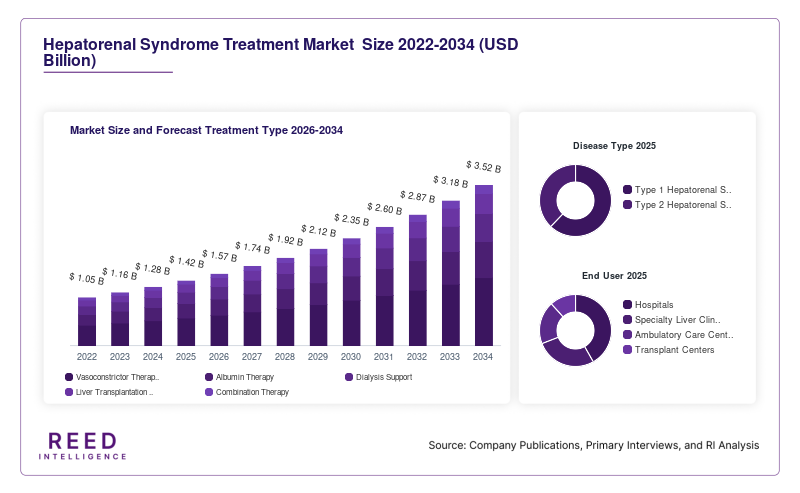
- By treatment type, vasoconstrictor therapy accounted for the largest share of 44.8%, while liver transplantation support therapies are projected to grow at a CAGR of 12.6%.
- By disease type, Type 1 hepatorenal syndrome led with a 58.2% share, whereas Type 2 hepatorenal syndrome is expected to expand at a CAGR of 10.8%.
- By end user, hospitals held a dominant share of 61.7%, while specialty liver clinics are projected to grow at a CAGR of 11.5%.
- The United States remained the dominant country, with market values of USD 468 million in 2024 and USD 515 million in 2025.
Market Trends
Growing adoption of combination drug therapies in critical care settings
Healthcare providers are increasingly adopting combination treatment strategies involving vasoconstrictors, albumin infusion, and renal supportive therapies for patients diagnosed with hepatorenal syndrome. Hospitals are focusing on integrated treatment approaches to stabilize kidney function while improving liver circulation and reducing systemic complications. This trend is becoming more visible in intensive care units where physicians are seeking better survival outcomes among patients with advanced cirrhosis. Pharmaceutical companies are also introducing improved formulations with optimized dosing profiles to reduce adverse effects and improve patient compliance. The growing availability of evidence-based treatment guidelines across North America and Europe has further accelerated the use of combination therapies in clinical settings.
In addition, increasing collaboration between hepatologists, nephrologists, and transplant specialists is supporting personalized treatment planning for critically ill patients. Healthcare institutions are adopting advanced monitoring systems that enable real-time assessment of renal performance and hemodynamic stability during treatment. This integrated care trend is expected to improve clinical efficiency and strengthen long-term demand for innovative hepatorenal syndrome treatment solutions across major healthcare markets.
Rising integration of transplant support programs and specialty liver care
The expansion of liver transplant programs and specialty hepatology centers has become an important trend within the Hepatorenal Syndrome Treatment Market. Patients suffering from severe liver dysfunction often require advanced supportive care before transplantation, creating demand for therapies that stabilize renal function and improve survival rates. Specialty liver clinics are increasingly investing in diagnostic technologies and multidisciplinary care frameworks to identify hepatorenal syndrome at earlier stages. This trend is helping healthcare providers initiate timely interventions that reduce complications and improve treatment success.
Emerging economies are also witnessing growth in transplant awareness campaigns and government-backed liver disease management initiatives. Several hospitals are expanding transplant waiting list management systems and post-transplant recovery programs to support critically ill patients. At the same time, pharmaceutical manufacturers are collaborating with research institutions to evaluate new therapies designed for pre-transplant stabilization. The growing role of specialty care networks and transplant-focused healthcare models is expected to create long-term opportunities for the global market during the forecast period.
Market Drivers
Increasing prevalence of chronic liver diseases and cirrhosis worldwide
The growing incidence of chronic liver disorders remains one of the primary drivers supporting the expansion of the Hepatorenal Syndrome Treatment Market. Rising alcohol consumption, viral hepatitis infections, obesity-related liver disease, and metabolic disorders have significantly increased the global burden of liver cirrhosis. Since hepatorenal syndrome commonly develops in patients with advanced liver failure, the growing number of cirrhosis cases has directly increased demand for specialized treatment solutions. Healthcare systems are reporting higher hospitalization rates related to liver complications, which has strengthened the need for effective renal stabilization therapies.
The burden is particularly visible in developed economies where aging populations and lifestyle-related liver conditions continue to rise. Governments and healthcare organizations are increasing investments in liver disease screening programs and advanced care infrastructure. Improved awareness regarding early-stage diagnosis has also encouraged patients to seek specialized treatment earlier. These factors are collectively supporting long-term growth opportunities for pharmaceutical companies and healthcare providers operating in the market.
Expansion of hospital infrastructure and critical care capabilities
The continuous improvement of hospital infrastructure and intensive care capabilities is another major factor accelerating market growth. Hospitals are increasingly equipped with advanced renal monitoring systems, specialized hepatology departments, and intensive care units designed to manage severe liver complications. This infrastructure development has improved access to treatment for patients diagnosed with hepatorenal syndrome, particularly in urban healthcare centers. Growing healthcare expenditure across several countries is also supporting the adoption of advanced treatment protocols and specialized supportive therapies.
In addition, medical professionals are receiving enhanced training regarding the management of liver-related kidney dysfunction, improving treatment outcomes in critical care settings. Hospitals are also expanding partnerships with transplant centers and specialty clinics to provide integrated patient care. The increasing availability of skilled healthcare professionals and improved reimbursement coverage for liver disease treatments are expected to continue driving market expansion throughout the forecast period.
Market Restraint
High treatment costs and limited access in developing healthcare systems
One of the major challenges affecting the Hepatorenal Syndrome Treatment Market is the high overall cost associated with diagnosis, hospitalization, and long-term supportive treatment. Patients diagnosed with hepatorenal syndrome often require intensive care admission, albumin therapy, vasoconstrictor administration, dialysis support, and in severe cases liver transplantation. These procedures create a significant financial burden for patients and healthcare systems, especially in low-income and middle-income countries where insurance coverage remains limited.
The availability of specialized hepatology care and transplant infrastructure is still uneven across many regions, reducing access to timely treatment. Several developing countries continue to face shortages of trained specialists, transplant centers, and advanced diagnostic facilities. Delayed diagnosis and restricted access to intensive care support frequently lead to poor patient outcomes. In addition, the high cost of novel therapies and biologic treatments may limit their adoption among smaller healthcare providers. Pharmaceutical manufacturers also face pricing pressures from public healthcare systems seeking cost-effective treatment alternatives. These challenges may slow market penetration in underserved regions despite the growing prevalence of liver-related diseases.
Market Opportunities
Expansion of emerging healthcare markets and specialty treatment centers
Emerging economies are creating substantial opportunities for companies operating in the Hepatorenal Syndrome Treatment Market. Countries across Asia Pacific, Latin America, and the Middle East are investing heavily in healthcare modernization and specialty hospital infrastructure. The increasing establishment of liver care centers and transplant-focused hospitals is improving patient access to advanced treatment services. Governments are also implementing public health initiatives aimed at controlling hepatitis infections and improving liver disease management.
Private healthcare providers in emerging regions are expanding intensive care facilities and introducing advanced renal support technologies for critically ill patients. Rising medical tourism in countries with expanding transplant capabilities is further supporting demand for hepatorenal syndrome treatments. Pharmaceutical companies are responding by strengthening regional distribution networks and collaborating with hospitals to improve treatment accessibility. These developments are expected to create strong long-term growth potential for market participants seeking geographic expansion opportunities.
Development of innovative therapies and personalized treatment approaches
The ongoing development of innovative therapies presents another major opportunity for the global market. Researchers and pharmaceutical companies are increasingly focused on creating targeted therapies that improve renal blood flow, reduce systemic inflammation, and enhance patient survival rates. Clinical trials involving biologics, improved vasoconstrictor formulations, and personalized treatment combinations are attracting significant investment across the healthcare industry.
Advances in precision medicine and biomarker-based diagnostics are also supporting the development of individualized treatment strategies for patients with varying stages of liver disease. Healthcare providers are adopting data-driven treatment planning tools that help optimize therapy selection and monitor patient responses more effectively. These innovations may reduce hospitalization duration and improve long-term recovery outcomes. As regulatory agencies continue supporting accelerated approval pathways for critical care therapies, manufacturers are expected to introduce more specialized products designed specifically for hepatorenal syndrome management.
Segmental Analysis
By Treatment Type
Vasoconstrictor therapy dominated the Hepatorenal Syndrome Treatment Market in 2024, accounting for approximately 44.8% of total revenue. The segment continues to maintain strong demand due to its widespread use in improving renal blood flow and stabilizing patients suffering from advanced liver failure. Commonly used therapies such as terlipressin and norepinephrine are increasingly being adopted in hospital intensive care units because of their effectiveness in managing severe renal complications associated with cirrhosis. Healthcare providers prefer vasoconstrictor therapy as part of standard treatment protocols due to clinical evidence supporting improved short-term survival outcomes.
The segment also benefits from growing physician awareness and broader inclusion of these therapies in international clinical practice guidelines. Pharmaceutical companies are investing in improved drug formulations designed to reduce side effects and improve treatment efficiency. The availability of supportive reimbursement policies in developed economies further contributes to the strong adoption rate. Rising hospitalization rates for liver-related complications are expected to maintain demand for vasoconstrictor-based treatment solutions during the forecast period.
By Disease Type
Type 1 hepatorenal syndrome accounted for the largest share of the market in 2024, representing nearly 58.2% of overall revenue. The segment continues to dominate due to the severe and rapidly progressive nature of the condition, which requires immediate hospitalization and intensive treatment intervention. Patients diagnosed with Type 1 HRS often experience sudden kidney function decline associated with advanced liver failure, creating strong demand for vasoconstrictor therapies, albumin infusion, and critical care support. Hospitals and specialty care centers remain the primary treatment settings for these patients.
The high mortality risk associated with untreated Type 1 HRS has encouraged healthcare providers to adopt aggressive treatment protocols and early diagnosis strategies. Increasing awareness among physicians regarding symptom identification and renal monitoring has also improved treatment initiation rates. In developed economies, favorable reimbursement coverage for critical care therapies continues to support segment growth. Rising prevalence of severe cirrhosis cases globally is expected to maintain the segment's leading market position throughout the forecast period.
By End User
Hospitals represented the dominant end-user segment in 2024, accounting for approximately 61.7% of the global Hepatorenal Syndrome Treatment Market. The segment maintains its leading position because patients with hepatorenal syndrome typically require intensive medical supervision, renal monitoring, and specialized supportive therapies. Large hospitals and tertiary care centers are equipped with intensive care units, transplant facilities, and multidisciplinary treatment teams capable of managing severe liver-related complications. The increasing number of hospital admissions associated with cirrhosis and acute kidney injury continues to drive demand within this segment.
Hospitals also benefit from access to advanced diagnostic technologies and specialized treatment protocols that improve patient survival outcomes. Healthcare providers are expanding critical care capabilities and strengthening transplant collaboration networks to manage rising patient volumes more effectively. Favorable reimbursement structures and increasing government healthcare investments are encouraging hospitals to adopt advanced treatment solutions for hepatorenal syndrome management. These factors are expected to support continued segment dominance during the forecast period.
Regional Analysis
North America
North America accounted for the largest share of the Hepatorenal Syndrome Treatment Market in 2025, representing approximately 36.4% of global revenue. The regional market is projected to expand at a CAGR of 9.8% during the forecast period due to strong healthcare infrastructure and widespread availability of advanced critical care services. Hospitals and transplant centers across the United States and Canada continue to adopt evidence-based treatment protocols for liver-related kidney complications. The presence of major pharmaceutical companies and ongoing clinical research activities further support regional market expansion.
The United States remains the dominant contributor to the regional market due to high liver disease prevalence and strong reimbursement coverage for advanced therapies. The country benefits from a large network of specialty hepatology clinics and transplant centers that provide comprehensive treatment support for critically ill patients. Rising cases of alcohol-related liver disease and nonalcoholic fatty liver disease are also increasing hospitalization rates associated with hepatorenal syndrome. Continuous investment in healthcare technology and clinical research continues to strengthen the country's leadership position.
Europe
Europe represented a significant portion of the global Hepatorenal Syndrome Treatment Market in 2025 and is expected to register a CAGR of 9.5% through 2034. The region benefits from strong public healthcare systems, increasing awareness regarding liver disease management, and improved access to specialized treatment facilities. Countries across Western Europe are witnessing growing demand for vasoconstrictor therapies and albumin-based treatment approaches. Rising healthcare expenditure and favorable reimbursement policies are encouraging hospitals to adopt advanced treatment protocols for patients with severe liver dysfunction.
Germany remains the dominant country within the European market due to its advanced hospital infrastructure and strong presence of specialty liver care centers. The country has experienced increasing demand for intensive care management solutions as the prevalence of chronic liver disorders continues to rise. Germany also benefits from active participation in clinical research studies focused on improving outcomes for liver failure patients. Expanding transplant support programs and increased physician awareness regarding early diagnosis are expected to continue driving market growth.
Asia Pacific
Asia Pacific is expected to emerge as the fastest-growing regional market, registering a CAGR of 11.9% during the forecast period. The region is experiencing rapid growth due to increasing healthcare investments, rising awareness regarding liver diseases, and improving access to specialty medical care. Several countries across Asia Pacific continue to report high rates of hepatitis infections and liver cirrhosis, creating a larger patient population requiring advanced treatment. Expanding hospital networks and rising healthcare spending are also supporting market penetration for pharmaceutical therapies and supportive care solutions.
China represents the leading country within the Asia Pacific market due to its large patient population and expanding healthcare infrastructure. Government initiatives aimed at controlling hepatitis infections and improving liver disease treatment accessibility are supporting regional demand. Major hospitals in urban areas are investing in advanced intensive care systems and transplant support programs to improve patient outcomes. The growing presence of domestic pharmaceutical manufacturers and increasing clinical research activities are expected to further strengthen China's role in the global market.
Middle East & Africa
The Middle East & Africa region is gradually expanding within the Hepatorenal Syndrome Treatment Market and is projected to grow at a CAGR of 8.6% between 2026 and 2034. Growth is supported by increasing investments in tertiary healthcare infrastructure and rising awareness regarding liver disease complications. Several countries in the Gulf region are strengthening specialty healthcare services and establishing advanced transplant centers to support critically ill patients. Healthcare modernization initiatives and increasing adoption of intensive care technologies are also contributing to regional market growth.
Saudi Arabia remains the dominant market within the region due to continuous healthcare sector investments and growing demand for advanced liver disease treatment services. The country is expanding its specialty hospital network and improving access to transplant-related care through government-backed healthcare reforms. Rising obesity rates and increasing prevalence of metabolic liver disorders are contributing to a larger patient population requiring hepatorenal syndrome management. The adoption of advanced diagnostic technologies is also improving early-stage disease detection and treatment planning.
Latin America
Latin America is expected to witness steady growth in the Hepatorenal Syndrome Treatment Market, supported by improving healthcare infrastructure and increasing awareness regarding chronic liver disorders. The regional market is forecast to expand at a CAGR of 8.9% during the assessment period. Hospitals across major economies are increasing investments in intensive care services and liver disease management programs. The growing prevalence of alcohol-related liver complications and hepatitis infections continues to create sustained demand for supportive renal therapies and hospitalization services.
Brazil remains the leading country within the Latin American market due to its expanding healthcare network and increasing focus on specialty medical services. Public and private hospitals are investing in advanced liver care facilities and improving access to diagnostic technologies for patients with severe cirrhosis complications. The country is also witnessing increased participation in international clinical research initiatives focused on critical care treatment solutions. Rising healthcare awareness campaigns and improving physician training programs are expected to support long-term market expansion.
Competitive Landscape
The Hepatorenal Syndrome Treatment Market is moderately consolidated, with several multinational pharmaceutical companies competing through product innovation, strategic partnerships, and clinical research investments. Market participants are focusing on expanding their liver disease treatment portfolios and improving access to specialized therapies across developed and emerging healthcare markets. Companies are also increasing investments in biologic therapies and advanced renal support solutions designed to improve patient survival outcomes.
Leading companies are strengthening collaboration with transplant centers, hospitals, and research institutions to accelerate clinical development activities. Product differentiation is increasingly based on treatment efficacy, safety profile, and supportive care integration. Manufacturers are also pursuing regulatory approvals for expanded indications related to liver-associated renal dysfunction.
Key Players
- Mallinckrodt Pharmaceuticals
- Ferring Pharmaceuticals
- Ocelot Bio
- Grifols S.A.
- Baxter International Inc.
- Pfizer Inc.
- Novartis AG
- Cipla Limited
- Sun Pharmaceutical Industries Ltd.
- Terumo Corporation
- Fresenius Medical Care AG
- B. Braun SE
- AstraZeneca plc
- GSK plc
- Abbott Laboratories
Recent Developments
- Mallinckrodt Pharmaceuticals expanded its late-stage clinical program in 2025 to evaluate advanced vasoconstrictor therapies for severe hepatorenal syndrome patients.
- Grifols S.A. announced the expansion of its albumin production capacity in 2025 to support rising global demand for liver disease treatment applications.
- Ocelot Bio entered a strategic research collaboration with specialty liver care institutions in 2024 to accelerate the development of targeted therapies for acute renal complications associated with cirrhosis.
- Baxter International Inc. introduced upgraded renal support technologies in 2025 aimed at improving intensive care management for critically ill liver disease patients.
- Fresenius Medical Care AG expanded its critical care dialysis service network across emerging healthcare markets in 2024 to improve treatment accessibility for advanced renal dysfunction cases.
Hepatorenal Syndrome Treatment Market Segments
Treatment Type
- Vasoconstrictor Therapy
- Albumin Therapy
- Dialysis Support
- Liver Transplantation Support Therapies
- Combination Therapy
Disease Type
- Type 1 Hepatorenal Syndrome
- Type 2 Hepatorenal Syndrome
End User
- Hospitals
- Specialty Liver Clinics
- Ambulatory Care Centers
- Transplant Centers
By Region
- North America
- Europe
- APAC
- Middle East and Africa
- LATAM