Hermansky Pudlak Syndrome Therapeutic Market Size, Share & Demand Report By Therapy Type (Antifibrotic Drugs, Gene Therapy, Supportive Therapy, Others), By Route of Administration (Oral, Injectable, Others), By End-Use (Hospitals, Specialty Clinics, Research Institutes), By Distribution Channel (Hospital Pharmacies, Retail Pharmacies, Online Pharmacies), By Region & Segment Forecasts, 2025–2034
USD 3950
Market Overview
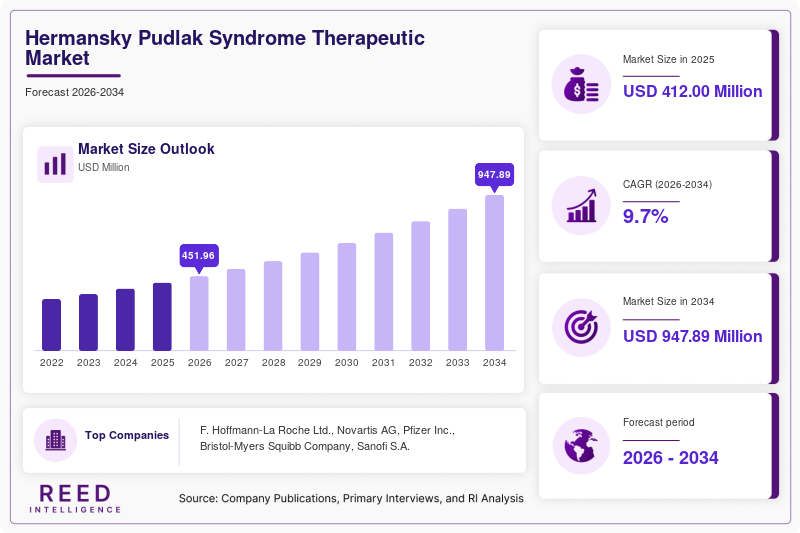
The global Hermansky Pudlak Syndrome Therapeutic Market size was valued at USD 412 million in 2025 and is projected to reach USD 948 million by 2034, expanding at a CAGR of 9.7% during the forecast period (2025–2034). The market is gaining momentum due to increasing research focus on rare genetic disorders and advancements in targeted therapies. Hermansky-Pudlak Syndrome (HPS), a rare autosomal recessive disorder, is characterized by oculocutaneous albinism, bleeding disorders, and pulmonary fibrosis, creating a need for specialized therapeutic interventions.
A key global factor supporting the growth of the Hermansky Pudlak Syndrome Therapeutic Market is the rising investment in orphan drug development. Governments and pharmaceutical companies are prioritizing rare disease treatments through funding, incentives, and regulatory support, which has accelerated the development of novel therapies for HPS.
Key Highlights:
- North America dominated the market with a 41.2% share in 2025, while Asia Pacific is expected to grow at the fastest CAGR of 10.4% through 2034.
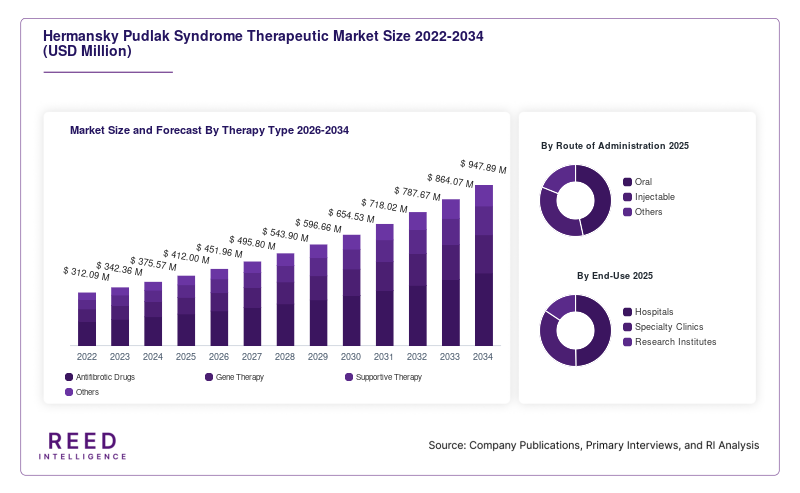
- By therapy type, antifibrotic drugs held the largest share (38.6%), while gene therapy is projected to grow at a CAGR of 11.2%.
- By end-use, hospitals accounted for the leading share (45.1%), while specialty clinics are expected to grow at a CAGR of 10.1%.
- The United States led the market with USD 168 million in 2025, projected to reach USD 182 million in 2026.
Market Trends
Advancements in Gene Therapy for Rare Disorders
The Hermansky Pudlak Syndrome Therapeutic Market is witnessing increased focus on gene therapy approaches. Researchers are exploring genetic correction techniques to address the root cause of HPS. These therapies aim to provide long-term solutions rather than symptomatic treatment, creating new possibilities for disease management.
Growing Adoption of Precision Medicine
Precision medicine is becoming a key trend in the treatment of Hermansky-Pudlak Syndrome. Personalized treatment strategies based on genetic profiling are improving therapeutic outcomes. The integration of genomics and advanced diagnostics is supporting the development of targeted therapies.
Market Drivers
Increasing Investment in Rare Disease Research
The growing investment in rare disease research is a major driver of the Hermansky Pudlak Syndrome Therapeutic Market. Pharmaceutical companies and research institutions are focusing on developing innovative therapies for rare genetic disorders. This is accelerating drug development and expanding treatment options.
Supportive Regulatory Framework for Orphan Drugs
Regulatory support for orphan drugs is encouraging market growth. Governments are providing incentives such as tax benefits, market exclusivity, and expedited approvals. These measures are promoting the development and commercialization of HPS therapies.
Market Restraint
Limited Patient Population and High Treatment Costs
A key restraint in the Hermansky Pudlak Syndrome Therapeutic Market is the limited patient population. As a rare disorder, the number of diagnosed cases is relatively low, which affects market scalability.
Additionally, high treatment costs associated with advanced therapies, including gene therapy, can limit accessibility. The financial burden on healthcare systems and patients may hinder widespread adoption.
Market Opportunities
Development of Targeted Antifibrotic Therapies
The development of targeted antifibrotic therapies presents a significant opportunity in the Hermansky Pudlak Syndrome Therapeutic Market. Pulmonary fibrosis is a major complication of HPS, and effective treatments can improve patient outcomes.
Expansion of Clinical Trials and Pipeline Drugs
Increasing clinical trials and a strong pipeline of investigational drugs are creating growth opportunities. Pharmaceutical companies are focusing on innovative treatment approaches, including gene editing and biologics, to address unmet medical needs.
Segmental Analysis
By Therapy Type
Antifibrotic drugs dominated the Hermansky Pudlak Syndrome Therapeutic Market in 2025, accounting for 38.6% of the total share. These drugs are widely used to manage pulmonary fibrosis, a major complication of HPS.
Gene therapy is expected to grow at the fastest CAGR of 11.2% during the forecast period. The potential to address the underlying genetic cause of HPS is driving interest in gene-based treatments.
By Route of Administration
Oral therapies held the largest share of 42.8% in 2025, supported by ease of administration and patient compliance.
Injectable therapies are expected to grow at a CAGR of 10.3%, driven by the development of biologics and advanced treatment options.
By End-Use
Hospitals accounted for 45.1% of the market in 2025, supported by availability of advanced diagnostic and treatment facilities.
Specialty clinics are expected to grow at a CAGR of 10.1%, driven by increasing focus on personalized care.
By Distribution Channel
Hospital pharmacies held the largest share of 48.3% in 2025, due to direct access to treatment.
Online pharmacies are expected to grow at a CAGR of 10.5%, supported by increasing digitalization.
Regional Analysis
North America
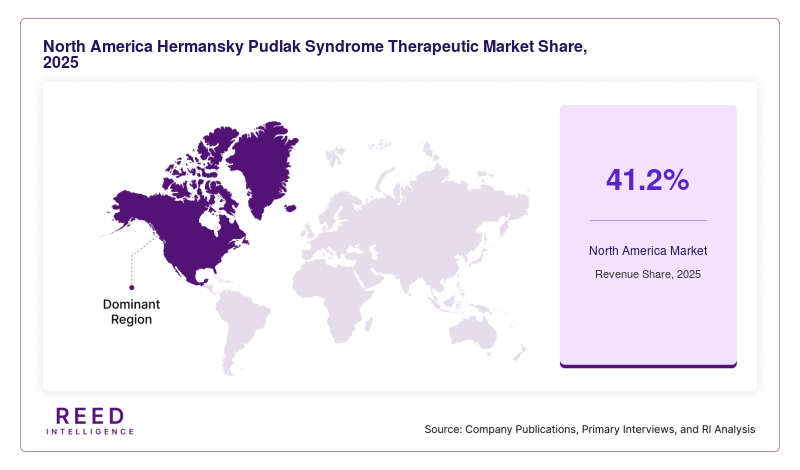
North America accounted for 41.2% of the Hermansky Pudlak Syndrome Therapeutic Market share in 2025 and is expected to grow at a CAGR of 9.5% during the forecast period. The region’s growth is supported by advanced healthcare infrastructure and strong research capabilities.
The United States dominated the regional market due to its robust pharmaceutical industry and high investment in rare disease research. The availability of advanced treatment options is driving growth.
Europe
Europe held a market share of 27.6% in 2025 and is projected to grow at a CAGR of 9.1% through 2034. The region’s focus on healthcare innovation and regulatory support is contributing to market growth.
Germany emerged as the leading country, supported by strong research institutions and healthcare systems. The adoption of advanced therapies is increasing.
Asia Pacific
Asia Pacific accounted for 18.9% of the market in 2025 and is expected to grow at the fastest CAGR of 10.4%. Increasing healthcare investments and improving diagnostic capabilities are driving growth.
Japan dominated the regional market due to its advanced medical research and focus on rare diseases. The development of innovative therapies is supporting market expansion.
Middle East & Africa
The Middle East & Africa held a market share of 6.1% in 2025 and is projected to grow at a CAGR of 9.3%. The region is witnessing gradual improvements in healthcare infrastructure.
Saudi Arabia led the regional market due to increasing healthcare investments. The adoption of advanced treatment solutions is growing.
Latin America
Latin America accounted for 6.2% of the market in 2025 and is expected to grow at a CAGR of 9.6%. Increasing awareness and healthcare development are supporting growth.
Brazil dominated the regional market due to expanding healthcare services. The demand for rare disease treatments is increasing.
Competitive Landscape
The Hermansky Pudlak Syndrome Therapeutic Market is characterized by a limited number of players due to the niche nature of the disease. Companies are focusing on research and development to introduce innovative therapies.
F. Hoffmann-La Roche Ltd. is a leading player in the market, known for its strong pipeline in rare disease therapeutics. The company is actively investing in gene therapy research for genetic disorders.
Other companies are focusing on collaborations and clinical trials to expand their product offerings. Strategic partnerships and innovation remain key growth strategies.
Key Players List
- F. Hoffmann-La Roche Ltd.
- Novartis AG
- Pfizer Inc.
- Bristol-Myers Squibb Company
- Sanofi S.A.
- GlaxoSmithKline plc
- AstraZeneca plc
- Regeneron Pharmaceuticals, Inc.
- Vertex Pharmaceuticals Incorporated
- BioMarin Pharmaceutical Inc.
- Amgen Inc.
- Takeda Pharmaceutical Company Limited
- Sarepta Therapeutics, Inc.
- Ionis Pharmaceuticals, Inc.
- Alnylam Pharmaceuticals, Inc.
Recent Developments
- F. Hoffmann-La Roche Ltd. expanded its research in gene therapy for rare diseases.
- Novartis AG initiated clinical trials for genetic disorder treatments.
- Pfizer Inc. increased investment in rare disease therapeutics.
- Regeneron Pharmaceuticals focused on biologics for genetic conditions.
- Vertex Pharmaceuticals advanced its pipeline for rare genetic disorders.
Hermansky Pudlak Syndrome Therapeutic Market Segments
By Therapy Type
- Antifibrotic Drugs
- Gene Therapy
- Supportive Therapy
- Others
By Route of Administration
- Oral
- Injectable
- Others
By End-Use
- Hospitals
- Specialty Clinics
- Research Institutes
By Distribution Channel
- Hospital Pharmacies
- Retail Pharmacies
- Online Pharmacies
By Region
- North America
- Europe
- APAC
- Middle East and Africa
- LATAM