Highly Reactive Polyisobutylene Market Size, Share Demand Report By Product Type (Conventional HR-PIB, Ultra-High Reactivity PIB), By Application (Lubricant Additives, Fuel Additives, Adhesives & Sealants), By End-Use Industry (Automotive, Industrial, Marine, Aerospace) By Region & Segment Forecasts, 2026–2034
USD 3950
Market Overview
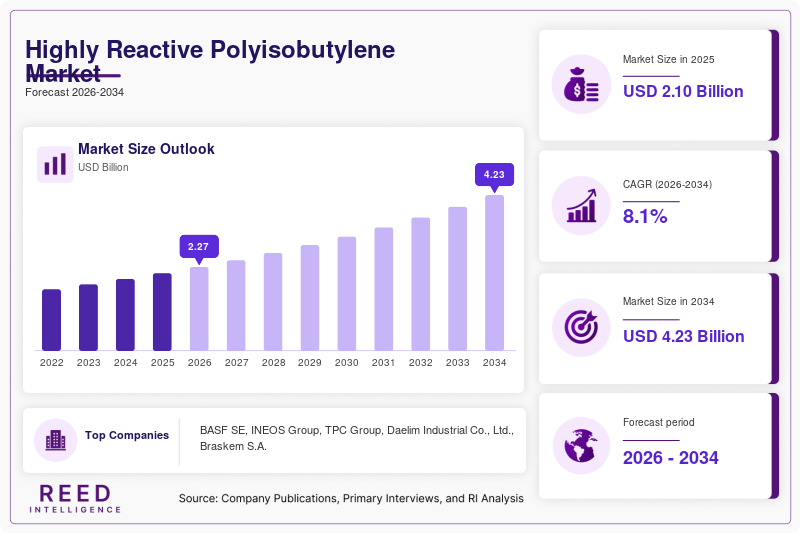
The Highly Reactive Polyisobutylene Market size was valued at approximately USD 2.1 billion in 2026 and is projected to reach around USD 3.9 billion by 2034, expanding at a CAGR of 8.1% during the forecast period (2026–2034). Highly reactive polyisobutylene (HR-PIB) is widely used as a key intermediate in lubricant additives, fuel additives, and sealants due to its enhanced reactivity and superior performance characteristics. Its ability to improve viscosity, oxidation stability, and deposit control has made it increasingly important in automotive and industrial applications.
A key global factor supporting market growth is the steady expansion of the automotive and transportation sectors, particularly in emerging economies. The increasing demand for high-performance engine oils and fuel efficiency solutions has driven the adoption of HR-PIB-based additives. Additionally, environmental regulations focusing on emissions reduction have encouraged the use of advanced lubricant formulations, further boosting demand.
Key Highlights
- North America dominated the market with a 33.8% share in 2025.
- Asia Pacific is expected to grow at the fastest CAGR of 9.4% during 2026–2034.
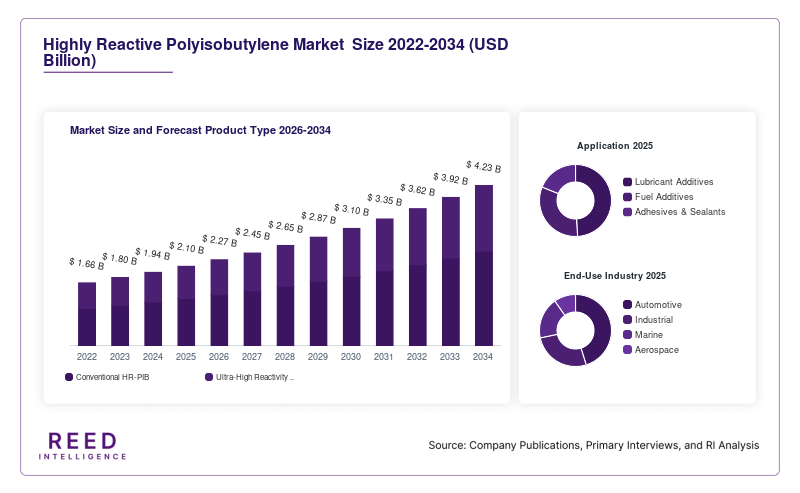
- By product type, conventional HR-PIB accounted for the largest share of 57.6%, while ultra-high reactivity PIB is projected to grow at a CAGR of 9.9%.
- By application, lubricant additives led with a 46.2% share, whereas fuel additives are expected to expand at a CAGR of 9.1%.
- The United States remained the dominant country, with market values of USD 520 million in 2024 and USD 565 million in 2025.
Market Trends
Increasing adoption of high-performance lubricant formulations
The growing need for efficient and durable engine systems has significantly influenced the adoption of high-performance lubricant formulations containing highly reactive polyisobutylene. Manufacturers are increasingly focusing on producing lubricants that can withstand extreme temperatures and pressures while maintaining engine cleanliness. HR-PIB acts as a dispersant precursor, helping reduce sludge formation and improving fuel economy. This trend is particularly evident in regions with strict emission regulations, where automotive manufacturers are compelled to meet higher efficiency standards.
Moreover, the transition toward synthetic and semi-synthetic lubricants has further enhanced the relevance of HR-PIB. These formulations require advanced additives that provide better oxidation resistance and thermal stability. As a result, lubricant producers are investing in improved HR-PIB grades to cater to evolving industry requirements. This shift is expected to continue as industrial machinery and automotive technologies become more sophisticated, driving sustained demand for high-quality additive components.
Rising demand from fuel additive applications
Another important trend shaping the Highly Reactive Polyisobutylene Market is the rising demand for fuel additives aimed at improving combustion efficiency and reducing emissions. HR-PIB is widely used in the production of polyisobutylene succinimide (PIBSI), a critical detergent additive that prevents deposit formation in engines. With increasing concerns about fuel efficiency and environmental impact, fuel additive manufacturers are integrating HR-PIB into advanced formulations.
The growth of this trend is supported by regulatory frameworks that encourage cleaner fuel usage and reduced particulate emissions. Emerging economies are also witnessing a rise in fuel consumption, leading to increased adoption of additive-enhanced fuels. Additionally, the expansion of commercial transportation and logistics sectors has further contributed to the demand. This trend is expected to gain momentum as governments and industries continue to prioritize sustainable and efficient fuel solutions.
Market Drivers
Expansion of the automotive and transportation industry
The consistent growth of the global automotive and transportation industry is a major driver of the Highly Reactive Polyisobutylene Market. Increasing vehicle production, especially in developing regions, has led to higher demand for lubricants and fuel additives. HR-PIB plays a crucial role in enhancing the performance of these products by improving engine cleanliness and extending service intervals. As vehicle ownership rises, the need for maintenance products such as engine oils and fuel treatments also increases.
Furthermore, the shift toward high-efficiency engines has amplified the requirement for advanced additive solutions. Automakers are focusing on reducing emissions and improving fuel economy, which directly impacts the formulation of lubricants. HR-PIB-based additives provide the necessary properties to meet these demands. This growing integration of advanced materials in automotive applications continues to support the market’s upward trajectory.
Increasing regulatory focus on emission control
Environmental regulations aimed at reducing emissions have significantly contributed to the demand for highly reactive polyisobutylene. Governments across the globe are implementing stricter standards for vehicle emissions, pushing manufacturers to adopt cleaner and more efficient technologies. HR-PIB is essential in producing additives that enhance combustion efficiency and minimize harmful emissions.
In addition, regulatory bodies are encouraging the use of cleaner fuels and advanced lubricants, further driving the demand for HR-PIB. The need to comply with these standards has led to increased research and development activities among chemical manufacturers. As regulations continue to evolve, the demand for high-performance additive components is expected to grow, reinforcing the importance of HR-PIB in achieving environmental compliance.
Market Restraint
Volatility in raw material prices and supply chain disruptions
Fluctuations in raw material prices pose a significant challenge to the Highly Reactive Polyisobutylene Market. HR-PIB is derived from petrochemical feedstocks, which are subject to price volatility due to changes in crude oil markets. These fluctuations directly impact production costs, making it difficult for manufacturers to maintain stable pricing strategies. Additionally, geopolitical tensions and supply chain disruptions can further exacerbate the situation, leading to inconsistent availability of raw materials.
The impact of this restraint is particularly evident in regions heavily dependent on imports for feedstock supply. Manufacturers may face reduced profit margins or be forced to pass on increased costs to end users, potentially affecting demand. For example, disruptions in global shipping routes or refinery operations can delay production schedules and limit supply. Addressing these challenges requires strategic sourcing and investment in alternative raw material solutions, which may involve additional costs and time.
Market Opportunities
Growth in emerging economies and industrialization
Emerging economies present substantial growth opportunities for the Highly Reactive Polyisobutylene Market due to rapid industrialization and urbanization. Countries in Asia Pacific, Latin America, and parts of Africa are witnessing increased investments in infrastructure and manufacturing activities. This expansion has led to higher demand for industrial lubricants and fuel additives, creating a favorable environment for HR-PIB adoption.
Additionally, rising disposable incomes and expanding middle-class populations in these regions have contributed to increased vehicle ownership. This trend further drives the demand for automotive maintenance products, including lubricants enhanced with HR-PIB. Market participants are focusing on establishing production facilities and distribution networks in these regions to capitalize on growth opportunities. The ongoing development of industrial sectors is expected to sustain demand over the forecast period.
Technological advancements in polymer processing
Advancements in polymer processing technologies offer promising opportunities for the Highly Reactive Polyisobutylene Market. Innovations in catalytic processes and production techniques have enabled manufacturers to produce HR-PIB with higher purity and improved reactivity. These advancements enhance the efficiency and performance of downstream applications, making HR-PIB more attractive to end users.
Furthermore, research efforts aimed at developing environmentally friendly production methods are gaining traction. The adoption of sustainable practices not only reduces environmental impact but also aligns with regulatory requirements. Companies investing in advanced manufacturing technologies can achieve cost efficiencies and product differentiation. This creates opportunities for market expansion, particularly in high-value applications such as specialty lubricants and advanced fuel additives.
Segmental Analysis
By Product Type
The conventional highly reactive polyisobutylene segment dominated the market, accounting for approximately 57.6% of the share in 2024. This dominance is attributed to its widespread use in lubricant and fuel additive formulations. Conventional HR-PIB offers a balance of performance and cost-effectiveness, making it suitable for large-scale applications. Its ability to enhance viscosity and improve deposit control has made it a preferred choice among manufacturers.
The ultra-high reactivity PIB segment is expected to witness the fastest growth, with a CAGR of 9.9% during the forecast period. This growth is driven by increasing demand for high-performance additives that require enhanced reactivity. Ultra-high reactivity PIB provides superior efficiency in chemical reactions, making it ideal for advanced applications. The rising focus on improving product performance and meeting stringent regulatory standards is expected to support its growth.
By Application
Lubricant additives emerged as the dominant application segment, holding a share of 46.2% in 2024. HR-PIB is widely used in producing dispersants that improve engine performance and longevity. The growing demand for high-quality lubricants in automotive and industrial sectors has contributed to this segment’s dominance. Additionally, advancements in lubricant formulations have increased the reliance on HR-PIB.
Fuel additives are projected to be the fastest-growing application segment, with a CAGR of 9.1%. The increasing emphasis on fuel efficiency and emission reduction has driven the adoption of HR-PIB in fuel additive formulations. Its role in preventing deposit formation and improving combustion efficiency makes it a valuable component. The expansion of transportation and logistics sectors further supports this growth.
By End-Use Industry
The automotive industry dominated the market, accounting for a significant share in 2024. The use of HR-PIB in engine oils and fuel additives has made it essential for vehicle maintenance and performance. The continuous growth of the automotive sector, particularly in emerging economies, has contributed to this dominance.
The industrial sector is expected to grow at the fastest CAGR during the forecast period. Increasing industrial activities and the need for efficient machinery have driven the demand for high-performance lubricants. HR-PIB plays a crucial role in enhancing the performance and durability of industrial equipment. The ongoing expansion of manufacturing industries is expected to support this growth.
Regional Analysis
North America
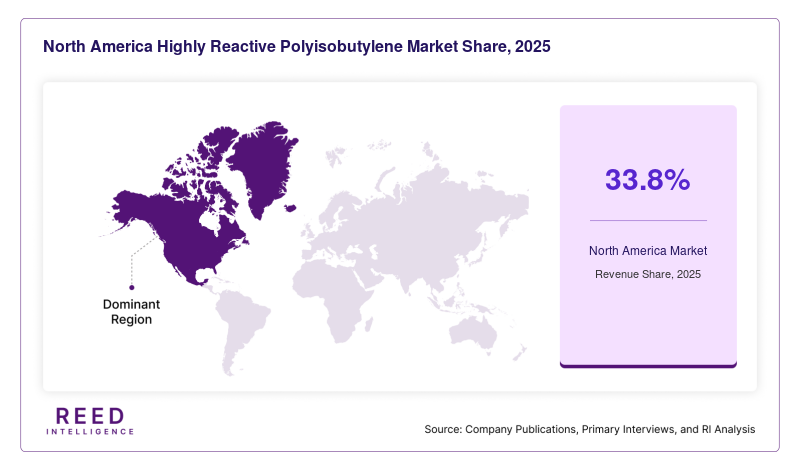
North America accounted for a significant share of the Highly Reactive Polyisobutylene Market, holding approximately 33.8% in 2025. The region is expected to grow at a CAGR of 7.5% during the forecast period. The presence of established automotive and chemical industries has contributed to steady demand for HR-PIB. Additionally, stringent emission regulations have encouraged the adoption of high-performance lubricant additives, supporting market growth.
The United States remains the dominant country in this region, driven by its advanced manufacturing base and strong focus on technological innovation. A key growth factor is the increasing investment in research and development for sustainable lubricant solutions. Companies are focusing on developing eco-friendly formulations that comply with regulatory standards, further boosting demand for HR-PIB in the region.
Europe
Europe held a market share of around 26.4% in 2025 and is projected to grow at a CAGR of 7.8% through 2034. The region’s strong emphasis on environmental sustainability and emission reduction has driven the adoption of advanced fuel additives and lubricants. The presence of leading automotive manufacturers further supports market expansion.
Germany stands out as the dominant country in Europe, owing to its robust automotive industry and technological expertise. A unique growth factor in this region is the increasing shift toward electric and hybrid vehicles, which still require specialized lubricants for components. This transition is encouraging innovation in additive formulations, including the use of HR-PIB.
Asia Pacific
Asia Pacific is the fastest-growing region, with a projected CAGR of 9.4% during the forecast period and a market share of 24.7% in 2025. Rapid industrialization, urbanization, and increasing vehicle production are key factors driving growth. The expanding manufacturing sector also contributes to rising demand for industrial lubricants.
China dominates the Asia Pacific market due to its large-scale automotive production and growing chemical industry. A significant growth factor is the government’s focus on improving fuel efficiency and reducing emissions. This has led to increased adoption of advanced additives, including HR-PIB, across various applications.
Middle East & Africa
The Middle East & Africa region accounted for a smaller share of approximately 8.1% in 2025 and is expected to grow at a CAGR of 6.9%. The region’s oil and gas sector plays a crucial role in driving demand for HR-PIB-based products. Industrial development and infrastructure projects also contribute to market growth.
Saudi Arabia is the leading country in this region, supported by its strong petrochemical industry. A unique growth factor is the availability of raw materials, which provides a competitive advantage for local production. This supports the expansion of HR-PIB manufacturing and its downstream applications.
Latin America
Latin America held a market share of about 7.0% in 2025 and is projected to grow at a CAGR of 7.2%. The region’s growing automotive sector and increasing industrial activities have contributed to steady demand for HR-PIB. Economic development and infrastructure investments further support market expansion.
Brazil emerges as the dominant country, driven by its large automotive market. A key growth factor is the rising demand for fuel-efficient vehicles, which has increased the adoption of advanced fuel additives. This trend is expected to drive the use of HR-PIB in the region.
Competitive Landscape
The Highly Reactive Polyisobutylene Market is characterized by the presence of several established players focusing on product innovation and capacity expansion. Leading companies are investing in research and development to improve product quality and meet evolving industry requirements. Strategic collaborations and mergers are also common, enabling companies to strengthen their market position.
BASF SE is recognized as a leading player in the market, leveraging its extensive product portfolio and global presence. A recent development includes the expansion of its production capacity for HR-PIB to meet increasing demand from lubricant and fuel additive manufacturers. Other key players are also focusing on sustainability initiatives and technological advancements to remain competitive.
Key Players
- BASF SE
- INEOS Group
- TPC Group
- Daelim Industrial Co. Ltd.
- Braskem S.A.
- Reliance Industries Limited
- SIBUR Holding
- ExxonMobil Chemical Company
- Chevron Phillips Chemical Company
- Lanxess AG
- Evonik Industries AG
- Infineum International Limited
- Oronite Company LLC
- Lubrizol Corporation
- Formosa Plastics Corporation
Recent Developments
- BASF SE expanded its HR-PIB production capacity in Asia to meet rising regional demand.
- INEOS Group announced a new research initiative focused on improving polymer efficiency and sustainability.
- Lubrizol Corporation introduced a new additive formulation incorporating advanced HR-PIB for enhanced engine performance.
Highly Reactive Polyisobutylene Market Segments
Product Type
- Conventional HR-PIB
- Ultra-High Reactivity PIB
Application
- Lubricant Additives
- Fuel Additives
- Adhesives & Sealants
End-Use Industry
- Automotive
- Industrial
- Marine
- Aerospace
By Region
- North America
- Europe
- APAC
- Middle East and Africa
- LATAM