Histoplasmosis Treatment Market Size, Share, Trends & Growth Analysis Report By Drug Type (Amphotericin B, Itraconazole, Fluconazole, Other Azole-Based Therapies), By Application (Pulmonary Histoplasmosis, Disseminated Histoplasmosis, Acute Histoplasmosis, Chronic Histoplasmosis), By End-Use (Hospitals, Specialty Clinics, Homecare Settings, Diagnostic Centers) and Regional Forecasts, 2025–2034
USD 3950
Market Overview
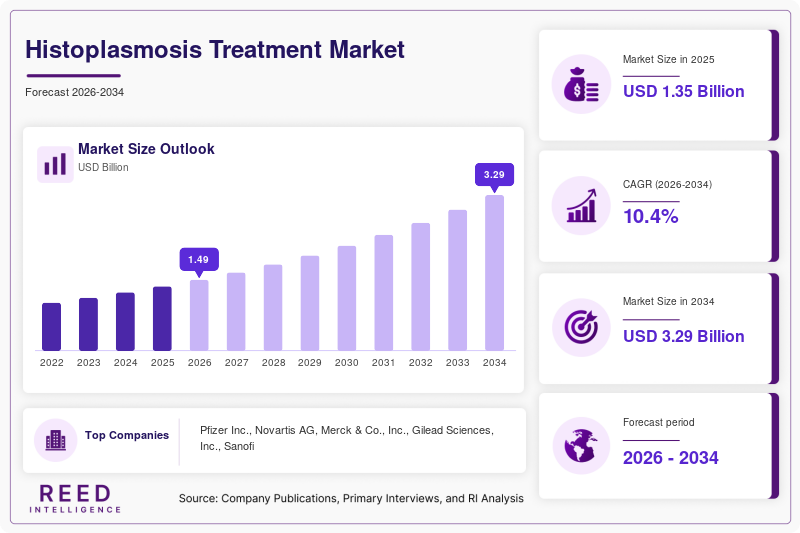
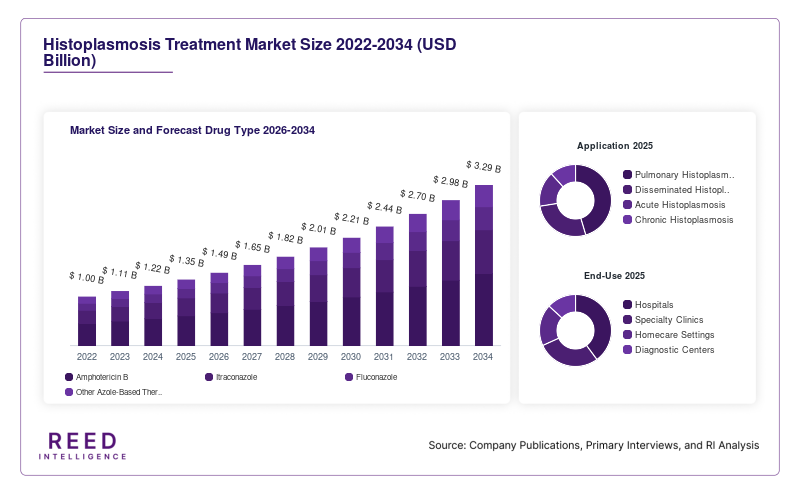
The Histoplasmosis Treatment Market size is estimated at approximately USD 1.35 billion, with projections indicating growth to around USD 1.48 billion in 2026. By 2034, the market is forecasted to reach nearly USD 3.25 billion, reflecting a compound annual growth rate (CAGR) of approximately 10.4% during 2025–2034. This growth trajectory reflects increased healthcare expenditure, broader access to antifungal drugs, and advancements in treatment protocols.
Several key growth factors are contributing to market expansion. First, the rising incidence of immunocompromised conditions such as HIV/AIDS and organ transplant cases is increasing susceptibility to histoplasmosis infections. Second, improved diagnostic technologies, including molecular assays and antigen detection tests, are enabling earlier detection and treatment initiation. Third, increasing investments in healthcare infrastructure, particularly in emerging economies, are improving access to antifungal medications and specialized care.
Key Highlights
- Global market size (2025): ~USD 1.35 billion
The market reflects steady demand driven by rising fungal infections and improved diagnosis rates across healthcare systems. - Forecast market size (2034): ~USD 3.25 billion
This growth is supported by expanding treatment access and increasing investments in antifungal drug development worldwide. - CAGR (2025–2034): ~10.4%
The consistent CAGR indicates strong long-term growth potential supported by clinical advancements and rising disease awareness. - Increasing prevalence of immunocompromised populations
Growing cases of HIV/AIDS, cancer, and organ transplants are increasing susceptibility to histoplasmosis infections globally. - Advancements in diagnostic technologies
Improved tools such as PCR and antigen testing enable early detection, leading to timely treatment and better patient outcomes.
Market Trends
Rising Adoption of Advanced Diagnostic Techniques
One of the prominent trends shaping the Histoplasmosis Treatment Market is the increasing adoption of advanced diagnostic techniques. Traditional diagnostic methods, such as culture-based testing, often require longer processing times, delaying treatment initiation. However, the introduction of rapid antigen detection assays, polymerase chain reaction (PCR)-based diagnostics, and enzyme immunoassays has significantly improved detection accuracy and speed. These advancements allow healthcare providers to identify histoplasmosis infections at earlier stages, leading to more effective treatment outcomes. Furthermore, integration of automated laboratory systems and point-of-care testing solutions is improving diagnostic accessibility in both developed and developing regions. As healthcare systems prioritize early diagnosis and intervention, demand for advanced diagnostic tools continues to grow alongside antifungal treatments.
Shift Toward Combination Antifungal Therapy
Another key trend is the increasing use of combination antifungal therapies to manage severe and disseminated histoplasmosis cases. Monotherapy, particularly with agents such as amphotericin B or itraconazole, remains common; however, in complex or resistant cases, combination regimens are gaining traction. This approach aims to enhance treatment efficacy, reduce fungal resistance, and minimize relapse rates. Clinical guidelines are gradually incorporating combination strategies for high-risk patients, especially those with compromised immune systems. Pharmaceutical research is also exploring synergistic drug combinations that can improve therapeutic outcomes while reducing toxicity. This trend is particularly relevant in hospital settings where critical care management of systemic fungal infections is required.
Market Drivers
Increasing Prevalence of Immunocompromised Populations
The growing population of immunocompromised individuals is a major driver of the Histoplasmosis Treatment Market. Conditions such as HIV/AIDS, cancer, diabetes, and post-organ transplant immunosuppression significantly increase vulnerability to fungal infections, including histoplasmosis. As global life expectancy rises and chronic diseases become more prevalent, the number of individuals at risk continues to expand. In regions with high HIV prevalence, histoplasmosis is often underdiagnosed, further contributing to disease burden. Governments and healthcare organizations are focusing on improving disease surveillance and treatment accessibility, which in turn is driving demand for antifungal medications. This demographic shift is expected to sustain long-term growth in the market, as more patients require continuous or repeated antifungal therapy.
Advancements in Antifungal Drug Development
Advancements in antifungal drug development are significantly contributing to market growth. Pharmaceutical companies are investing in research to develop next-generation antifungal agents with improved efficacy, reduced toxicity, and broader spectrum activity. Existing drugs such as itraconazole and amphotericin B remain standard treatments, but newer formulations and drug delivery systems are enhancing patient compliance and reducing side effects. Liposomal amphotericin B, for example, offers improved safety profiles compared to conventional formulations. Additionally, research into novel azoles and echinocandins is expanding therapeutic options. These innovations are particularly important for treating resistant strains and severe infections. Continuous R&D efforts, coupled with regulatory support for orphan and rare disease treatments, are accelerating the introduction of improved antifungal therapies.
Market Restraint
One of the primary restraints in the Histoplasmosis Treatment Market is the limited awareness and underdiagnosis of the disease, particularly in endemic and resource-limited regions. Histoplasmosis often presents with nonspecific symptoms such as fever, cough, and fatigue, which can be mistaken for other respiratory infections like tuberculosis or pneumonia. This diagnostic overlap leads to misdiagnosis or delayed treatment initiation. In many developing countries, access to advanced diagnostic tools is limited, and healthcare professionals may lack sufficient training to identify fungal infections accurately.
Additionally, the high cost of antifungal therapies and prolonged treatment duration can pose financial challenges for patients and healthcare systems. Drugs such as liposomal amphotericin B and prolonged itraconazole therapy require sustained medical supervision, increasing overall treatment costs. In low-income regions, these cost barriers can restrict patient access to effective care. Limited reimbursement policies and inadequate healthcare infrastructure further exacerbate the issue. As a result, many patients may discontinue treatment prematurely, leading to recurrence or complications. These factors collectively hinder market penetration and slow adoption rates in certain geographies, impacting overall market growth.
Market Opportunities
Expansion in Emerging Economies
Emerging economies present significant growth opportunities for the Histoplasmosis Treatment Market due to improving healthcare infrastructure, rising awareness, and increasing government initiatives to combat infectious diseases. Countries in Asia Pacific, Latin America, and parts of Africa are witnessing gradual improvements in diagnostic capabilities and access to antifungal medications. As healthcare spending increases and public health programs expand, more patients are being diagnosed and treated for histoplasmosis. Pharmaceutical companies are also focusing on expanding their distribution networks and partnerships in these regions to improve product accessibility. The growing burden of immunocompromised conditions in emerging markets further strengthens demand for effective treatment options. This creates a favorable environment for market expansion, particularly for affordable generic antifungal drugs.
Development of Novel Drug Delivery Systems
The development of advanced drug delivery systems represents another promising opportunity in the market. Innovations such as liposomal formulations, controlled-release systems, and targeted drug delivery are improving the efficacy and safety of antifungal treatments. These technologies help reduce drug toxicity, enhance bioavailability, and improve patient compliance. For example, liposomal amphotericin B minimizes renal toxicity while maintaining therapeutic effectiveness. Additionally, oral formulations with improved absorption profiles are reducing the need for prolonged hospital-based intravenous therapy. Pharmaceutical companies are increasingly investing in formulation research to differentiate their products and meet evolving clinical needs. As patient-centric treatment approaches gain importance, novel drug delivery systems are expected to play a crucial role in shaping the future of histoplasmosis management.
Segmental Analysis
Drug Type
The antifungal drug segment dominates the Histoplasmosis Treatment Market, accounting for approximately 52% of total market share in 2024. Within this segment, drugs such as itraconazole, amphotericin B, and fluconazole are widely used as first-line treatments. Amphotericin B, particularly in liposomal form, is commonly administered for severe or disseminated cases, while itraconazole is frequently used for mild to moderate infections and maintenance therapy. The dominance of this segment is attributed to its proven efficacy, established clinical guidelines, and widespread availability across healthcare facilities. Hospitals and specialty clinics remain the primary end-users, where these medications are administered under medical supervision. Continuous demand for effective antifungal drugs ensures sustained growth of this segment.
The fastest-growing subsegment within drug type is newer azole-based therapies, projected to grow at a CAGR of approximately 11.2% through 2034. Growth is driven by ongoing research into more effective and less toxic antifungal agents. These newer compounds offer improved pharmacokinetics, reduced side effects, and enhanced patient compliance. Increasing cases of drug-resistant fungal infections are also encouraging the adoption of alternative treatment options beyond traditional antifungals. Pharmaceutical companies are investing in pipeline development to introduce innovative molecules that can address unmet clinical needs. This is expected to accelerate growth in this subsegment over the forecast period.
Application
The pulmonary histoplasmosis segment holds the largest share within the application category, representing approximately 46% of the market in 2024. This form of histoplasmosis is the most common manifestation and typically affects the lungs following inhalation of fungal spores. Symptoms often resemble other respiratory conditions, leading to initial misdiagnosis in some cases. Treatment in this segment primarily involves antifungal medications administered over a defined period, depending on disease severity. The high prevalence of pulmonary infections, combined with environmental exposure in endemic regions, contributes to the dominance of this subsegment. Hospitals and diagnostic centers play a key role in identifying and managing these cases.
The disseminated histoplasmosis subsegment is the fastest-growing, with an estimated CAGR of around 11.8% through 2034. Disseminated infections occur when the fungus spreads beyond the lungs to other organs, often affecting immunocompromised individuals. Growth in this subsegment is driven by increasing HIV prevalence, organ transplant procedures, and the use of immunosuppressive therapies. These cases require intensive and prolonged treatment, often involving combination antifungal therapy. Rising awareness among clinicians and improved diagnostic capabilities are enabling earlier detection of disseminated infections, contributing to increased treatment rates and market growth.
End-Use
Hospitals represent the dominant end-use segment, accounting for approximately 58% of the market share in 2024. Hospitals serve as the primary setting for diagnosing and treating moderate to severe histoplasmosis cases, particularly those requiring intravenous antifungal therapy. Availability of advanced diagnostic equipment, specialized healthcare professionals, and intensive care units makes hospitals the preferred choice for managing complex infections. Inpatient care is often necessary for patients receiving amphotericin B treatment, further reinforcing the dominance of this segment. Hospitals also play a central role in emergency care and management of complications associated with disseminated histoplasmosis.
The fastest-growing end-use subsegment is specialty clinics, with a projected CAGR of around 10.9% through 2034. Growth in this segment is driven by the increasing shift toward outpatient care and specialized treatment centers focusing on infectious diseases. Specialty clinics offer targeted care, shorter waiting times, and improved patient management for non-severe cases. The expansion of healthcare networks and increasing availability of trained specialists are supporting the growth of this segment. Additionally, patients with mild to moderate infections often prefer outpatient treatment options, contributing to the rising demand for specialty clinic services.
Regional Analysis
North America
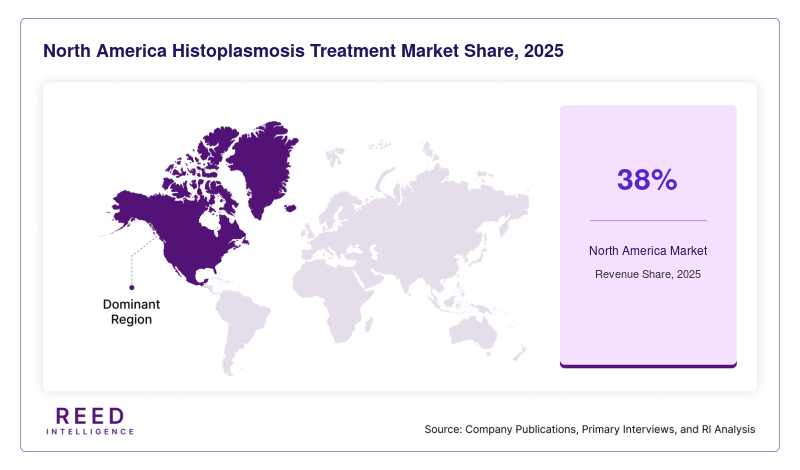
North America accounts for approximately 38% of the global Histoplasmosis Treatment Market in 2025, with a projected CAGR of around 9.8% through 2034. The region’s strong healthcare infrastructure, high awareness levels, and advanced diagnostic capabilities contribute to its leading market position. The presence of established pharmaceutical companies and widespread availability of antifungal therapies further supports market growth. Additionally, favorable reimbursement frameworks and insurance coverage facilitate patient access to treatment, ensuring steady demand across hospitals and outpatient settings.
The United States dominates the North American market due to its well-developed healthcare system and high incidence of immunocompromised patients. A key growth factor in the country is the increasing number of organ transplant procedures and HIV cases, which heighten susceptibility to histoplasmosis infections. Ongoing research initiatives and clinical trials focused on antifungal therapies also contribute to innovation in treatment options. Canada also shows consistent growth due to improved healthcare access and government support for infectious disease management.
Europe
Europe holds approximately 25% market share in 2025, with a forecast CAGR of around 9.2% during the forecast period. The region benefits from robust healthcare systems, strong regulatory frameworks, and increasing investments in infectious disease research. Rising awareness among healthcare professionals and the availability of advanced diagnostic technologies are contributing to improved detection and treatment rates. European countries are also witnessing a gradual increase in fungal infection cases linked to aging populations and immunosuppressive therapies.
Germany is the leading country in the European market, driven by its advanced medical infrastructure and strong pharmaceutical industry. One unique growth factor in Germany is the emphasis on hospital-based infection control programs and early diagnostic screening initiatives. These measures help reduce disease progression and improve patient outcomes. Other countries such as France, Italy, and the United Kingdom are also experiencing steady growth due to expanding healthcare access and increased focus on rare disease management.
Asia Pacific
Asia Pacific represents approximately 22% of the global market share in 2025, with the highest projected CAGR of around 11.5% through 2034. The region’s growth is driven by increasing healthcare expenditure, rising awareness of fungal infections, and improving diagnostic infrastructure. Rapid urbanization and population growth are contributing to a higher prevalence of infectious diseases, including histoplasmosis. Governments in countries such as India, China, and Japan are investing in healthcare modernization and expanding access to antifungal treatments.
China leads the Asia Pacific market due to its large population and expanding healthcare system. A key growth factor in China is the government’s focus on strengthening infectious disease surveillance and improving hospital infrastructure. Additionally, increasing prevalence of chronic diseases and immunocompromised conditions is driving demand for effective treatment options. India is also emerging as a significant market due to rising healthcare awareness and growing availability of affordable generic antifungal drugs.
Middle East & Africa
The Middle East & Africa region accounts for approximately 8% market share in 2025, with a CAGR of around 10.1% during the forecast period. Market growth is supported by improving healthcare infrastructure, increasing government healthcare investments, and rising awareness of infectious diseases. However, limited access to advanced diagnostic tools in certain parts of Africa continues to pose challenges. Efforts by international health organizations and regional governments are gradually improving disease detection and treatment accessibility.
South Africa dominates the regional market due to its relatively advanced healthcare system compared to neighboring countries. A unique growth factor in South Africa is the high prevalence of HIV/AIDS, which increases susceptibility to histoplasmosis infections. The Middle Eastern countries, including the UAE and Saudi Arabia, are also experiencing growth due to investments in healthcare infrastructure and adoption of advanced medical technologies. Medical tourism is another contributing factor in select countries within the region.
Latin America
Latin America holds approximately 7% market share in 2025, with a projected CAGR of around 9.6% through 2034. The region’s growth is driven by increasing awareness of fungal infections, improving healthcare access, and rising investments in public health programs. Countries such as Brazil and Mexico are leading contributors to market growth due to their large populations and expanding healthcare systems. However, challenges related to limited diagnostic infrastructure in rural areas continue to affect disease detection rates.
Brazil is the dominant country in the Latin American market, supported by its robust public healthcare system and government initiatives aimed at controlling infectious diseases. A key growth factor in Brazil is the high incidence of environmental exposure to fungal pathogens in certain regions, which increases infection rates. Additionally, growing adoption of antifungal therapies in urban healthcare centers is contributing to market expansion. Mexico also shows steady growth due to increasing healthcare spending and improved access to medical services.
Competitive Landscape
The competitive landscape of the Histoplasmosis Treatment Market is moderately consolidated, with several global and regional pharmaceutical companies actively engaged in antifungal drug development and distribution. Leading players focus on expanding their product portfolios, improving drug formulations, and strengthening distribution networks to maintain market presence. Competition is primarily driven by product efficacy, pricing strategies, regulatory approvals, and availability of generic alternatives.
The market is led by companies such as Pfizer Inc., Novartis AG, Merck & Co., Gilead Sciences, and Sanofi. These companies invest significantly in research and development to enhance antifungal therapies and address unmet medical needs. Pfizer remains a notable leader with its established antifungal portfolio and continuous innovation efforts. A recent development includes increased focus on improving liposomal drug formulations to reduce toxicity and enhance patient outcomes. Strategic collaborations, mergers, and acquisitions are also common, enabling companies to expand their geographic reach and strengthen their market positions.
Key Players List
- Pfizer Inc.
- Novartis AG
- Merck & Co., Inc.
- Gilead Sciences, Inc.
- Sanofi
- Bayer AG
- Abbott Laboratories
- GlaxoSmithKline plc
- Astellas Pharma Inc.
- Bristol-Myers Squibb Company
- F. Hoffmann-La Roche Ltd
- Cipla Limited
- Sun Pharmaceutical Industries Ltd
- Lupin Pharmaceuticals
- Teva Pharmaceutical Industries Ltd
Recent Developments
- Pharmaceutical companies are increasing investments in liposomal antifungal formulations to improve safety profiles and reduce nephrotoxicity associated with conventional amphotericin B.
- Several clinical trials are underway evaluating next-generation azole compounds aimed at enhancing efficacy against resistant fungal strains.
- Expansion of global distribution partnerships by key players to improve access to antifungal medications in emerging markets, particularly in Asia Pacific and Latin America.
Histoplasmosis Treatment Market Segments
Drug Type
- Amphotericin B
- Itraconazole
- Fluconazole
- Other Azole-Based Therapies
Application
- Pulmonary Histoplasmosis
- Disseminated Histoplasmosis
- Acute Histoplasmosis
- Chronic Histoplasmosis
End-Use
- Hospitals
- Specialty Clinics
- Homecare Settings
- Diagnostic Centers
By Region
- North America
- Europe
- APAC
- Middle East and Africa
- LATAM