Homeopathic Medicine Market Size, Share & Demand Report By Product Type (Dilutions, Tablets, Tinctures, Ointments, Biochemic Medicines, Others), By Application (Respiratory Disorders, Digestive Disorders, Skin Disorders, Pain Management, Stress and Anxiety Management, Others), By Distribution Channel (Retail Pharmacies, Hospital Pharmacies, Online Pharmacies, Specialty Stores), By Region & Segment Forecasts, 2026–2034
USD 3950
Market Overview
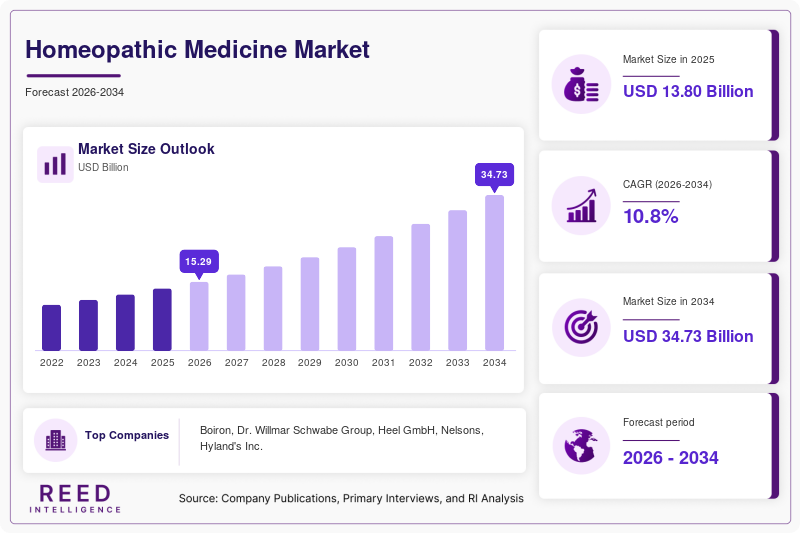
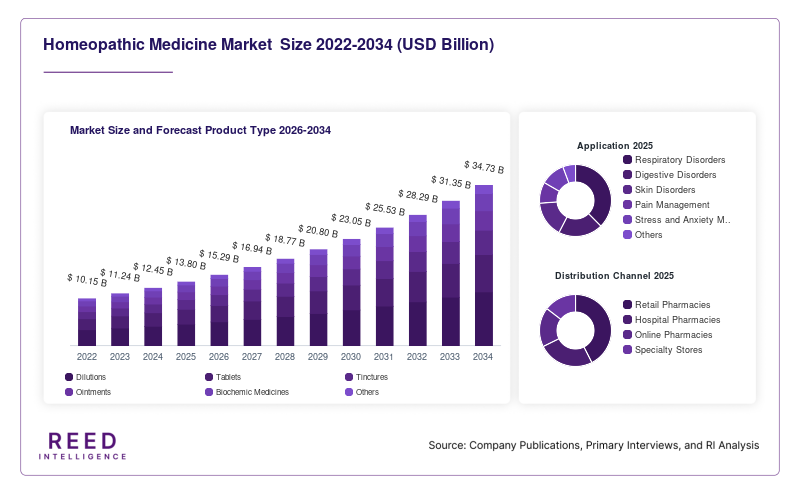
The global Homeopathic Medicine Market size was valued at USD 13.8 billion in 2026 and is projected to reach USD 31.4 billion by 2034, expanding at a CAGR of 10.8% during 2026–2034. The market continues to experience steady growth due to increasing consumer preference for natural and alternative healthcare solutions. Rising awareness regarding preventive healthcare, growing interest in holistic treatment approaches, and expanding access to complementary medicine are contributing to the industry's expansion across developed and emerging economies.
A major global factor supporting market growth is the increasing shift toward wellness-oriented healthcare systems. Consumers are becoming more conscious of long-term health management and are actively seeking treatment options that align with natural healing principles. This transition has encouraged healthcare providers, pharmacies, and wellness centers to broaden their offerings of homeopathic formulations. Digital health platforms and e-commerce channels have further improved product accessibility, enabling manufacturers to reach wider consumer groups across multiple regions.
Key Highlights
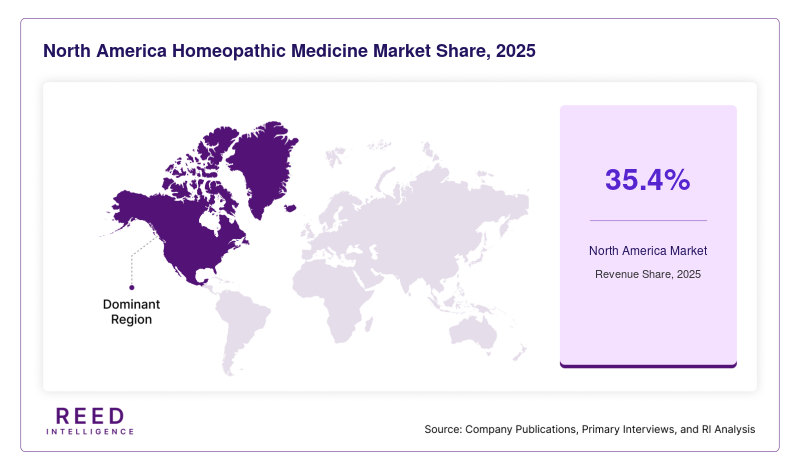
- North America dominated the market with a 35.4% share in 2025, while Asia Pacific is expected to grow at the fastest CAGR of 12.6% during 2026–2034.
- By product type, dilutions accounted for the largest share of 39.8%, while tablets are projected to grow at a CAGR of 12.9%.
- By application, respiratory disorders led with a 33.7% share, whereas stress and anxiety management is expected to expand at a CAGR of 13.4%.
- By distribution channel, retail pharmacies held the largest share of 44.1%, while online pharmacies are projected to grow at a CAGR of 14.2%.
- The United States remained the dominant country, with market values of USD 1.78 billion in 2024 and USD 1.95 billion in 2025.
Market Trends
Expansion of Digital Distribution Networks
Digital transformation is reshaping the Homeopathic Medicine Market as consumers increasingly purchase healthcare products through online platforms. E-commerce marketplaces, specialized wellness websites, and direct-to-consumer portals have significantly expanded access to homeopathic remedies. Manufacturers are investing in digital marketing campaigns, virtual consultations, and subscription-based wellness services to improve customer engagement. The convenience of online purchasing, coupled with access to educational resources and practitioner recommendations, is encouraging first-time users to explore homeopathic products. This trend is particularly visible among younger consumers who prefer digital healthcare solutions and value personalized treatment information before making purchasing decisions.
Rising Integration of Holistic Wellness Practices
The growing popularity of holistic wellness programs is creating new opportunities for homeopathic medicine providers. Consumers increasingly combine homeopathic remedies with yoga, meditation, nutrition management, and lifestyle improvement programs. Wellness centers and integrative healthcare clinics are incorporating homeopathic products into broader treatment plans focused on preventive health and long-term wellbeing. This trend is expanding the role of homeopathy beyond traditional applications and positioning it as part of comprehensive wellness strategies. As health-conscious populations continue to seek balanced and natural approaches to healthcare management, demand for homeopathic formulations is expected to remain strong throughout the forecast period.
Market Drivers
Growing Consumer Preference for Natural Healthcare Solutions
Consumer demand for natural healthcare products continues to be a significant growth driver for the Homeopathic Medicine Market. Increasing concerns regarding synthetic ingredients and long-term medication dependency have encouraged many individuals to explore alternative treatment options. Homeopathic remedies are often perceived as compatible with wellness-focused lifestyles and preventive healthcare approaches. Growing awareness through digital platforms, healthcare practitioners, and wellness communities has strengthened public understanding of homeopathic treatment methods. This shift is particularly notable among urban populations seeking personalized healthcare solutions. As consumer confidence in natural therapies increases, manufacturers are expanding product portfolios to address a broader range of health conditions and lifestyle needs.
Increasing Prevalence of Lifestyle-Related Health Conditions
The growing incidence of allergies, stress-related disorders, respiratory issues, digestive problems, and sleep disturbances is driving demand for homeopathic treatments worldwide. Rapid urbanization, changing dietary habits, and increasingly demanding lifestyles have contributed to rising healthcare concerns across various age groups. Homeopathic medicine providers are responding by introducing specialized formulations targeted at common lifestyle-related ailments. The availability of condition-specific products through pharmacies and digital channels has improved market accessibility. Additionally, increasing healthcare expenditure and greater emphasis on preventive treatment strategies are encouraging consumers to adopt complementary therapies, supporting sustained market growth across developed and emerging regions.
Market Restraint
Regulatory Variations and Scientific Validation Challenges
Despite positive growth prospects, the Homeopathic Medicine Market faces challenges associated with varying regulatory frameworks and ongoing debates regarding scientific validation. Regulatory requirements differ significantly across countries, creating complexity for manufacturers seeking international expansion. Product registration procedures, labeling requirements, and quality standards often vary between regions, increasing operational costs and extending market entry timelines. Furthermore, differences in clinical evidence expectations among healthcare authorities can affect consumer perception and healthcare provider recommendations.
These challenges may limit adoption in certain markets where evidence-based healthcare standards dominate purchasing decisions. Smaller manufacturers often encounter difficulties in allocating sufficient resources for compliance, documentation, and quality assurance programs. For example, companies expanding into multiple regions may need to conduct separate regulatory assessments and product approvals, delaying commercialization efforts. Such factors can influence market growth rates and create barriers for new entrants despite increasing consumer interest in alternative healthcare solutions.
Market Opportunities
Expansion Across Emerging Healthcare Markets
Emerging economies present substantial growth opportunities for the Homeopathic Medicine Market due to improving healthcare infrastructure and rising consumer awareness. Growing middle-class populations, increasing healthcare spending, and expanding retail pharmacy networks are creating favorable conditions for market development. Many consumers in developing regions are becoming more receptive to complementary medicine as access to healthcare information improves. Manufacturers are leveraging these trends by establishing local partnerships, expanding distribution capabilities, and introducing affordable product ranges tailored to regional preferences. As awareness campaigns and practitioner networks continue to expand, emerging markets are expected to contribute significantly to future industry revenues.
Development of Personalized Homeopathic Treatment Solutions
Advancements in digital health technologies and patient engagement platforms are creating opportunities for personalized homeopathic care. Consumers increasingly seek customized treatment recommendations based on individual health conditions, lifestyle factors, and wellness objectives. Companies are investing in virtual consultation services, mobile health applications, and data-driven wellness platforms to enhance treatment personalization. This approach strengthens customer loyalty while improving treatment accessibility. Personalized product recommendations also encourage recurring purchases and long-term engagement. As healthcare systems continue to emphasize patient-centered care models, the integration of personalized homeopathic solutions is expected to become an important growth avenue for industry participants.
Segmental Analysis
By Product Type
Dilutions represented the dominant product type and accounted for approximately 39.8% of the market share in 2024. Their leadership position is attributed to extensive use across multiple therapeutic applications and strong practitioner preference. Dilutions offer flexibility in dosage selection and are widely prescribed for respiratory disorders, digestive issues, allergies, and chronic conditions. Established consumer familiarity and broad product availability through pharmacies and clinics further contribute to segment dominance. Manufacturers continue to expand dilution portfolios with condition-specific formulations designed to meet evolving consumer needs. Growing awareness of holistic healthcare approaches and increasing practitioner recommendations support consistent demand across both developed and emerging markets.
Tablets are projected to be the fastest-growing product type, expanding at a CAGR of 12.9% during the forecast period. Growth is driven by convenience, portability, and ease of administration compared with traditional liquid formulations. Consumers increasingly prefer tablets for routine wellness management and preventive healthcare applications. Manufacturers are investing in advanced production technologies, improved packaging, and enhanced flavor profiles to attract broader consumer groups. Expanding retail distribution channels and rising online sales are further accelerating adoption. The segment also benefits from growing demand among younger consumers seeking convenient healthcare products that fit modern lifestyles and support regular treatment adherence.
By Application
Respiratory disorders emerged as the leading application segment, accounting for approximately 33.7% of total market revenue in 2024. Rising prevalence of allergies, seasonal respiratory conditions, and pollution-related health concerns has contributed significantly to demand. Consumers increasingly seek complementary treatment options that align with preventive healthcare strategies. Homeopathic formulations targeting respiratory symptoms are widely available through pharmacies, practitioner clinics, and digital platforms. Strong consumer awareness and recurring demand patterns support segment stability. Manufacturers continue to introduce specialized remedies designed to address changing environmental conditions and growing concerns regarding respiratory health management.
Stress and anxiety management is expected to be the fastest-growing application segment, registering a CAGR of 13.4% during 2026–2034. Increasing workplace pressures, urban lifestyles, and growing mental wellness awareness are driving demand for supportive healthcare solutions. Consumers are actively exploring holistic treatment approaches that complement broader wellness practices such as mindfulness and lifestyle management. Digital health platforms and wellness programs frequently incorporate homeopathic remedies within stress management recommendations. Product innovation, targeted marketing initiatives, and rising acceptance of preventive mental wellness strategies are expected to accelerate growth and strengthen segment performance throughout the forecast period.
By Distribution Channel
Retail pharmacies dominated the distribution channel segment and accounted for approximately 44.1% of market share in 2024. Their leadership is supported by extensive geographic reach, consumer trust, and convenient access to a wide range of homeopathic products. Pharmacists often play an important role in educating consumers and recommending suitable remedies for common health concerns. Established retail infrastructure allows manufacturers to maintain strong product visibility and consistent availability. Promotional campaigns, in-store wellness programs, and partnerships between manufacturers and pharmacy chains continue to support sales performance. Retail pharmacies remain a critical channel for both first-time and repeat purchasers seeking professional guidance.
Online pharmacies are anticipated to be the fastest-growing distribution channel, expanding at a CAGR of 14.2% during the forecast period. Growth is driven by increasing internet penetration, changing purchasing behavior, and consumer demand for convenient healthcare shopping experiences. Digital platforms provide access to extensive product selections, educational resources, and customer reviews that support informed purchasing decisions. Subscription services, home delivery options, and personalized recommendations enhance customer engagement and encourage repeat purchases. Manufacturers are strengthening digital marketing capabilities and investing in direct-to-consumer strategies to capitalize on growing e-commerce adoption and improve market reach across diverse consumer segments.
Regional Analysis
North America
North America accounted for approximately 35.4% of the global Homeopathic Medicine Market in 2025, maintaining its position as the leading regional market. The region is expected to register a CAGR of 9.8% during 2026–2034. Strong consumer awareness, established retail distribution networks, and high spending on wellness products contribute to regional dominance. Demand is supported by increasing adoption of complementary healthcare approaches and growing interest in preventive medicine among consumers seeking long-term health management solutions.
The United States remains the dominant country within North America. A key growth factor is the widespread availability of homeopathic products through pharmacies, supermarkets, and digital platforms. Consumer preference for natural healthcare options continues to expand across multiple demographic groups. Product innovation, strong brand recognition, and active marketing campaigns have also supported market development, enabling manufacturers to strengthen their presence and attract new customers.
Europe
Europe represented approximately 29.6% of the global market in 2025 and is projected to grow at a CAGR of 10.1% through 2034. The region benefits from long-standing acceptance of homeopathic medicine, particularly in countries where complementary healthcare practices are integrated into broader wellness cultures. Increasing demand for natural therapies and rising interest in preventive healthcare continue to support market expansion. The presence of established manufacturers and practitioner networks further strengthens regional growth prospects.
Germany remains the dominant country in the European market. A unique growth factor is the country's strong tradition of homeopathic practice and consumer familiarity with alternative healthcare methods. Educational initiatives, practitioner support programs, and robust pharmacy distribution systems contribute to sustained demand. Continued product innovation and increasing investment in wellness-focused healthcare solutions are expected to maintain Germany's leadership position throughout the forecast period.
Asia Pacific
Asia Pacific held approximately 21.7% of the global Homeopathic Medicine Market in 2025 and is expected to record the fastest CAGR of 12.6% between 2026 and 2034. Rapid urbanization, rising healthcare awareness, and expanding middle-class populations are fueling regional demand. Governments and healthcare organizations are increasingly promoting diverse treatment approaches, creating favorable conditions for homeopathic medicine adoption. Growing digital commerce penetration also improves accessibility across both metropolitan and semi-urban areas.
India is the dominant country within the region. A distinctive growth factor is the extensive network of homeopathic practitioners and educational institutions supporting treatment accessibility. Consumer familiarity with alternative medicine and government support for traditional healthcare systems further encourage adoption. Increasing investments in manufacturing capacity, retail expansion, and digital health services are expected to strengthen India's contribution to regional market growth over the forecast period.
Middle East & Africa
The Middle East & Africa accounted for approximately 6.4% of the global market in 2025 and is forecast to expand at a CAGR of 9.4% during the study period. Market growth is supported by improving healthcare infrastructure, increasing awareness of natural treatment options, and rising investments in wellness services. Consumers are showing growing interest in complementary healthcare products as preventive health practices gain traction across several countries in the region.
The United Arab Emirates represents the leading country market. A unique growth factor is the rapid expansion of premium wellness centers and integrative healthcare facilities. These establishments increasingly incorporate homeopathic solutions into broader healthcare offerings. Rising disposable income, strong healthcare investments, and increasing health consciousness among residents continue to support market expansion and create opportunities for international manufacturers entering the region.
Latin America
Latin America captured approximately 6.9% of the global Homeopathic Medicine Market in 2025 and is expected to grow at a CAGR of 9.7% through 2034. Demand is driven by increasing healthcare accessibility, growing consumer awareness, and expanding pharmacy networks. Interest in complementary medicine is rising as consumers seek affordable healthcare alternatives. Improvements in distribution infrastructure and digital retail channels are also contributing to regional market growth.
Brazil remains the dominant country across Latin America. An important growth factor is the increasing integration of alternative healthcare options within wellness-oriented treatment programs. Consumer demand for natural remedies continues to rise, supported by educational initiatives and broader product availability. Investments in local manufacturing, practitioner training, and retail expansion are expected to strengthen Brazil's role as a key contributor to regional market development.
Competitive Landscape
The Homeopathic Medicine Market remains moderately fragmented, with global and regional manufacturers competing through product innovation, distribution expansion, and brand development strategies. Leading companies focus on strengthening practitioner relationships, expanding digital sales channels, and introducing specialized formulations targeting high-demand therapeutic areas. Competitive intensity continues to increase as consumer awareness of alternative healthcare solutions grows across multiple regions.
Boiron remains a leading participant due to its extensive product portfolio, strong international presence, and established distribution network. The company continues to invest in product development and digital engagement initiatives to strengthen market positioning. Other significant participants include Dr. Willmar Schwabe, Heel, Nelsons, and Hyland's, each leveraging unique product strengths and regional expertise.
Key Players
- Boiron
- Dr. Willmar Schwabe Group
- Heel GmbH
- Nelsons
- Hyland's Inc.
- SBL Pvt. Ltd.
- Bakson Drugs & Pharmaceuticals
- Hahnemann Laboratories
- Medisynth Chemicals Pvt. Ltd.
- Washington Homeopathic Products
- Ainsworths Homeopathic Pharmacy
- GMP Laboratories of America
- Homeocan Inc.
- Allen Healthcare
- Lord's Homoeopathic Laboratory
Recent Developments
- In 2025, a leading homeopathic medicine manufacturer expanded its production facilities to meet growing global demand for natural and alternative healthcare products across retail and online distribution channels.
- In 2025, several homeopathic healthcare companies launched condition-specific formulations targeting respiratory wellness, stress management, and immune support applications to address evolving consumer preferences.
- In 2024, a major homeopathic medicine producer introduced a new range of tablet-based remedies designed to improve dosage convenience, portability, and consumer adherence.
- In 2024, manufacturers increased investments in clinical research, quality assurance programs, and advanced manufacturing technologies to strengthen product consistency and regulatory compliance.
- In 2025, strategic collaborations between homeopathic medicine companies, digital health platforms, and pharmacy networks accelerated the expansion of online consultation services and direct-to-consumer sales channels.
Homeopathic Medicine Market Segments
Product Type
- Dilutions
- Tablets
- Tinctures
- Ointments
- Biochemic Medicines
- Others
Application
- Respiratory Disorders
- Digestive Disorders
- Skin Disorders
- Pain Management
- Stress and Anxiety Management
- Others
Distribution Channel
- Retail Pharmacies
- Hospital Pharmacies
- Online Pharmacies
- Specialty Stores
By Region
- North America
- Europe
- APAC
- Middle East and Africa
- LATAM