Hot Tub Rash Market Size, Share & Demand Report By Product Type (Treatment Solutions, Preventive Products), By Application (Residential, Commercial), By End-Use (Healthcare Providers, Homecare Settings), By Distribution Channel (Pharmacies, Online Channels) & Segment Forecasts, 2025–2034
USD 3950
Market Overview
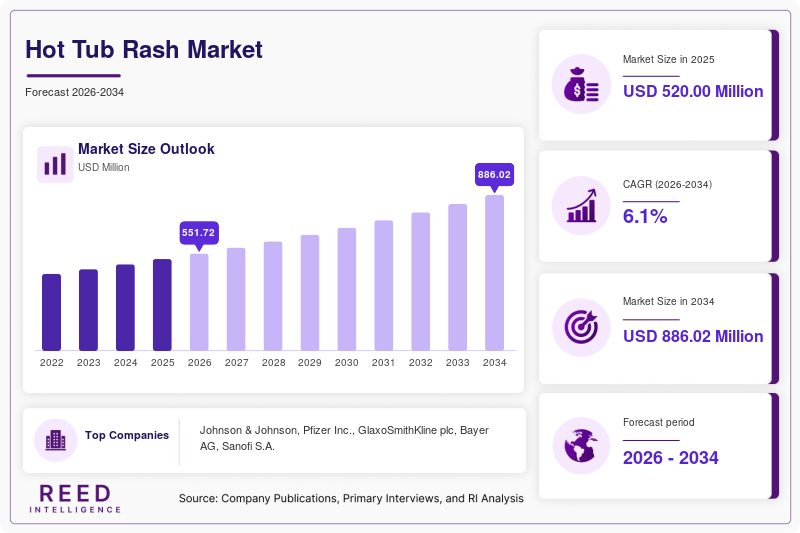
The global Hot Tub Rash Market size was valued at approximately USD 520 million in 2025 and is projected to reach USD 890 million by 2034, expanding at a CAGR of 6.1% during 2025–2034. The market growth reflects increasing awareness of waterborne skin infections, particularly those caused by Pseudomonas aeruginosa, commonly associated with poorly maintained hot tubs, spas, and pools.
A key global factor supporting the growth of the Hot Tub Rash Market is the rapid expansion of the wellness and recreational spa industry. The rise in luxury hospitality, home spa installations, and public wellness centers has led to higher exposure to shared water environments, thereby increasing the incidence of hot tub-related skin conditions. This has simultaneously driven demand for preventive solutions, diagnostic services, and treatment products.
Key Highlights
- Dominant region: North America held approximately 38% market share in 2025, while Asia Pacific is expected to register the fastest growth at a CAGR of 7.4%.
- Leading subsegments: Treatment-based solutions dominated the market with a 42% share, while preventive care products are projected to grow fastest at a CAGR of 7.8%.
- Dominant country: The United States market was valued at USD 180 million in 2025 and is estimated to reach USD 192 million in 2026.
Market Trends
Rising Adoption of Preventive Water Treatment Technologies
A prominent trend shaping the Hot Tub Rash Market is the increasing adoption of advanced water treatment technologies. Consumers and commercial operators are shifting toward automated disinfection systems, UV sterilizers, and ozone purification solutions. These technologies reduce microbial contamination and lower the risk of hot tub rash outbreaks. This trend is particularly visible in high-end residential installations and commercial wellness centers, where consistent water quality is a priority. The integration of smart monitoring systems further enhances maintenance efficiency, enabling real-time tracking of water conditions.
Growing Demand for Dermatologically Safe Treatment Products
Another notable trend in the Hot Tub Rash Market is the rising demand for dermatologically tested and skin-friendly treatment products. Consumers are increasingly seeking topical antibiotics, soothing creams, and anti-inflammatory solutions that minimize irritation while effectively treating infections. The shift toward natural and hypoallergenic formulations is also gaining traction, especially among health-conscious users. Manufacturers are responding by launching products with improved safety profiles and faster recovery outcomes, aligning with evolving consumer expectations.
Market Drivers
Expansion of Wellness and Spa Infrastructure
The rapid expansion of wellness tourism and spa infrastructure is a major driver of the Hot Tub Rash Market. Hotels, resorts, and fitness centers are increasingly incorporating hot tubs and hydrotherapy pools to enhance customer experience. This has significantly increased exposure to communal water systems, thereby elevating the risk of bacterial infections. As a result, demand for preventive maintenance solutions, water treatment chemicals, and medical treatments has risen steadily.
Increasing Awareness of Waterborne Skin Conditions
Growing awareness about waterborne infections has contributed to the market’s growth. Public health campaigns and digital information platforms have educated consumers about the causes, symptoms, and prevention of hot tub rash. This awareness has led to early diagnosis and timely treatment, boosting demand for healthcare services and over-the-counter remedies. Additionally, regulatory bodies are enforcing stricter hygiene standards, further supporting market expansion.
Market Restraint
Underreporting and Misdiagnosis of Hot Tub Rash
A significant restraint in the Hot Tub Rash Market is the underreporting and frequent misdiagnosis of the condition. Hot tub rash symptoms often resemble other dermatological issues such as allergic reactions or fungal infections. This similarity leads to delayed or incorrect diagnosis, limiting the demand for targeted treatments. Many cases remain unreported, particularly in regions with limited healthcare access or awareness.
Moreover, mild cases often resolve without medical intervention, reducing the perceived need for specialized treatment products. This behavior affects market penetration, especially in developing regions. Healthcare providers may also lack standardized diagnostic protocols, further contributing to inconsistencies in treatment approaches.
The lack of comprehensive epidemiological data poses challenges for market players in assessing demand and developing targeted solutions. Consequently, this restraint may slow down the overall growth trajectory of the Hot Tub Rash Market despite increasing exposure to risk factors.
Market Opportunities
Development of Rapid Diagnostic Solutions
The introduction of rapid diagnostic tools presents a strong opportunity for the Hot Tub Rash Market. Point-of-care testing kits and advanced laboratory diagnostics can enable quick identification of bacterial infections, facilitating timely treatment. Such innovations can improve patient outcomes and increase adoption of targeted therapies. Healthcare providers and diagnostic companies are likely to invest in research and development to address this gap.
Growth in Emerging Markets
Emerging economies offer significant growth potential for the Hot Tub Rash Market. Increasing urbanization, rising disposable income, and expanding hospitality sectors are driving the adoption of recreational water facilities. As awareness of hygiene and health risks improves, demand for preventive and treatment solutions is expected to rise. Market players can capitalize on this opportunity by expanding distribution networks and offering cost-effective products tailored to regional needs.
Segmental Analysis
By Product Type
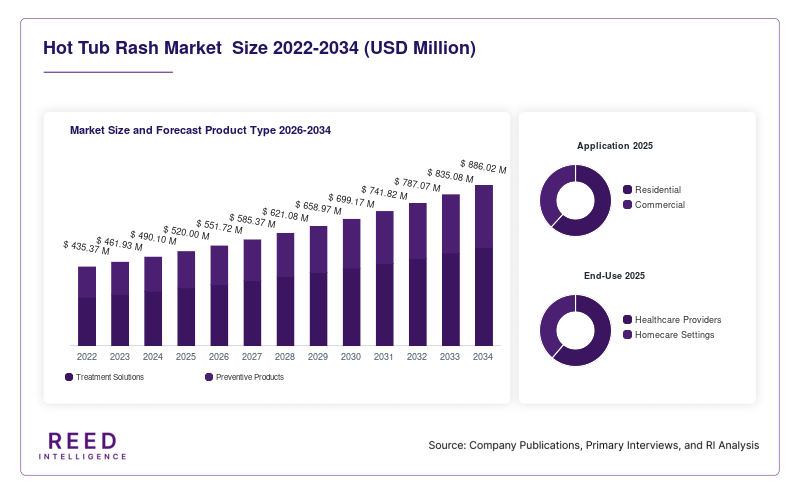
Treatment solutions dominated the Hot Tub Rash Market in 2025, accounting for approximately 42% of the total share. This segment includes topical antibiotics, anti-inflammatory creams, and oral medications. The dominance is attributed to the immediate need for symptom relief and infection control among affected individuals. Healthcare providers commonly recommend these treatments, reinforcing their widespread adoption.
Preventive products will register the fastest growth, with a projected CAGR of 7.8%. This subsegment includes disinfectants, water treatment chemicals, and antimicrobial coatings. The growth will be driven by increasing awareness of infection prevention and the rising adoption of proactive maintenance practices in residential and commercial settings.
By Application
Residential applications held the largest share of the Hot Tub Rash Market in 2025, contributing around 48%. The growing trend of home wellness installations and private hot tubs has increased the incidence of infections in residential settings. Consumers are investing in maintenance products and treatment solutions to ensure safe usage.
Commercial applications will grow at a faster pace, with a CAGR of 7.2%. Hotels, resorts, and fitness centers will drive this growth due to higher usage rates and regulatory requirements for hygiene standards. The need to maintain brand reputation and customer safety will further accelerate adoption of preventive solutions.
By End-Use
Healthcare providers dominated the market with a 36% share in 2025, as they play a central role in diagnosing and treating hot tub rash cases. Hospitals, clinics, and dermatology centers are key contributors to this segment’s growth.
Homecare settings will experience the fastest growth, with a CAGR of 7.5%. Increasing availability of over-the-counter treatments and online healthcare information will enable consumers to manage mild cases independently. This trend will reduce dependency on clinical visits while boosting product sales.
By Distribution Channel
Pharmacies accounted for the largest share, approximately 40% in 2025, due to their accessibility and availability of prescription and non-prescription treatments. Consumers rely on pharmacies for immediate access to medications and professional guidance.
Online channels will grow at the fastest rate, with a CAGR of 8.1%. The convenience of e-commerce platforms and increasing digital adoption will drive this growth. Consumers will benefit from a wider range of products and competitive pricing, encouraging online purchases.
Regional Analysis
North America
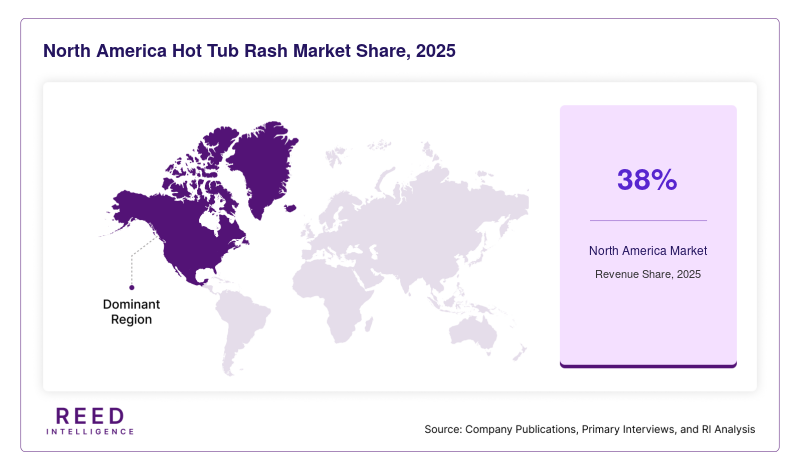
North America accounted for approximately 38% of the Hot Tub Rash Market share in 2025, reflecting its established wellness infrastructure and high consumer awareness. The region will continue to grow at a CAGR of 5.8% through 2034, supported by ongoing investments in recreational facilities and stringent health regulations.
The United States dominated the regional market due to widespread adoption of home spas and commercial hot tubs. A key growth factor is the presence of advanced healthcare systems that facilitate early diagnosis and treatment. Additionally, regulatory frameworks ensure adherence to water quality standards, reducing infection risks while sustaining demand for preventive solutions.
Europe
Europe held around 26% market share in 2025 and is projected to expand at a CAGR of 5.6% during the forecast period. The region’s growth is influenced by a strong wellness culture and increasing spa tourism across countries such as Germany, France, and Italy.
Germany emerged as the dominant country, driven by its robust healthcare infrastructure and emphasis on hygiene standards. The country’s focus on preventive healthcare has encouraged the adoption of advanced water treatment systems, contributing to steady market growth.
Asia Pacific
Asia Pacific represented approximately 20% of the Hot Tub Rash Market in 2025 and is expected to grow at the fastest CAGR of 7.4%. Rapid urbanization and increasing disposable income are driving the expansion of wellness centers and luxury hospitality services.
China led the regional market due to its growing middle-class population and rising demand for recreational amenities. The increasing number of spa facilities and awareness campaigns about waterborne infections are key factors supporting market expansion.
Middle East & Africa
The Middle East & Africa accounted for about 9% of the market share in 2025 and is anticipated to grow at a CAGR of 6.3%. The region is witnessing increased investments in tourism and luxury hospitality, particularly in the Gulf countries.
The United Arab Emirates dominated the market, supported by its focus on high-end tourism and wellness infrastructure. The adoption of advanced water treatment technologies in hotels and resorts is a key growth driver in this region.
Latin America
Latin America held nearly 7% of the Hot Tub Rash Market share in 2025 and is projected to grow at a CAGR of 6.0%. The region’s growth is driven by expanding tourism and increasing consumer spending on leisure activities.
Brazil emerged as the leading country due to its growing hospitality sector and rising awareness of hygiene practices. Investments in recreational infrastructure and public health initiatives are expected to support market growth over the forecast period.
Competitive Landscape
The Hot Tub Rash Market is moderately fragmented, with several global and regional players competing on product innovation, pricing, and distribution. Companies are focusing on expanding their portfolios to include both treatment and preventive solutions.
A leading player in the market is Johnson & Johnson, which has established a strong presence through its dermatology product range. The company recently introduced an advanced topical formulation designed to provide faster relief from bacterial skin infections, strengthening its competitive position.
Other key players are investing in research and development to enhance product efficacy and safety. Strategic partnerships with healthcare providers and hospitality businesses are also common, enabling companies to expand their market reach. The competitive landscape is expected to evolve further as new entrants introduce innovative solutions targeting unmet needs.
Key Players
- Johnson & Johnson
- Pfizer Inc.
- GlaxoSmithKline plc
- Bayer AG
- Sanofi S.A.
- Procter & Gamble
- Unilever
- Reckitt Benckiser Group plc
- 3M Company
- Ecolab Inc.
- Clorox Company
- Church & Dwight Co., Inc.
- Medline Industries, LP
- Cardinal Health, Inc.
- Kimberly-Clark Corporation
Recent Developments
- 2024: A major healthcare company launched a new antimicrobial cream targeting waterborne bacterial infections.
- 2024: A global sanitation solutions provider introduced an advanced UV-based water purification system for hot tubs.
- 2025: Several spa chains adopted automated monitoring systems to maintain water quality and reduce infection risks.
- 2025: Online platforms expanded their offerings of dermatological products, improving accessibility for consumers.
Hot Tub Rash Market Segments
Product Type
- Treatment Solutions
- Preventive Products
Application
- Residential
- Commercial
End-Use
- Healthcare Providers
- Homecare Settings
Distribution Channel
- Pharmacies
- Online Channels
By Region
- North America
- Europe
- APAC
- Middle East and Africa
- LATAM