Hurler Syndrome Treatment Market Size, Share & Demand Report By Treatment Type (Enzyme Replacement Therapy, Hematopoietic Stem Cell Transplantation, Gene Therapy), By Route of Administration (Intravenous, Subcutaneous), By End-Use (Hospitals, Specialty Clinics, Research Institutes), By Distribution Channel (Hospital Pharmacies, Retail Pharmacies, Online Pharmacies), By Disease Severity (Severe, Moderate, Mild), By Region & Segment Forecasts, 2025–2034
USD 3950
Market Overview
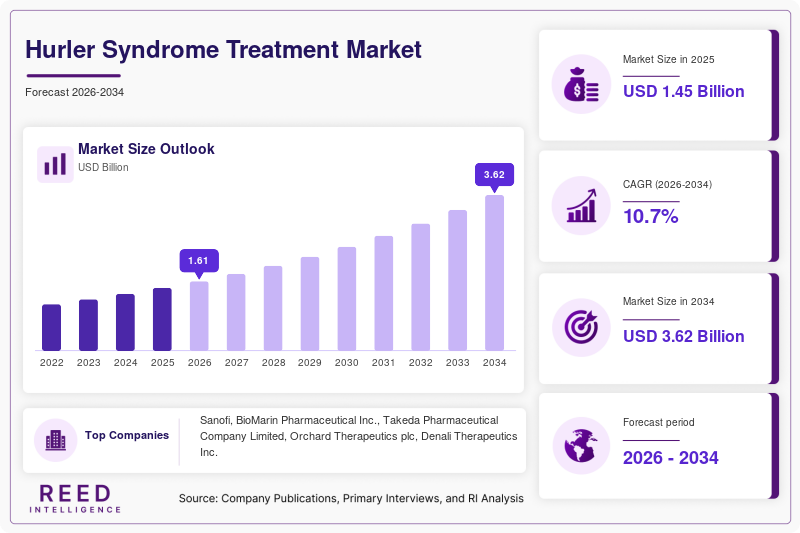
The global Hurler Syndrome Treatment Market size was valued at approximately USD 1.45 billion in 2025 and is projected to reach USD 3.62 billion by 2034, expanding at a CAGR of 10.7% during the forecast period (2025–2034). The market reflects steady growth driven by advancements in rare disease therapeutics and increasing healthcare investments in genetic disorder management.
A key global factor supporting market growth is the expansion of orphan drug development programs, supported by favorable regulatory frameworks and financial incentives. Governments and regulatory bodies have introduced accelerated approval pathways, tax credits, and market exclusivity benefits, encouraging pharmaceutical companies to invest in treatments for rare conditions such as Hurler syndrome. This has led to increased research activity and improved accessibility of therapies across developed healthcare systems.
Key Highlights
- North America dominated the market with 42% share in 2025, while Asia Pacific is projected to grow at the fastest CAGR of 12.9%.
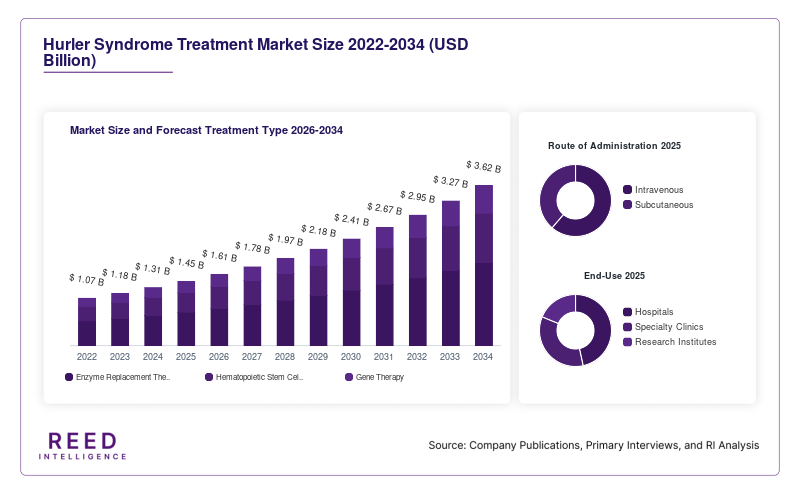
- Enzyme Replacement Therapy (ERT) led the treatment segment with 48% share, while gene therapy is expected to grow at a CAGR of 14.2%.
- Hospitals dominated the end-use segment with 55% share, while specialty clinics are anticipated to grow at a CAGR of 11.8%.
- The United States accounted for USD 520 million in 2025 and is expected to reach USD 560 million in 2026.
Market Trends
Expansion of Gene Therapy Pipeline
The Hurler Syndrome Treatment Market is witnessing a notable rise in gene therapy development programs. Pharmaceutical and biotechnology firms are increasingly focusing on one-time curative approaches that address the underlying genetic mutation responsible for the disease. Advances in viral vector technologies and genome editing tools are improving treatment efficacy and safety profiles. This trend is shifting the treatment paradigm from lifelong management to potential long-term remission solutions.
Integration of Early Diagnosis Programs
Another key trend is the integration of newborn screening and early diagnostic initiatives. Healthcare systems in several countries are incorporating mucopolysaccharidosis screening into national health programs. Early detection enables timely intervention, improving patient outcomes and reducing disease progression. This trend is also contributing to increased treatment adoption rates and expanding the addressable patient population within the Hurler Syndrome Treatment Market.
Market Drivers
Rising Investment in Rare Disease Research
Growing investments in rare disease research are a primary driver of the Hurler Syndrome Treatment Market. Public and private funding initiatives are supporting clinical trials and drug development programs. This has accelerated the introduction of innovative therapies and expanded the treatment landscape. Increased collaboration between academic institutions and pharmaceutical companies further strengthens research capabilities.
Increasing Awareness and Diagnosis Rates
Improved awareness among healthcare professionals and patients is contributing to higher diagnosis rates of Hurler syndrome. Educational campaigns and advancements in genetic testing technologies are enabling earlier and more accurate detection. As a result, more patients are entering the treatment pipeline, driving market growth and improving long-term outcomes.
Market Restraint
High Cost of Treatment and Limited Accessibility
A significant restraint in the Hurler Syndrome Treatment Market is the high cost associated with treatment options, particularly enzyme replacement therapies and stem cell transplantation. These treatments often require long-term administration or complex procedures, resulting in substantial healthcare expenses. In developing regions, limited reimbursement coverage and inadequate healthcare infrastructure further restrict patient access.
Additionally, the rarity of the condition leads to smaller patient populations, which increases per-patient treatment costs and limits economies of scale. This financial burden affects both healthcare systems and patients, slowing adoption rates in cost-sensitive markets. Addressing affordability challenges remains a critical factor for sustained market growth.
Market Opportunities
Development of Personalized Medicine Approaches
The emergence of personalized medicine presents a significant opportunity for the Hurler Syndrome Treatment Market. Tailored therapies based on genetic profiling can improve treatment efficacy and minimize adverse effects. Advances in precision medicine are enabling the development of customized therapeutic strategies, enhancing patient outcomes and expanding market potential.
Expansion into Emerging Markets
Emerging economies offer untapped growth potential due to improving healthcare infrastructure and increasing awareness of rare diseases. Governments in regions such as Asia Pacific and Latin America are investing in healthcare modernization and rare disease programs. This creates opportunities for market players to expand their presence and improve treatment accessibility in underserved regions.
Segmental Analysis
By Treatment Type
Enzyme Replacement Therapy (ERT) dominated the Hurler Syndrome Treatment Market with a 48% share in 2025. This dominance was attributed to its established clinical efficacy and widespread adoption as a standard treatment option. ERT helps manage symptoms by supplementing deficient enzymes, making it a widely accepted therapy among healthcare providers.
Gene therapy is expected to be the fastest-growing subsegment, projected to expand at a CAGR of 14.2%. This growth will be driven by advancements in genetic engineering and the potential for long-term or curative outcomes. Increasing investment in clinical trials and regulatory approvals will further support adoption.
By Route of Administration
Intravenous administration held the largest share of 62% in 2025, driven by the widespread use of enzyme replacement therapies delivered through infusion. The established clinical protocols and effectiveness of intravenous delivery contributed to its dominance.
Subcutaneous administration is anticipated to grow at a CAGR of 11.5%. This growth will be supported by the development of patient-friendly formulations that reduce hospital visits and improve treatment convenience.
By End-Use
Hospitals accounted for 55% of the market share in 2025, due to the availability of specialized equipment and trained healthcare professionals required for complex treatments. Hospitals also serve as primary centers for diagnosis and treatment initiation.
Specialty clinics are expected to grow at a CAGR of 11.8%, driven by increasing demand for focused care and outpatient treatment options. These clinics offer personalized services and improved patient management.
By Distribution Channel
Hospital pharmacies dominated with a 50% share in 2025, supported by direct access to treatment facilities and integration with hospital-based care systems. Patients receiving treatments in hospitals often rely on in-house pharmacies.
Online pharmacies are projected to grow at a CAGR of 12.1%, driven by increasing digitalization and demand for convenient medication access. Expansion of e-commerce platforms in healthcare is supporting this trend.
By Disease Severity
Severe Hurler syndrome cases accounted for 60% of the market share in 2025, as these patients require immediate and intensive treatment interventions. The high disease burden and urgency of treatment contributed to this dominance.
Moderate cases are expected to grow at a CAGR of 10.9%, driven by improved diagnostic capabilities and early detection. Timely intervention in moderate cases is expected to improve patient outcomes and increase treatment adoption.
Regional Analysis
North America
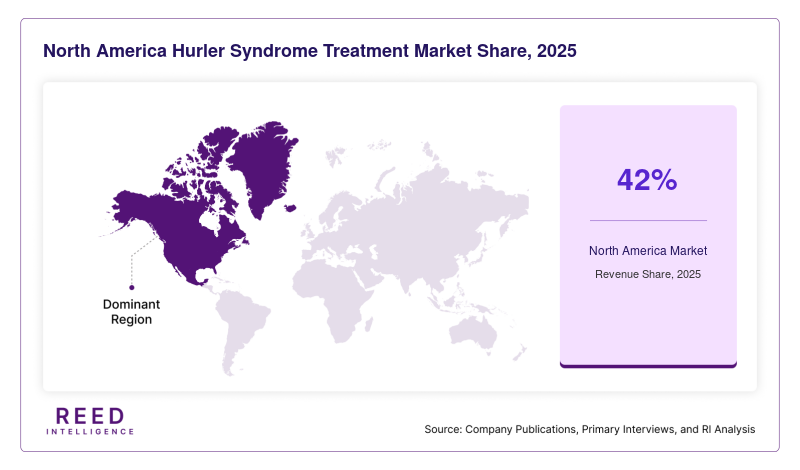
North America accounted for 42% of the Hurler Syndrome Treatment Market share in 2025 and is expected to grow at a CAGR of 9.8% during the forecast period. The region benefited from advanced healthcare infrastructure, high awareness levels, and strong presence of key pharmaceutical companies. Favorable reimbursement policies and early adoption of innovative therapies supported market growth.
The United States dominated the regional market due to extensive research funding and established rare disease treatment programs. The presence of specialized treatment centers and strong regulatory support facilitated rapid adoption of advanced therapies. Increasing focus on gene therapy development continues to drive growth in the country.
Europe
Europe held 28% market share in 2025 and is projected to grow at a CAGR of 10.2%. The region demonstrated steady growth due to supportive regulatory frameworks and increasing investment in rare disease research. Countries across Europe implemented national screening programs, improving early diagnosis rates.
Germany emerged as the dominant country due to its well-developed healthcare system and strong pharmaceutical industry. Government initiatives supporting orphan drug development and reimbursement policies contributed to market expansion. The country also benefits from collaborations between research institutions and biotech firms.
Asia Pacific
Asia Pacific captured 17% of the market share in 2025 and is anticipated to register the fastest CAGR of 12.9%. The region experienced growth due to improving healthcare infrastructure and rising awareness of genetic disorders. Increasing government investments in healthcare and expansion of diagnostic facilities supported market development.
China led the regional market due to its large population base and growing healthcare expenditure. The country is focusing on expanding access to rare disease treatments and improving diagnostic capabilities. Strategic partnerships with global pharmaceutical companies are enhancing treatment availability.
Middle East & Africa
The Middle East & Africa region accounted for 7% of the market share in 2025 and is expected to grow at a CAGR of 8.7%. Growth in the region was driven by gradual improvements in healthcare infrastructure and increasing awareness of rare diseases.
Saudi Arabia dominated the regional market due to government initiatives aimed at improving healthcare services and expanding access to advanced treatments. Investments in specialized healthcare facilities and training programs for healthcare professionals are supporting market growth.
Latin America
Latin America held 6% of the market share in 2025 and is projected to grow at a CAGR of 9.1%. The region showed moderate growth due to increasing healthcare spending and rising awareness of genetic disorders.
Brazil emerged as the leading country due to its expanding healthcare system and government initiatives supporting rare disease treatment programs. Efforts to improve diagnostic capabilities and access to advanced therapies are driving market development in the country.
Competitive Landscape
The Hurler Syndrome Treatment Market is characterized by the presence of established pharmaceutical companies and emerging biotech firms focusing on rare disease therapies. The competitive landscape is shaped by innovation, strategic collaborations, and regulatory approvals.
A leading player in the market is Sanofi, which has maintained a strong position through its enzyme replacement therapy portfolio. The company recently expanded its research initiatives in gene therapy, aiming to develop next-generation treatments for mucopolysaccharidosis disorders.
Other key players are actively investing in research and development, forming partnerships, and expanding their geographic presence. The market is expected to witness increased competition as new therapies enter clinical trials and gain regulatory approvals.
Key Players
- Sanofi
- BioMarin Pharmaceutical Inc.
- Takeda Pharmaceutical Company Limited
- Orchard Therapeutics plc
- Denali Therapeutics Inc.
- Regenxbio Inc.
- Ultragenyx Pharmaceutical Inc.
- Sobi (Swedish Orphan Biovitrum AB)
- Sangamo Therapeutics
- Amicus Therapeutics
- JCR Pharmaceuticals Co., Ltd.
- Abeona Therapeutics Inc.
- Pfizer Inc.
- Novartis AG
- Roche Holding AG
Recent Developments
- Sanofi expanded its clinical trials for next-generation enzyme replacement therapies targeting improved efficacy.
- BioMarin Pharmaceutical announced progress in gene therapy research programs for mucopolysaccharidosis disorders.
- Orchard Therapeutics advanced its pipeline with new data supporting hematopoietic stem cell gene therapy approaches.
- Takeda Pharmaceutical strengthened its rare disease portfolio through strategic collaborations.
- Ultragenyx Pharmaceutical initiated new clinical studies focusing on innovative treatment mechanisms.
Hurler Syndrome Treatment Market Segments
Treatment Type
- Enzyme Replacement Therapy
- Hematopoietic Stem Cell Transplantation
- Gene Therapy
Route of Administration
- Intravenous
- Subcutaneous
End-Use
- Hospitals
- Specialty Clinics
- Research Institutes
Distribution Channel
- Hospital Pharmacies
- Retail Pharmacies
- Online Pharmacies
Disease Severity
- Severe
- Moderate
- Mild
By Region
- North America
- Europe
- APAC
- Middle East and Africa
- LATAM