HVAC Service Software Market Size, Share & Demand Report By Deployment Type (Cloud-Based, On-Premise), By Application (Service Scheduling and Dispatch, Invoicing and Billing, Inventory Management, Customer Relationship Management, Remote Diagnostics and Predictive Maintenance), By End Use (Residential, Commercial, Industrial) By Region & Segment Forecasts, 2026–2034
USD 3950
Market Overview
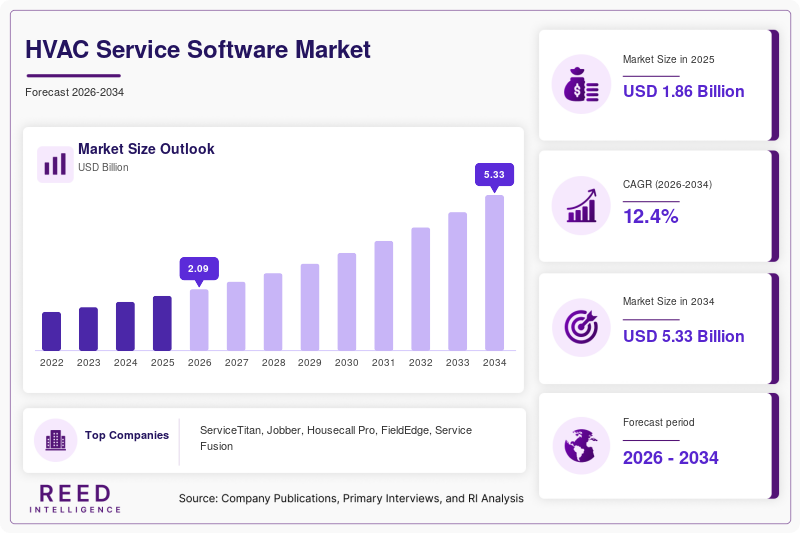
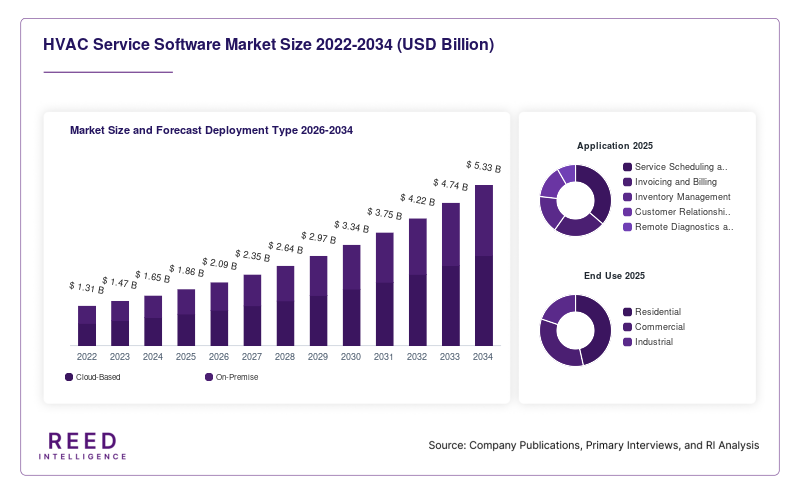
The global HVAC Service Software Market size was valued at USD 1.86 billion in 2026 and is projected to reach USD 4.72 billion by 2034, expanding at a CAGR of 12.4% during the forecast period. The market growth is supported by the increasing adoption of cloud-based field service management solutions across commercial and residential HVAC operations. Companies are investing in digital scheduling, predictive maintenance tools, technician tracking systems, and customer relationship management platforms to improve operational efficiency and reduce service downtime. The transition toward connected HVAC ecosystems and IoT-enabled maintenance systems has further accelerated software deployment across large enterprises and independent service providers.
The growing emphasis on energy-efficient infrastructure and smart building management continues to create favorable conditions for HVAC service software adoption. Businesses are integrating mobile applications, AI-driven diagnostics, automated invoicing, and real-time analytics into their service operations. The rising need for preventive maintenance and rapid response services has also encouraged HVAC contractors to deploy centralized platforms that improve workforce coordination and customer engagement. Increasing urban construction activity, especially in emerging economies, is expected to strengthen long-term demand for scalable HVAC software platforms.
Key Highlights
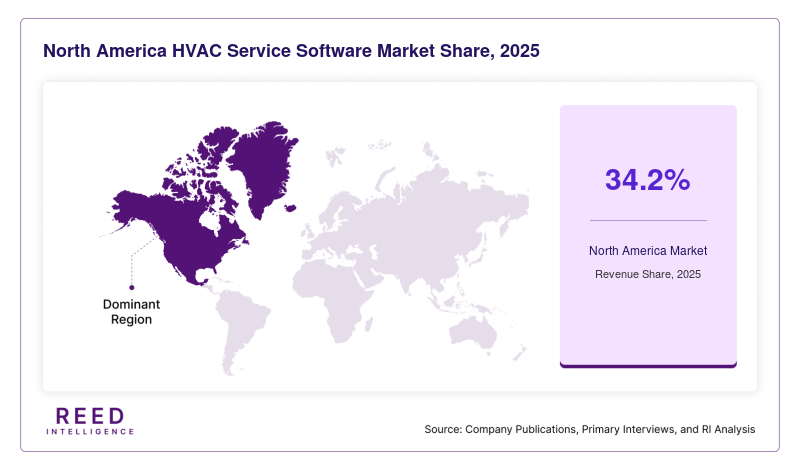
- North America dominated the market with a 34.2% share in 2025, while Asia Pacific is expected to grow at the fastest CAGR of 13.1% during 2026–2034.
- By deployment type, cloud-based software accounted for the largest share of 61.8%, while AI-enabled service platforms are projected to grow at a CAGR of 14.2%.
- By application, commercial HVAC management led with a 46.5% share, whereas predictive maintenance applications are expected to expand at a CAGR of 13.8%.
- By end use, HVAC contractors represented the highest share of 42.7%, while facility management companies are projected to grow at a CAGR of 13.5%.
- The United States remained the dominant country, with market values of USD 540 million in 2024 and USD 610 million in 2025.
Market Trends
Integration of Artificial Intelligence and Predictive Analytics
Artificial intelligence and predictive analytics are transforming the HVAC Service Software Market by enabling proactive maintenance and automated diagnostics. HVAC companies are increasingly deploying AI-powered platforms that analyze equipment performance, identify operational abnormalities, and recommend maintenance schedules before system failures occur. These intelligent systems reduce downtime, improve technician productivity, and lower maintenance expenses for end users. Predictive analytics also supports energy optimization by evaluating system efficiency in real time and identifying patterns associated with excessive energy consumption.
The demand for automated customer support and digital service workflows has further accelerated AI integration across HVAC software platforms. Companies are adopting chatbots, automated dispatch systems, and machine-learning algorithms to improve service coordination and customer response times. The increasing use of connected HVAC equipment in commercial buildings is generating large volumes of operational data, encouraging software vendors to develop advanced analytics tools. As businesses focus on improving customer retention and reducing operational inefficiencies, AI-enabled HVAC service software solutions are expected to witness substantial adoption throughout the forecast period.
Expansion of Mobile Workforce Management Solutions
The growing use of mobile workforce management applications is emerging as a major trend within the HVAC Service Software Market. HVAC service providers are increasingly equipping technicians with mobile-enabled platforms that support real-time scheduling, digital invoicing, customer communication, and inventory tracking. Mobile accessibility allows field technicians to access maintenance records, equipment history, and service manuals directly from job sites, improving repair accuracy and operational productivity. This shift toward mobile-based service management is helping companies streamline workflows and enhance customer satisfaction.
The rising adoption of remote work technologies and cloud infrastructure has strengthened demand for mobile HVAC software systems. Companies are integrating GPS tracking, route optimization, and instant reporting features to improve technician utilization and reduce fuel expenses. Small and medium-sized HVAC businesses are also adopting affordable subscription-based mobile solutions to compete with larger service providers. The expansion of smartphone penetration and high-speed internet connectivity across emerging markets is expected to create additional growth opportunities for mobile workforce management solutions during the forecast period.
Market Drivers
Rising Adoption of Smart Buildings and Connected HVAC Systems
The rapid growth of smart buildings and connected infrastructure is driving demand for advanced HVAC service software solutions. Commercial facilities, hospitals, educational institutions, and industrial complexes are increasingly implementing smart HVAC systems equipped with IoT sensors and automated monitoring technologies. These systems require integrated software platforms capable of tracking performance metrics, scheduling maintenance tasks, and generating real-time operational insights. HVAC service software helps facility managers optimize energy consumption, improve equipment lifespan, and maintain consistent indoor air quality standards.
The expansion of smart city initiatives across developed and developing economies is further accelerating software adoption. Governments and private developers are investing in energy-efficient building infrastructure, increasing the need for centralized HVAC management solutions. Software vendors are responding by introducing scalable platforms with remote monitoring and predictive maintenance capabilities. The growing preference for cloud-connected building systems and digital service ecosystems is expected to strengthen demand for HVAC service software among commercial and industrial users over the coming years.
Increasing Need for Operational Efficiency Among HVAC Contractors
HVAC contractors are increasingly adopting service software solutions to improve operational efficiency and manage complex service workflows. Traditional paper-based systems often result in scheduling conflicts, delayed invoicing, inventory inaccuracies, and poor communication between technicians and customers. HVAC service software addresses these challenges through automated dispatching, digital documentation, and integrated customer management tools. Businesses are using these platforms to reduce administrative workloads, enhance technician productivity, and improve revenue management.
The growing labor shortage within the HVAC industry has also encouraged companies to invest in automation technologies that maximize workforce efficiency. Service providers are implementing software solutions that optimize route planning, reduce travel time, and enable faster job completion. Real-time technician tracking and automated work order generation help companies improve service response times and customer retention. As competition intensifies among HVAC service providers, the demand for advanced software platforms that support scalable operations and efficient resource allocation is expected to increase steadily.
Market Restraint
High Initial Integration Costs and Data Security Concerns
The high implementation cost associated with advanced HVAC service software remains a major restraint for market expansion, particularly among small and medium-sized service providers. Many businesses face financial challenges related to software licensing, cloud migration, employee training, and integration with existing enterprise systems. Smaller contractors operating with limited budgets often hesitate to replace traditional operational methods due to concerns regarding return on investment and workflow disruptions. These cost-related barriers can slow software adoption in price-sensitive regional markets.
Data security and cybersecurity risks also present significant challenges for software vendors and end users. HVAC service platforms frequently store customer information, building data, equipment records, and financial transactions within cloud-based environments. The increasing use of connected devices and remote monitoring systems raises concerns regarding unauthorized access, data breaches, and operational disruptions. Companies handling critical infrastructure projects are particularly cautious about deploying digital service management systems without robust cybersecurity measures. These concerns may limit adoption among organizations operating in highly regulated sectors such as healthcare, government facilities, and industrial manufacturing.
Market Opportunities
Expansion of Subscription-Based Cloud Software Models
The growing popularity of subscription-based cloud software models is creating strong growth opportunities within the HVAC Service Software Market. Cloud-based platforms reduce the need for expensive hardware installations and allow businesses to access advanced service management tools through flexible monthly subscription plans. Small and medium-sized HVAC companies are increasingly adopting software-as-a-service models due to lower upfront costs, automatic updates, and simplified scalability. This transition toward cloud infrastructure is helping software vendors expand their customer base across cost-sensitive markets.
Cloud deployment also enables businesses to manage operations remotely and improve collaboration between office staff and field technicians. Companies are investing in integrated platforms that combine scheduling, invoicing, analytics, and customer communication within a single digital ecosystem. The increasing availability of customizable software packages tailored for independent contractors and regional service providers is expected to accelerate market penetration. As internet infrastructure and cloud adoption continue to improve globally, subscription-based HVAC software solutions are likely to experience substantial long-term demand.
Growing Demand for Predictive Maintenance Services
The increasing focus on predictive maintenance services is generating new revenue opportunities for HVAC software providers. Commercial building operators and industrial facilities are prioritizing preventive maintenance strategies to reduce equipment failure, lower energy costs, and minimize operational disruptions. HVAC service software equipped with predictive analytics and IoT monitoring capabilities allows businesses to identify system issues before major breakdowns occur. This proactive maintenance approach improves equipment performance and reduces long-term repair expenses.
The rising use of smart sensors and connected HVAC devices is supporting the expansion of predictive maintenance applications. Software vendors are integrating advanced reporting tools, machine-learning algorithms, and automated alert systems into their platforms to improve maintenance accuracy. Industries such as healthcare, retail, hospitality, and manufacturing are increasingly adopting predictive maintenance software to ensure uninterrupted HVAC operations. As businesses continue to prioritize energy efficiency and operational reliability, predictive maintenance solutions are expected to become a major growth area within the HVAC service software industry.
Segmental Analysis
By Deployment Type
Cloud-based HVAC service software dominated the market in 2024, accounting for 61.8% of total revenue share. Businesses are increasingly adopting cloud deployment models because they provide remote accessibility, flexible scalability, and lower infrastructure costs compared to on-premise systems. HVAC contractors and facility management companies benefit from centralized data storage, automatic software updates, and real-time technician coordination through cloud platforms. The increasing preference for subscription-based software models has also accelerated cloud adoption among small and medium-sized enterprises. Commercial organizations managing multiple facilities are implementing cloud solutions to streamline scheduling, invoicing, inventory management, and customer communication across distributed service networks.
On-premise HVAC service software is projected to witness stable growth during the forecast period due to increasing demand among organizations requiring higher data security and operational control. Large enterprises operating within highly regulated sectors such as healthcare, manufacturing, and government infrastructure continue to prefer on-premise deployment models for sensitive operational data. These systems allow businesses to customize software architecture according to internal workflow requirements and cybersecurity standards. Another important growth factor is the integration of advanced analytics and predictive maintenance tools into private enterprise networks. Organizations handling critical infrastructure projects are increasingly investing in secure software ecosystems that support long-term operational stability and compliance management.
By Application
Commercial HVAC management accounted for the largest market share of 46.5% in 2024 due to the growing need for centralized service coordination across offices, hospitals, shopping centers, educational institutions, and industrial facilities. Commercial building operators are deploying HVAC service software to improve maintenance scheduling, optimize energy usage, and reduce equipment downtime. The increasing adoption of smart building technologies and connected HVAC infrastructure has further accelerated demand for integrated management platforms. Businesses are also using digital service tools to monitor technician productivity, automate invoicing processes, and enhance customer service operations. The expansion of commercial real estate development continues to support strong demand for HVAC software solutions globally.
Predictive maintenance applications are expected to register the fastest CAGR of 13.8% during the forecast period. Organizations are increasingly investing in predictive analytics and IoT-enabled monitoring systems to identify equipment issues before operational failures occur. HVAC software vendors are integrating machine-learning algorithms, sensor data analytics, and automated alert systems into their platforms to improve maintenance efficiency and reduce service disruptions. Industries such as healthcare, hospitality, manufacturing, and retail are adopting predictive maintenance solutions to ensure uninterrupted HVAC performance. Another major growth factor is the rising focus on energy optimization and sustainability initiatives, encouraging businesses to implement proactive maintenance strategies that lower operational expenses and extend equipment lifespan.
By End Use
HVAC contractors represented the dominant end-use segment in 2024 with a market share of 42.7%. Contractors are increasingly adopting digital service management platforms to improve workflow efficiency, manage technician schedules, and strengthen customer engagement. Traditional manual processes often create operational inefficiencies related to dispatching, invoicing, and inventory tracking. HVAC service software addresses these challenges by providing automated work order management, mobile communication tools, and integrated billing systems. The growing demand for rapid service response and preventive maintenance support has encouraged contractors to invest in cloud-based platforms that enhance productivity and streamline business operations across residential and commercial service networks.
Facility management companies are projected to witness the fastest growth during the forecast period, expanding at a CAGR of 13.5%. These organizations manage large commercial properties, industrial facilities, healthcare institutions, and retail infrastructure that require continuous HVAC monitoring and maintenance support. Facility managers are increasingly implementing centralized software platforms to improve equipment visibility, automate maintenance scheduling, and optimize energy consumption. Another important growth factor is the rising adoption of smart building technologies integrated with IoT-enabled HVAC systems. Facility management companies are prioritizing predictive maintenance and data-driven operational strategies to reduce downtime, improve occupant comfort, and maintain compliance with environmental efficiency standards.
Regional Analysis
North America
North America accounted for 34.2% of the HVAC Service Software Market share in 2025 and is projected to maintain stable growth with a CAGR of 11.4% during the forecast period. The region benefits from widespread digitalization across commercial infrastructure and strong adoption of cloud-based field service management platforms. HVAC contractors and facility operators in the United States and Canada are investing heavily in automated scheduling, predictive maintenance tools, and mobile workforce applications. The presence of advanced IT infrastructure and high demand for energy-efficient building management solutions continue to support regional market expansion.
The United States remains the dominant contributor within North America due to its large commercial building sector and growing smart infrastructure investments. Rising demand for connected HVAC systems in offices, healthcare facilities, and industrial complexes has accelerated software deployment across the country. Another important growth factor is the increasing adoption of subscription-based software platforms among small and mid-sized HVAC contractors. Businesses are focusing on reducing operational inefficiencies and improving customer response times through digital service management solutions.
Europe
Europe represented a significant share of the HVAC Service Software Market in 2025 and is expected to grow at a CAGR of 10.8% through 2034. The market growth is influenced by strict environmental regulations and increasing adoption of energy-efficient HVAC systems across commercial and residential buildings. European businesses are integrating software solutions that support real-time monitoring, compliance reporting, and preventive maintenance management. The expansion of green building initiatives and sustainability-focused infrastructure projects has further strengthened software demand throughout the region.
Germany continues to dominate the European market due to its advanced industrial sector and strong focus on smart building technologies. HVAC companies in the country are increasingly deploying AI-enabled software platforms to improve maintenance planning and energy optimization. Another major growth factor is the increasing modernization of aging building infrastructure across Western Europe. Governments and private developers are investing in digital building management systems to improve operational efficiency and reduce carbon emissions, creating additional demand for HVAC service software solutions.
Asia Pacific
Asia Pacific is projected to witness the fastest growth in the HVAC Service Software Market, registering a CAGR of 13.1% during the forecast period. Rapid urbanization, rising construction activity, and expanding commercial infrastructure are contributing to strong regional demand. Businesses across China, India, Japan, and Southeast Asia are increasingly adopting cloud-based HVAC management solutions to improve operational efficiency and support large-scale service operations. The growing use of smart buildings and connected HVAC technologies is accelerating software deployment across both developed and emerging economies.
China remains the leading market within Asia Pacific due to its extensive urban development projects and expanding commercial real estate sector. The country is experiencing strong demand for centralized HVAC management systems across office buildings, shopping centers, hospitals, and manufacturing facilities. Another key growth factor is the increasing penetration of mobile workforce management applications among local HVAC service providers. The availability of cost-effective cloud software solutions is encouraging small and medium-sized businesses to transition toward digital service operations.
Middle East & Africa
The Middle East & Africa HVAC Service Software Market is expected to grow steadily during the forecast period, supported by increasing investments in commercial construction and smart city projects. The region is witnessing rising demand for advanced HVAC systems due to extreme climate conditions and growing urban infrastructure development. Businesses are implementing digital service management platforms to improve maintenance efficiency, optimize technician scheduling, and reduce operational downtime. The expansion of hospitality, healthcare, and retail infrastructure is also supporting market growth.
Saudi Arabia dominates the regional market due to large-scale infrastructure modernization initiatives and expanding smart city investments. Commercial complexes, airports, hotels, and industrial facilities are increasingly deploying connected HVAC systems that require advanced monitoring and maintenance software. Another significant growth factor is the ongoing development of energy-efficient buildings aligned with sustainability objectives. Companies operating in the region are adopting predictive maintenance software to improve equipment reliability and reduce long-term operational costs in high-temperature environments.
Latin America
Latin America is anticipated to experience moderate growth in the HVAC Service Software Market over the forecast period. Increasing urban expansion and rising adoption of commercial air conditioning systems are encouraging businesses to implement digital service management platforms. HVAC contractors are gradually transitioning from manual scheduling methods to cloud-based software solutions that improve customer communication, invoicing accuracy, and technician productivity. The growing penetration of smartphones and internet connectivity is further supporting software adoption across regional service industries.
Brazil remains the dominant country within Latin America due to its expanding commercial infrastructure and increasing demand for energy-efficient HVAC systems. Large retail centers, office buildings, and healthcare facilities are investing in centralized HVAC maintenance solutions to improve operational performance. Another major growth factor is the rising adoption of mobile-enabled field service applications among regional HVAC contractors. Businesses are focusing on improving workforce coordination and reducing service delays through integrated software platforms that support remote operations and digital reporting capabilities.
Competitive Landscape
The HVAC Service Software Market remains moderately fragmented, with global and regional software providers competing through product innovation, cloud integration, and AI-driven service management capabilities. Leading companies are focusing on expanding subscription-based service offerings and integrating predictive maintenance features into their platforms. Strategic partnerships with HVAC equipment manufacturers and facility management firms are also becoming increasingly common as vendors seek to strengthen their market presence.
ServiceTitan continues to maintain a strong market position through its extensive cloud-based field service management platform designed for HVAC contractors and commercial service providers. The company has expanded its AI-enabled dispatching and customer communication capabilities to improve operational productivity.
Other significant participants include Jobber, Housecall Pro, FieldEdge, and Service Fusion. These companies are investing in mobile applications, automated invoicing tools, real-time technician tracking, and cloud analytics solutions to expand their customer base. Market participants are also pursuing mergers, regional expansion strategies, and product customization initiatives to strengthen competitiveness in commercial and residential HVAC service operations.
Key Players
- ServiceTitan
- FieldEdge
- Housecall Pro
- Jobber
- Service Fusion
- mHelpDesk
- Workiz
- ThermoGrid
- BuildOps
- Oracle
- SAP
- Microsoft
- Salesforce
- IFS
- Zoho
Recent Developments
- In 2025, ServiceTitan launched an AI-powered predictive maintenance module designed to improve technician scheduling and reduce emergency repair costs.
- In 2025, BuildOps expanded its cloud-based commercial HVAC management platform with integrated IoT monitoring capabilities for large facility operators.
- In 2024, Housecall Pro introduced advanced mobile invoicing and automated customer communication features for small HVAC businesses.
- In 2024, FieldEdge enhanced its field technician tracking and route optimization tools to improve service efficiency across commercial operations.
HVAC Service Software Market Segments
Deployment Type
- Cloud-Based
- On-Premise
Application
- Service Scheduling and Dispatch
- Invoicing and Billing
- Inventory Management
- Customer Relationship Management
- Remote Diagnostics and Predictive Maintenance
End Use
- Residential
- Commercial
- Industrial
By Region
- North America
- Europe
- APAC
- Middle East and Africa
- LATAM