Hydraulic Lash Adjuster Market Size, Share & Demand Report By Type (Roller Hydraulic Lash Adjuster, Flat Tappet Hydraulic Lash Adjuster), By Application (Passenger Vehicles, Commercial Vehicles, Hybrid Vehicles), By End-Use (OEM, Aftermarket), By Region & Segment Forecasts, 2026–2034
USD 3950
Market Overview
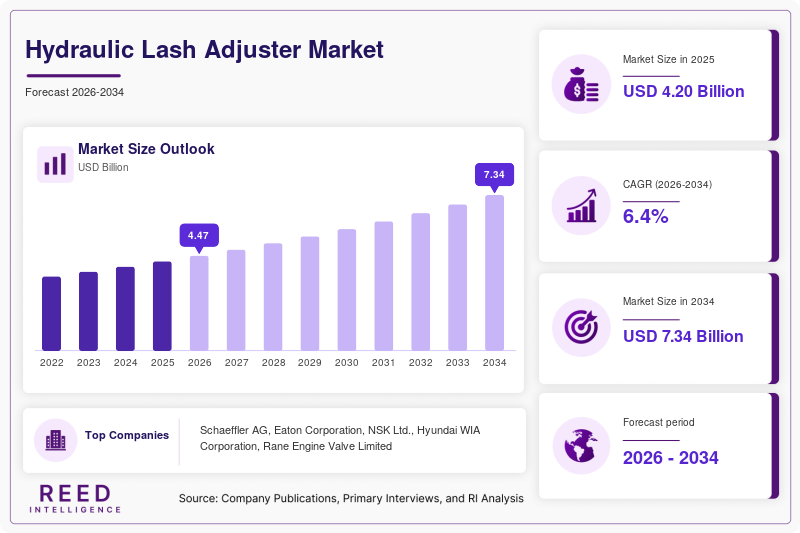
The global Hydraulic Lash Adjuster Market was valued at approximately USD 4.2 billion in 2026 and is projected to reach USD 6.9 billion by 2034, expanding at a CAGR of 6.4% during the forecast period (2026–2034). Hydraulic lash adjusters (HLAs) are critical components in internal combustion engines, ensuring optimal valve clearance and improving engine efficiency, noise reduction, and durability. The market continues to witness steady demand due to the sustained production of passenger and commercial vehicles across emerging and developed economies.
One key global factor supporting market growth is the ongoing emphasis on fuel efficiency and emission reduction in automotive engines. Governments worldwide are implementing stricter emission regulations, prompting automakers to adopt advanced valvetrain technologies such as hydraulic lash adjusters to enhance combustion efficiency and minimize mechanical losses. Additionally, the rising demand for hybrid vehicles, which still rely on internal combustion engines alongside electric systems, is further contributing to the steady expansion of the market.
Key Highlights
- North America dominated the market with a 32.8% share in 2025.
- Asia Pacific is expected to grow at the fastest CAGR of 7.5% during 2026–2034.
- By type, roller hydraulic lash adjusters accounted for the largest share of 42.3%.
- while flat tappet adjusters are projected to grow at a CAGR of 6.9%.
- By application, passenger vehicles led with a 57.6% share, whereas hybrid vehicles are expected to expand at a CAGR of 7.8%.
- The United States remained the dominant country, with market values of USD 720 million in 2024 and USD 770 million in 2025.
Market Trends
Integration of Advanced Valvetrain Technologies
The increasing integration of advanced valvetrain technologies is shaping the hydraulic lash adjuster market. Automotive manufacturers are focusing on optimizing engine performance while complying with emission norms. Hydraulic lash adjusters are being combined with variable valve timing (VVT) and variable valve lift systems to enhance combustion efficiency and reduce fuel consumption. This integration allows for precise control of valve operations, minimizing mechanical wear and ensuring smoother engine performance. As engine downsizing trends continue, the demand for compact yet efficient components such as HLAs is rising. Additionally, innovations in material science, including the use of lightweight alloys and high-strength steel, are improving the durability and performance of these components. These technological advancements are expected to remain a core trend, influencing product development and differentiation strategies across the market.
Growing Adoption in Hybrid Powertrains
The rise of hybrid vehicles is significantly influencing the hydraulic lash adjuster market. While fully electric vehicles do not require traditional engine components, hybrid vehicles still rely on internal combustion engines, thereby sustaining demand for HLAs. Automakers are increasingly investing in hybrid technologies as a transitional solution toward full electrification. In hybrid engines, hydraulic lash adjusters play a crucial role in maintaining engine efficiency during frequent start-stop cycles. This operational requirement increases the importance of durability and precision in HLAs. Furthermore, governments promoting low-emission vehicles through incentives are accelerating hybrid vehicle adoption, particularly in Asia Pacific and Europe. As a result, the market is witnessing a gradual shift in application focus, with hybrid vehicles emerging as a key growth segment.
Market Drivers
Stringent Emission Regulations and Fuel Efficiency Standards
The implementation of stringent emission regulations across major automotive markets is a significant driver for the hydraulic lash adjuster market. Governments in regions such as North America, Europe, and Asia Pacific are enforcing strict limits on vehicle emissions, compelling automakers to enhance engine efficiency. Hydraulic lash adjusters contribute to precise valve operation, reducing energy losses and improving combustion efficiency. This directly supports compliance with emission standards while maintaining engine performance. Additionally, the growing consumer preference for fuel-efficient vehicles is encouraging manufacturers to adopt technologies that optimize engine operation. HLAs reduce mechanical noise and wear, further enhancing vehicle reliability and lifespan. These benefits make hydraulic lash adjusters an essential component in modern engine designs, thereby driving consistent market demand.
Sustained Production of Internal Combustion Engine Vehicles
Despite the increasing focus on electrification, the production of internal combustion engine vehicles remains substantial, particularly in developing economies. Countries in Asia Pacific, Latin America, and parts of Africa continue to rely heavily on conventional vehicles due to cost considerations and infrastructure limitations. Hydraulic lash adjusters are integral to these engines, ensuring proper valve clearance and efficient operation. Moreover, the commercial vehicle segment, including trucks and buses, continues to depend on diesel engines, further supporting market growth. The aftermarket segment also contributes significantly, as replacement and maintenance of HLAs are required over the vehicle lifecycle. This sustained demand across both OEM and aftermarket channels is expected to support the market over the forecast period.
Market Restraint
Increasing Shift Toward Fully Electric Vehicles
The growing adoption of fully electric vehicles presents a notable restraint for the hydraulic lash adjuster market. Electric vehicles do not utilize internal combustion engines, eliminating the need for components such as hydraulic lash adjusters. As governments and automotive manufacturers invest heavily in electrification, the long-term demand for engine-related components is expected to decline. Developed regions such as Europe and North America are witnessing accelerated EV adoption due to supportive policies, subsidies, and advancements in battery technology. This shift is gradually reducing the growth potential of traditional engine component markets.
The impact is particularly evident in passenger vehicle segments, where EV penetration is increasing rapidly. For instance, several automakers have announced plans to phase out internal combustion engine vehicles over the next decade. This transition may lead to reduced OEM demand for hydraulic lash adjusters. Additionally, suppliers heavily dependent on traditional engine components may face challenges in adapting to changing market dynamics. However, the restraint is partially offset by continued demand in emerging markets and hybrid vehicle segments, which still rely on internal combustion engines. Nevertheless, the long-term outlook requires manufacturers to diversify and innovate to mitigate the impact of electrification trends.
Market Opportunities
Expansion in Emerging Automotive Markets
Emerging economies present significant growth opportunities for the hydraulic lash adjuster market. Regions such as Asia Pacific, Latin America, and parts of Africa are experiencing rising vehicle ownership due to increasing disposable incomes and urbanization. These markets continue to rely on cost-effective internal combustion engine vehicles, creating sustained demand for engine components. Additionally, infrastructure development and expanding transportation networks are boosting the demand for commercial vehicles, further supporting the market. Local manufacturing initiatives and government policies promoting automotive production are also encouraging investments in these regions. As a result, companies operating in the hydraulic lash adjuster market can leverage these opportunities by expanding their presence and establishing strategic partnerships with regional OEMs.
Technological Advancements in Materials and Design
Advancements in materials and design offer promising opportunities for market growth. Manufacturers are focusing on developing lightweight and high-performance hydraulic lash adjusters to improve engine efficiency and durability. The use of advanced materials such as high-strength steel and composite alloys is enhancing product performance while reducing weight. Additionally, innovations in manufacturing processes, including precision machining and automation, are improving product quality and consistency. These advancements enable manufacturers to meet the evolving requirements of modern engines, including those used in hybrid vehicles. Furthermore, the increasing emphasis on reducing maintenance costs and extending component lifespan is driving demand for durable and efficient HLAs. Companies investing in research and development are likely to gain a competitive edge in this evolving market landscape.
Segmental Analysis
By Type
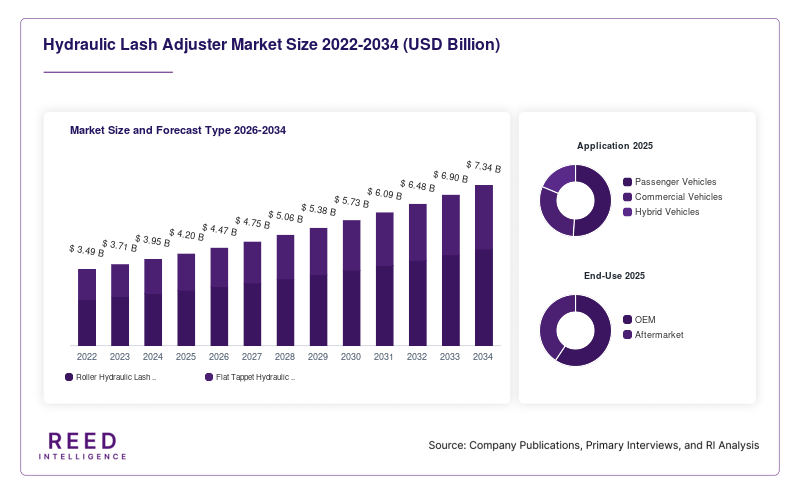
The roller hydraulic lash adjuster segment dominated the market, accounting for 42.3% of the share in 2024. This dominance is attributed to its superior performance characteristics, including reduced friction and improved durability. Roller HLAs are widely used in modern engines due to their ability to enhance efficiency and reduce wear. Automotive manufacturers prefer these components for high-performance engines, as they provide smoother operation and better fuel efficiency. Additionally, advancements in manufacturing processes have improved the reliability and cost-effectiveness of roller HLAs, further supporting their adoption across various vehicle segments.
The flat tappet hydraulic lash adjuster segment is expected to grow at the fastest CAGR of 6.9% during the forecast period. This growth is driven by its cost-effectiveness and suitability for smaller engines. Flat tappet HLAs are commonly used in entry-level and mid-range vehicles, particularly in emerging markets. The increasing demand for affordable vehicles is supporting the growth of this segment. Additionally, ongoing improvements in material quality and design are enhancing the performance and lifespan of flat tappet HLAs, making them a viable option for a broader range of applications.
By Application
The passenger vehicles segment held the largest market share of 57.6% in 2024. The high volume of passenger vehicle production globally is a key factor driving this dominance. Hydraulic lash adjusters are essential components in these vehicles, ensuring efficient engine operation and reduced noise. The growing demand for fuel-efficient and low-emission vehicles is further supporting the adoption of HLAs in this segment. Additionally, the increasing consumer preference for comfort and performance is encouraging automakers to incorporate advanced engine technologies, including hydraulic lash adjusters.
The hybrid vehicles segment is projected to grow at the fastest CAGR of 7.8%. This growth is driven by the increasing adoption of hybrid powertrains as a transitional solution toward electrification. Hydraulic lash adjusters play a crucial role in maintaining engine efficiency in hybrid vehicles, particularly during frequent start-stop cycles. Government incentives and environmental concerns are further boosting the demand for hybrid vehicles, thereby supporting the growth of this segment.
By End-Use
The OEM segment dominated the market with a 61.2% share in 2024. This dominance is attributed to the high volume of vehicle production and the integration of hydraulic lash adjusters during the manufacturing process. OEMs focus on incorporating high-quality components to ensure vehicle performance and reliability. The growing demand for advanced engine technologies is further supporting the adoption of HLAs in this segment. Additionally, partnerships between component manufacturers and automakers are driving innovation and improving product offerings.
The aftermarket segment is expected to grow at a CAGR of 6.7% during the forecast period. This growth is driven by the increasing need for maintenance and replacement of engine components. As vehicles age, the demand for hydraulic lash adjusters in the aftermarket segment rises. Additionally, the expanding vehicle fleet in emerging markets is contributing to the growth of this segment. The availability of cost-effective replacement parts and the growing number of service centers are further supporting the expansion of the aftermarket segment.
Regional Analysis
North America
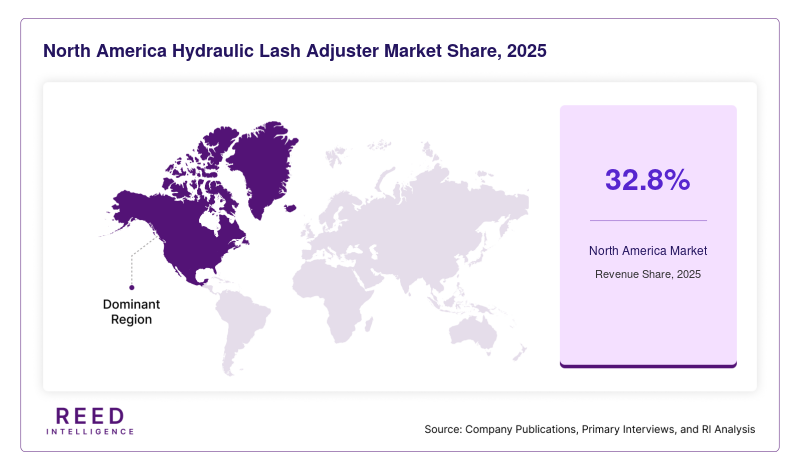
North America held a significant share of 32.8% in 2025 and is projected to grow at a CAGR of 5.9% during the forecast period. The region's mature automotive industry and high adoption of advanced engine technologies contribute to its dominance. The presence of established automotive manufacturers and strong aftermarket demand further supports market growth. Additionally, the region’s focus on fuel efficiency and emission reduction continues to drive the adoption of hydraulic lash adjusters.
The United States dominates the North American market, supported by its large automotive production base and technological advancements. A key growth factor is the strong aftermarket demand driven by the aging vehicle fleet. As vehicles require periodic maintenance and component replacement, the demand for hydraulic lash adjusters remains steady. This trend is expected to sustain market growth in the region.
Europe
Europe accounted for approximately 27.4% of the market share in 2025 and is expected to grow at a CAGR of 5.6% during 2026–2034. The region’s stringent emission regulations and focus on sustainable mobility are key drivers. Automotive manufacturers are adopting advanced engine technologies to comply with regulatory standards, supporting the demand for hydraulic lash adjusters.
Germany leads the European market due to its strong automotive manufacturing sector. A unique growth factor is the emphasis on precision engineering and high-performance vehicles. German automakers continue to invest in advanced engine components to enhance efficiency and performance, driving demand for hydraulic lash adjusters in the region.
Asia Pacific
Asia Pacific is the fastest-growing region, with a CAGR of 7.5% and a market share of 24.6% in 2025. Rapid urbanization, increasing vehicle production, and rising disposable incomes are key factors driving growth. The region’s expanding automotive industry and strong demand for passenger and commercial vehicles contribute significantly to market expansion.
China dominates the Asia Pacific market, supported by its large-scale automotive production. A key growth factor is government support for domestic manufacturing and infrastructure development. These initiatives are boosting vehicle demand, thereby increasing the need for hydraulic lash adjusters in the region.
Middle East & Africa
The Middle East & Africa region held a market share of 7.2% in 2025 and is expected to grow at a CAGR of 5.2%. The market is driven by increasing vehicle imports and growing transportation needs. The region’s reliance on internal combustion engine vehicles supports demand for hydraulic lash adjusters.
Saudi Arabia is the dominant country in this region. A unique growth factor is the expansion of logistics and transportation sectors. As economic diversification efforts continue, the demand for commercial vehicles is increasing, driving the need for reliable engine components such as hydraulic lash adjusters.
Latin America
Latin America accounted for 8.0% of the market share in 2025 and is projected to grow at a CAGR of 5.4%. The region’s automotive industry is gradually recovering, supported by economic stability and increasing vehicle demand. The aftermarket segment also contributes significantly to market growth.
Brazil leads the Latin American market. A key growth factor is the rising demand for flex-fuel vehicles, which rely on internal combustion engines. This trend supports the demand for hydraulic lash adjusters, as these components play a critical role in maintaining engine efficiency and performance.
Competitive Landscape
The hydraulic lash adjuster market is moderately competitive, with several global and regional players focusing on product innovation and strategic partnerships. Leading companies are investing in research and development to enhance product performance and durability. The market is characterized by the presence of established automotive component manufacturers with strong distribution networks.
Schaeffler AG is a key leader in the market, known for its advanced engine components and strong global presence. The company has recently expanded its product portfolio by introducing high-performance hydraulic lash adjusters designed for hybrid engines. Other major players are also focusing on technological advancements and expanding their manufacturing capabilities to meet growing demand. Strategic collaborations with automotive OEMs are common, enabling companies to strengthen their market position and enhance customer reach.
Key Players
- Schaeffler AG
- Eaton Corporation
- NSK Ltd.
- Hyundai WIA Corporation
- Rane Engine Valve Limited
- Tenneco Inc.
- Federal-Mogul LLC
- Aisin Corporation
- BorgWarner Inc.
- Delphi Technologies
- Hitachi Astemo Ltd.
- Mahle GmbH
- SKF Group
- Linamar Corporation
- Ningbo Tuopu Group
Recent Developments
- Schaeffler AG launched a new range of lightweight hydraulic lash adjusters optimized for hybrid engine applications in 2025.
- BorgWarner Inc. expanded its manufacturing facility in Asia Pacific to increase production capacity for engine components, including HLAs.
- Aisin Corporation introduced advanced hydraulic lash adjusters with enhanced durability and reduced friction for next-generation engines.
Hydraulic Lash Adjuster Market Segments
Type
- Roller Hydraulic Lash Adjuster
- Flat Tappet Hydraulic Lash Adjuster
Application
- Passenger Vehicles
- Commercial Vehicles
- Hybrid Vehicles
End-Use
- OEM
- Aftermarket
By Region
- North America
- Europe
- APAC
- Middle East and Africa
- LATAM