Hydrobike Market Size, Share & Demand Report By Type (Pontoon-based Hydrobikes, Catamaran Hydrobikes, Hybrid Hydrobikes), By Application (Recreational Tourism, Fitness & Personal Use, Sports Training), By End-Use (Commercial Users, Individual Consumers), By Distribution Channel (Online Retail, Specialty Stores, Outdoor & Sports Equipment Retailers, Direct Sales), By Region & Segment Forecasts, 2025–2034
USD 3950
Market Overview
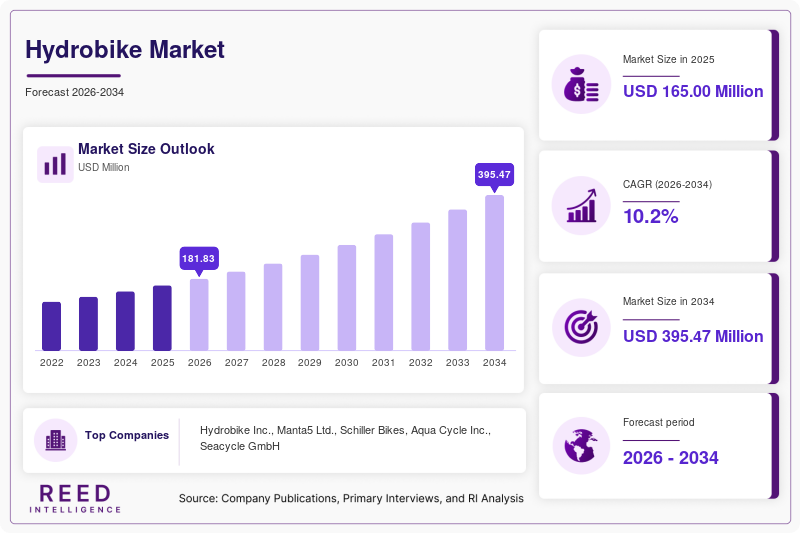
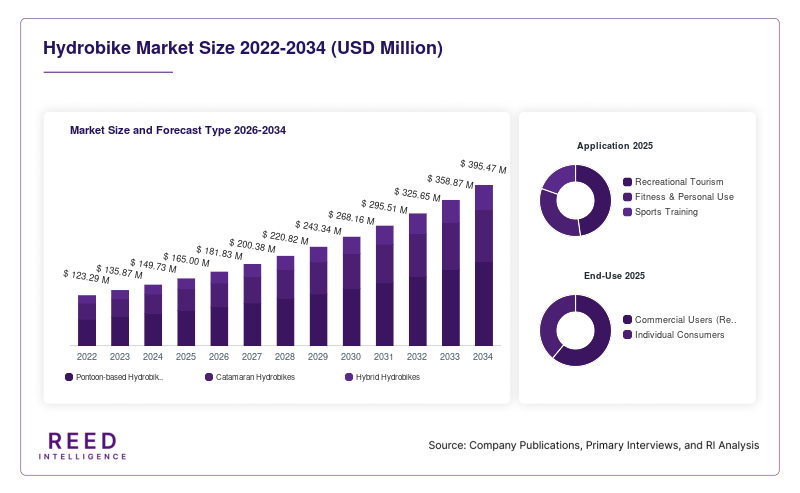
The global Hydrobike Market size was valued at approximately USD 165 million in 2025 and is projected to reach USD 395 million by 2034, expanding at a CAGR of 10.2% during the forecast period (2025–2034). Hydrobikes human-powered watercraft designed for recreational and fitness use—are gaining traction as consumers increasingly seek eco-friendly and low-impact outdoor activities. The market growth has been supported by the global rise in sustainable tourism and water-based recreational infrastructure development, particularly in coastal and lake-based destinations.
One key global factor driving growth is the increasing emphasis on carbon-neutral recreational alternatives. Hydrobikes, which operate without fuel and produce zero emissions, align well with sustainability initiatives promoted by governments and tourism boards worldwide. This has led to increased adoption across rental services, resorts, and personal leisure activities.
Key Highlights:
- North America dominated the Hydrobike Market with a share of 34.8% in 2025, while Asia Pacific is projected to grow at the fastest CAGR of 12.6% during the forecast period.
- In terms of type, pontoon-based hydrobikes held the largest share, whereas hybrid hydrobikes are expected to grow at the fastest CAGR of 13.4%.
- The recreational tourism segment led the application category, while fitness and personal use is expected to expand at a CAGR of 11.9%.
- The United States remained the dominant country, with market values of USD 52 million in 2024 and USD 56 million in 2025.
Market Trends
Integration of Fitness and Recreation
The Hydrobike Market is witnessing a shift toward dual-purpose usage, combining fitness and leisure. Consumers are increasingly using hydrobikes as part of low-impact aquatic workouts. This trend is particularly prominent in urban waterfronts and fitness resorts, where hydrobikes are being incorporated into structured fitness programs. Manufacturers are responding by enhancing ergonomic designs and adjustable resistance features, making hydrobikes suitable for a broader demographic, including older users and rehabilitation patients.
Expansion of Rental-Based Business Models
Rental services are becoming a major trend in the Hydrobike Market, especially in tourist-heavy regions. Operators are offering hydrobikes on an hourly or daily basis, lowering the barrier to entry for consumers. This trend is supported by digital booking platforms and mobile applications that allow seamless reservations. The rental model not only increases accessibility but also ensures recurring revenue streams for operators, making it a preferred business strategy in coastal and lakefront destinations.
Market Drivers
Growth in Eco-Friendly Water Sports
The increasing preference for environmentally sustainable recreational activities is a major driver of the Hydrobike Market. Unlike motorized watercraft, hydrobikes produce no emissions and generate minimal noise pollution. This makes them suitable for environmentally sensitive areas such as marine reserves and protected lakes. Governments and regulatory bodies are encouraging the use of such eco-friendly alternatives, which is boosting adoption across public and private sectors.
Rising Health and Wellness Awareness
The global focus on physical fitness and mental well-being is significantly contributing to market growth. Hydrobiking offers a full-body workout with low joint impact, making it an attractive option for individuals seeking alternative exercise routines. The ability to combine scenic outdoor experiences with physical activity has increased its appeal among urban populations. Fitness centers and wellness retreats are increasingly incorporating hydrobikes into their offerings, further driving demand.
Market Restraint
High Initial Investment and Maintenance Costs
One of the primary challenges in the Hydrobike Market is the relatively high upfront cost associated with purchasing and maintaining hydrobikes. Advanced models with durable materials and enhanced features can be expensive, limiting adoption among individual consumers. Additionally, maintenance requirements such as corrosion prevention, storage, and periodic servicing add to operational costs for rental operators.
These cost-related barriers are particularly significant in developing regions where disposable income levels are lower. Small-scale operators may find it difficult to invest in high-quality hydrobikes, which can impact service quality and user experience. Furthermore, limited availability of repair infrastructure and spare parts in certain regions can hinder market expansion. While technological advancements are gradually reducing production costs, affordability remains a key concern that could restrain widespread adoption in the near term.
Market Opportunities
Growth in Adventure Tourism
The increasing popularity of adventure and experiential tourism presents a significant opportunity for the Hydrobike Market. Tourists are seeking unique and engaging water-based activities, and hydrobikes offer a safe and accessible option. Tour operators are integrating hydrobike experiences into travel packages, especially in destinations with calm water bodies. This trend is expected to create new revenue streams and expand market reach.
Technological Advancements in Design
Innovations in materials and design are opening new avenues for market growth. Lightweight composites, modular designs, and improved propulsion systems are enhancing performance and user comfort. These advancements are expected to reduce manufacturing costs and improve durability, making hydrobikes more accessible to a wider audience. Additionally, the integration of smart features such as GPS tracking and performance monitoring could further enhance user experience and drive adoption.
Segmental Analysis
By Type
Pontoon-based hydrobikes accounted for the largest share of 48.6% in 2024, owing to their stability and ease of use. These models are widely preferred for recreational purposes, especially by beginners and rental operators. Their ability to operate efficiently in calm waters makes them a popular choice across tourist destinations.
Hybrid hydrobikes are expected to grow at the fastest CAGR of 13.4% during the forecast period. These models combine traditional pedaling mechanisms with advanced propulsion systems, offering enhanced performance and versatility. The increasing demand for multi-functional and high-performance equipment is expected to drive this segment.
By Material
Aluminum-based hydrobikes held the dominant share of 42.1% in 2024 due to their durability and corrosion resistance. These materials are widely used in manufacturing due to their lightweight properties and cost-effectiveness.
Composite materials are projected to grow at a CAGR of 12.8% over the forecast period. These materials offer superior strength-to-weight ratios and improved performance. The adoption of advanced composites is expected to increase as manufacturers focus on enhancing product quality and reducing weight.
By Application
Recreational tourism accounted for 51.7% of the market share in 2024, driven by the increasing popularity of water-based leisure activities. Hydrobikes are widely used in resorts, beaches, and lakes for recreational purposes.
Fitness and personal use is expected to grow at a CAGR of 11.9% during the forecast period. The rising awareness of health and wellness is driving the adoption of hydrobikes as a fitness tool. Their low-impact nature makes them suitable for a wide range of users.
By End-Use
Commercial users held the largest share of 63.4% in 2024, including rental operators, resorts, and tourism companies. These entities are the primary adopters of hydrobikes due to their revenue-generating potential.
Individual consumers are expected to grow at a CAGR of 10.7% during the forecast period. Increasing disposable incomes and interest in outdoor activities are encouraging personal ownership of hydrobikes.
By Distribution Channel
Offline channels accounted for 58.2% of the market share in 2024, as customers prefer physical inspection before purchasing. Specialty stores and distributors play a key role in this segment.
Online channels are projected to grow at a CAGR of 12.2% during the forecast period. The convenience of e-commerce platforms and the availability of a wide range of products are driving this growth.
Regional Analysis
North America
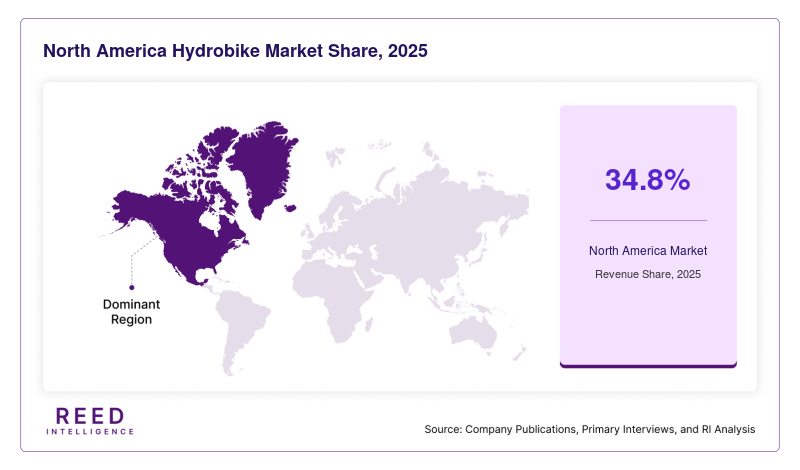
North America accounted for 34.8% of the Hydrobike Market share in 2025 and is expected to grow at a CAGR of 9.5% during the forecast period. The region has a well-established recreational infrastructure, including lakes, rivers, and coastal areas, which supports the adoption of hydrobikes.
The United States dominated the regional market due to the strong presence of water sports enthusiasts and developed tourism infrastructure. The increasing integration of hydrobikes in waterfront parks and resorts has contributed to market growth. Additionally, local governments are promoting eco-friendly recreational activities, which is supporting adoption.
Europe
Europe held a 27.3% share of the Hydrobike Market in 2025 and is projected to grow at a CAGR of 9.8% through 2034. The region benefits from a strong culture of outdoor recreation and sustainability-focused initiatives.
France emerged as the leading country, driven by its extensive coastline and inland water bodies. The country’s focus on eco-tourism and sustainable mobility has encouraged the use of hydrobikes. Local municipalities are increasingly incorporating hydrobike rentals into public recreational programs.
Asia Pacific
Asia Pacific captured 20.5% of the market share in 2025 and is anticipated to register the fastest CAGR of 12.6% during the forecast period. Rapid urbanization and increasing disposable incomes are contributing to market expansion.
China dominated the regional market due to large-scale investments in tourism infrastructure. The development of artificial lakes and waterfront projects has created new opportunities for hydrobike adoption. The growing middle-class population is also driving demand for recreational activities.
Middle East & Africa
The Middle East & Africa region accounted for 9.1% of the Hydrobike Market in 2025 and is expected to grow at a CAGR of 10.4% over the forecast period. The region is witnessing increasing investments in tourism and leisure infrastructure.
The United Arab Emirates led the market, supported by luxury resorts and waterfront developments. Hydrobikes are being introduced as premium recreational offerings, attracting both tourists and residents. Government initiatives to diversify the economy beyond oil are also supporting market growth.
Latin America
Latin America held an 8.3% share of the Hydrobike Market in 2025 and is projected to grow at a CAGR of 10.1% during the forecast period. The region’s natural water resources provide a strong foundation for market development.
Brazil dominated the regional market due to its extensive coastline and growing tourism sector. The increasing popularity of water-based recreational activities is driving demand for hydrobikes. Local businesses are investing in rental services to cater to both domestic and international tourists.
Competitive Landscape
The Hydrobike Market is moderately fragmented, with a mix of established players and emerging companies competing on product innovation and distribution strategies. Leading companies are focusing on enhancing product durability, user comfort, and performance to gain a competitive edge.
Hydrobike Inc. is recognized as a market leader, driven by its extensive product portfolio and strong presence in North America. The company recently introduced a new line of lightweight composite hydrobikes designed for both recreational and fitness applications, reflecting its focus on innovation.
Other key players are investing in partnerships with tourism operators and expanding their distribution networks to strengthen market presence. Companies are also exploring customization options to cater to specific customer requirements, which is expected to intensify competition in the coming years.
Key Players
- Hydrobike Inc.
- Waterbike Solutions Ltd.
- Aqua Cycle Inc.
- Seacycle GmbH
- HydroRider LLC
- Manta5 Ltd.
- Schiller Bikes
- AquaJet Watercraft
- WaterBee Ltd.
- FloatBike Technologies
Recent Developments
- In 2024, Hydrobike Inc. launched a next-generation hydrobike with enhanced propulsion efficiency and modular design.
- In 2023, Manta5 Ltd. expanded its distribution network in Asia Pacific to tap into emerging markets.
- In 2024, Schiller Bikes introduced a foldable hydrobike model aimed at improving portability.
- In 2023, Aqua Cycle Inc. partnered with resort chains to expand rental services across North America.
- In 2024, Waterbike Solutions Ltd. invested in composite material technology to improve product durability and reduce weight.
Hydrobike Market Segments
Type
- Pontoon-based Hydrobikes
- Catamaran Hydrobikes
- Hybrid Hydrobikes
Application
- Recreational Tourism
- Fitness & Personal Use
- Sports Training
End-Use
- Commercial Users (Resorts, Rentals, Tourism Operators)
- Individual Consumers
Distribution Channel
- Online Retail
- Specialty Stores
- Outdoor & Sports Equipment Retailers
- Direct Sales
By Region
- North America
- Europe
- APAC
- Middle East and Africa
- LATAM