Hydrolyzed Casein Market Size, Share Demand Report By Type (Partially Hydrolyzed Casein, Extensively Hydrolyzed Casein), By Application (Infant Nutrition, Sports Nutrition, Medical Nutrition, Functional Foods and Beverages, Dietary Supplements), By Form (Powder, Liquid), By Distribution Channel (Direct Sales, Distributors, Online Ingredient Platforms), By Region & Segment Forecasts, 2026–2034
USD 3950
Hydrolyzed Casein Market Overview
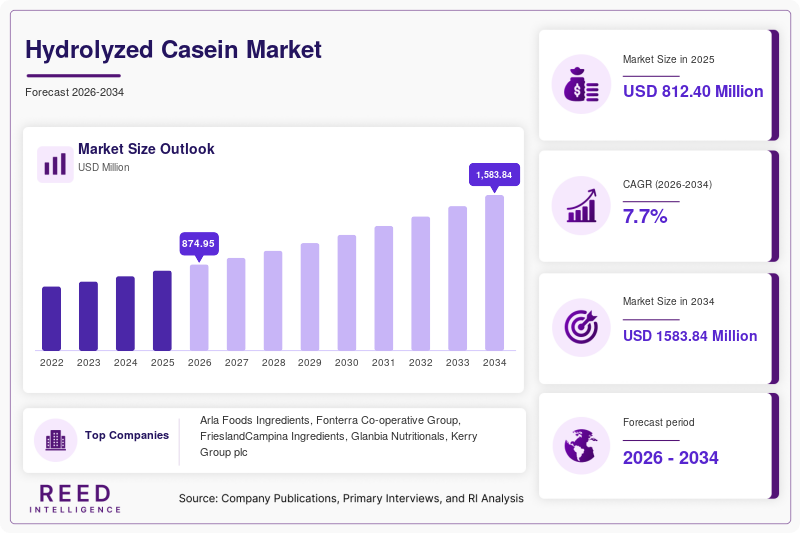
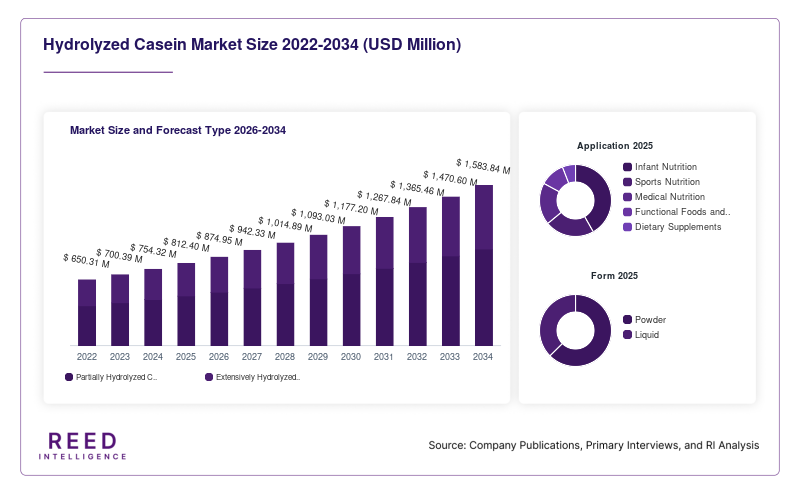
The global Hydrolyzed Casein Market was valued at USD 812.4 million in 2026 and is projected to reach USD 1,467.8 million by 2034, expanding at a CAGR of 7.7% during 2026–2034. The market has been developing steadily due to rising demand for highly digestible protein ingredients in infant nutrition, sports nutrition, medical foods, and specialized dietary formulations. Hydrolyzed casein, known for improved absorption, lower allergenicity, and functional benefits, has gained traction across both clinical and consumer nutrition applications.
One global factor supporting market expansion has been the continued rise in protein fortification trends across functional food and beverage formulations. Manufacturers have increased the incorporation of hydrolyzed proteins into ready-to-drink beverages, protein powders, meal replacements, and medical nutrition products to meet growing demand for performance-oriented and digestive-friendly nutrition solutions.
Key Highlights
- North America dominated the Hydrolyzed Casein Market with 34.6% share in 2025, while Asia Pacific is projected to register the fastest CAGR of 8.9% through 2034.
- By Type, Extensively Hydrolyzed Casein led with 58.4% share in 2025, while Partially Hydrolyzed Casein is expected to expand at 8.4% CAGR.
- By Application, Infant Nutrition accounted for 36.2% share in 2025, while Sports Nutrition is projected to grow at 8.8% CAGR.
- By Form, Powder held 74.1% share in 2025, while Liquid Hydrolyzed Casein is expected to grow at 8.2% CAGR.
- The U.S. Hydrolyzed Casein Market was valued at USD 196.8 million in 2024 and reached USD 211.4 million in 2025.
Market Trends
Expansion of Clinical and Specialized Nutrition Formulations
A notable trend shaping the Hydrolyzed Casein Market is the increasing incorporation of hydrolyzed proteins into specialized nutrition formulations. Demand has increased for enteral nutrition, hypoallergenic infant formulas, and medical dietary solutions designed for patients with digestive disorders, inflammatory conditions, and metabolic requirements. Product innovation in clinical nutrition continues to support wider ingredient penetration.
Rising Adoption in Performance and Functional Foods
Another significant trend is the use of hydrolyzed casein in sports nutrition and functional food products. Protein hydrolysates are being incorporated into recovery drinks, protein bars, and fortified dairy alternatives due to their rapid absorption characteristics. This trend is expected to support broader product diversification across consumer nutrition categories.
Market Drivers
Growing Demand for Hypoallergenic Infant Nutrition
A major driver for the Hydrolyzed Casein Market is increasing demand for infant formulas formulated for allergy-sensitive populations. Hydrolyzed proteins are used extensively in specialized pediatric nutrition due to reduced allergenic potential and improved digestibility. This demand has encouraged manufacturers to expand hydrolyzed ingredient production capacities.
Growth in Protein-Enriched Functional Nutrition Products
Increasing consumption of protein-enriched nutritional products has driven demand for hydrolyzed casein ingredients. Consumers seeking digestive-friendly proteins, muscle support, and active nutrition products have contributed to sustained ingredient utilization in functional foods and supplements.
Market Restraint
High Production and Processing Costs
A major restraint in the Hydrolyzed Casein Market is the relatively high cost associated with enzymatic hydrolysis, purification processes, and flavor correction technologies. These factors can raise production costs and limit adoption in price-sensitive markets.
Market Opportunities
Expansion in Personalized Nutrition Solutions
The rise of personalized nutrition presents growth opportunities for hydrolyzed casein manufacturers. Customized protein blends targeting digestive health, metabolic support, and age-specific nutrition are expected to create new commercial avenues.
Emerging Demand in Medical Nutrition for Aging Populations
A growing aging population has created opportunities for hydrolyzed casein use in senior-focused nutritional products. Products supporting muscle retention, recovery, and nutrient absorption are expected to generate future demand.
Segmental Analysis
By Type
Extensively Hydrolyzed Casein: Extensively hydrolyzed casein accounted for 58.4% share in 2025, supported by its widespread use in infant allergy formulations and clinical nutrition products. Strong demand from medical-grade applications supported segment dominance.
Partially Hydrolyzed Casein: Partially hydrolyzed casein is projected to grow at 8.4% CAGR through 2034. Growth will be supported by increasing incorporation into functional foods and digestive health formulations where moderate hydrolysis offers formulation advantages.
By Application
Infant Nutrition: Infant nutrition held 36.2% share in 2025, driven by extensive use of hydrolyzed proteins in hypoallergenic and specialty pediatric formulas.
Sports Nutrition: Sports nutrition is projected to expand at 8.8% CAGR over the forecast period. Demand will increase due to wider use in muscle recovery products, performance supplements, and active nutrition beverages.
By Form
Powder: Powder represented 74.1% market share in 2025, supported by easier storage, transportation efficiency, and extensive use in dry nutritional formulations.
Liquid Hydrolyzed Casein: Liquid hydrolyzed casein is anticipated to grow at 8.2% CAGR due to expanding use in ready-to-drink nutritional beverages and liquid clinical nutrition products.
By End Use
Food and Beverage Manufacturers: Food and beverage manufacturers accounted for 41.5% share in 2025, supported by ingredient demand for fortified foods, protein beverages, and specialty formulations.
Pharmaceutical and Medical Nutrition Producers: This segment is expected to grow at 8.5% CAGR through 2034, supported by rising demand for disease-specific nutrition products and enteral feeding formulations.
By Distribution Channel
Direct/B2B Sales: Direct sales held 62.7% share in 2025, driven by long-term supply contracts between ingredient producers and nutritional product manufacturers.
Online and Specialty Ingredient Distribution: This segment is projected to grow at 7.9% CAGR, supported by digital procurement platforms and broader ingredient access among smaller formulation companies.
Regional Analysis
North America
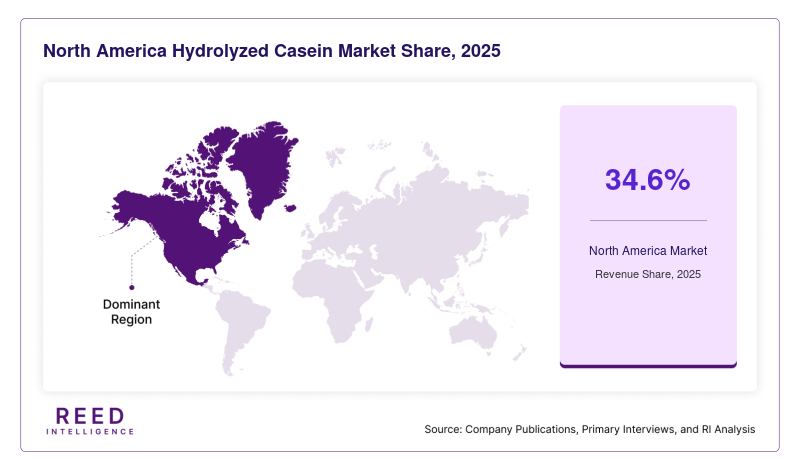
North America accounted for 34.6% of the Hydrolyzed Casein Market in 2025. The region benefited from established clinical nutrition infrastructure and mature sports nutrition demand. The market in this region is projected to expand at 7.4% CAGR through 2034.
The United States remained the dominant country due to strong adoption of specialized pediatric formulas and growing demand for medical nutrition products. Continued investment in protein ingredient innovation has supported national market growth.
Europe
Europe held 27.3% market share in 2025. Demand was supported by established dairy protein processing capabilities and growing demand for premium infant nutrition products. The regional market is projected to grow at 7.2% CAGR during the forecast period.
Germany dominated the regional market due to advanced food ingredient manufacturing capabilities and demand for clean-label nutritional formulations. Innovation in specialized dietary products contributed to growth.
Asia Pacific
Asia Pacific represented 23.5% share in 2025 and is projected to register the fastest growth at 8.9% CAGR through 2034.
China led regional demand due to growing pediatric nutrition consumption and increasing demand for premium protein ingredients in fortified food applications. Expansion of nutritional product manufacturing has strengthened demand.
Middle East & Africa
Middle East & Africa accounted for 7.2% market share in 2025 and is expected to grow at 6.8% CAGR over the forecast period.
Saudi Arabia emerged as the dominant country due to growing investments in medical nutrition imports and increasing demand for clinical dietary products. Expanding healthcare nutrition infrastructure supported growth.
Latin America
Latin America captured 7.4% share in 2025 and is forecast to grow at 6.9% CAGR through 2034.
Brazil dominated the regional market due to increasing functional nutrition consumption and growing domestic demand for fortified protein products. Expanding supplement manufacturing supported demand growth.
Competitive Landscape
The Hydrolyzed Casein Market remains moderately consolidated, with leading participants competing through ingredient innovation, processing advancements, and strategic capacity expansion. Arla Foods Ingredients remained a major market leader due to its broad hydrolyzed protein portfolio and established presence in pediatric and medical nutrition markets. The company recently expanded specialty protein processing capabilities to support demand growth.
Fonterra Co-operative Group maintained strong positioning through dairy protein innovation and supply partnerships. FrieslandCampina Ingredients focused on clinical nutrition product development. Glanbia Nutritionals expanded hydrolyzed protein applications within sports nutrition solutions. Kerry Group strengthened market presence through formulation technologies targeting taste improvement and protein functionality.
Competition in the Hydrolyzed Casein Market is increasingly shaped by investments in hydrolysis optimization, specialty ingredient differentiation, and expansion into emerging nutrition applications.
Key Players List
- Arla Foods Ingredients
- Fonterra Co-operative Group
- FrieslandCampina Ingredients
- Glanbia Nutritionals
- Kerry Group
- Lactalis Ingredients
- Hilmar Ingredients
- Armor Proteines
- Agropur Ingredients
- Ingredia SA
- AMCO Proteins
- Tatua Co-operative Dairy Company
- Milk Specialties Global
- Saputo Ingredients
- Carbery Group
Recent Developments
- In 2025, several manufacturers expanded enzymatic hydrolysis production capacity to improve hydrolyzed casein output and meet growing demand from infant and clinical nutrition applications.
- In 2025, leading market participants strengthened specialty protein portfolios through new hydrolyzed casein ingredient launches targeting performance and health nutrition formulations.
- In 2025, companies increased investment in flavor masking and bitterness reduction technologies to improve taste performance in hydrolyzed casein formulations used in beverages and supplements.
- In 2025, multiple ingredient suppliers introduced new hydrolyzed casein blends for sports recovery products, expanding applications in performance nutrition and functional beverages.
- In 2024–2025, manufacturers expanded contract manufacturing partnerships to strengthen specialty dairy protein supply chains and improve ingredient commercialization.
- In 2025, innovation accelerated in infant nutrition hydrolysate ingredients, supported by broader adoption of hydrolyzed proteins in pediatric nutrition products.
- In 2025, companies advanced next-generation casein processing technologies to support innovation in functional and specialty hydrolyzed protein ingredients.
- In 2026, producers increased focus on AI-optimized hydrolysis processing and advanced enzyme systems to improve peptide quality and production efficiency.
- In 2025, several suppliers expanded ready-to-drink nutritional applications using hydrolyzed dairy proteins, supporting growth in convenient clinical and active nutrition products.
- In 2025, manufacturers invested in plant modernization and specialty protein processing upgrades to strengthen supply availability for high-value hydrolyzed casein ingredients.
Hydrolyzed Casein Market Segments
Type
- Partially Hydrolyzed Casein
- Extensively Hydrolyzed Casein
Application
- Infant Nutrition
- Sports Nutrition
- Medical Nutrition
- Functional Foods and Beverages
- Dietary Supplements
Form
- Powder
- Liquid
Distribution Channel
- Direct Sales
- Distributors
- Online Ingredient Platforms
By Region
- North America
- Europe
- APAC
- Middle East and Africa
- LATAM