Hydrolyzed Whey Protein Market Size, Share & Demand Report By Product Type (Hydrolyzed Whey Protein Concentrate, Hydrolyzed Whey Protein Isolate), By Application (Sports Nutrition, Clinical Nutrition, Infant Nutrition, Functional Foods & Beverages), By Form (Powder, Liquid), By Distribution Channel (Specialty Nutrition Stores, Supermarkets & Hypermarkets, Online Retail) & Regional Forecasts, 2026–2034
USD 3950
Market Overview
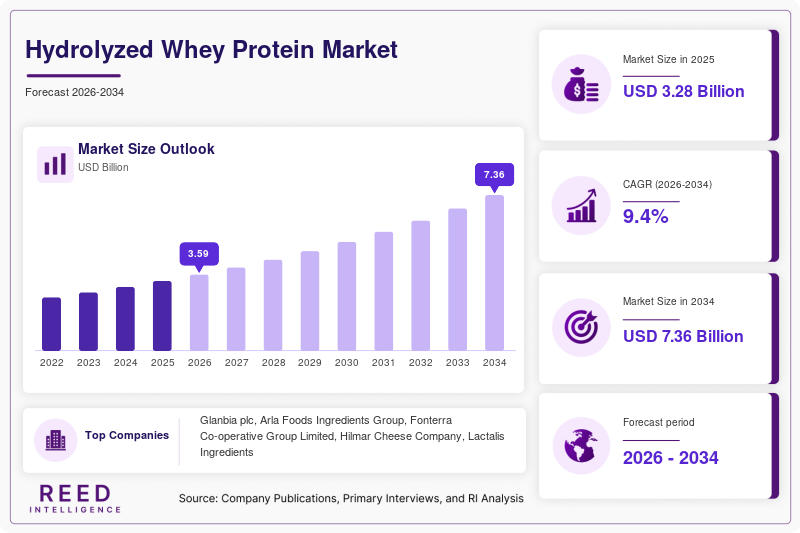
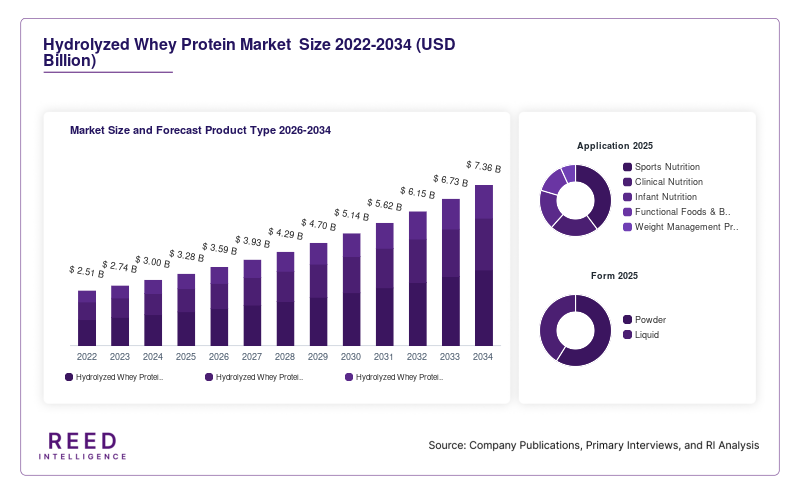
The Hydrolyzed Whey Protein Market was valued at approximately USD 3.28 billion in 2026 and is projected to reach USD 6.74 billion by 2034, expanding at a CAGR of 9.4% during 2026–2034. The market is experiencing strong growth due to increasing consumer demand for high-performance nutritional products, sports supplements, and functional protein ingredients. Hydrolyzed whey protein is widely recognized for its rapid absorption rate, enhanced digestibility, and superior amino acid profile, making it highly suitable for sports nutrition, clinical nutrition, infant formula, and weight management applications.
One of the major global factors supporting the growth of the Hydrolyzed Whey Protein Market is the increasing focus on active lifestyles and preventive healthcare. Consumers across both developed and emerging economies are adopting protein-rich diets to support muscle recovery, metabolic health, and physical performance. Fitness culture expansion, rising gym memberships, and increased participation in endurance sports and athletic training programs have significantly accelerated demand for premium whey-based protein ingredients.
Key Highlights
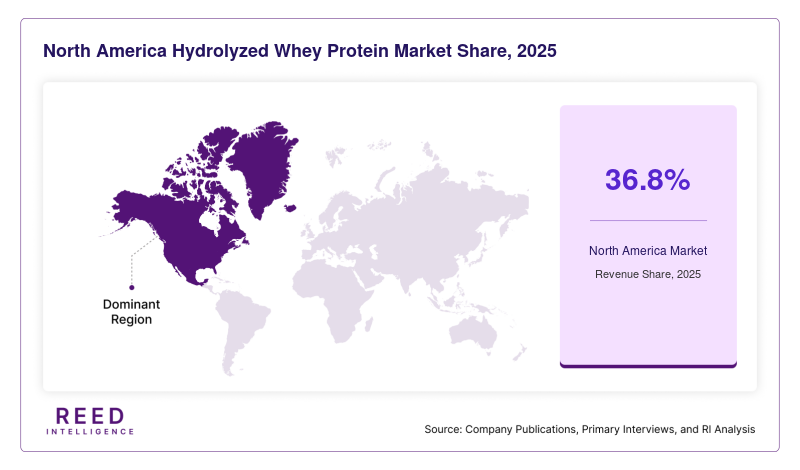
- North America dominated the Hydrolyzed Whey Protein Market with a market share of 36.8% in 2025.
- Asia Pacific is projected to register the fastest growth with a CAGR of 10.6% during 2026–2034.
- By product type, hydrolyzed whey protein isolate accounted for the largest market share of 48.9% in 2025.
- By product type, hydrolyzed whey protein peptides are expected to grow at a 11.2% CAGR during the forecast period.
- By application, the sports nutrition segment held the dominant share in 2025.
- By application, the clinical nutrition segment is forecast to expand at a 10.8% CAGR through 2034.
- The United States remained the dominant country with market values of approximately USD 894 million in 2024 and USD 972 million in 2025.
Market Trends
Rising Popularity of High-Protein Functional Beverages
The growing consumption of protein-enriched beverages is becoming a major trend influencing the Hydrolyzed Whey Protein Market. Consumers are increasingly preferring ready-to-drink nutritional products that support convenience, muscle recovery, and daily protein intake. Hydrolyzed whey protein is gaining widespread use in functional beverages because it dissolves easily and offers faster digestion compared to conventional protein ingredients.
Beverage manufacturers are introducing protein shakes, recovery drinks, and fortified dairy beverages targeting athletes, fitness enthusiasts, and health-conscious consumers. This trend is expected to strengthen market demand throughout the forecast period.
Expansion of Personalized Sports Nutrition Products
The sports nutrition industry is increasingly moving toward personalized formulations designed for specific fitness goals and body requirements. Hydrolyzed whey protein products are being customized for endurance athletes, bodybuilders, senior consumers, and clinical patients requiring rapid amino acid absorption.
Manufacturers are introducing targeted protein blends with enhanced digestive properties and specialized nutrient combinations. This trend is encouraging product innovation and premium product positioning across the global market.
Market Drivers
Increasing Participation in Fitness and Athletic Activities
Growing global participation in fitness programs, gym memberships, and recreational sports is significantly driving the Hydrolyzed Whey Protein Market. Consumers are increasingly investing in post-workout recovery products and performance-enhancing nutritional supplements to improve physical endurance and muscle development.
Hydrolyzed whey protein has become highly preferred among athletes due to its rapid digestion and improved amino acid delivery. Rising awareness regarding sports recovery nutrition continues to accelerate product demand.
Growth of Clinical and Medical Nutrition Applications
The increasing adoption of protein-based clinical nutrition products is another major driver supporting market growth. Hydrolyzed whey protein is extensively used in medical nutrition because it offers improved digestibility and efficient nutrient absorption for patients with compromised digestive systems.
Healthcare institutions and nutritional product manufacturers are increasingly incorporating hydrolyzed whey protein into medical beverages, elderly nutrition products, and recovery-focused formulations.
Market Restraint
High Production and Processing Costs
One of the primary restraints affecting the Hydrolyzed Whey Protein Market is the relatively high cost associated with enzymatic hydrolysis processing and advanced purification technologies. The production process requires specialized equipment and quality control measures, increasing overall manufacturing expenses and limiting affordability in price-sensitive markets.
Market Opportunities
Expansion of Infant Nutrition Products
The growing demand for premium infant nutrition products presents a strong opportunity for the Hydrolyzed Whey Protein Market. Hydrolyzed whey protein is increasingly used in infant formulas because of its enhanced digestibility and reduced allergenic potential.
Manufacturers are developing specialized infant nutrition products targeting sensitive digestion and nutritional balance, particularly in urban markets with rising disposable incomes.
Growth of Online Nutritional Supplement Retailing
The rapid growth of e-commerce and digital health retail platforms is creating favorable opportunities for hydrolyzed whey protein manufacturers. Online retail channels provide direct consumer access to specialized sports nutrition and dietary supplement products.
Digital marketing strategies and subscription-based supplement services are expected to improve product visibility and support higher sales volumes during the forecast period.
Segmental Analysis
By Product Type
Hydrolyzed whey protein isolate dominated the Hydrolyzed Whey Protein Market with a market share of 48.9% in 2025. The segment achieved strong adoption due to its high protein concentration, low fat content, and superior absorption characteristics.
Hydrolyzed whey protein peptides are projected to witness the fastest CAGR of 11.2% during 2026–2034. Growing demand for premium clinical nutrition and specialized sports recovery formulations is expected to support segment expansion.
By Application
The sports nutrition segment accounted for the largest market share of 44.6% in 2025 within the Hydrolyzed Whey Protein Market. Strong demand from athletes, bodybuilders, and fitness enthusiasts significantly contributed to segment dominance.
The clinical nutrition segment is expected to grow at a 10.8% CAGR through 2034 due to increasing use in recovery-focused nutritional therapies and elderly nutrition products.
By Form
Powdered hydrolyzed whey protein represented the dominant segment with a market share of 69.5% in 2025 because of its longer shelf life and compatibility with sports nutrition formulations.
Liquid hydrolyzed whey protein is projected to expand at a 9.9% CAGR during the forecast period owing to rising demand for ready-to-drink nutritional beverages and protein-enriched dairy products.
By Distribution Channel
Specialty nutrition stores held the dominant market share of 39.8% in 2025 in the Hydrolyzed Whey Protein Market due to strong consumer preference for expert-guided supplement purchasing.
Online retail channels are anticipated to register the fastest CAGR of 11.4% during 2026–2034 as digital commerce platforms continue expanding global access to nutritional products.
Regional Analysis
North America
North America accounted for approximately 36.8% of the Hydrolyzed Whey Protein Market in 2025 and is expected to grow at a 9.1% CAGR during 2026–2034. The United States dominated the regional market due to strong sports nutrition consumption and widespread adoption of protein-enriched dietary products.
The region benefits from a highly developed nutritional supplement industry and increasing demand for premium functional food products. Rising consumer focus on physical wellness and active lifestyles continues to support regional market expansion.
Europe
Europe held a market share of 28.3% in 2025 and is projected to expand at a 8.7% CAGR through 2034. Germany remained the dominant country because of rising demand for clean-label nutritional products and growing fitness awareness among consumers.
The region is witnessing increasing adoption of protein-rich dietary supplements and medical nutrition products. Strong regulatory standards for food quality and nutritional ingredients are also supporting market development.
Asia Pacific
Asia Pacific represented 24.9% of the global Hydrolyzed Whey Protein Market in 2025 and is anticipated to register the fastest growth with a 10.6% CAGR during 2026–2034. China dominated the regional market due to increasing sports nutrition consumption and rapid expansion of fitness culture among urban consumers.
The region is also benefiting from rising disposable income levels, increasing awareness regarding protein supplementation, and expanding online supplement retail channels.
Middle East & Africa
The Middle East & Africa accounted for 5.3% of the Hydrolyzed Whey Protein Market in 2025 and is projected to grow at a 8.1% CAGR during the forecast period. The United Arab Emirates remained the dominant country because of growing fitness center penetration and increasing demand for imported nutritional supplements.
Consumer interest in health-focused lifestyles and protein-enriched dietary products continues to support market growth across the region.
Latin America
Latin America held approximately 4.7% market share in 2025 and is expected to expand at a 8.4% CAGR through 2034. Brazil dominated the regional market due to increasing participation in sports activities and rising popularity of bodybuilding and athletic training programs.
The growing availability of nutritional supplements through retail pharmacies and online distribution channels is supporting regional expansion.
Competitive Landscape
The Hydrolyzed Whey Protein Market is characterized by strong competition among dairy ingredient manufacturers, nutritional supplement producers, and specialty protein companies. Market participants are focusing on advanced processing technologies, clean-label formulations, and product innovation to strengthen their competitive position.
Glanbia plc remained one of the leading players in the market due to its broad portfolio of performance nutrition ingredients and global distribution network. The company recently expanded its hydrolyzed whey protein manufacturing capacity to support growing demand from sports nutrition and functional beverage industries.
Arla Foods Ingredients Group continues to focus on high-purity whey protein formulations for clinical and infant nutrition applications. Fonterra Co-operative Group Limited is investing in premium dairy protein innovation and advanced ingredient technologies. Hilmar Cheese Company remains active in whey protein ingredient development for sports nutrition manufacturers. Lactalis Ingredients is strengthening its functional protein portfolio through strategic product expansion initiatives.
Key Players List
- Glanbia plc
- Arla Foods Ingredients Group
- Fonterra Co-operative Group Limited
- Hilmar Cheese Company
- Lactalis Ingredients
- FrieslandCampina Ingredients
- Carbery Group
- Agropur Inc.
- Kerry Group plc
- Saputo Inc.
- Armor Proteines
- Milk Specialties Global
- AMCO Proteins
- Davisco Foods International
- Leprino Foods Company
Recent Developments
- In 2025, several nutritional supplement manufacturers launched hydrolyzed whey protein products with enhanced digestive support formulations.
- Glanbia plc expanded production facilities to address increasing global demand for sports nutrition ingredients.
- Companies introduced clean-label hydrolyzed whey protein formulations targeting premium functional beverage applications.
- Dairy protein manufacturers increased investment in advanced enzymatic hydrolysis technologies to improve product quality and amino acid absorption.
- Multiple market participants expanded online retail partnerships to strengthen direct-to-consumer supplement distribution channels.
Hydrolyzed Whey Protein Market Segments
Product Type
- Hydrolyzed Whey Protein Concentrate
- Hydrolyzed Whey Protein Isolate
- Hydrolyzed Whey Protein Peptides
Application
- Sports Nutrition
- Clinical Nutrition
- Infant Nutrition
- Functional Foods & Beverages
- Weight Management Products
Form
- Powder
- Liquid
Distribution Channel
- Specialty Nutrition Stores
- Supermarkets & Hypermarkets
- Online Retail
- Pharmacies & Health Stores
By Region
- North America
- Europe
- APAC
- Middle East and Africa
- LATAM