Hydrotherapy Equipment Market Size, Share & Demand Report By Equipment Type (Underwater Treadmills, Whirlpool Baths, Contrast Bath Systems, Aquatic Exercise Equipment, Other Hydrotherapy Equipment), By Application (Sports Medicine and Fitness Recovery, Pain Management, Neurological Treatment, Wellness and Relaxation), By End Use (Hospitals and Rehabilitation Centers, Physiotherapy Clinics, Wellness Centers and Spas) By Region & Segment Forecasts, 2026–2034
USD 3950
Market Overview
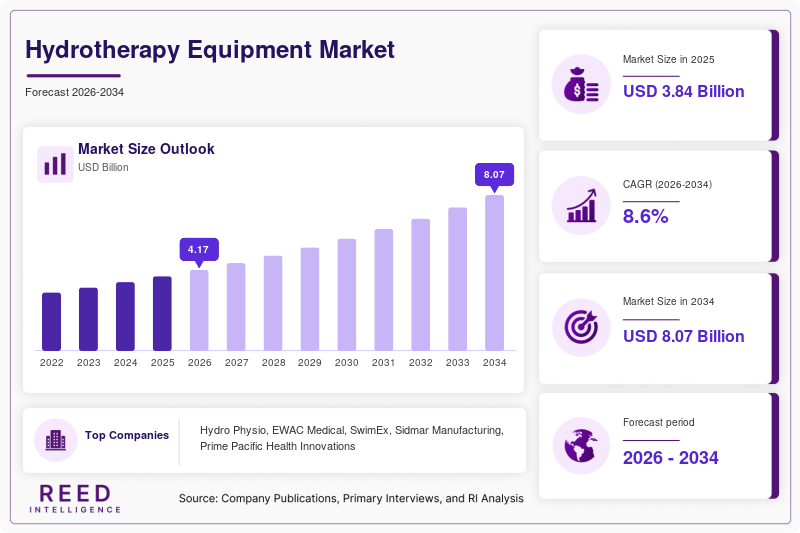
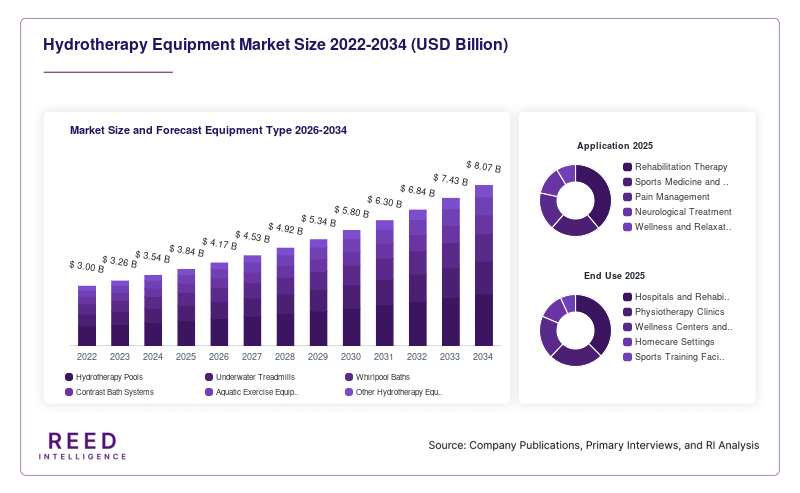
The global Hydrotherapy Equipment Market size was valued at approximately USD 3.84 billion in 2026 and is projected to reach nearly USD 7.42 billion by 2034, expanding at a CAGR of 8.6% during the forecast period from 2026 to 2034. Hydrotherapy equipment includes therapeutic pools, underwater treadmills, whirlpool systems, contrast bath systems, aquatic exercise equipment, and rehabilitation-focused water treatment solutions used across hospitals, rehabilitation centers, wellness clinics, sports facilities, and homecare environments. The market continues to gain traction as healthcare providers increasingly adopt non-invasive rehabilitation therapies that improve mobility, reduce pain, and support faster recovery for patients suffering from musculoskeletal disorders, neurological conditions, sports injuries, and chronic pain syndromes.
One of the primary global factors supporting market growth is the increasing aging population combined with rising prevalence of arthritis, obesity, spinal injuries, and post-operative rehabilitation requirements. Healthcare systems across developed and emerging economies are prioritizing physiotherapy and aquatic therapy programs due to their ability to minimize joint stress while improving circulation and muscle strength. Growing awareness regarding wellness-based preventive healthcare has also increased demand for compact hydrotherapy systems in fitness and residential applications. In addition, technological developments such as temperature-controlled smart pools, automated resistance systems, and energy-efficient water circulation technologies are improving treatment outcomes and operational efficiency for healthcare institutions.
Key Highlights
- North America dominated the market with a 34.2% share in 2025.
- Asia Pacific is expected to grow at the fastest CAGR of 10.9% during 2026–2034.
- By equipment type, hydrotherapy pools accounted for the largest share of 36.8%.
- while underwater treadmills are projected to grow at a CAGR of 11.7%.
- By application, rehabilitation therapy led with a 44.1% share.
- whereas sports medicine and fitness recovery is expected to expand at a CAGR of 10.8%.
- The United States remained the dominant country, with market values of USD 760 million in 2024 and USD 825 million in 2025.
Market Trends
Integration of Smart Monitoring and Digital Therapy Features
Manufacturers operating in the Hydrotherapy Equipment Market are increasingly integrating smart technologies into aquatic rehabilitation systems to improve treatment precision and patient monitoring capabilities. Advanced hydrotherapy pools and underwater treadmills now include digital touch panels, AI-assisted exercise tracking, motion sensors, adjustable resistance controls, and cloud-based patient management systems. Healthcare providers are adopting connected systems that allow therapists to monitor patient progress in real time and customize rehabilitation sessions according to mobility limitations or injury severity. These technologies also help reduce therapist workload while improving operational efficiency within rehabilitation centers and hospitals. The adoption of smart hydrotherapy systems has become especially important in sports medicine facilities where accurate performance tracking and recovery management are critical for athletes.
The trend is also expanding into home-based rehabilitation equipment, where compact smart hydrotherapy tubs and portable aquatic systems are gaining consumer interest. Remote monitoring capabilities allow physicians and physiotherapists to guide patients through personalized therapy programs without requiring frequent hospital visits. Growing acceptance of telehealth and digital physiotherapy platforms is supporting this transition. Equipment manufacturers are also focusing on energy-efficient heating systems and automated sanitation technologies to reduce long-term operating costs. As healthcare institutions continue investing in connected rehabilitation infrastructure, the demand for digitally enabled hydrotherapy equipment is expected to rise steadily across developed and emerging markets.
Expansion of Wellness and Preventive Healthcare Applications
Hydrotherapy equipment is increasingly being used beyond traditional rehabilitation environments, creating a broader consumer base across wellness resorts, luxury spas, fitness centers, and residential healthcare applications. Rising awareness regarding preventive healthcare and stress management has encouraged consumers to adopt water-based therapies for relaxation, circulation improvement, and muscular recovery. Wellness tourism growth in regions such as Europe, the Middle East, and Southeast Asia is driving investments in modern hydrotherapy facilities equipped with therapeutic pools, whirlpool baths, and sensory aquatic systems. Fitness clubs are also incorporating hydrotherapy zones to support post-workout recovery and injury prevention for members.
The trend toward holistic wellness is influencing product development strategies among leading manufacturers. Companies are introducing aesthetically designed hydrotherapy equipment that combines therapeutic benefits with user comfort and modern interior integration. Residential demand for compact whirlpool systems and therapeutic bathtubs has also increased due to rising disposable incomes and home wellness trends. Urban consumers are increasingly prioritizing wellness-oriented lifestyle investments that support mental and physical health. This broader application scope is expanding revenue opportunities for suppliers while encouraging partnerships between healthcare providers, hospitality operators, and fitness organizations. The trend is expected to create sustained demand for multifunctional hydrotherapy systems during the forecast period.
Market Drivers
Rising Prevalence of Musculoskeletal and Neurological Disorders
The increasing global burden of musculoskeletal disorders and neurological conditions is one of the strongest growth drivers for the Hydrotherapy Equipment Market. Conditions such as arthritis, osteoporosis, spinal injuries, cerebral palsy, stroke-related mobility issues, and chronic lower back pain are becoming more common due to aging populations and sedentary lifestyles. Hydrotherapy offers low-impact rehabilitation that reduces pressure on joints while improving muscle strength, flexibility, and circulation. Hospitals and rehabilitation centers are therefore investing in advanced hydrotherapy systems to support long-term patient recovery and pain management programs.
Healthcare professionals increasingly recommend aquatic therapy because water buoyancy enables patients to perform movements that may not be possible through conventional physiotherapy methods. The treatment approach also reduces injury risk and improves patient comfort during rehabilitation sessions. Demand is particularly strong among elderly populations who require joint-friendly mobility therapies. Governments and healthcare organizations are also expanding rehabilitation infrastructure and physiotherapy services to manage the growing burden of chronic diseases. These developments are increasing installations of hydrotherapy pools, aquatic exercise systems, and underwater rehabilitation equipment across both public and private healthcare facilities.
Growth of Sports Rehabilitation and Athletic Recovery Programs
The expanding sports medicine industry is significantly supporting growth in the Hydrotherapy Equipment Market. Professional athletes, fitness enthusiasts, and sports organizations increasingly rely on hydrotherapy systems to accelerate recovery from injuries, reduce muscular fatigue, and improve physical conditioning. Underwater treadmills and resistance-based aquatic systems are widely used in sports rehabilitation because they allow controlled exercise with reduced impact on muscles and joints. This makes hydrotherapy suitable for post-surgery recovery, ligament rehabilitation, and performance enhancement programs.
Sports training facilities, universities, physiotherapy clinics, and fitness centers are investing in specialized hydrotherapy infrastructure to support athlete wellness programs. Growing participation in organized sports and recreational fitness activities has further increased the incidence of sports injuries, creating additional demand for rehabilitation services. Hydrotherapy has also gained popularity among physiotherapists due to its ability to shorten recovery periods and improve mobility outcomes. Equipment manufacturers are responding by developing compact, customizable, and portable aquatic therapy solutions suitable for sports clinics and wellness centers. As the global sports and fitness industry continues to expand, demand for advanced hydrotherapy equipment is expected to remain strong.
Market Restraint
High Installation and Maintenance Costs Limiting Adoption
Despite favorable long-term demand outlook, the Hydrotherapy Equipment Market faces challenges associated with high installation, infrastructure, and maintenance costs. Large hydrotherapy pools, underwater treadmill systems, and temperature-controlled therapeutic baths require substantial investments in plumbing, heating, water filtration, and safety systems. Small healthcare facilities and rehabilitation clinics often face budget limitations that restrict adoption of advanced hydrotherapy technologies. In emerging economies, limited healthcare funding and uneven reimbursement structures further reduce purchasing capabilities among hospitals and physiotherapy centers.
Maintenance requirements also create operational challenges for end users. Hydrotherapy systems require frequent water treatment, sanitation monitoring, energy consumption management, and equipment servicing to ensure patient safety and regulatory compliance. Skilled personnel are needed to operate and maintain these systems effectively, increasing labor costs for healthcare institutions. Facilities located in regions with unstable utility infrastructure may experience additional operational burdens related to water supply and electricity usage. For example, smaller rehabilitation clinics in developing countries frequently opt for conventional physiotherapy equipment instead of aquatic therapy systems because of installation complexity and long-term maintenance expenses. These cost-related barriers may slow market penetration in price-sensitive regions despite rising awareness regarding hydrotherapy benefits.
Market Opportunities
Expansion of Homecare and Portable Hydrotherapy Solutions
The growing shift toward home-based healthcare and personalized rehabilitation presents a major opportunity for companies operating in the Hydrotherapy Equipment Market. Patients recovering from surgeries, orthopedic injuries, or chronic mobility disorders increasingly prefer treatment solutions that reduce hospital visits and improve convenience. This trend is encouraging manufacturers to develop compact hydrotherapy tubs, portable whirlpool systems, and home-friendly aquatic therapy devices that support supervised rehabilitation in residential settings. Advances in lightweight materials and automated control systems are making home-use hydrotherapy equipment more accessible to middle-income consumers.
Homecare demand is also rising due to increasing healthcare costs and pressure on hospitals to reduce inpatient stays. Elderly individuals and patients with long-term conditions are adopting hydrotherapy solutions that improve mobility and reduce discomfort without requiring continuous clinical supervision. Manufacturers are integrating remote monitoring capabilities and digital therapy guidance features into home-use systems to enhance user safety and treatment effectiveness. Insurance providers in some developed countries are also expanding reimbursement support for rehabilitation equipment used in homecare environments. These developments create long-term revenue opportunities for suppliers focusing on compact, affordable, and digitally connected hydrotherapy products.
Emerging Demand Across Hospitality and Wellness Infrastructure
Rapid investments in luxury wellness centers, spa resorts, medical tourism facilities, and premium fitness clubs are creating attractive growth opportunities for hydrotherapy equipment manufacturers. Consumers are increasingly seeking integrated wellness experiences that combine relaxation, rehabilitation, and preventive healthcare services. Hotels and wellness resorts are therefore expanding aquatic therapy offerings through installations of therapeutic pools, sensory hydrotherapy baths, and relaxation-focused water treatment systems. Medical tourism destinations in Asia Pacific and the Middle East are particularly investing in advanced wellness infrastructure to attract international visitors seeking rehabilitation and holistic treatment services.
The hospitality industry is also adopting hydrotherapy technologies to differentiate premium service offerings and improve customer retention. Growing urban stress levels and rising disposable incomes are encouraging consumers to spend more on wellness-oriented travel and recovery programs. Fitness clubs and luxury residential projects are incorporating aquatic recovery zones as value-added amenities. This shift is encouraging equipment manufacturers to design visually appealing and multifunctional systems suitable for commercial wellness environments. Partnerships between healthcare providers, wellness brands, and hospitality operators are expected to accelerate installations of hydrotherapy systems across emerging markets during the forecast period.
Segmental Analysis
By Equipment Type
Hydrotherapy pools represented the dominant subsegment within the Hydrotherapy Equipment Market and accounted for approximately 36.8% of total market share in 2024. These systems remain widely adopted across hospitals, rehabilitation centers, physiotherapy clinics, and wellness facilities because they support a broad range of therapeutic exercises and rehabilitation treatments. Hydrotherapy pools are particularly effective for treating orthopedic conditions, chronic pain disorders, neurological injuries, and mobility limitations. Their ability to reduce weight-bearing pressure while improving flexibility and muscle movement makes them suitable for elderly patients and individuals recovering from surgeries. Large healthcare facilities continue to prioritize investments in temperature-controlled therapeutic pools equipped with resistance jets, underwater monitoring systems, and automated sanitation technologies. The broad clinical application range and strong patient outcomes associated with aquatic therapy pools continue to support their leading market position.
Underwater treadmills are projected to register the fastest CAGR of 11.7% during the forecast period due to increasing adoption across sports rehabilitation and physiotherapy environments. These systems enable controlled walking and running exercises while minimizing joint impact through water buoyancy support. Sports medicine facilities are increasingly using underwater treadmills for injury rehabilitation, post-surgery recovery, and athletic performance conditioning. Growing awareness regarding low-impact cardiovascular rehabilitation is also driving adoption among elderly populations and obesity management programs. Manufacturers are introducing advanced models featuring digital monitoring systems, adjustable water levels, and customizable resistance settings to improve therapy precision. Compact designs and portable configurations are further expanding adoption across small rehabilitation clinics and private therapy centers. As demand for efficient mobility rehabilitation technologies increases globally, underwater treadmill installations are expected to accelerate steadily.
By Application
Rehabilitation therapy emerged as the dominant application segment in the Hydrotherapy Equipment Market and held approximately 44.1% of market share in 2024. The segment benefits from increasing prevalence of musculoskeletal disorders, spinal injuries, neurological conditions, and post-operative rehabilitation requirements worldwide. Hydrotherapy systems are widely used in rehabilitation programs because water buoyancy reduces pressure on joints and muscles, enabling patients to perform therapeutic exercises with lower injury risk. Hospitals and rehabilitation centers continue to expand aquatic therapy departments to improve patient mobility, flexibility, and pain management outcomes. The segment also benefits from rising demand for non-invasive treatment methods that reduce dependency on pain medications and support faster recovery periods. Physiotherapists increasingly recommend hydrotherapy for elderly patients and individuals requiring long-term rehabilitation, strengthening demand for therapeutic pools, whirlpool systems, and aquatic exercise equipment.
Sports medicine and fitness recovery is expected to record the fastest CAGR of 10.8% through 2034 due to rising participation in sports activities and growing awareness regarding athlete wellness. Professional sports teams, fitness clubs, and rehabilitation centers are investing in advanced hydrotherapy systems to support muscular recovery, injury prevention, and performance enhancement programs. Underwater treadmills, resistance-based aquatic exercise systems, and contrast therapy baths are becoming common features in modern sports rehabilitation facilities. The segment is also benefiting from increased consumer interest in fitness recovery therapies among recreational athletes and wellness-focused individuals. Growing influence of sports physiotherapy and personalized recovery programs has encouraged healthcare providers to integrate hydrotherapy into comprehensive athlete management strategies. Technological advancements that improve exercise customization and treatment monitoring are expected to further accelerate segment growth during the forecast period.
By End Use
Hospitals and rehabilitation centers accounted for the largest share of the Hydrotherapy Equipment Market in 2024, contributing nearly 48.3% of global revenue. These facilities remain the primary end users because they manage a high volume of patients requiring post-surgical rehabilitation, chronic pain treatment, neurological therapy, and mobility restoration programs. Large hospitals continue to invest in specialized aquatic therapy departments equipped with therapeutic pools, underwater treadmills, and advanced hydrotherapy systems to improve rehabilitation efficiency. The segment also benefits from rising healthcare expenditure and growing focus on integrated physiotherapy services across developed economies. Rehabilitation centers increasingly rely on hydrotherapy to provide customized treatment programs that improve patient outcomes while reducing recovery time. Availability of trained physiotherapists and strong clinical infrastructure further supports widespread adoption of hydrotherapy equipment within institutional healthcare environments.
Homecare and wellness centers are projected to witness the fastest CAGR of 10.5% during the forecast period due to rising consumer preference for preventive healthcare and convenient rehabilitation solutions. Home-based hydrotherapy systems are becoming increasingly popular among elderly individuals, patients with chronic mobility conditions, and consumers focused on wellness-oriented lifestyles. Compact whirlpool systems, portable therapeutic tubs, and digitally connected aquatic therapy equipment are enabling patients to continue rehabilitation programs outside hospital environments. Wellness centers and luxury spas are also expanding hydrotherapy service offerings to attract health-conscious consumers seeking stress relief and recovery treatments. Increasing disposable incomes and rising awareness regarding holistic wellness practices are supporting installations of hydrotherapy systems in residential and commercial settings. Manufacturers are responding with energy-efficient, aesthetically designed, and user-friendly equipment tailored for non-clinical applications.
Regional Analysis
North America
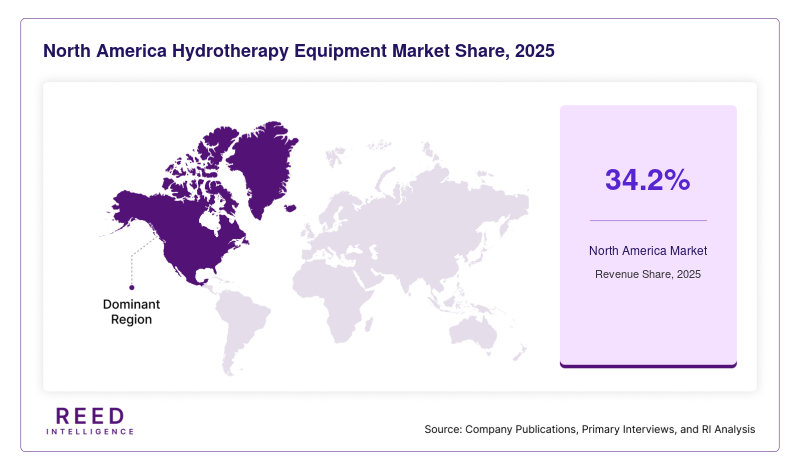
North America accounted for approximately 34.2% of the global Hydrotherapy Equipment Market share in 2025 and continues to maintain a leading position due to strong healthcare infrastructure and high spending on rehabilitation services. The regional market is projected to expand at a CAGR of 7.9% through 2034, supported by increasing prevalence of orthopedic disorders and sports-related injuries. Hospitals, rehabilitation centers, and sports medicine facilities across the region are adopting advanced hydrotherapy systems to improve patient recovery outcomes and reduce long-term treatment costs. Technological innovation and favorable insurance coverage for rehabilitation therapies further strengthen regional demand.
The United States remains the dominant country within North America due to extensive investments in physiotherapy services and growing awareness regarding aquatic rehabilitation benefits. The country also benefits from a well-established sports medicine ecosystem that relies heavily on underwater treadmills and therapeutic aquatic systems for athlete recovery programs. Increasing adoption of home-based rehabilitation technologies among elderly populations represents a unique growth factor driving product demand. In Canada, healthcare modernization and rising focus on senior wellness programs are also contributing to market expansion across hospitals and long-term care facilities.
Europe
Europe represented nearly 27.1% of the global Hydrotherapy Equipment Market in 2025 and is expected to witness a CAGR of 8.1% during the forecast period. The region benefits from strong public healthcare systems, rising geriatric populations, and increasing focus on preventive rehabilitation therapies. Countries across Western Europe continue to integrate aquatic therapy programs into physiotherapy and post-operative treatment frameworks. Demand for hydrotherapy systems is particularly strong in rehabilitation clinics, wellness resorts, and orthopedic treatment centers that focus on non-invasive recovery methods.
Germany remains the leading market in Europe due to advanced healthcare infrastructure and strong investments in rehabilitation technologies. The country has a growing network of wellness clinics and physiotherapy facilities that actively utilize hydrotherapy for musculoskeletal and neurological treatment programs. A unique growth factor supporting the German market is the integration of hydrotherapy services into medical tourism and wellness tourism industries. Countries such as France, Italy, and the United Kingdom are also witnessing increased installations of aquatic therapy systems within sports rehabilitation and elderly care facilities.
Asia Pacific
Asia Pacific held around 22.6% of the Hydrotherapy Equipment Market share in 2025 and is anticipated to record the fastest CAGR of 10.9% between 2026 and 2034. Rapid urbanization, expanding healthcare infrastructure, and rising disposable incomes are supporting market growth across the region. Governments in several Asian countries are increasing investments in rehabilitation centers and physiotherapy services to manage growing burdens of chronic diseases and aging populations. Rising awareness regarding wellness therapies and preventive healthcare is also accelerating adoption of hydrotherapy systems in commercial and residential applications.
China remains the dominant country in Asia Pacific due to large-scale healthcare investments and rapid growth of private rehabilitation facilities. The country is experiencing rising demand for advanced physiotherapy technologies as healthcare providers modernize treatment infrastructure. A unique growth factor driving the Chinese market is the expansion of wellness tourism and integrated rehabilitation centers within urban areas. India, Japan, South Korea, and Australia are also witnessing increasing demand for aquatic therapy systems driven by sports rehabilitation programs, elderly healthcare needs, and fitness-oriented consumer trends.
Middle East & Africa
The Middle East & Africa region accounted for nearly 8.3% of the global Hydrotherapy Equipment Market in 2025 and is expected to grow at a CAGR of 8.4% through 2034. Market growth is primarily supported by rising investments in healthcare modernization and luxury wellness infrastructure across Gulf countries. Hospitals and premium rehabilitation centers are increasingly adopting advanced hydrotherapy systems to improve treatment quality and attract international patients. Growth in medical tourism and wellness-oriented hospitality projects is also contributing to increased installations of therapeutic pools and aquatic rehabilitation equipment.
Saudi Arabia remains the leading country within the region due to ongoing healthcare diversification initiatives and expansion of rehabilitation services. The country is investing heavily in wellness tourism, physiotherapy centers, and modern healthcare facilities under broader economic transformation programs. A unique growth factor supporting the market is the increasing integration of hydrotherapy services into luxury hospitality and sports wellness projects. The United Arab Emirates and South Africa are also witnessing rising adoption of hydrotherapy equipment within rehabilitation clinics and high-end fitness facilities.
Latin America
Latin America captured approximately 7.8% of the Hydrotherapy Equipment Market share in 2025 and is projected to expand at a CAGR of 7.6% during the forecast period. The regional market is benefiting from gradual improvements in healthcare infrastructure and increasing awareness regarding physiotherapy and rehabilitation treatments. Urban hospitals and rehabilitation centers are adopting hydrotherapy systems to address rising cases of orthopedic disorders and post-surgical rehabilitation needs. Demand for wellness-oriented healthcare services is also supporting installations of aquatic therapy equipment in private clinics and fitness centers.
Brazil remains the dominant country in Latin America due to its expanding healthcare sector and strong sports culture. The country has a growing network of physiotherapy clinics and rehabilitation facilities that actively utilize hydrotherapy for athletic recovery and chronic pain treatment. A unique growth factor supporting the Brazilian market is the increasing collaboration between sports organizations and rehabilitation centers to improve athlete recovery services. Mexico and Argentina are also experiencing growing demand for hydrotherapy systems as private healthcare investments continue to rise.
Competitive Landscape
The Hydrotherapy Equipment Market is moderately consolidated, with international manufacturers focusing on product innovation, strategic partnerships, and geographic expansion to strengthen competitive positioning. Leading companies are investing in smart rehabilitation technologies, energy-efficient aquatic systems, and customized therapy solutions designed for hospitals, wellness centers, and homecare applications. Market participants are also expanding distribution networks and collaborating with rehabilitation providers to improve product accessibility across emerging economies.
Hydro Physio remains one of the leading companies in the market due to its extensive portfolio of underwater treadmills and aquatic rehabilitation systems used across sports medicine and physiotherapy facilities. The company recently introduced an advanced underwater rehabilitation platform featuring AI-assisted movement tracking and digital patient analytics for clinical therapy management. Other major players including EWAC Medical, SwimEx, and Sidmar Manufacturing are focusing on modular hydrotherapy pools and customized rehabilitation systems tailored for healthcare institutions. Companies are increasingly emphasizing sustainability by introducing water-efficient filtration systems and energy-saving heating technologies. Competitive intensity is expected to increase as manufacturers target homecare rehabilitation and wellness infrastructure segments across Asia Pacific and the Middle East.
Key Players
- Hydro Physio
- EWAC Medical
- SwimEx
- Sidmar Manufacturing
- Prime Pacific Health Innovations
- Jacuzzi Brands
- Stas Doyer Hydrotherapy
- Hudson Aquatic Systems
- Technomex
- Performance Health
- Aqua Creek Products
- Endless Pools
- Chirana Progress
- Unbescheiden GmbH
- Narang Medical Limited
Recent Developments
- In February 2026, Hydro Physio launched a next-generation underwater treadmill equipped with AI-supported gait analysis and cloud-based rehabilitation monitoring features for sports medicine clinics.
- In September 2025, EWAC Medical expanded its rehabilitation equipment manufacturing facility in Europe to increase production capacity for therapeutic pools and aquatic therapy systems.
- In June 2025, SwimEx partnered with a major rehabilitation hospital network in North America to supply modular hydrotherapy pools designed for neurological rehabilitation programs.
- In January 2026, Jacuzzi Brands introduced a compact residential hydrotherapy system targeting premium home wellness and elderly mobility assistance applications.
Hydrotherapy Equipment Market Segments
Equipment Type
- Hydrotherapy Pools
- Underwater Treadmills
- Whirlpool Baths
- Contrast Bath Systems
- Aquatic Exercise Equipment
- Other Hydrotherapy Equipment
Application
- Rehabilitation Therapy
- Sports Medicine and Fitness Recovery
- Pain Management
- Neurological Treatment
- Wellness and Relaxation
End Use
- Hospitals and Rehabilitation Centers
- Physiotherapy Clinics
- Wellness Centers and Spas
- Homecare Settings
- Sports Training Facilities
By Region
- North America
- Europe
- APAC
- Middle East and Africa
- LATAM