Hydroxycitronellal Market Size, Share & Demand Report By Type (Synthetic Hydroxycitronellal, Natural Hydroxycitronellal), By Application (Fragrances, Personal Care Products, Household Products), By End-Use (Cosmetics and Personal Care Industry, Household Industry, Industrial Applications) By Region & Segment Forecasts, 2026–2034
USD 3950
Market Overview
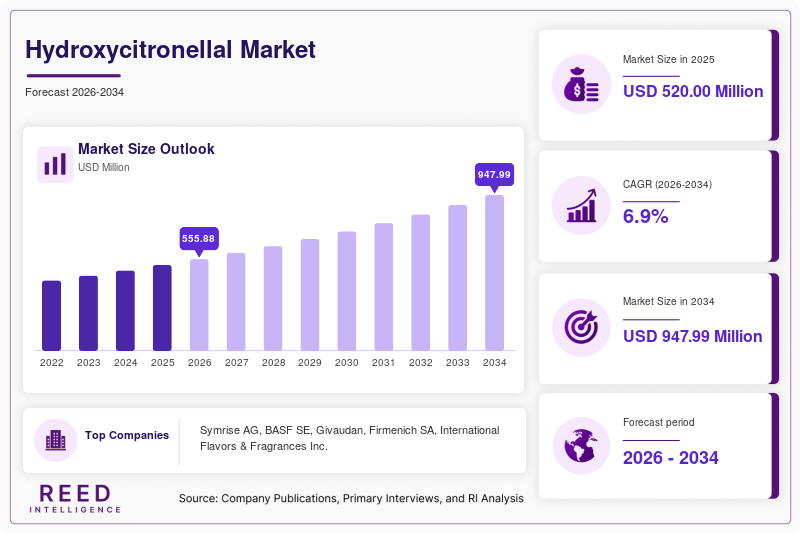
The global Hydroxycitronellal Market size was valued at approximately USD 520 million in 2026 and is projected to reach USD 890 million by 2034, expanding at a CAGR of 6.9% during the forecast period (2026–2034). Hydroxycitronellal, a widely used fragrance ingredient, is primarily utilized in personal care products, fine fragrances, soaps, and household cleaning solutions. Its mild floral scent resembling lily-of-the-valley has positioned it as a staple compound in the fragrance industry, driving steady demand across both developed and emerging economies.
A major global factor supporting market growth is the consistent expansion of the personal care and cosmetics industry. Rising disposable income, changing consumer lifestyles, and increasing awareness regarding grooming and hygiene have significantly contributed to the demand for fragrance ingredients such as hydroxycitronellal. Additionally, product innovation in perfumes and scented products, along with the growing trend of premium and niche fragrances, has strengthened the adoption of this compound.
Key Highlights
- North America dominated the market with a 33.8% share in 2025.
- Asia Pacific is expected to grow at the fastest CAGR of 8.1% during 2026–2034.
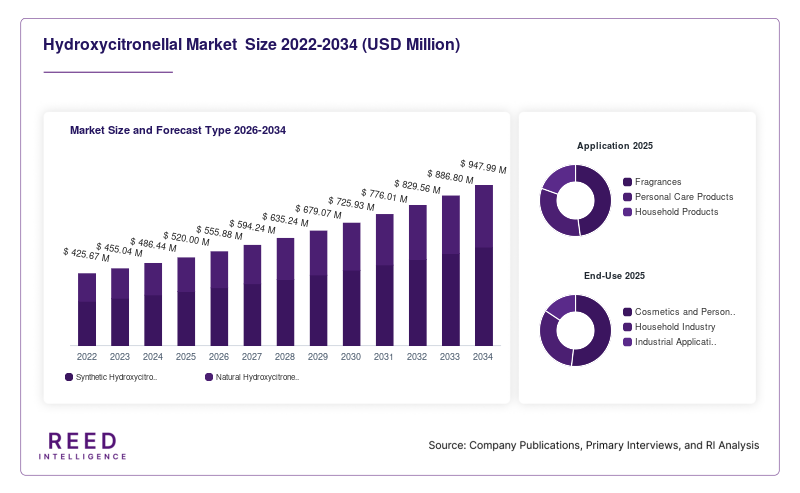
- By type, synthetic hydroxycitronellal accounted for the largest share of 72.4%.
- while natural-based variants are projected to grow at a CAGR of 7.6%.
- By application, fragrances led with a 46.3% share, whereas personal care products are expected to expand at a CAGR of 7.4%.
- The United States remained the dominant country, with market values of USD 155 million in 2024 and USD 168 million in 2025.
Market Trends
Rising demand for natural and sustainable fragrance ingredients
The increasing consumer preference for natural and sustainable products is shaping the Hydroxycitronellal Market. Consumers are becoming more conscious of ingredient sourcing, environmental impact, and product transparency. This shift has encouraged manufacturers to explore bio-based and naturally derived alternatives to synthetic hydroxycitronellal. While synthetic variants continue to dominate due to cost efficiency, the demand for plant-derived fragrance compounds is gaining traction, particularly in premium cosmetics and organic personal care products. Companies are investing in green chemistry and sustainable extraction techniques to meet regulatory requirements and consumer expectations. This trend is also influencing branding strategies, with labels emphasizing eco-friendly and cruelty-free formulations.
Expansion of premium and niche fragrance segments
The growth of premium and niche fragrances is another significant trend influencing market dynamics. Consumers are increasingly seeking unique, long-lasting, and personalized scents, which has led to a rise in boutique fragrance brands. Hydroxycitronellal plays a crucial role in creating floral notes that enhance fragrance complexity. The expansion of e-commerce platforms and digital marketing has further enabled niche brands to reach a broader audience. Additionally, collaborations between fragrance houses and luxury brands are driving innovation in scent profiles. This trend is particularly prominent in urban markets where consumers are willing to pay a premium for exclusive fragrance experiences, thereby supporting the growth of high-quality aroma chemicals.
Market Drivers
Growth in personal care and cosmetics industry
The steady growth of the global personal care and cosmetics industry is a key driver for the Hydroxycitronellal Market. Increasing consumer spending on skincare, haircare, and grooming products has led to higher demand for fragrance ingredients. Hydroxycitronellal is widely used in lotions, creams, deodorants, and shampoos due to its pleasant scent and compatibility with other ingredients. Emerging economies are witnessing rapid urbanization and rising middle-class populations, which are fueling the consumption of personal care products. Additionally, the influence of social media and beauty trends has accelerated product adoption, prompting manufacturers to incorporate appealing fragrances to differentiate their offerings.
Increasing demand from household and cleaning products
The demand for scented household and cleaning products is another major driver. Consumers are placing greater emphasis on cleanliness and hygiene, particularly following global health concerns. This has resulted in increased consumption of detergents, disinfectants, and air fresheners, many of which utilize hydroxycitronellal for its mild floral fragrance. Manufacturers are focusing on enhancing product appeal through fragrance innovation, which improves user experience. The growing trend of aromatherapy and wellness-oriented cleaning products is also contributing to market growth, as consumers seek products that offer both functional and sensory benefits.
Market Restraint
Regulatory restrictions and safety concerns
Regulatory restrictions and safety concerns related to fragrance ingredients pose a significant challenge to the Hydroxycitronellal Market. Hydroxycitronellal is subject to usage limitations in certain regions due to its potential to cause skin sensitization in some individuals. Regulatory bodies have established guidelines regarding permissible concentrations in cosmetic and personal care formulations. Compliance with these regulations requires manufacturers to reformulate products, which can increase production costs and affect product performance. Additionally, growing consumer awareness about ingredient safety has led to scrutiny of synthetic chemicals, prompting some brands to reduce or eliminate certain fragrance compounds. This restraint may limit market growth, particularly in regions with stringent regulatory frameworks.
Market Opportunities
Development of bio-based fragrance ingredients
The development of bio-based hydroxycitronellal presents a significant growth opportunity. Advances in biotechnology and fermentation processes are enabling the production of fragrance compounds from renewable sources. This approach aligns with sustainability goals and reduces reliance on petrochemical-based inputs. Companies investing in bio-based production methods can gain a competitive advantage by catering to environmentally conscious consumers. Furthermore, regulatory support for sustainable products is encouraging innovation in this segment. As the demand for green chemistry solutions increases, bio-based hydroxycitronellal is expected to gain traction across multiple applications.
Growth in emerging markets
Emerging markets offer substantial opportunities for expansion in the Hydroxycitronellal Market. Rapid urbanization, rising disposable incomes, and changing consumer preferences are driving demand for personal care and household products in regions such as Asia Pacific, Latin America, and the Middle East. Local manufacturers are expanding their product portfolios to include fragranced products, thereby increasing the consumption of aroma chemicals. Additionally, the growing retail infrastructure and penetration of international brands are boosting market accessibility. Companies that establish strong distribution networks and adapt to regional preferences can capitalize on these growth opportunities.
Segmental Analysis
By Type
Synthetic hydroxycitronellal dominated the market in 2024, accounting for a share of 72.4%. Its widespread use can be attributed to cost-effectiveness, consistent quality, and large-scale availability. Synthetic variants are preferred by manufacturers due to their stability and compatibility with various formulations. The demand for synthetic hydroxycitronellal remains strong across mass-market products, including soaps, detergents, and air fresheners. Additionally, advancements in chemical synthesis have improved production efficiency, further supporting the dominance of this segment.
Natural-based hydroxycitronellal is projected to be the fastest-growing subsegment, with a CAGR of 7.6% during the forecast period. The growth is driven by increasing consumer preference for natural and organic products. Manufacturers are investing in sustainable sourcing and extraction methods to meet this demand. The premium pricing of natural variants is offset by their appeal in high-end products. This trend is particularly prominent in developed markets, where consumers prioritize eco-friendly and clean-label products.
By Application
Fragrances represented the largest application segment in 2024, with a share of 46.3%. Hydroxycitronellal is widely used in perfumes and colognes to create floral notes. Its ability to blend well with other fragrance ingredients makes it a preferred choice for perfumers. The growth of the fragrance industry, including luxury and niche segments, continues to drive demand in this category.
Personal care products are expected to be the fastest-growing application segment, with a CAGR of 7.4%. The increasing use of hydroxycitronellal in lotions, creams, and deodorants is driving growth. Consumers are seeking products with pleasant and long-lasting scents, prompting manufacturers to enhance formulations. The expansion of the skincare and grooming industry further supports this trend.
By End-Use
The cosmetics and personal care industry dominated the end-use segment in 2024, accounting for a significant share. The widespread use of hydroxycitronellal in skincare, haircare, and grooming products drives this dominance. The growing emphasis on product differentiation and branding has led manufacturers to incorporate appealing fragrances, boosting demand.
The household products segment is expected to witness the fastest growth, with a notable CAGR during the forecast period. The increasing demand for scented cleaning products, including detergents and air fresheners, is driving this growth. Consumers are prioritizing hygiene and cleanliness, leading to higher consumption of fragranced household products.
Regional Analysis
North America
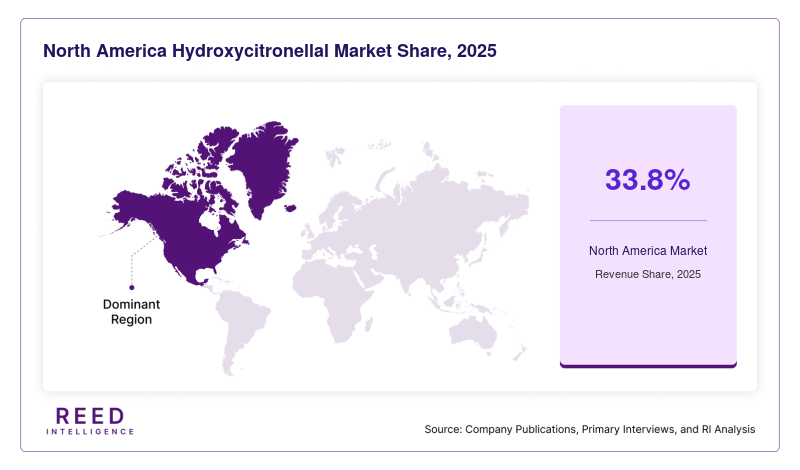
North America accounted for approximately 33.8% of the Hydroxycitronellal Market share in 2025 and is expected to grow at a CAGR of 5.8% during the forecast period. The region benefits from a well-established personal care and cosmetics industry, along with high consumer spending on premium products. The presence of major fragrance manufacturers and continuous innovation in product formulations contribute to steady demand. Additionally, increasing adoption of scented household products supports market growth.
The United States remains the dominant country in North America, driven by strong demand for premium fragrances and personal care products. A unique growth factor is the increasing popularity of niche and artisanal fragrance brands. These brands emphasize unique scent compositions and high-quality ingredients, driving the demand for hydroxycitronellal as a key fragrance component.
Europe
Europe held a market share of 28.5% in 2025 and is projected to grow at a CAGR of 5.5% through 2034. The region is known for its rich heritage in perfumery and strong presence of luxury fragrance brands. Stringent regulations regarding cosmetic ingredients influence product formulations, encouraging manufacturers to focus on safety and quality. The demand for sustainable and natural products is also shaping market trends in Europe.
France dominates the European market due to its established fragrance industry and global reputation in perfumery. A unique growth factor is the presence of leading fragrance houses and research institutions that drive innovation in scent development. This fosters continuous demand for high-quality aroma chemicals, including hydroxycitronellal.
Asia Pacific
Asia Pacific is expected to register the fastest CAGR of 8.1% during the forecast period, with a market share of 22.4% in 2025. Rapid urbanization, growing population, and increasing disposable income are key factors driving demand. The expansion of the cosmetics and personal care industry, particularly in countries like China and India, is significantly boosting market growth.
China leads the Asia Pacific market, supported by its large consumer base and growing demand for beauty and personal care products. A unique growth factor is the rising influence of e-commerce platforms, which have enhanced product accessibility and consumer awareness. This has accelerated the adoption of fragranced products, thereby increasing demand for hydroxycitronellal.
Middle East & Africa
The Middle East & Africa region accounted for 8.7% of the market share in 2025 and is projected to grow at a CAGR of 6.2%. The demand for fragrances is deeply rooted in cultural traditions, particularly in the Middle East. The growing population and increasing urbanization are driving demand for personal care and household products.
Saudi Arabia is the dominant country in this region, driven by high consumption of perfumes and luxury fragrances. A unique growth factor is the strong cultural preference for scented products, which supports consistent demand for fragrance ingredients. The expanding retail sector further enhances market growth.
Latin America
Latin America held a market share of 6.6% in 2025 and is expected to grow at a CAGR of 6.5% during the forecast period. The region is experiencing steady growth in the personal care and cosmetics sector, supported by increasing consumer awareness and spending. The demand for affordable fragranced products is a key driver.
Brazil leads the Latin American market, supported by its large population and strong beauty industry. A unique growth factor is the increasing adoption of locally manufactured personal care products. This trend is boosting the demand for fragrance ingredients, including hydroxycitronellal, as manufacturers aim to enhance product appeal.
Competitive Landscape
The Hydroxycitronellal Market is moderately consolidated, with several global and regional players competing based on product quality, pricing, and innovation. Leading companies are focusing on expanding their product portfolios and investing in research and development to enhance fragrance performance. Strategic collaborations and mergers are common as companies aim to strengthen their market position.
A key leader in the market is Symrise AG, known for its extensive range of fragrance ingredients and strong global presence. The company has recently invested in sustainable production technologies to develop bio-based aroma chemicals, including hydroxycitronellal. This initiative aligns with the growing demand for eco-friendly products and enhances its competitive position.
Key Players
- Symrise AG
- BASF SE
- Givaudan
- Firmenich SA
- International Flavors & Fragrances Inc.
- Takasago International Corporation
- Mane SA
- Robertet Group
- Sensient Technologies Corporation
- Kao Corporation
- Vigon International
- Penta Manufacturing Company
- Axxence Aromatic GmbH
- Treatt Plc
- Privi Speciality Chemicals Limited
Recent Developments
- A leading fragrance manufacturer introduced a bio-based hydroxycitronellal variant to meet sustainability goals.
- A global chemical company expanded its production capacity for aroma chemicals in Asia Pacific to cater to rising demand.
- A major player launched a new line of eco-friendly fragrance ingredients, including hydroxycitronellal, targeting premium personal care brands.
Hydroxycitronellal Market Segments
Type
- Synthetic Hydroxycitronellal
- Natural Hydroxycitronellal
Application
- Fragrances
- Personal Care Products
- Household Products
End-Use
- Cosmetics and Personal Care Industry
- Household Industry
- Industrial Applications
By Region
- North America
- Europe
- APAC
- Middle East and Africa
- LATAM